One of the fascinating things we continue to learn about sloths is just how different their circadian rhythms can be across species. Data loggers on the collars of the sloths in our project are revealing just this, by showing how and when sloths move.
Luiza’s activity patterns are completely unpredictable. Some days she is active during daylight hours, while other days she moves more at night.
This is the data behind these claims…
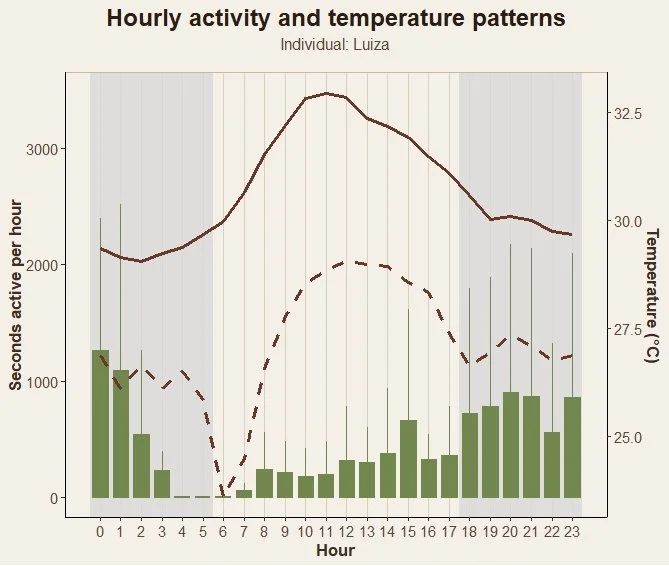
Grey shading = night
Green bars = sleep that may occur that hour
Thin green lines at top and bottom of bars = activity extremes recorded at that hour for that sloth
Solid line = microclimate temperature recorded by datalogger
Dashed line = atmospheric temperature recorded by remote weather stations
The graph shows Luiza has highly unpredictable and constantly changing activity patterns, which matches what we observe in three-fingered sloths in the field. Some days they appear active during daylight hours while we are tracking them, while other times they are fast asleep under exactly the same conditions.
This supports the idea that three-fingered sloths are cathemeral creatures, meaning they do not follow a strict day- or night-time schedule and instead can be active at any time across a 24-hour period.
This randomness may actually be an important survival strategy. One theory is that by being unpredictable, sloths make it harder for predators to anticipate their movements and routines.
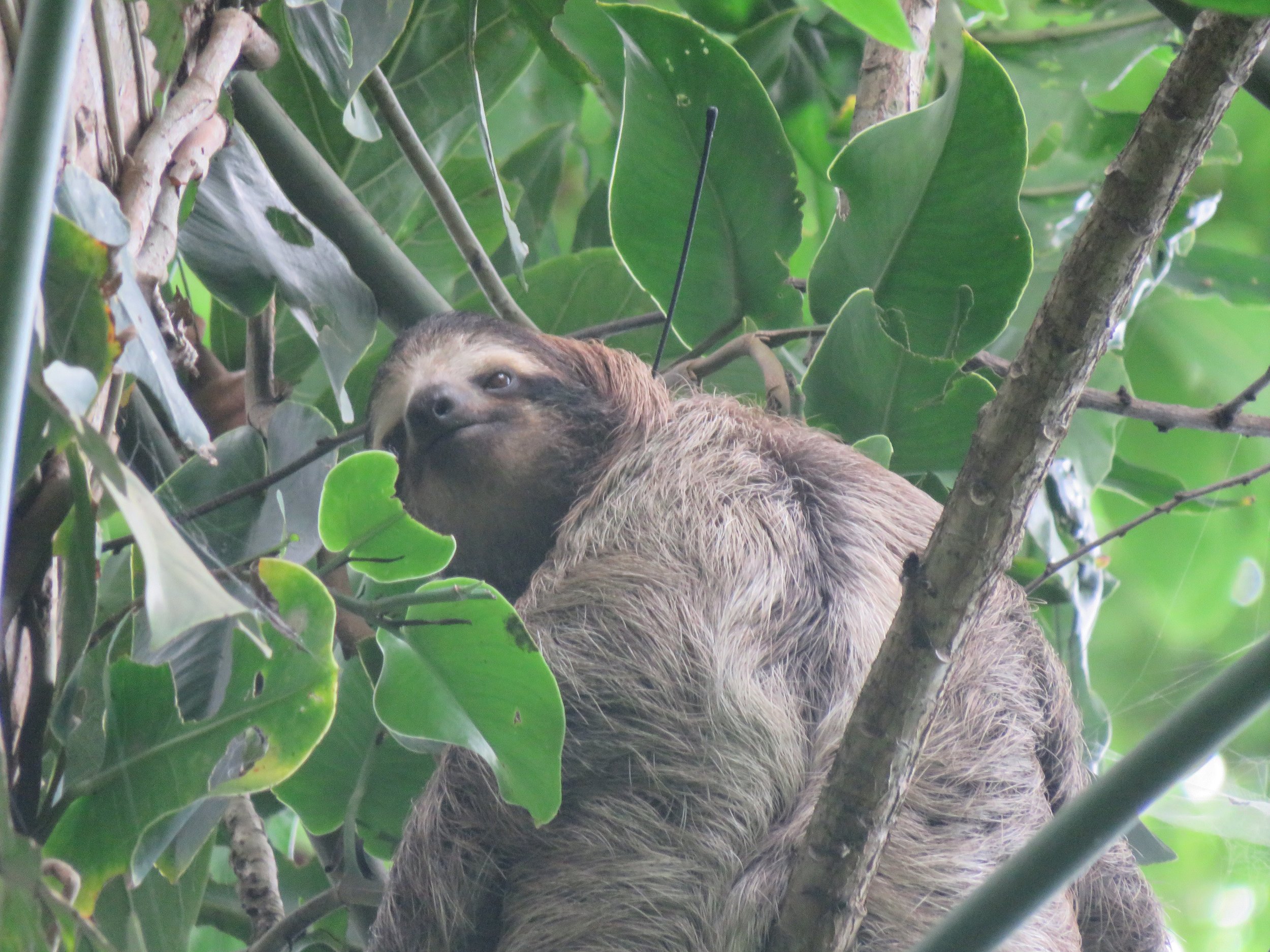
Luiza, wide awake and munching on leaves during the day.
We’ll continue to monitor Luiza’s and other USP sloths’ activity to better understand their movements and rhythms and what it might reveal about sloth behaviour in the wild.