
Why Do Male Sloths Have an Orange Patch on Their Back? Scientists May Finally Have An Answer
Male three-fingered sloths have one of the strangest features in the animal kingdom.
Right in the middle of their back sits a bright orange patch of fur crossed by a dark stripe. Known as the speculum, this striking marking stands out against the sloth's otherwise excellent camouflage. And for decades, scientists have been scratching their heads wondering why.
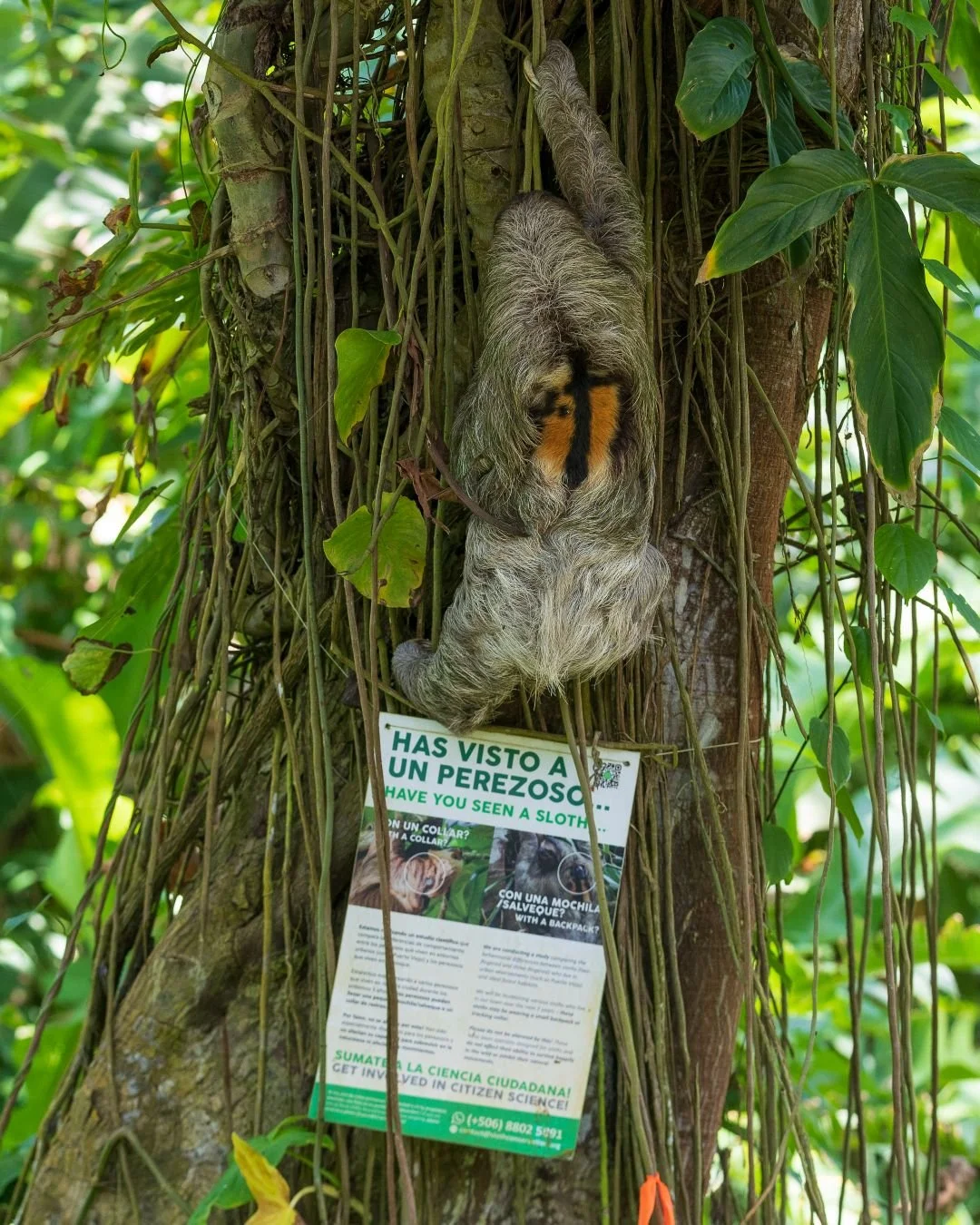
After all, sloths have spent millions of years evolving to avoid being seen. They move slowly, blend into the canopy, and rely heavily on camouflage to avoid predators. So why would a male sloth advertise his location with what looks suspiciously like a giant orange target?
A new study, titled "A spectrum of speculums: Testing adaptive hypotheses for male speculum coloration in male Brown-Throated sloths (Bradypus variegatus)," may finally provide some clues.
What Is a Sloth Speculum?
The speculum is a patch of brightly coloured fur found on adult male three-fingered sloths throughout most of the genus Bradypus (with the exception of the maned sloths Bradypus torquatus and Bradypus crinitus).
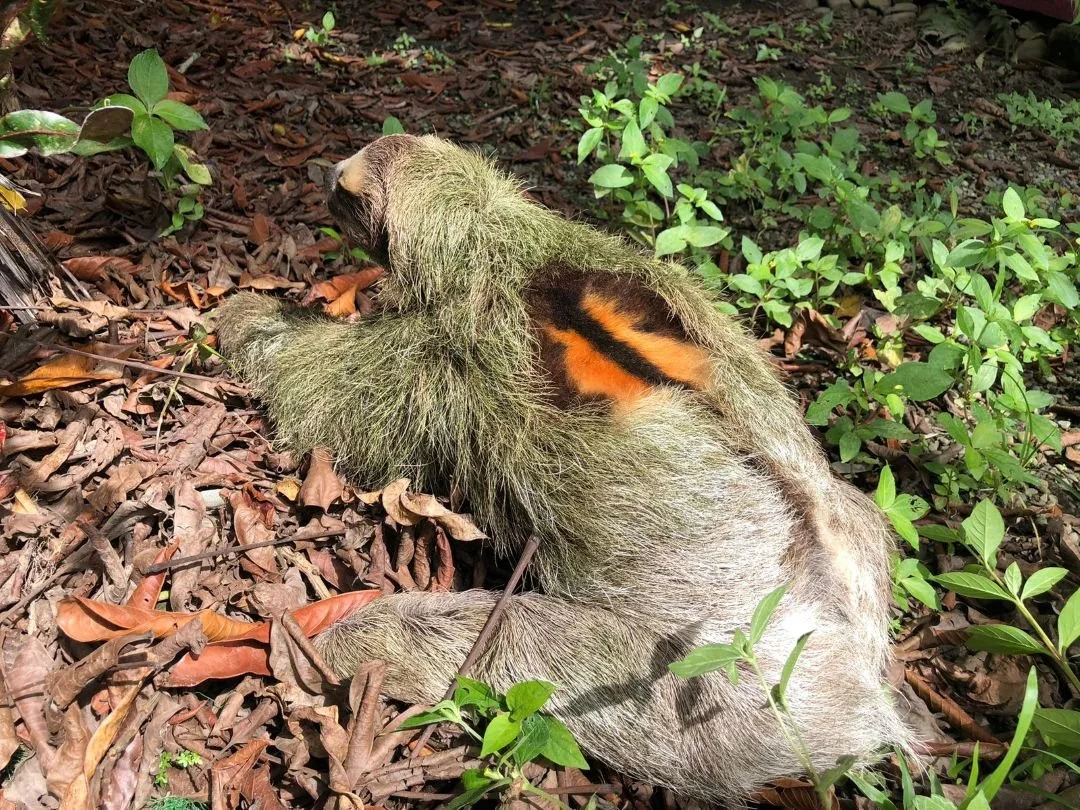
The patch develops when males reach sexual maturity and varies considerably between individuals. Some males sport large, bright orange patches that can be spotted from quite a distance, while others have smaller or darker markings. But the speculum isn't just a patch of differently coloured fur - it appears to be structurally different too.
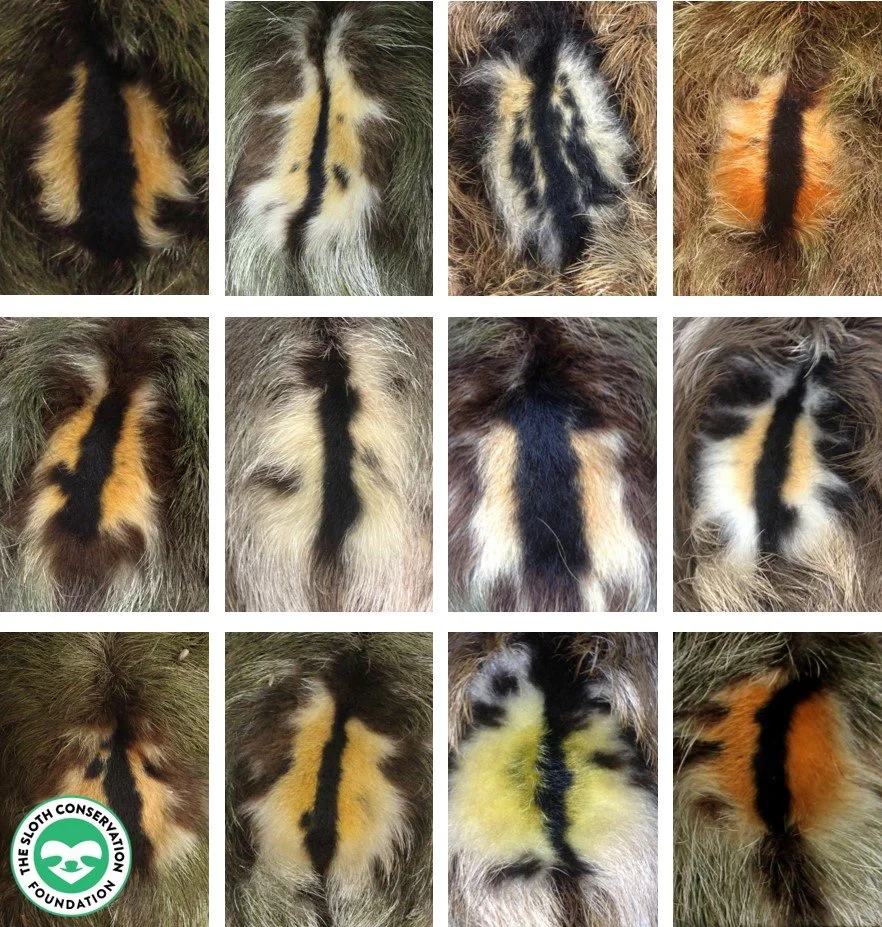
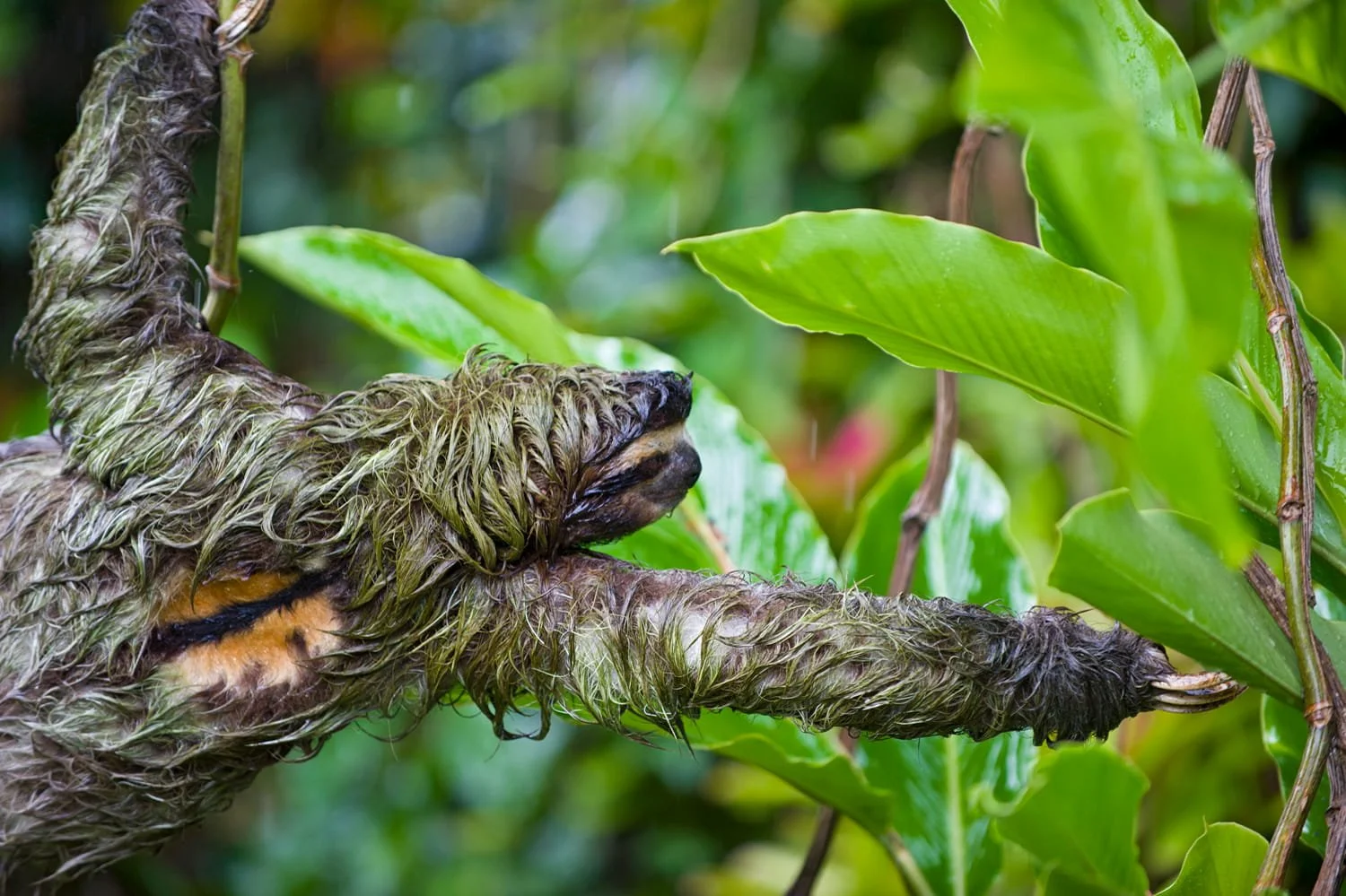
According to observations by sloth researcher Dr Rebecca Cliffe, the patch lacks the long, coarse guard hairs found elsewhere on the body and is instead composed of dense underfur. Unlike the surrounding coat, it also seems resistant to the algae that normally grow on sloth fur, making it stand out even more. In other words, the speculum appears to be a feature that sloths have invested a lot of effort into evolving.
Which raises an obvious question: Why?
Credit: Suzi Eszterhas
The Mystery of the Orange Patch
The speculum presents something of an evolutionary puzzle. Sloths are among the most cryptic mammals on Earth. Their entire lifestyle revolves around avoiding detection. They move slowly, spend most of their lives hidden high in the canopy, and rely heavily on camouflage to stay safe. But here's where the mystery gets even stranger, because sloths are also thought to be essentially colourblind.
Previous research has shown that sloths have poor visual acuity and rod monochromacy, meaning they likely cannot perceive colors in the same way humans do. So why would a largely colourblind animal evolve a bright orange patch that makes it more visible?
Credit: Suzi Eszterhas
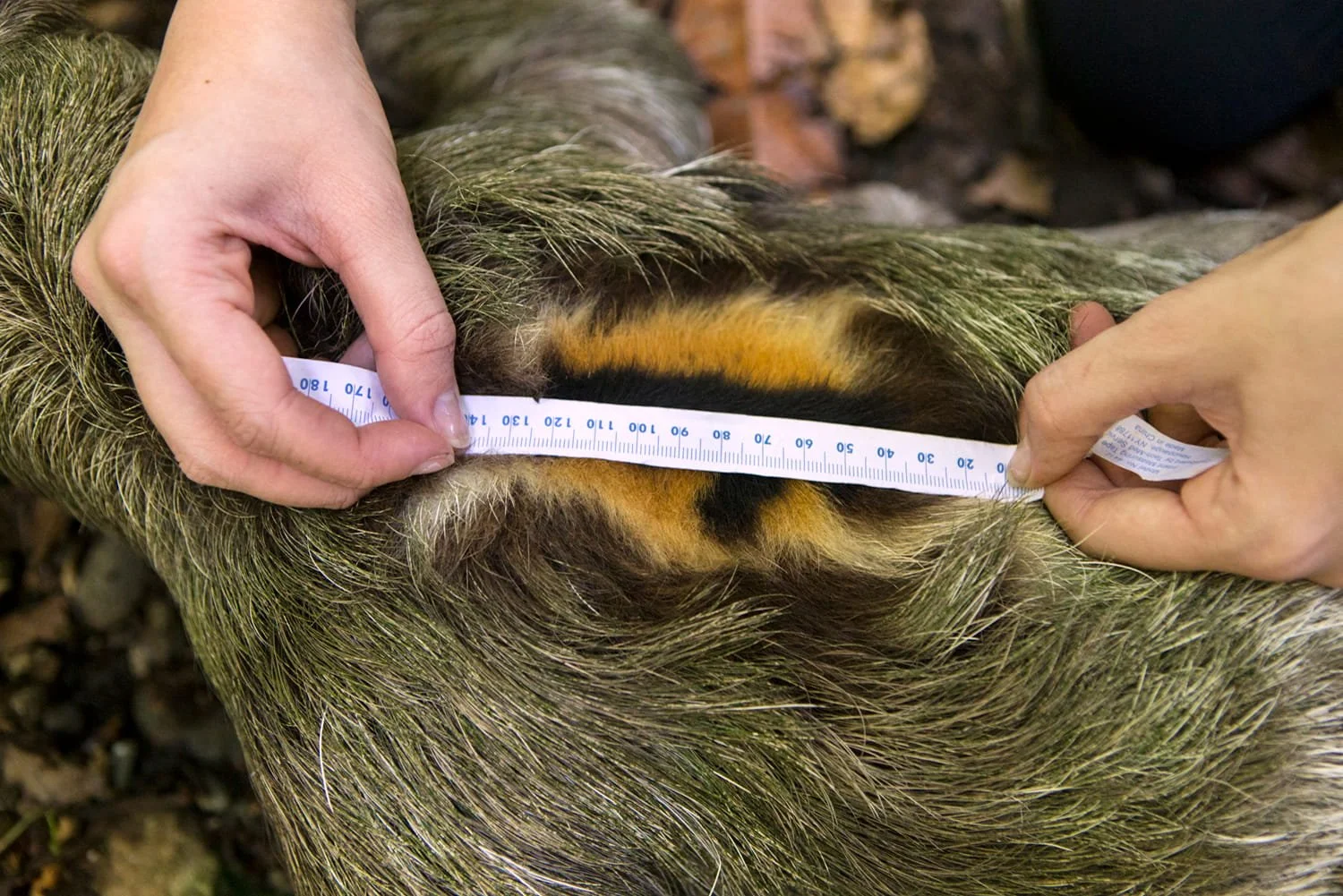
To investigate this question, we measured and photographed 60 wild sloth speculums in Costa Rica, and we collaborated with researchers at West Liberty University to quantify the size, shape, and color of the speculum and test some of the leading hypotheses for its existence.
What We Found
We measured speculum size, shape, and coloration from wild male sloths and compared these traits to body size. Several interesting patterns emerged:
Bigger Sloths Have Bigger Speculums
The clearest finding was that larger males tended to have larger speculums. We found a significant positive relationship between body size and speculum area, suggesting that the patch may provide information about an individual's size, maturity, or age. This doesn't prove the speculum functions as a signal, but it does suggest that it contains information that other sloths could potentially use.
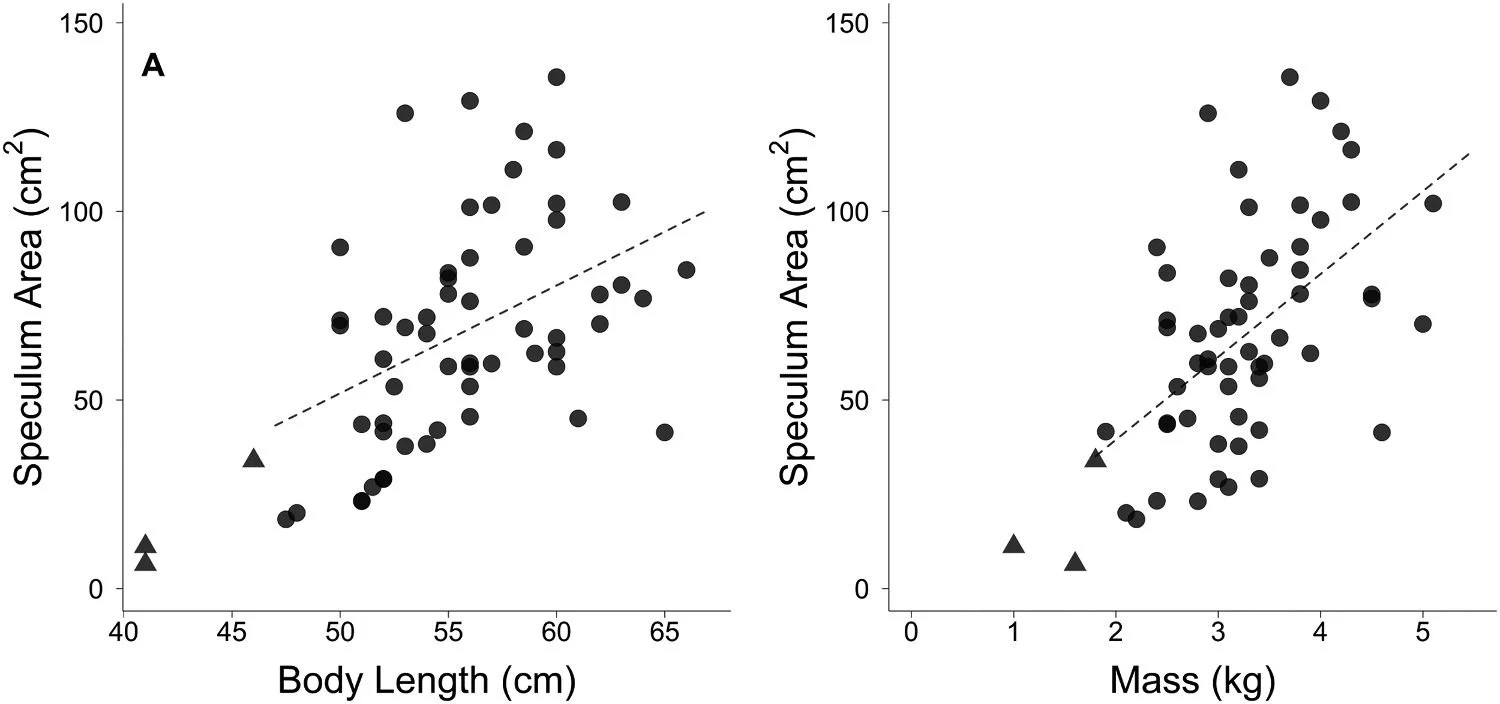
Relationship between A) body length, B) mass and speculum area in 60 Brown-Throated Sloths (Bradypus variegatus). The scatterplot shows raw measurements with each point representing an individual sloth. Adults are represented by circles (n = 57), and the juveniles (n = 3) are represented by triangles. The dashed regression line indicates a positive relationship between body size and speculum area.
The Color Changes as Sloths Grow
The study also found subtle differences in coloration. Larger males tended to have slightly more dark pigmentation and somewhat less of the bright orange coloration seen in smaller adults. Juvenile males showed an even more dramatic difference. Many possessed narrow black patches with little or no orange coloration at all, suggesting that the speculum develops gradually as males mature.

Fig. 4. Proportional coloration of 60 male Brown-Throated Sloth (Bradypus variegatus) speculum in relation to body length (A and C) and mass (B and D). The proportion of speculum color weakly correlated to body length, but not mass. Adults are represented by circles (n = 57), and the juveniles (n = 3) are represented by triangles. The dashed lines represent indicates the linear relationship between the two variables in adults.
If you've ever seen photos of young male sloths and wondered why their speculums look different from adults, this may be the answer.
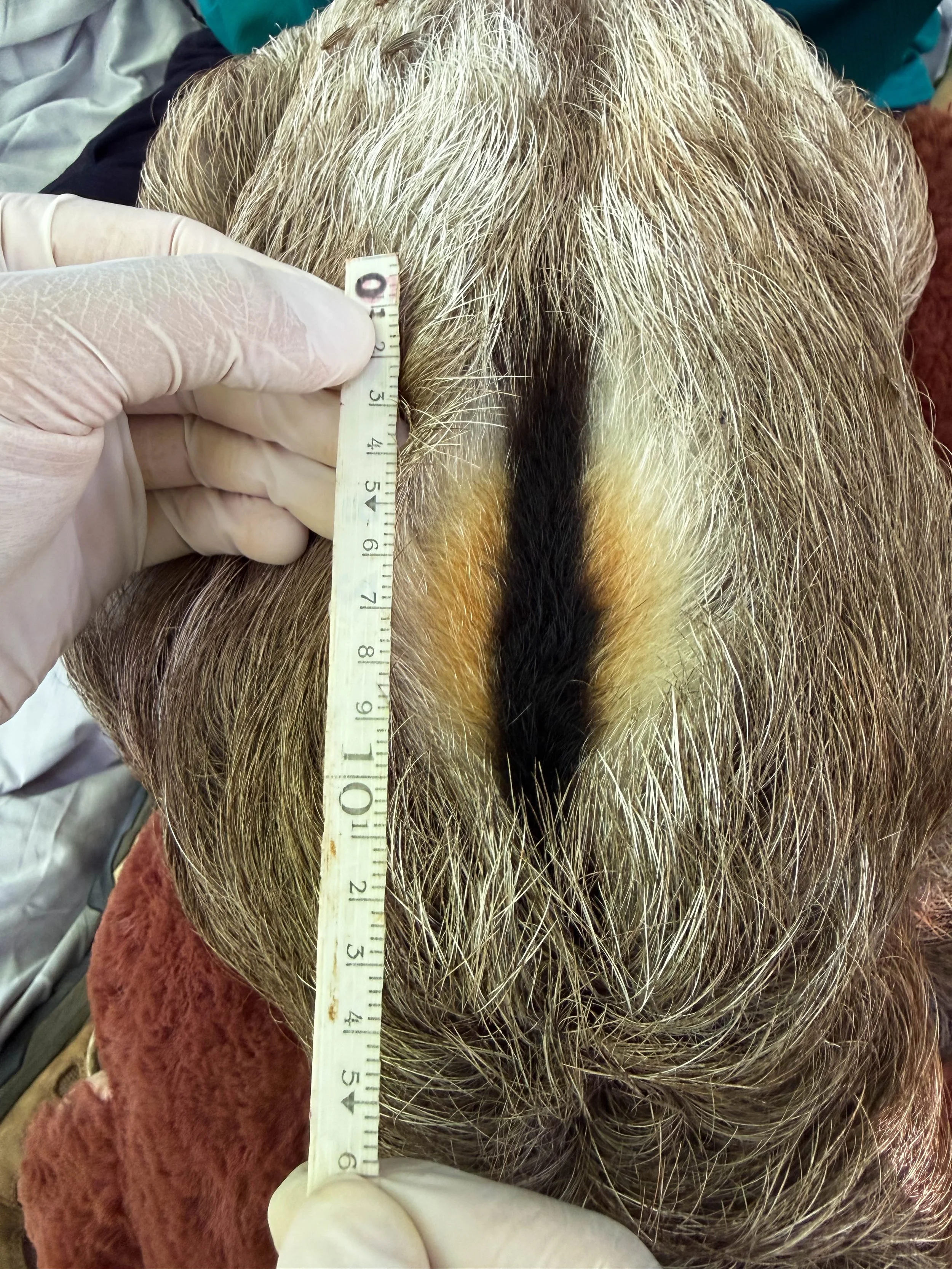
The little speculum of Nigel, a juvenile sloth we’re monitoring for The Urban Sloth Project
Could the Speculum Help Sloths Find a Mate?
One of the leading hypotheses is that the speculum functions as a sexually selected trait. In many animal species, males evolve specialized characteristics that help them compete for mates or advertise their quality. Think of a peacock's tail, a lion's mane, or a deer's antlers. The sloth speculum may serve a similar purpose. Female sloths often have access to multiple males and may switch partners frequently. In this type of mating system, traits that help males advertise themselves can become advantageous.
A larger speculum could potentially signal body size, maturity, health, or overall condition. The current study cannot prove that females use the speculum when choosing mates, but the relationship between body size and speculum size is certainly consistent with that possibility.
Or Is It Really About Smell?
Here's where things get even more interesting. The speculum isn't just colorful; it is also coated with an oily secretion that has a distinctive odor and leaves a yellow-orange residue when touched.
Because sloths have poor vision, we suggest that the speculum may actually function as a chemical signal rather than a visual one. In other words, the orange color may be less important than the scent it produces. The speculum could act as a kind of olfactory billboard, helping sloths identify potential mates, recognize sexually mature males, or communicate reproductive status.
The Bright Orange Problem
One of the most fascinating aspects of the speculum is that it may be far more visible to predators than it is to other sloths.
While sloths are thought to have limited color vision, their primary predator, the harpy eagle, possesses exceptional eyesight and can likely detect the bright coloration with ease.
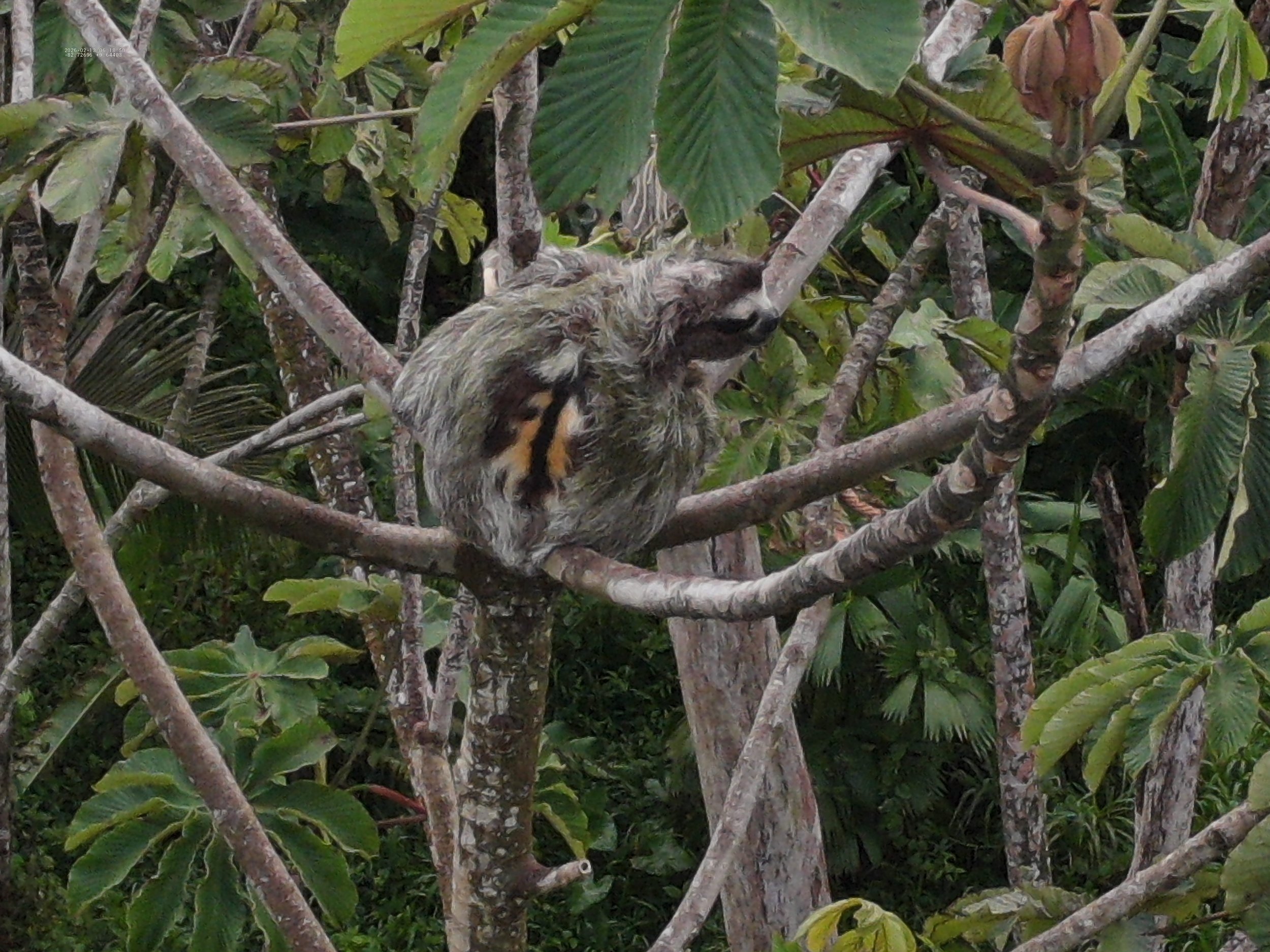
A male sloth found by our drone.
Imagine spending millions of years perfecting the art of hiding, only to evolve a bright orange patch that can probably be seen perfectly well by one of the largest eagles on Earth. This raises an intriguing question: if the speculum increases the risk of being detected by predators, what benefit does it provide that makes it worth keeping? The answer remains unknown, but it suggests that whatever purpose the speculum serves may be important enough to outweigh its potential costs.
Other Hypotheses
Some researchers have even proposed that it could serve as an anti-predator signal by mimicking an injury. And perhaps the most intriguing idea of all is that the speculum may be a vestigial trait, a leftover feature inherited from ancient ancestors that once relied more heavily on visual communication than modern sloths do today.
Why This Matters
At first glance, studying an orange patch of fur may seem like a small detail. But understanding how animals communicate is essential for understanding their behavior, reproduction, and evolution.
For sloths, many aspects of their lives remain surprisingly mysterious. Their slow movements, secretive lifestyles, and life high in the rainforest canopy make them difficult to study.
Research like this helps fill important gaps in our knowledge and reminds us that even some of the world's most recognizable animals still hold secrets waiting to be uncovered.
The Next Steps
We believe future research should focus on analysing the chemistry of the speculum's secretions and investigating whether they contain information about hormones, reproductive status, health, or individual identity. We also suggest studying how sloths respond to these scents and whether the speculum influences mate choice in the wild.
For now, one thing is clear. That bright orange patch on a male sloth's back is far more than a curious splash of colour. It may be one of the most important clues we have for understanding how sloths communicate, compete, and reproduce in the rainforest canopy. And perhaps most remarkably, it reminds us that even after decades of research, some of the world's most recognisable animals are still keeping secrets.
Reference
