
Florida Strengthens Sloth Import Rules Following the Sloth World Orlando Controversy
After issuing an emergency halt on foreign-origin sloth imports in May, Florida wildlife officials have now announced that anyone wishing to import a sloth into Florida must first obtain a dedicated Wildlife Importation Permit before the animal enters the state.
When The Sloth Conservation Foundation and The Sloth Institute first launched a joint campaign in January 2026, our goal was simple: bring attention to the growing trade in wild-caught sloths being imported into the United States for exhibition, encounters, and commercial entertainment.
The campaign led to former employees coming forward with information, investigative journalists taking a closer look at the facility, and widespread public scrutiny of Sloth World Orlando. Subsequent reporting revealed that over 50 sloths died before the facility ever opened to the public. The remaining animals were ultimately surrendered, transferred into accredited care, and the facility closed permanently.
May, 2026: Emergency Halt
In May 2026, following reports of multiple sloth deaths linked to recently imported animals, the Florida Fish and Wildlife Conservation Commission (FWC) issued Executive Order EO 26-12, temporarily suspending the importation of sloths entering the United States from foreign countries and destined for captivity in Florida. The agency specifically cited the recent deaths of imported sloths, as well as the species' susceptibility to severe illness caused by stress and inadequate husbandry practices.
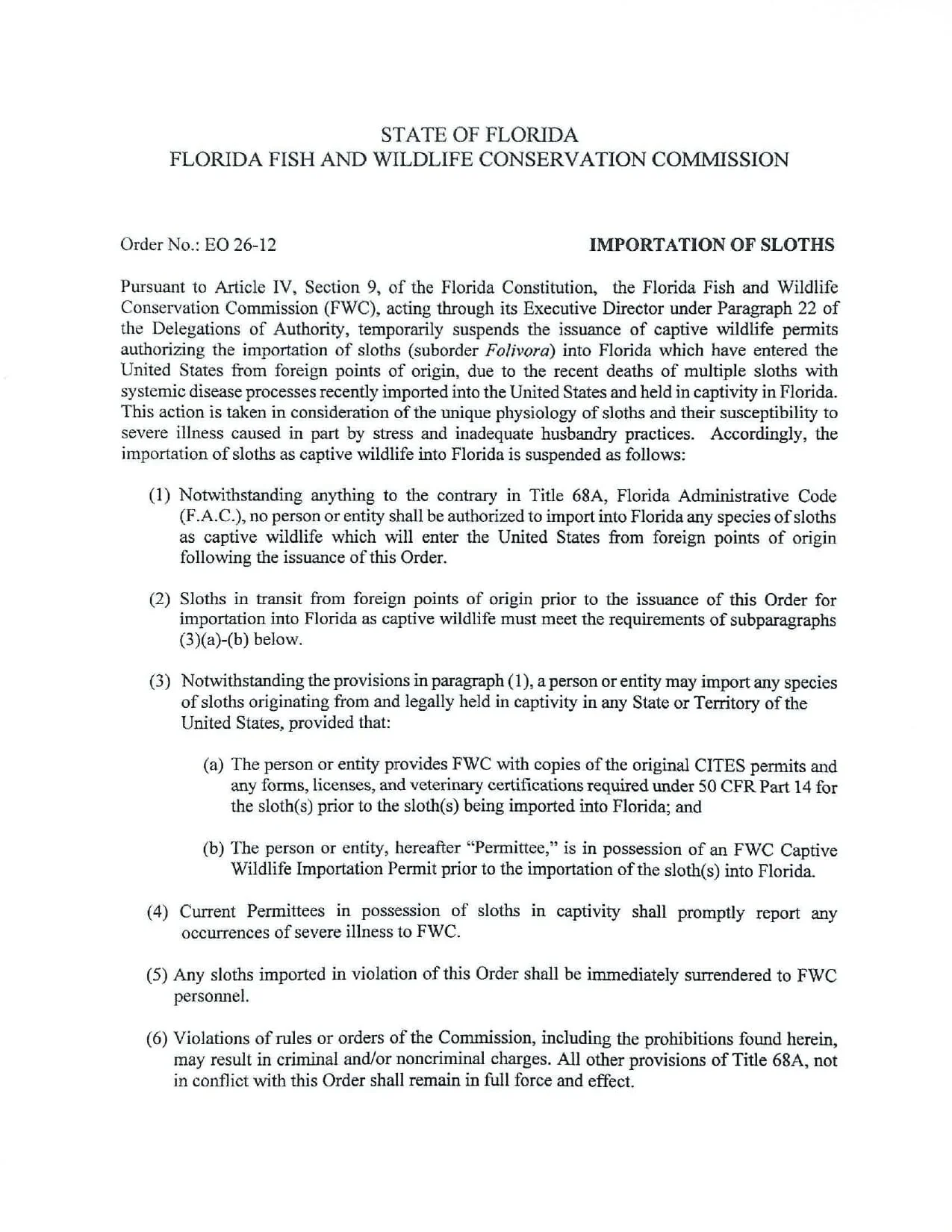
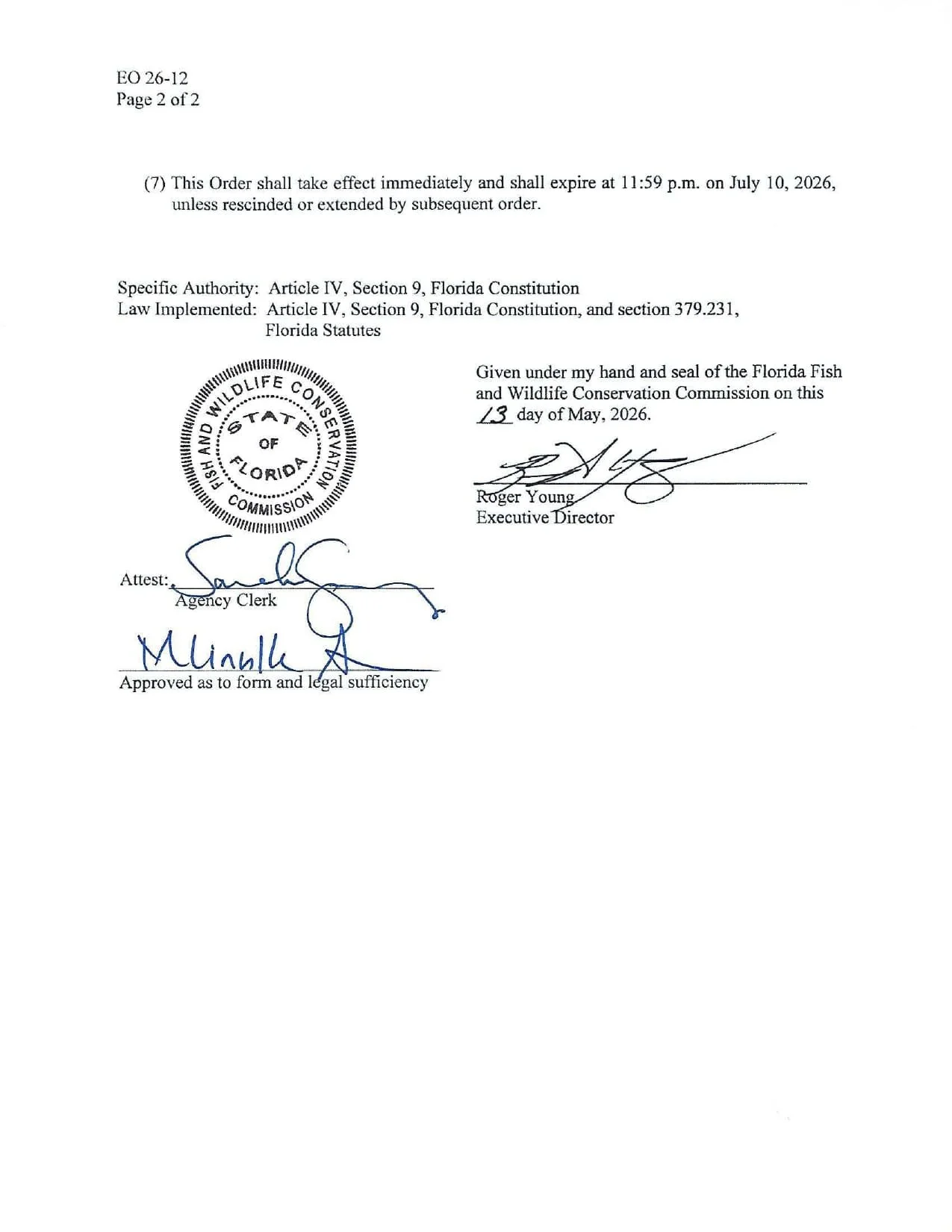
The order immediately stopped the issuance of permits authorizing the importation of foreign-origin sloths into Florida and represented the first regulatory response directly connected to the Sloth World case. The temporary halt remains in effect until July 10, 2026, unless extended or replaced by further action. For many people following the story, this was the first indication that policymakers were taking the issue seriously.
June 2026: Florida Announces Permanent Changes
While the temporary emergency order is set to expire, the FWC has now announced a permanent change to how sloths can be imported into Florida.
On June 19, 2026, the agency informed captive wildlife permit holders that sloths will no longer be covered under Florida's standard blanket import permits. Instead, any entity wishing to import a sloth into Florida must first obtain a dedicated Wildlife Importation Permit before the animal enters the state.
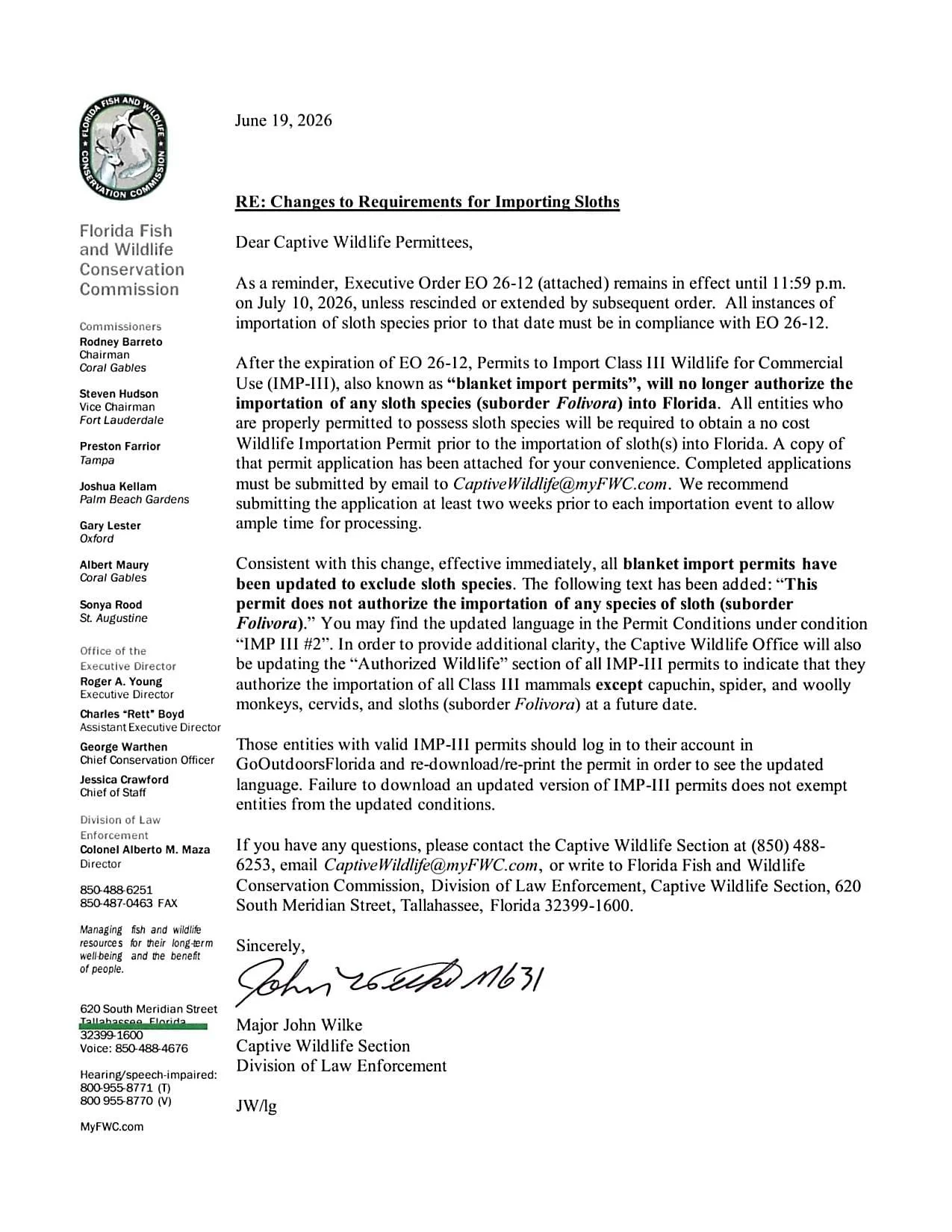
The agency also announced that all existing blanket import permits have been immediately updated to exclude sloths. The revised permit language now explicitly states:
"After the expiration of EO 26-12, Permits to Import Class III Wildlife for Commercial Use (IMP-III), also known as "blanket import permits", will no longer authorize the importation of any sloth species (suborder Folivora) into Florida."
According to the FWC, this additional permit requirement is intended to ensure that facilities and documentation can be reviewed before sloths are imported into the state. In practical terms, importing a sloth into Florida will now require additional scrutiny and approval that did not previously exist.
A Small Victory, But Not the Finish Line
For the first time, Florida has not only halted imports in response to welfare concerns, but has also changed its regulatory framework for sloth importation. This demonstrates something important: public attention matters.
What This Change Does Not Do
As encouraging as this announcement is, it is important to understand its limitations.
The new permit requirement does not ban the importation of wild-caught sloths.
It does not prohibit the commercial use of sloths in encounters, exhibitions, or similar attractions.
It does not establish stricter ownership standards for facilities wishing to possess sloths.
Those broader reforms would require formal rule changes by the Florida Fish and Wildlife Conservation Commission, including public consultation and Commission approval.
Stronger measures, including stricter ownership requirements and a permanent prohibition on importing wild-caught sloths, remain long-term goals.
What Happens Next?
While these changes represent meaningful progress, our work is far from over.
Through the Sloth Protection Alliance, The Sloth Conservation Foundation and The Sloth Institute continue to work closely with policymakers, the Florida Fish and Wildlife Conservation Commission (FWC), and other stakeholders to strengthen protections for sloths. Together, we are providing scientific evidence, technical expertise, and policy recommendations to support future legislative and regulatory reforms aimed at ending the commercial exploitation of wild-caught sloths.
But our work continues behind the scenes. Together with policymakers and wildlife authorities, we are helping shape the next phase of protections to ensure a tragedy like Sloth World can never happen again.
How You Can Help
The progress we've made has only been possible because people around the world chose to speak up. But our work is far from over.
You can support the Sloth Protection Alliance by signing our petition calling for stronger protections for wild sloths and an end to their commercial exploitation. If you're able, please also consider making a donation. Your support helps us continue investigating the wildlife trade, provide scientific evidence to policymakers, develop stronger legislation, and advocate for lasting protections that keep sloths where they belong: in the wild.

Read More:
For background and context, read our full blog on Sloth World Orlando here.
Press Release January 21 | Sloth Conservation Organizations Warn Against U.S. Attraction Sourcing Wild-Caught Sloths for Commercial Entertainment
Press Release April 24 | Sloth World Orlando to Close After 31 Sloth Deaths; Survivors Transferred to AZA Care
Press Conference May 6 | Scientists and conservation organizations call for action on the commercial sloth trade in the United States
Press Release May 13 | Florida Announces Temporary Halt on Sloth Imports Following Sloth World Orlando Investigation, With Nationwide Implications