
Tender, in Every Sense of the Word
Puerto Viejo de Talamanca is a small town known for its idyllic Caribbean beaches and lately, for all the wildlife that is possible to see; you don’t even need to enter the depths of a national park to see toucans, monkeys, iguanas, and of course, sloths.
With just a little patience and a keen eye for scanning the trees, you can spot wildlife right from the porch of your cabin. Sometimes, you might even encounter these animals while dining at a local restaurant. This is a common occurrence at Tasty Waves Cantina, a beach bar and restaurant located on the popular Cocles Beach. At Tasty Waves, it’s almost always possible to find a sloth living in the trees surrounding the cantina.
Tender is one of the sloths living in the trees above the cantina, and he became a perfect candidate for monitoring through the Urban Sloth Project, a long-term research effort focused on understanding how urbanisation shapes the lives of wild sloths. This is Tender’s story.
It all starts with Tiki
Tiki is a two-fingered sloth that has been living for the past few years in the trees surrounding Tasty Waves. She was named by Bryton, the owner of the cantina, after one of their most popular dishes served there, the Tiki Tenders.

An old photo of Tiki
Previously, Tiki used to traverse the front of the restaurant, utilizing a decorative fairy light cable strung from one tree to another. At our first Sloth Fest in 2021, we installed a Sloth Crossing bridge just above the light line, hoping that Tiki would start to use it. Although the light cable did not pose a threat of electrocution, we still wanted to provide a safer passage for Tiki. Thankfully, Tiki began using the bridge, and now you can see her navigating it regularly.
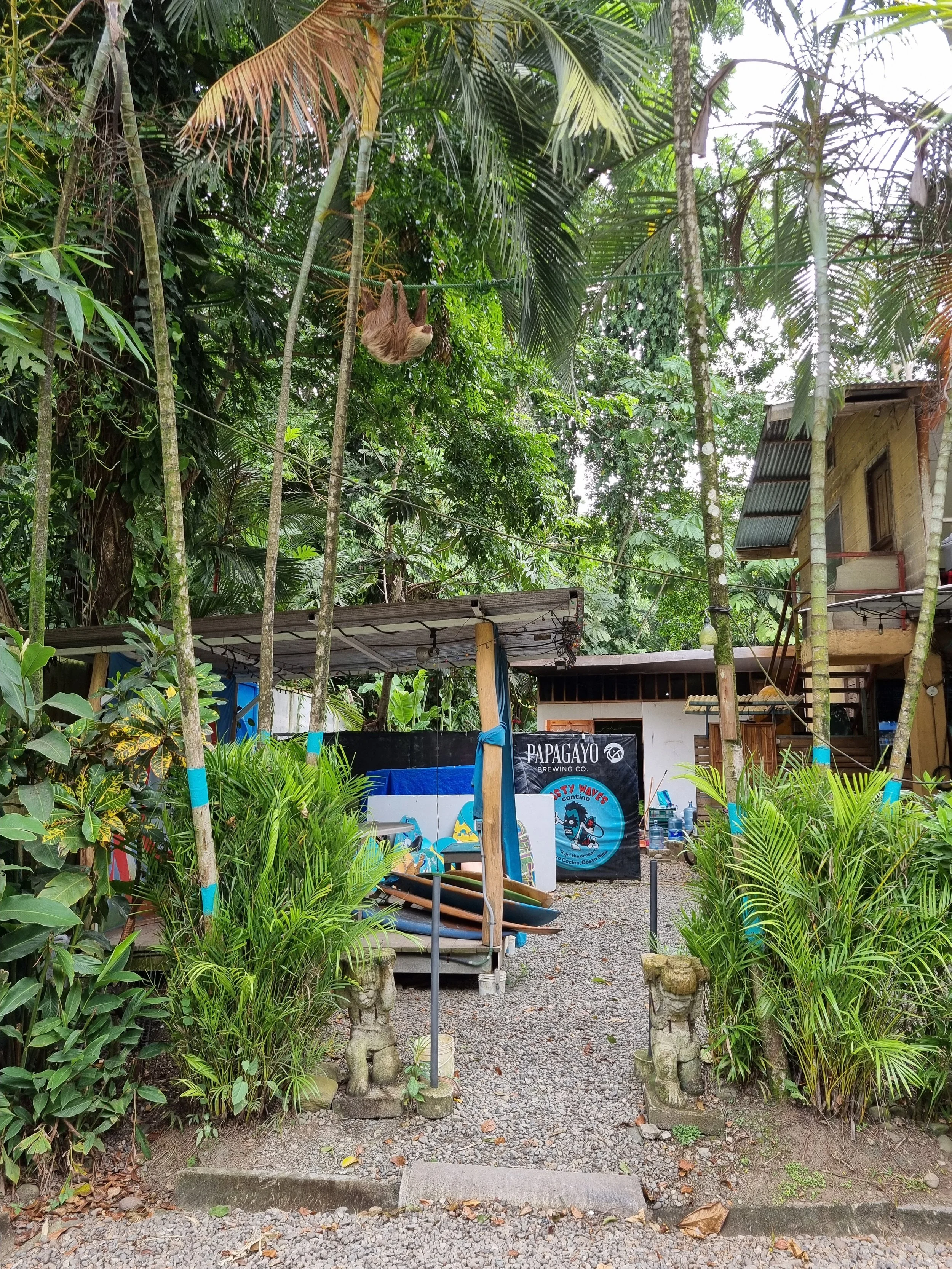
Tiki Using the Sloth Crossing canopy bridge SC-122. Navigate the map with alll bridges here.
Tiki seems to be the perfect candidate for the Urban Sloth Project: she literally lives above a restaurant, next to a busy road and a crowded beach, exposed to all kinds of noises, including live music. We've known Tiki for years, long before the Urban Sloth Project was even conceived, and we always considered her our ideal Urban Sloth. Of course, Tiki has never been in the right place at the right time for us to fit her with a tracking collar.
Tiki…. And Tender
One day in early 2024, we had the perfect opportunity to collar another sloth neighboring Tiki. Our sloth researcher José Guzman, who was tracking other sloths in the area, came across a young two-fingered sloth sleeping close to the ground, about 3 meters (10 feet) up in the Beach almond tree (Terminalia catappa) we anchor Tiki’s bridge in the front of Tasty Waves.
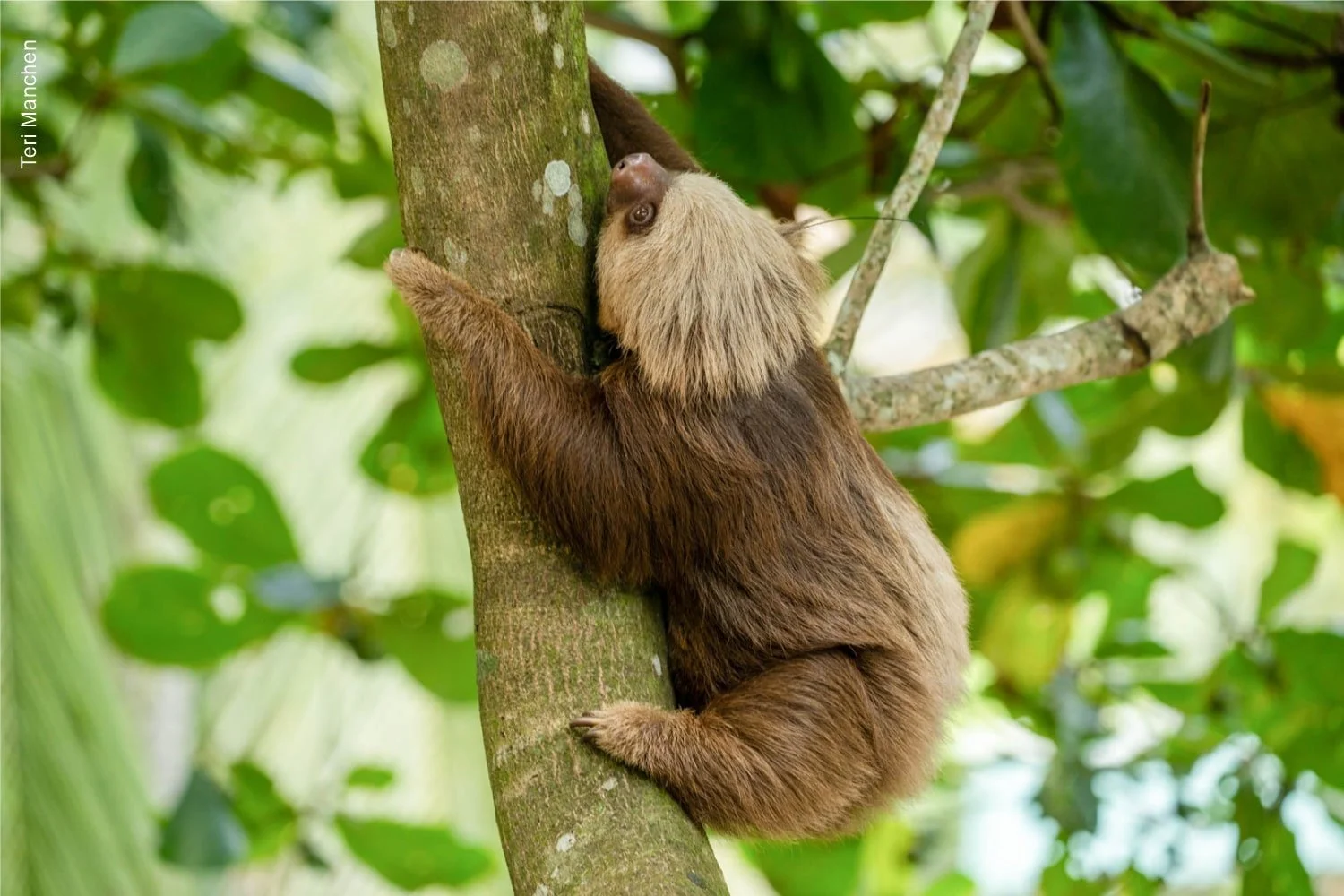
Tender
We were familiar with this distinctive sloth: we had watched Tiki raise him and could often see them hanging out together. Young and chocolate brown, the obvious name for Tiki’s offspring was, of course, Tender.
24 months of continuing monitoring
Tender was not only part of the Urban Sloth Project, but he was also enrolled in a parallel long-term study called The Eternal Sloths, where we are investigating how long sloths live in the wild. Tender was the perfect candidate for this work as we knew exactly when he was born and we began monitoring him as a young juvenile, freshly separated from his mother, Tiki.

Tender using the Sloth Crossing canopy bridge
For most of his young life, he was exceptionally predictable… happily “hiding in plain sight” above a busy beach bar. But in December 2025, Tender decided that the time had come to leave home. For the first time, he ventured beyond the safety of his maternal home range and headed off alone.
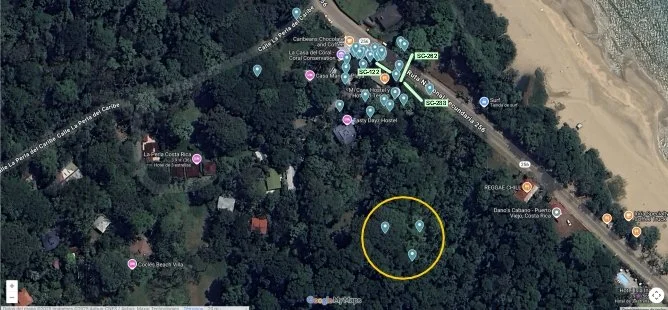
Some of the last known locations of Tender
This behaviour fits what we expect for male two-fingered sloths. As they reach sexual maturity, males disperse to establish themselves in new areas. However, almost nothing is known about how this process unfolds in fragmented urban landscapes. Tender was giving us a rare window into it.
The end of this story
Unfortunately for us, Tender’s chosen direction took him through a mosaic of private properties along the beach. His tracking collar eventually parked him inside the garden of a private residence. Despite multiple attempts - knocking on doors, requesting access, speaking with neighbours - the property owners refused to let our team enter. After several weeks of his collar transmitting from the same location, the signal abruptly stopped. We believe the collar may have been removed by the property owners, who were not receptive to our presence or our research.
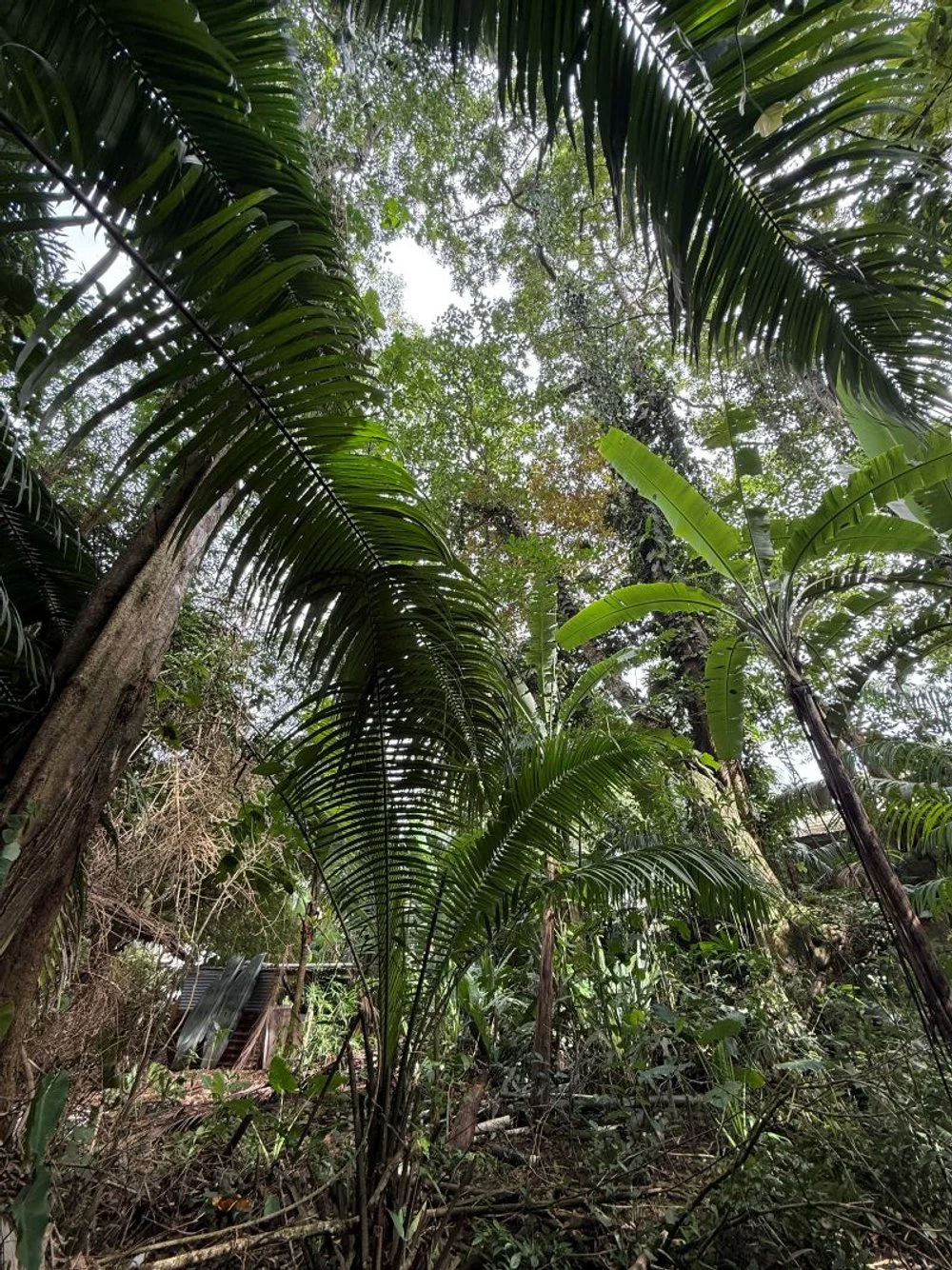
The signal of Tender’s collar was coming from behind these trees, in the property we can’t access.
This is one of the difficult realities of studying wildlife in urban areas. Unlike sloths in remote forests, urban sloths live among people. They are visible, they cross private boundaries, and not everyone welcomes conservation work. Most of the time, people are curious and supportive. Sometimes all it takes is a conversation to turn scepticism into excitement. Conservation is, at its core, about people as much as wildlife.
But not always. Occasionally, no amount of dialogue helps. We have had people become aggressive, accuse us of spying, or threaten us for walking through neighbourhoods with antennas. We understand how strange it must look… a team quietly sweeping gardens with radio receivers and binoculars… but when someone refuses to engage, we have no choice but to change our plans for our own safety and for the welfare of the animals.
This is not the first time this has happened. A few years ago, we had a similar experience with a sloth called Nacho, who dispersed in the opposite direction toward downtown Puerto Viejo and took up residence among bars and restaurants. You can read his story here.
At the end of the day, every decision we make is guided by one principle: what is best for the sloths.
Although we are officially closing Tender’s chapter within the Urban Sloth Project, we are not giving up on him. We will continue to keep an eye out for him in the area, and we hope that one day we will be able to locate him again and confirm that he is safe. Until then, his story with us remains open-ended… just lived beyond the reach of our equipment.
What Tender Taught Us
Tender may have slipped beyond our ability to monitor him, but not before giving us extraordinarily valuable data. Over the past year, he helped us document the dispersal of a young male transitioning into adulthood, a phase of sloth life we know very little about. His data now joins the six years (and billions of data points) of the Urban Sloth Project. Our team is actively analysing the movement and behavioural data from all of the urban sloths, and Tender’s story will form an important piece of that puzzle.
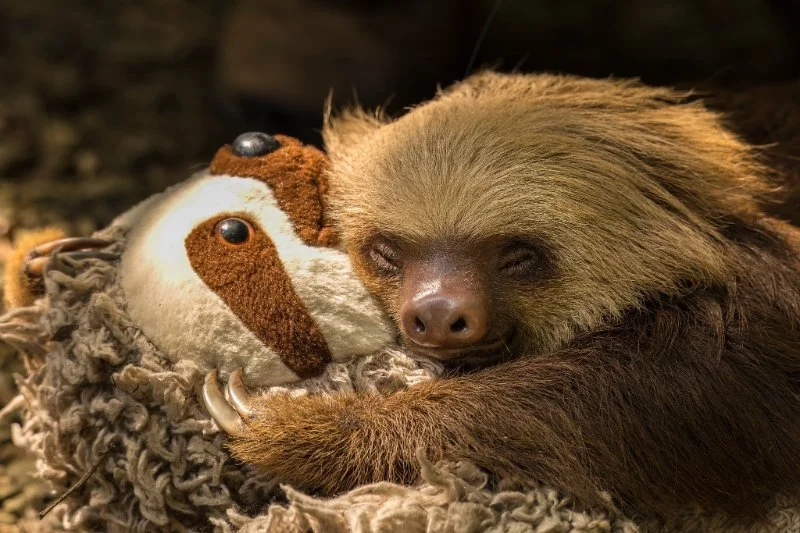
Farewell sweet Tender!
With Gratitude, and a New Beginning
Following Tender for so many years would not have been possible without an extraordinary community around him. We want to thank Bryton and Lydia from Tasty Waves, whose openness and care allowed this research to happen in the first place, as well as the staff and neighbours along Cocles Beach who welcomed us into their daily lives and looked out for the sloths above their heads.
Our thanks also go to every single person who symbolically adopted Tender and chose to follow his journey so closely. Conservation science does not happen in isolation. It happens because of trust, curiosity, and people willing to share their space with wildlife and researchers alike. Despite occasional setbacks, we remain deeply grateful for the support of such a strong community, both here in Costa Rica and around the world.
While we are no longer actively monitoring Tender, the story at Tasty Waves is far from over. Tiki continues to thrive, and as she has done before, she keeps surprising us. We have recently begun monitoring Tango, Tender’s little brother. The first time we ever saw Tango, he was a tiny baby riding on Tiki’s belly as she crossed her bridge, a moment that felt like a quiet passing of the torch.
Tango is now part of the Urban Sloth Project and is available for symbolic adoption. If you choose to join his family of adopters, you’ll be there from the very beginning, watching the first dots appear on his GPS map and following his story as it unfolds, one slow step at a time.
