This month, we were able to confirm that Debbie does indeed have a baby! This marks her second baby since joining the study, which is very exciting news for our long-term monitoring efforts.
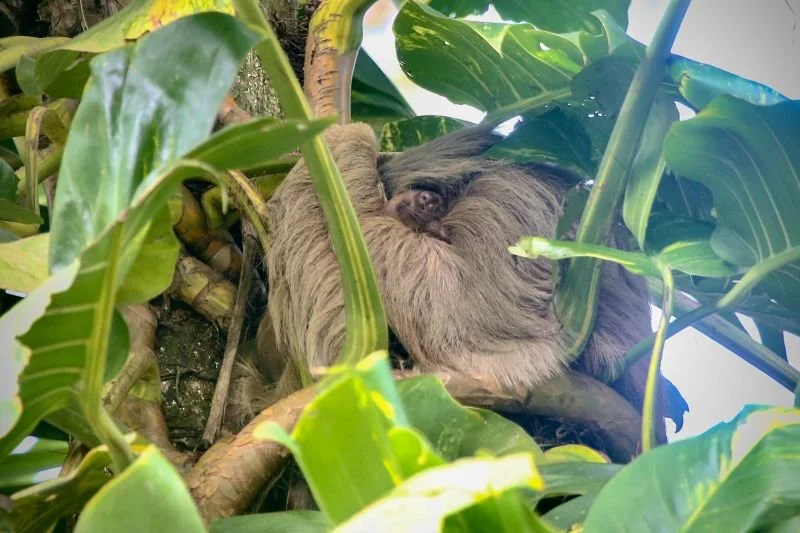
She has remained within her usual home range and continues to frequently use a beach almond tree near the road. Spending most of the time resting among the surrounding vines, where she sits quietly with her newborn nestled safely against her. The baby appears healthy and is growing well. If development continues as expected, we hope to see the young one becoming more independent in about five months.
However, we are increasingly concerned about the condition of her habitat. Coastal erosion in this area has been intensifying, and sections of shoreline are steadily disappearing. Strong waves have been hitting the coast with greater force, accelerating the loss of sand and destabilizing trees along the beach. Several trees have already fallen due to the shifting soil, and although the damage is not yet extensive, the trend is worrying. As erosion progresses, the available habitat becomes narrower, reducing the number of safe trees available for Debbie and other wildlife. Habitat loss along the coastline not only limits resting and feeding options but can also increase exposure to roads and human activity as animals are pushed further inland.
For now, sea conditions appear to be calming, which may temporarily slow the erosion process. We will continue monitoring both Debbie and the condition of her habitat closely in the coming months.