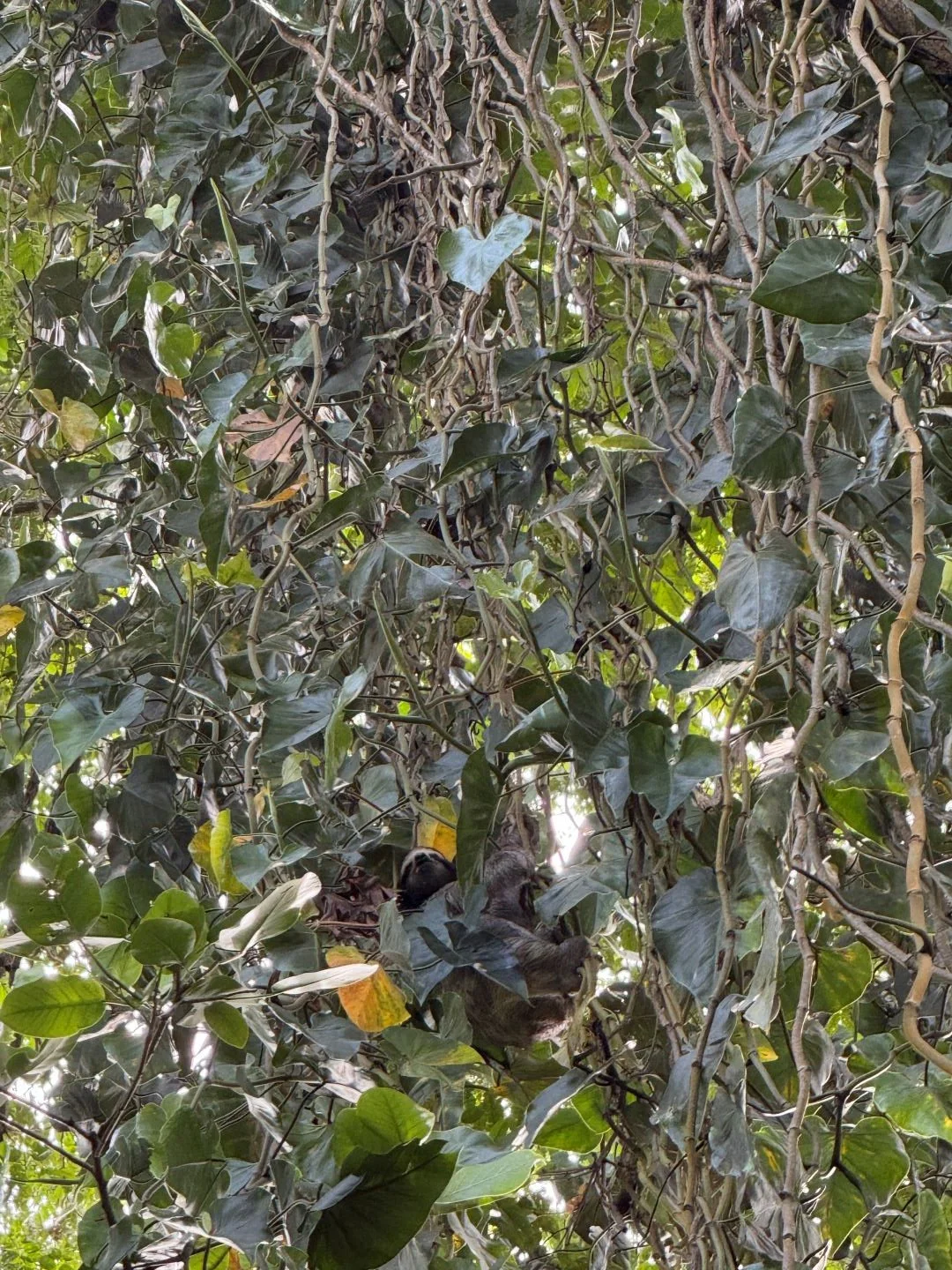
Chubby, Curious, and High in the Canopy| January 2026
Our first outing of the year began under dark, cloudy, and windy skies. Strong gusts sent branches swaying dramatically as the tracking team dusted off the cobwebs after the winter break. Although we encountered several other three-fingered sloths in the area, José knew exactly where to head, one of Luiza’s favourite trees.
And there she was, high up in one of the tallest trees around. Luiza was unusually active, moving from branch to branch and even between trees. Slowly and deliberately, she climbed using lianas to reach the treetops. At one point, José laughed and remarked, “She looks a bit chubby from here.” We suspect she may have been enjoying some festive feasting over the holidays!
As she began to descend, she stopped at around seven metres above the ground… and then, mid-descent, decided it was time for a nap. Sloths as a species are famously unpredictable, with varied routines, waking hours, and tree preferences. Yet, on an individual level, tracking has shown us that they can be surprisingly consistent. Luiza, for example, loves climbing up and down vines with impressive agility, is usually active around late morning, and almost always chooses the highest points in the canopy.
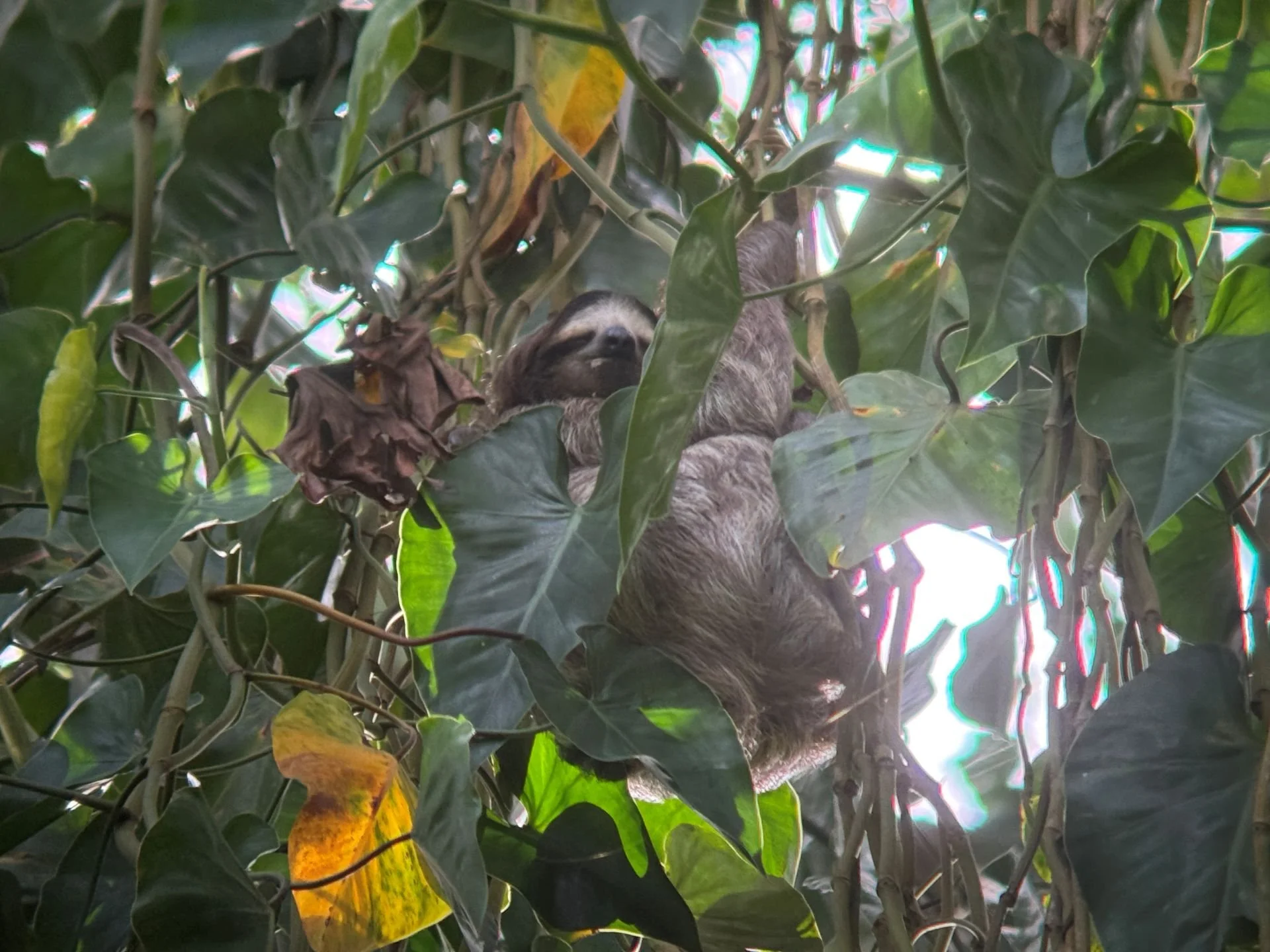
For the rest of the month, the days turned sunny and warm. Luiza remained settled in one of her favourite trees high along the Cocles Cliff. The forest was full of life: raccoons, birds, monkeys, and many other sloths were active nearby. On one visit, a lively group of spider monkeys played through Luiza’s tree, while she stayed right at the centre, curled into a tight ball, resting as though nestled in a bed of lianas. It was a peaceful month, marked by alternating sun and rain, and an abundance of fresh leaves to enjoy.
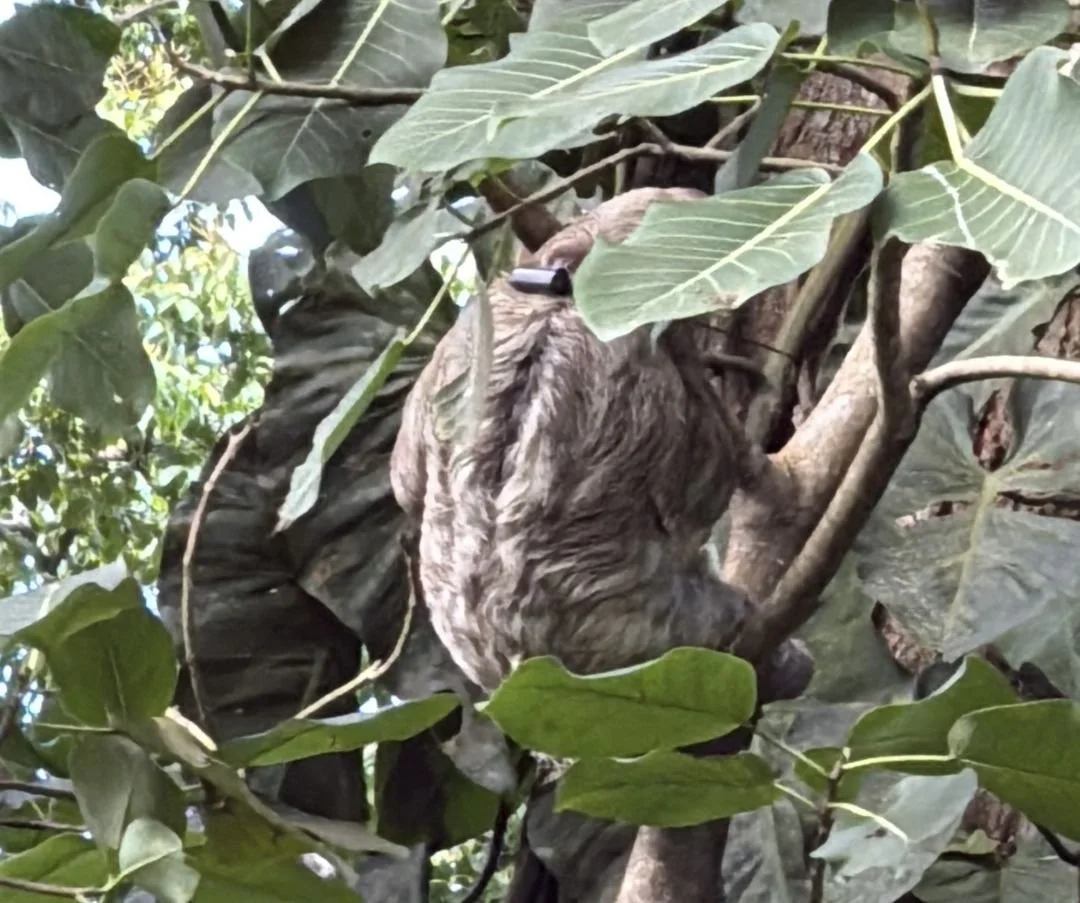
On our final outing of January, the antenna led us to a tree hosting four female three-fingered sloths! One by one, we carefully checked each individual with binoculars, searching for the tell-tale glimpse of a collar antenna. Deyber, with his keen eye for sloth details, helped us confirm the surprise: none of them were Luiza! It was a perfect reminder of why visual confirmation is essential. While VHF radio telemetry is a highly specialised and invaluable tool, it isn’t precise enough to identify an individual sloth, especially when they’re perched so high in the canopy.
How well trained are your eyes for sloth spotting?
When we’re out tracking sloths, passers-by often stop to chat, intrigued by our antenna and our habit of staring up into the trees. People love asking what we’re up to!
This month it happened a lot more than usual, as the summer holidays brought plenty of curious people into the village. It’s always a great opportunity to share our work and talk about sloths and conservation.
Often, people want to try and see what we are seeing… and that’s when we realise just how trained our eyes have become. Spotting a sloth is much harder than it looks! Most people search for a face or dangling legs, but here’s the secret: think furry coconut.
Even we can’t always find them right away. Sloths are masters of disguise, tucked deep into vines or perfectly blended among branches and leaves.
So now it’s your turn…
How long did it take you to spot Luiza in this picture?