Luiza was especially active this month, moving frequently between the cliff lookout point and the main road area. When she goes to the area near the road it’s to specifically visit this one large Guarumo tree which we have records of her visiting since 2022. During her time there, she was observed near other three-fingered sloths, including females with babies and at least one male, suggesting increased social proximity within this area.
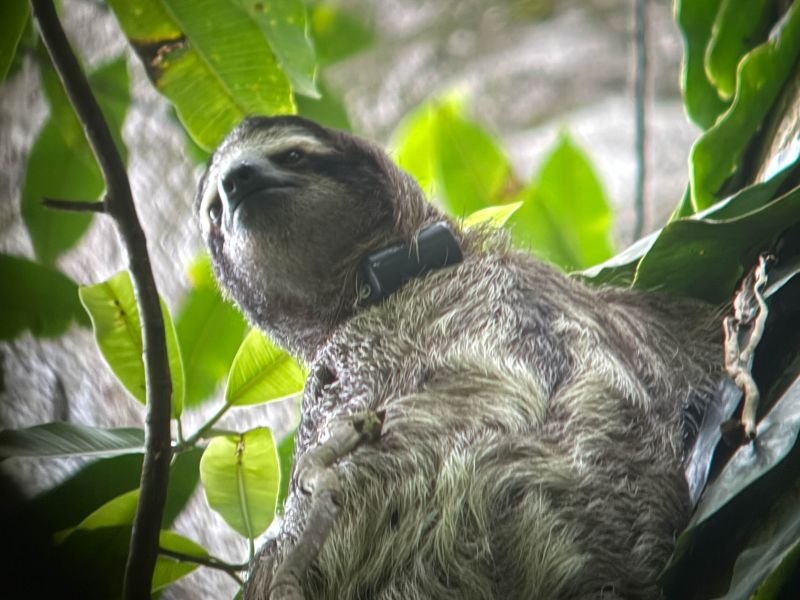
Despite heavy rains throughout the month, Luiza continued moving consistently and remained highly visible. She even provided quite a show for tourists, who often stopped to watch her, and to ask us what we were doing with our large tracking antenna.
She also spent time along the raised cliff forest patch (The so-called Talamanca Viewpoint). Due to slippery and potentially dangerous conditions caused by the rain, the team avoids entering that area during wet days. However, on clearer days, we were able to spot her safely from the viewpoint.
Luiza’s home range (see map below) measures no more than 100 meters at its widest point, and a public trail runs directly through it. Fortunately, this does not seem to disturb her, as she moves above it through the canopy, crossing safely from tree to tree.
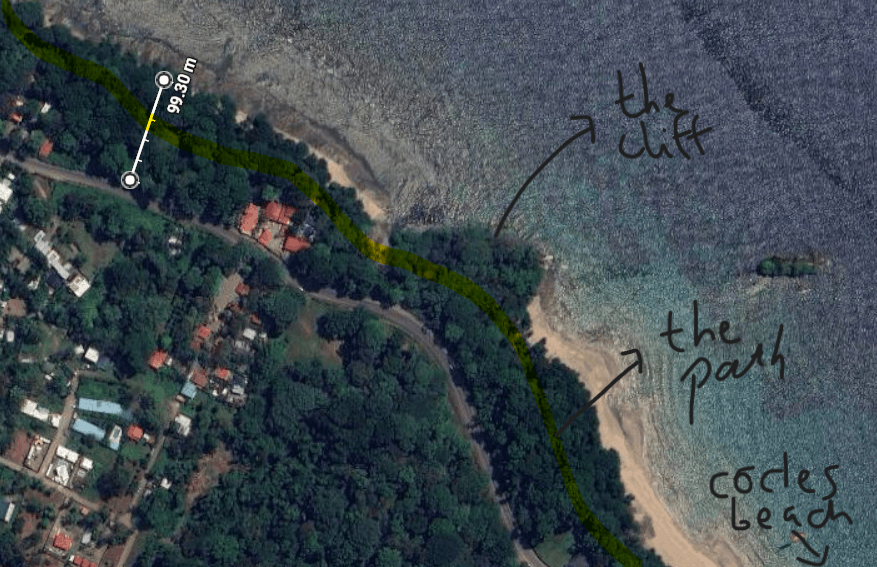
From the map, you can see how Luiza travels along the upper edge of the forest patch, up toward the cliff, and then down in the direction of Cocles Beach. Even within this relatively narrow strip of habitat, she makes full use of the vertical and connected canopy to navigate her range.
Toward the end of the month, Luiza was seen near the coastal forest trail that leads to Cocles Beach. While this is not a completely new area for her, she has been using some different trees there. Notably, she has been resting relatively low around 10 meters high over the last two days.
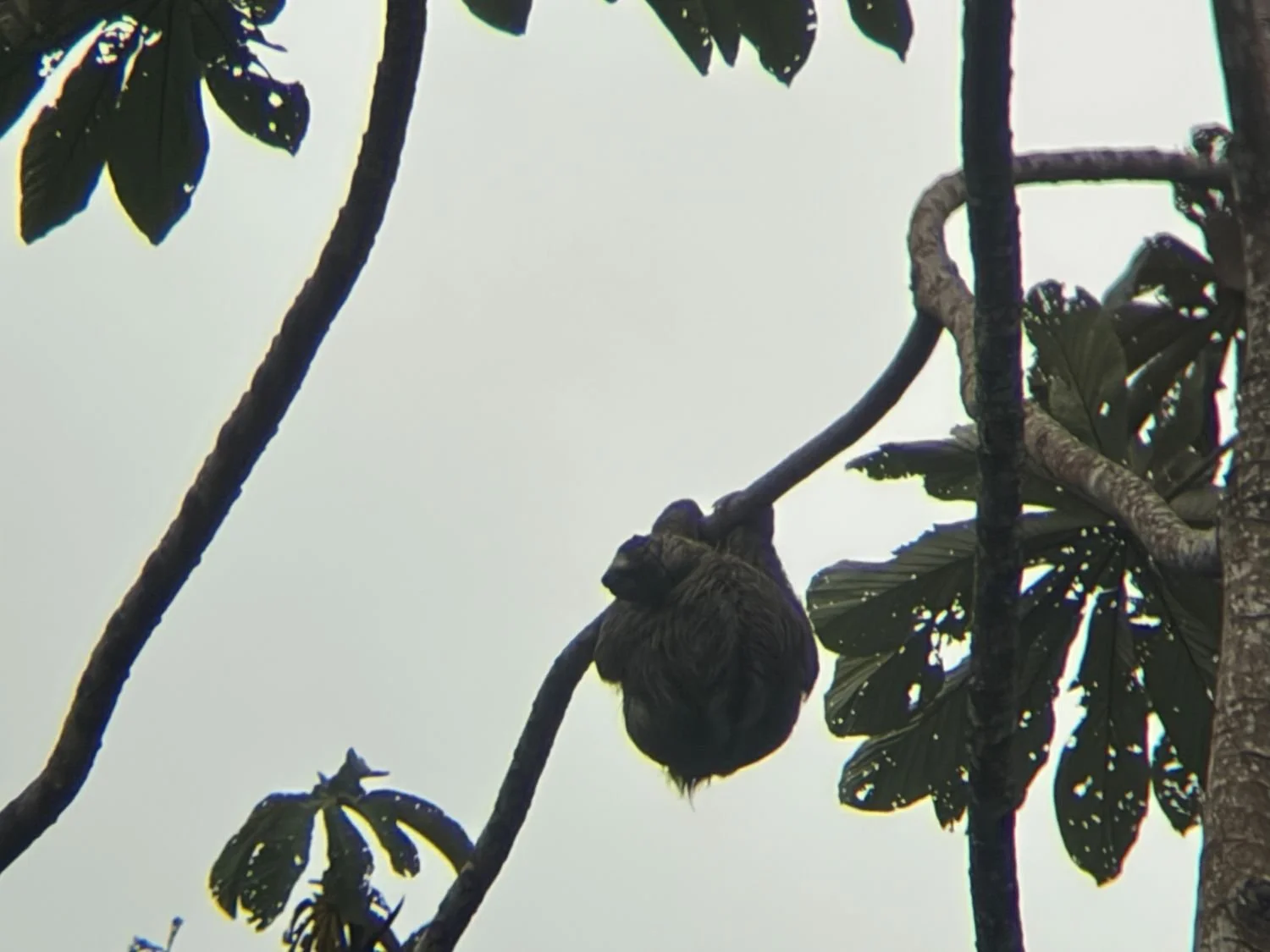
This is particularly interesting because female sloths often position themselves lower in the canopy around the time of birth. Giving birth high in the treetops can increase the risk of a newborn falling, so females may choose lower, more stable branches that offer better support and protection. In some cases, they also reduce their movements and remain in a smaller area as parturition approaches.
So this raises an exciting question: were we simply lucky with these lower sightings, or could this behavior indicate that Luiza may be preparing to have a baby soon? We are hopeful and will be watching closely in the coming weeks!