
Tango Uses Tiki’s Bridge | January ‘26
Tango wasted no time making an impression. His very first days of monitoring showed us a young two-fingered sloth learning to navigate a world that blends jungle life with the buzz of the town.
On a cloudy, windy day, we first spotted Tango in a new tree right at the edge of the Tasty Waves property. While monkeys and a three-fingered sloth shared the same tree, Tango chose the most sloth-appropriate response to urban chaos: a perfectly relaxed nap. Around him, a gardener trimmed plants and tourists wandered past. Life carried on, and Tango snoozed through it all.
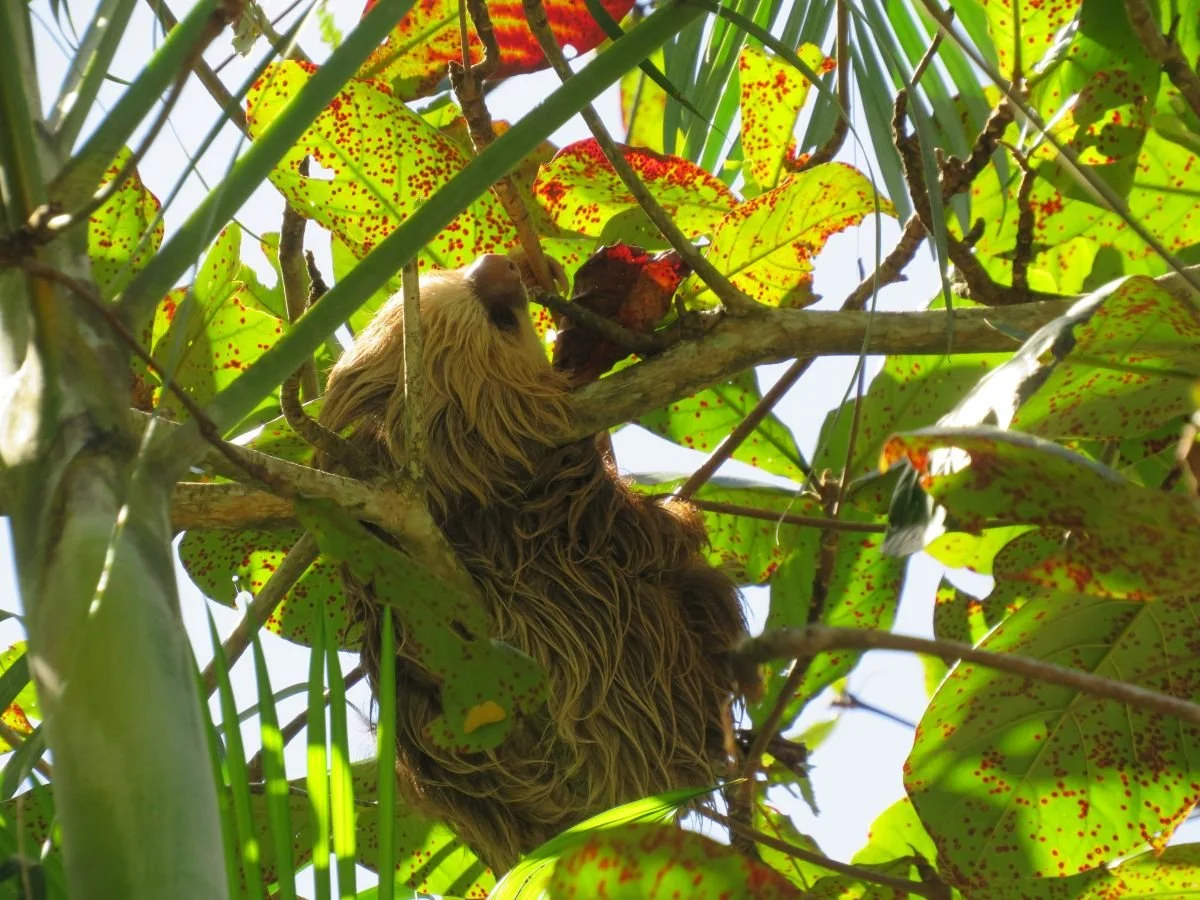
Tango being a sloth
The next time we saw him, Tango was already using the wildlife bridge we installed for his mum, Tiki, back in 2021! Tango crossed with surprising speed and grace, clearly confident navigating the man-made structures of the world he has been born into.
For many arboreal animals, new wildlife bridges can be unsettling at first. The unfamiliar texture underfoot, the different smells, and the sudden appearance of a structure where there was once open space can all trigger caution. Sloths, monkeys, and other tree-dwelling animals often take days, weeks, or even months before they fully trust and regularly use a bridge.
Sloths are known to have excellent spatial memory and rely on their surroundings to move safely through the canopy. Whether they navigate using visual landmarks, mental maps, or some combination of both is still one of the many mysteries we’re working to understand. What we do know is that consistency matters. When a structure remains in place and proves safe over time, animals begin to incorporate it into their mental understanding of the landscape.
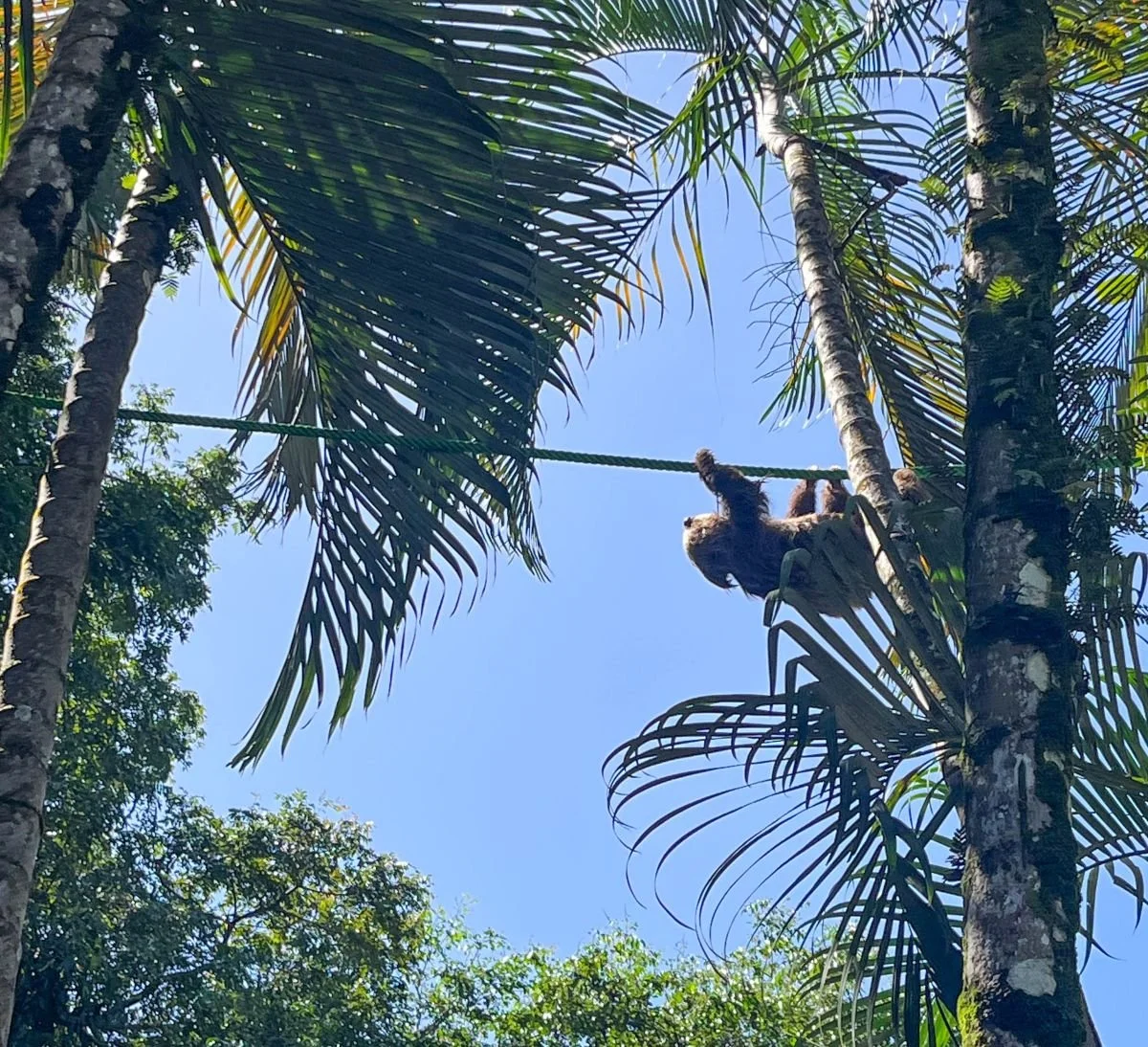
Tango using the bridge!
This learning process is called habituation. Through repeated exposure, without negative experiences, arboreal wildlife gradually learns that the bridge is not a threat, but a reliable and useful pathway. Eventually, it becomes just another branch in their daily commute.
Tango’s confidence may also be shaped by the world he was born into. Growing up in an urban environment, he was exposed to wildlife bridges, buildings, and human activity from the very beginning of his life. While he was still clinging to his mum’s belly, Tiki regularly used this very bridge, meaning Tango quite literally learned the landscape while being carried through it. For him, these structures aren’t new or strange, they’re simply part of home.
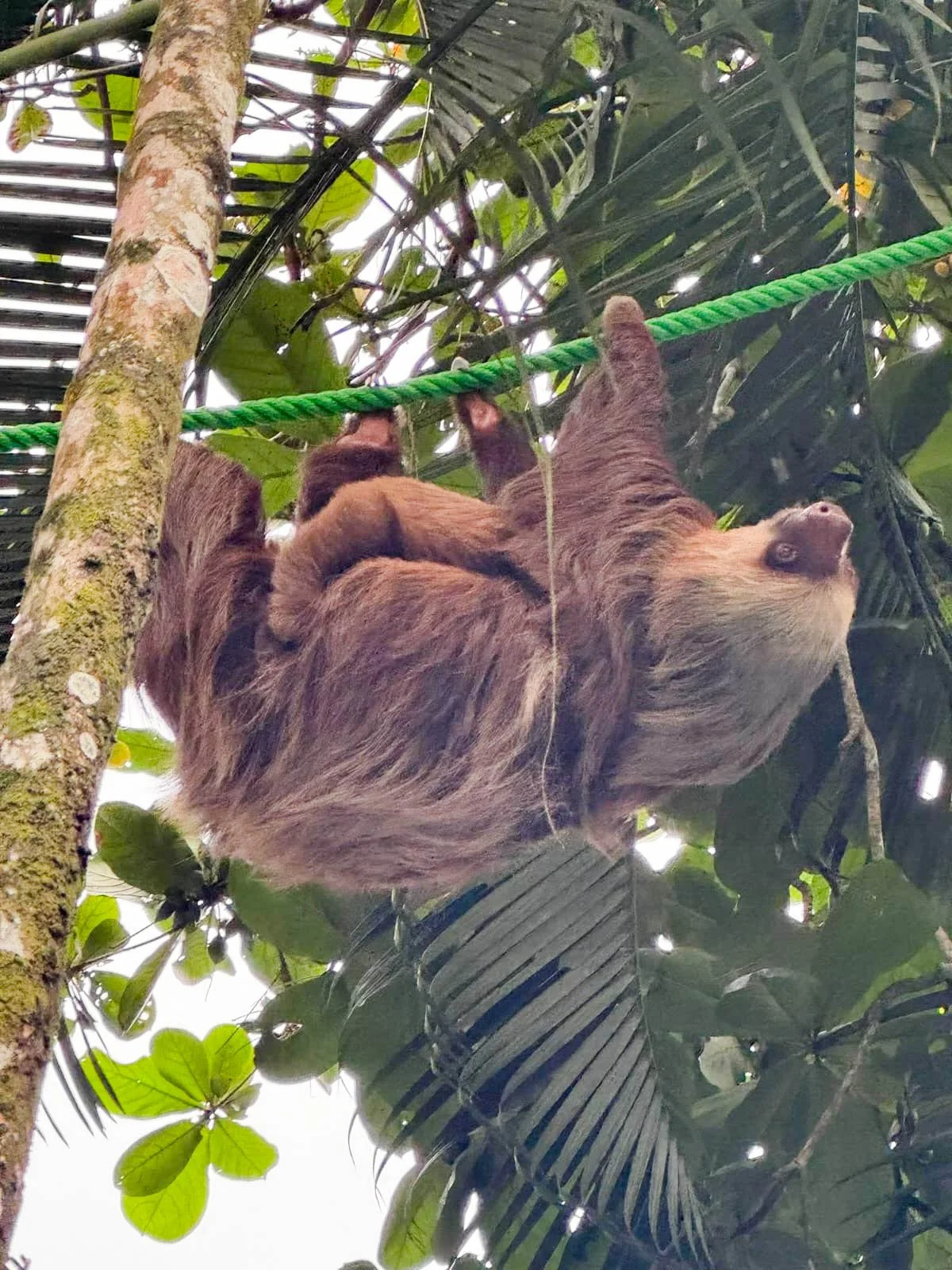
Tiki and baby Tango using the same canopy bridge
This is what makes Tango especially interesting to study. While many sloths need time to cautiously investigate a bridge before trusting it, Tango appears to have skipped that learning curve entirely. What is unfamiliar or even frightening to other animals is, for him, completely normal. Understanding how early-life exposure shapes habituation may help us design safer, more effective wildlife crossings for animals growing up in increasingly urbanised forests.
As he crossed, a small crowd gathered below, watching in awe. Tango, it seems, already knows how to draw an audience.
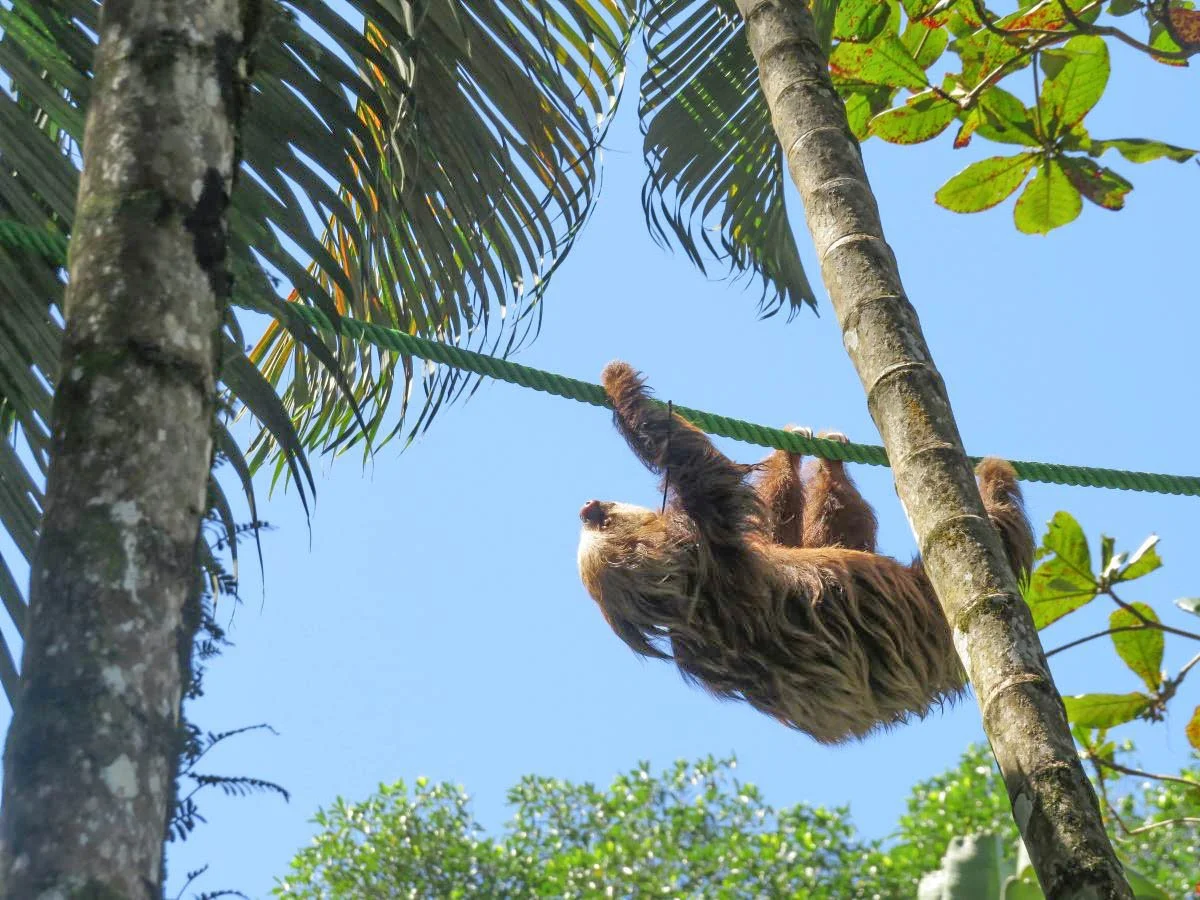
Can you spot the collar’s antenna?
Later, while climbing through another tree, Tango encountered two resting raccoons. There was a brief moment of dramatic tension (some stiff sloth posturing and a mutual “excuse me?”), before Tango calmly changed course and moved to a neighbouring tree.
The following day began bright and sunny, though the weather soon turned. As rain started to fall, Tango curled himself into a tight little ball and slept through the storm. By afternoon, as the skies cleared, he became active again, moving into a new almond tree that had previously been used by other two-fingered sloths. High in the canopy, surrounded by fresh leaves and the sound of wind in the branches, Tango settled in for another well-earned rest.
From nap-taking in busy urban trees to confidently using wildlife bridges, Tango’s first month shows he’s already mastering life between two worlds. And this is only the beginning.
