A Month Of Rescues | February ‘26
Since we collared Tango, he had been spending most of his time in the Tasty Waves Cantina area, using the same trees we know are shared by Tiki and Tender. He had been regularly crossing the wildlife bridge and was healthy and thriving!
At one point, we went about a week without seeing him. Although we were still receiving a signal from the antenna, it seemed to be coming from a neighboring property next to Tasty Waves, which we hadn’t been able to gain access to, meaning we couldn’t visually confirm his condition.
Shortly after, we found him at the base of a tree, partially submerged in stagnant sewage water and in very poor shape.
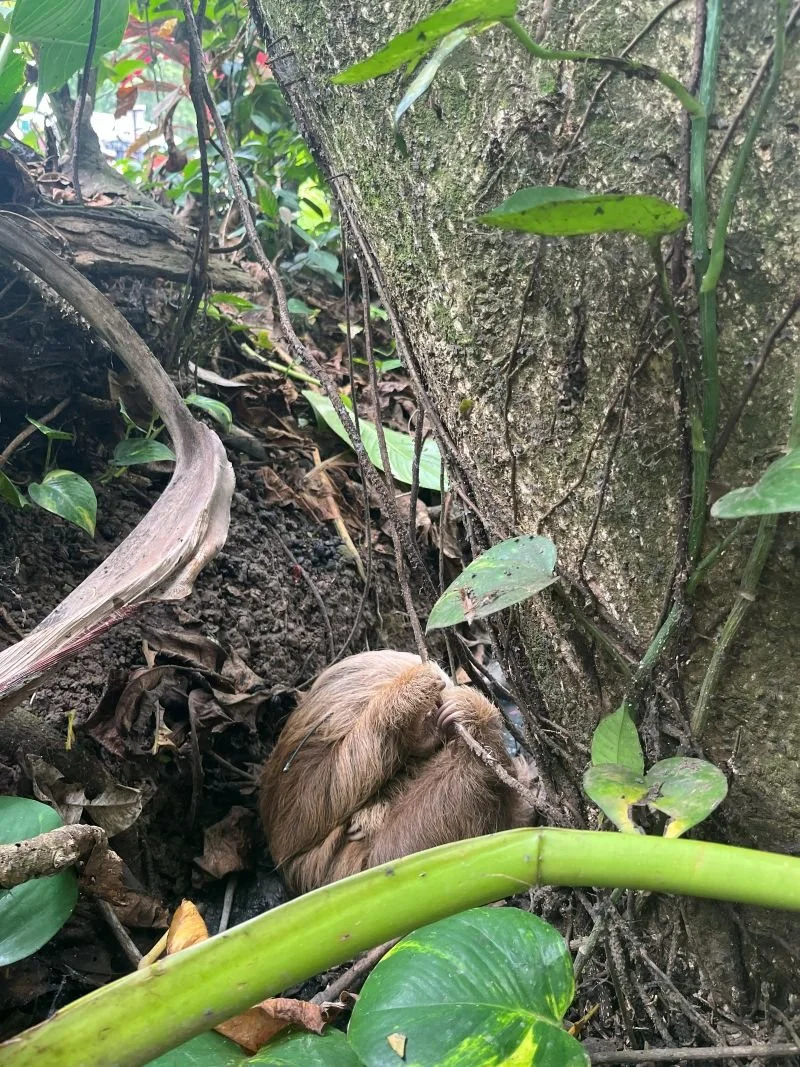
He had significant wounds, and it was immediately clear that he needed help. We made the decision to transport him to the rescue center, where he is now recovering from his injuries.
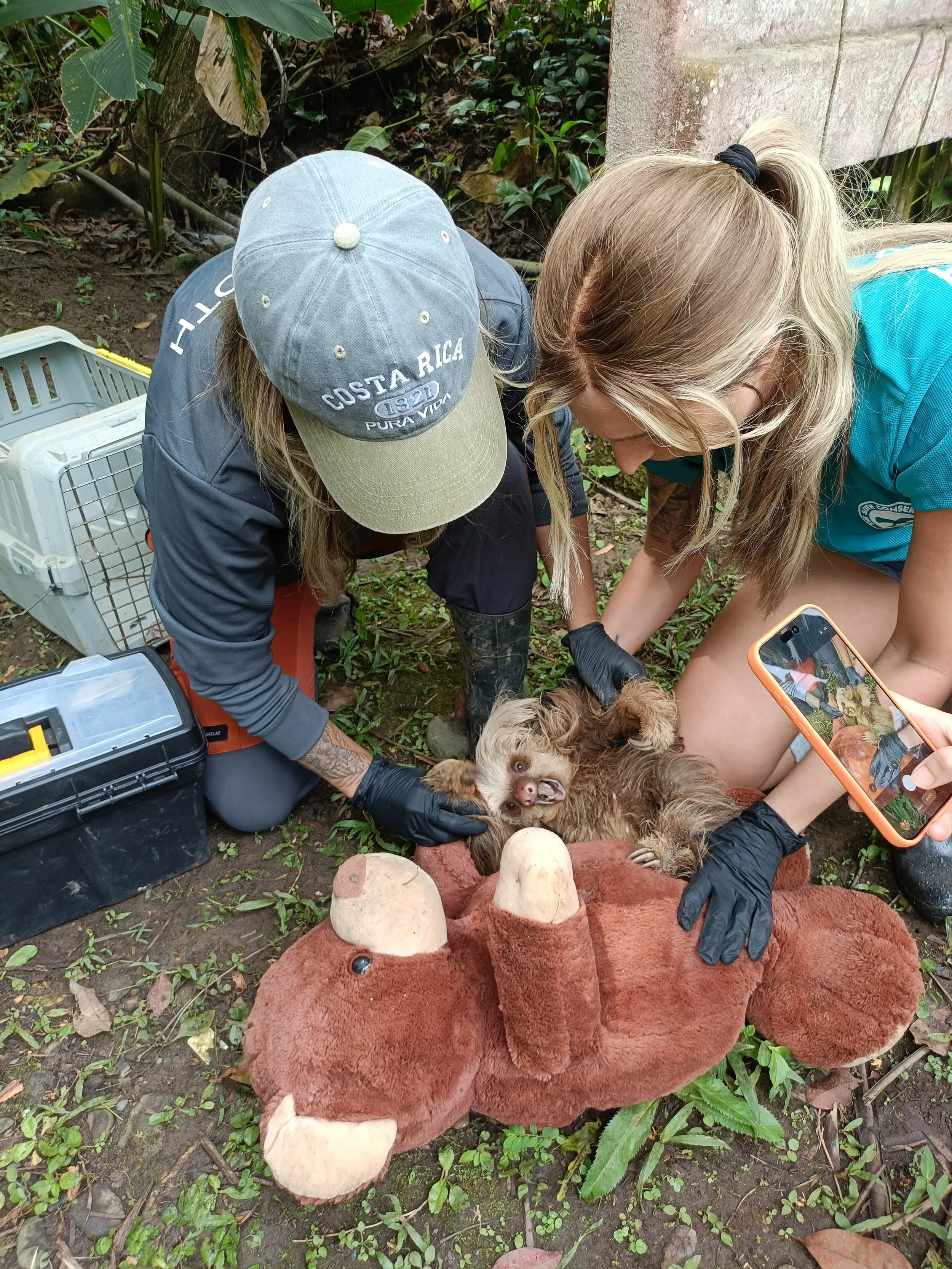
At first, we suspected a dog attack. Dogs are one of the biggest threats to sloths when they are on the ground. Sloths are extremely vulnerable at ground level - they move slowly, cannot defend themselves effectively, and have very limited ability to escape. In areas with free-roaming or stray dogs, attacks can happen quickly and are often fatal. This ongoing risk is one of the reasons we neuter and spay around 100 dogs a year as part of our effort to reduce the number of stray and free-roaming dogs in the area. By working to humanely control the local dog population, we aim to lower the risk of wildlife attacks and create a safer environment for sloths and other species.
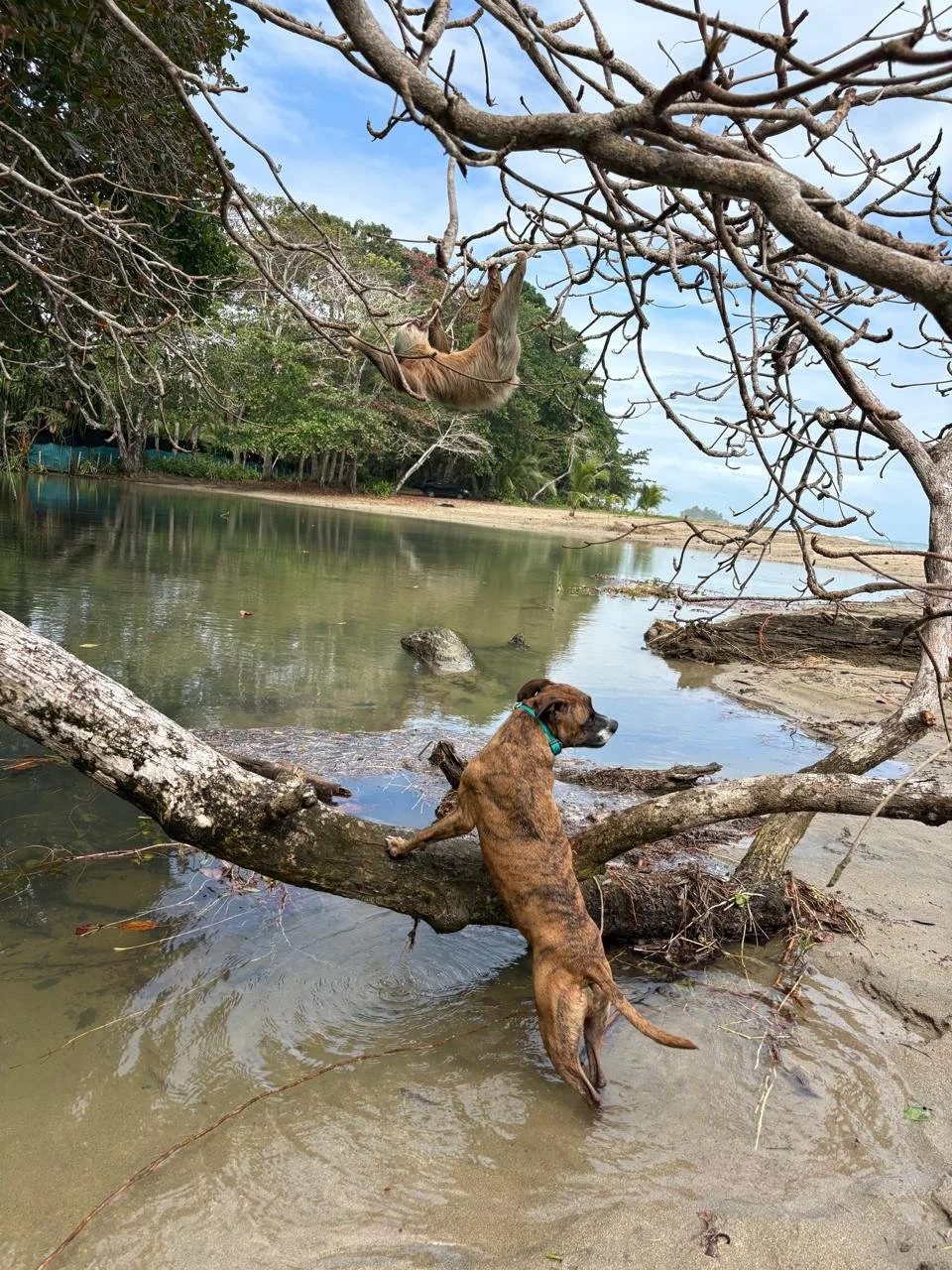
Read More | When Dogs Meet Sloths
On this occasion though, veterinarians determined that his injuries are more consistent with a raccoon attack. This is especially concerning, as we have been observing raccoons using the same trees as Pistachio in recent weeks.
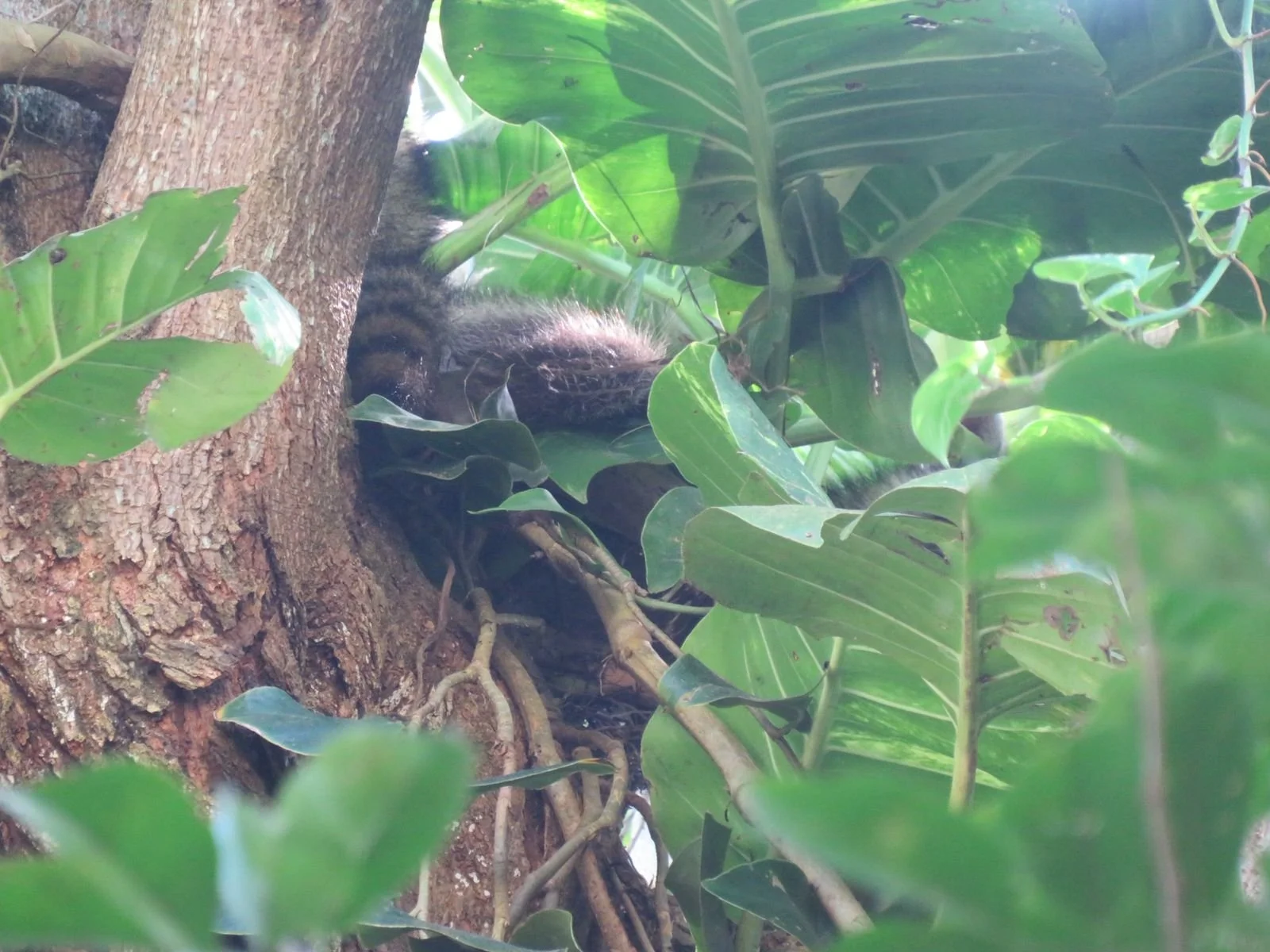
Raccoons are highly adaptable and thrive in urban and semi-urban environments. Their growing presence in this area reflects a changing landscape, one that is becoming increasingly urbanized. Human settlements, along with the trash and food waste that come with them, attract raccoons and support larger populations. As raccoon numbers increase, their territories begin to overlap more with sloths, creating new pressures and risks within what was once safer habitat.
Tango’s situation is a reminder of how environmental change and urban expansion can directly impact wildlife. For now, we are hopeful and grateful that he is receiving the care he needs, and we will continue to monitor his recovery closely.
Tiki Doppelganger rescue
Earlier this month, we responded to a sloth with what appeared to be a broken leg, initially believing it was Tiki (Tango and Tender’s mom). After safely rescuing the animal and conducting a proper examination, it became clear that the leg was indeed fractured, so we are glad we intervened!
Interestingly, once at the rescue center and examined more closely, we discovered that the sloth was not Tiki after all, but a male. He is now receiving care and recovering well.
Misidentifications like this can happen because sexing sloths in the field is not always straightforward. In many cases, males and females look very similar, especially from a distance or when they are high in the canopy. Unlike some other mammals, there are no obvious external features that make identification easy at first glance. In two-toed sloths, for example, the genitalia are not always visible unless you have a very clear angle, which is rarely the case in dense forest. Even in three-toed sloths, where adult females may have a dorsal patch, that marking is not always visible depending on posture, age, or lighting conditions.
When a sloth is partially hidden by foliage, curled up, or observed briefly, it can be challenging to confidently determine sex without a closer examination, which is something we only do when absolutely necessary and safe for the animal.