Tracking Tender: What We Learned From His Nocturnal Routine | May ‘26
We know many of you have been missing your regular Tango updates, and we cannot wait for the day he is back out in the wild where he belongs. But for now, we wanted to share something very special with you, some fascinating data we collected from Tender, Tango’s brother!
Many of you long-time Tango adopters may remember Tender. Before we were unfortunately unable to continue tracking him, we managed to collect a large amount of information from the data logger attached to his collar. We have now been able to analyse that data, and the results are proving to be incredibly interesting indeed…
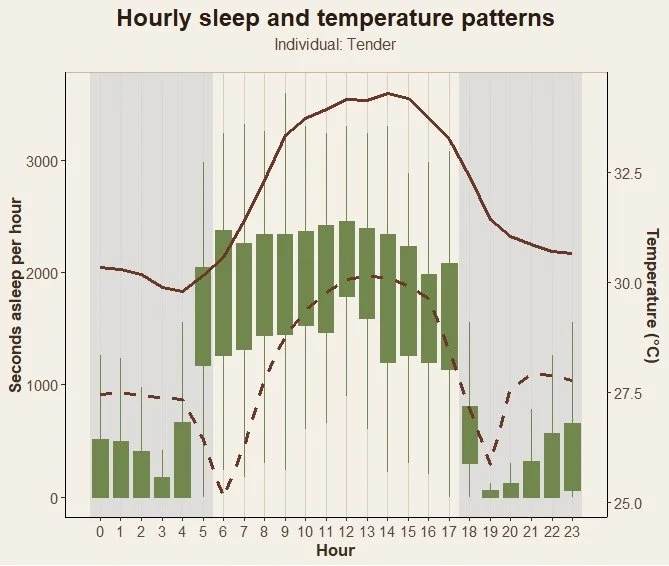
Grey shading = night
Green bars = sleep that may occur that hour
Thin green lines at top and bottom of bars = extremes recorded at that hour for that sloths
Solid line = microclimate temperature recorded by datalogger
Dashed line = atmospheric temperature recorded by remote weather stations
The green bars in the boxplot below show how much of the day Tender was likely to spend sleeping. Based on what we know about two-fingered sloths, we would expect him to be more nocturnal, but in Tender’s case, the pattern is especially pronounced.
The data revealed that Tender was almost completely nocturnal, spending the vast majority of daylight hours resting and becoming active almost exclusively at night.
One possible explanation for this behaviour is the environment in which Tender was living. He inhabited a particularly urban area with heavy human activity and high traffic levels, which may have reinforced an already nocturnal tendency into a very strict nighttime routine. By limiting activity during the day, Tender may have been actively avoiding humans and disturbance.
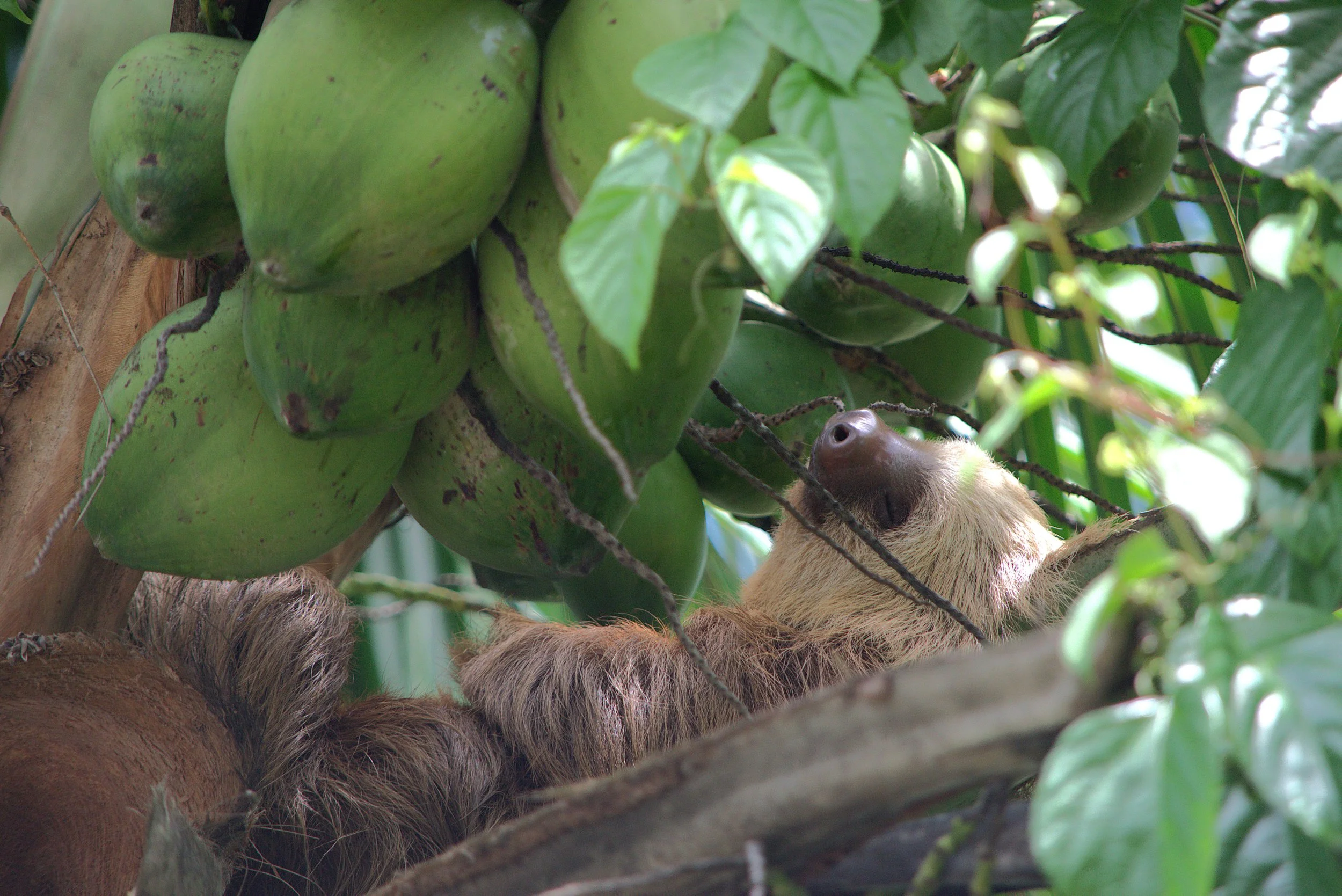
Tender, fast asleep during the day.
Interestingly, similar behavioural changes have also been observed in other urban sloths, suggesting that sloths may adapt their activity patterns in response to increasing human presence.
This kind of information is incredibly valuable for conservation. Every piece of movement data helps us better understand what sloths need to survive in increasingly human-dominated environments. It can help guide where wildlife bridges should be installed, which habitats are most important to protect, and how we can better work with local communities to promote awareness, encourage coexistence, and help people protect the sloths living alongside them.
Tango may still be recovering for now, but our research into and protection of sloths continues every single day.
Thank you for being part of this important work and for continuing to support sloth conservation alongside us.