December 2025
Update #52 of The Urban Sloth Project!
December brought familiar routines, unexpected movements, and a few extra challenges, all offering valuable insights into how sloths adapt to increasingly urban and fragmented landscapes.
Pistachio
This month Pistachio made his slow return back over towards Caribeans. He clearly decided that nothing quite rivals the comfort of his favorite spot: the outside of the wooden wall of the Caribeans cafe. As always, he took his time heading back there, spending time first in his usual Jabillo tree, then drifting between beach almonds and coconut palms between Tasty Waves and Caribeans.
Thanks to a volunteer’s comment, we realized that Pistachio has the spirit of an old man napping in a reclining chair. And in more sciency news, we got a chance to collect some poo samples which will give us valuable information on genetics!
Luiza
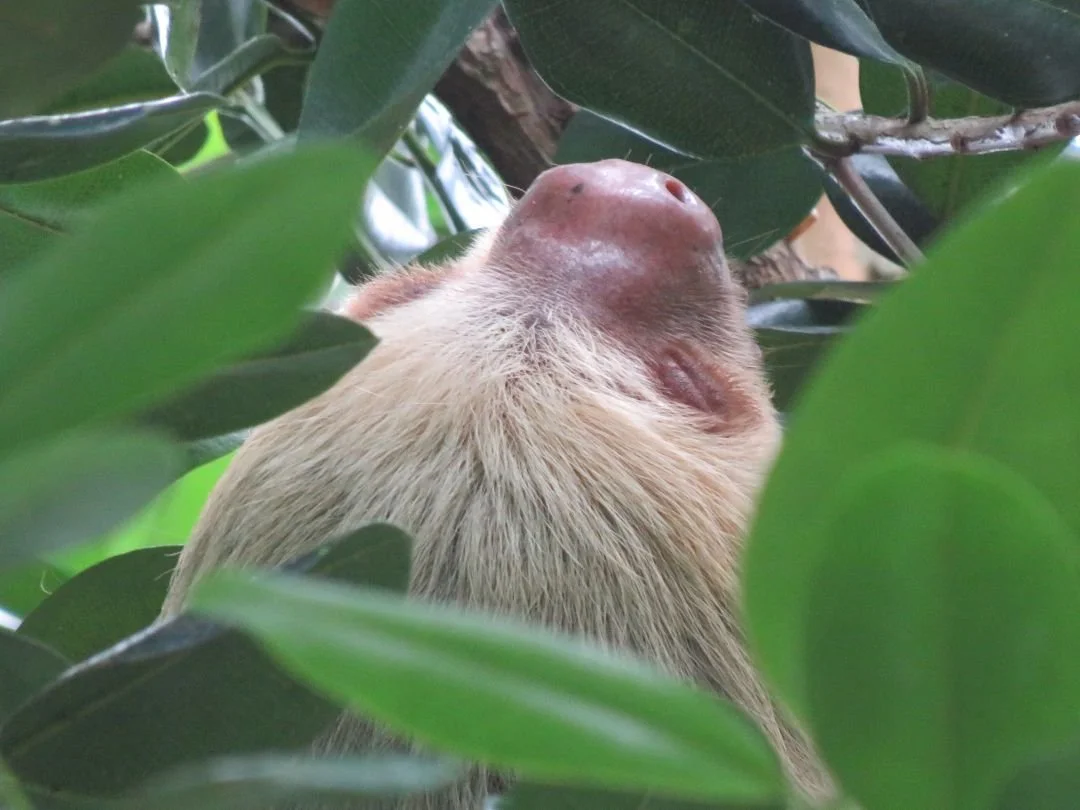
The few hot days at the start of the month gave us a chance to get some good sightings of Luiza. As usual, she was noticing us long before we were spotting her. When she’s awake, she peers down with that calm, curious expression that makes it feel like we’re the ones being studied.
Tracking during cloudy weather added another challenge. The bright, washed-out sky makes it incredibly hard to spot sloths tucked into dense canopy, everything turns into the same silhouette. By the end of November, cloudy days were the norm. Thankfully, at least it wasn’t raining. Luiza’s signal consistently came from one of her familiar areas, but this particular spot is notorious: dense growth, awkward angles, and too many vine clusters disguising perfectly sloth-shaped lumps. Even knowing she was right above us, we often couldn’t get eyes on her.
Deborah
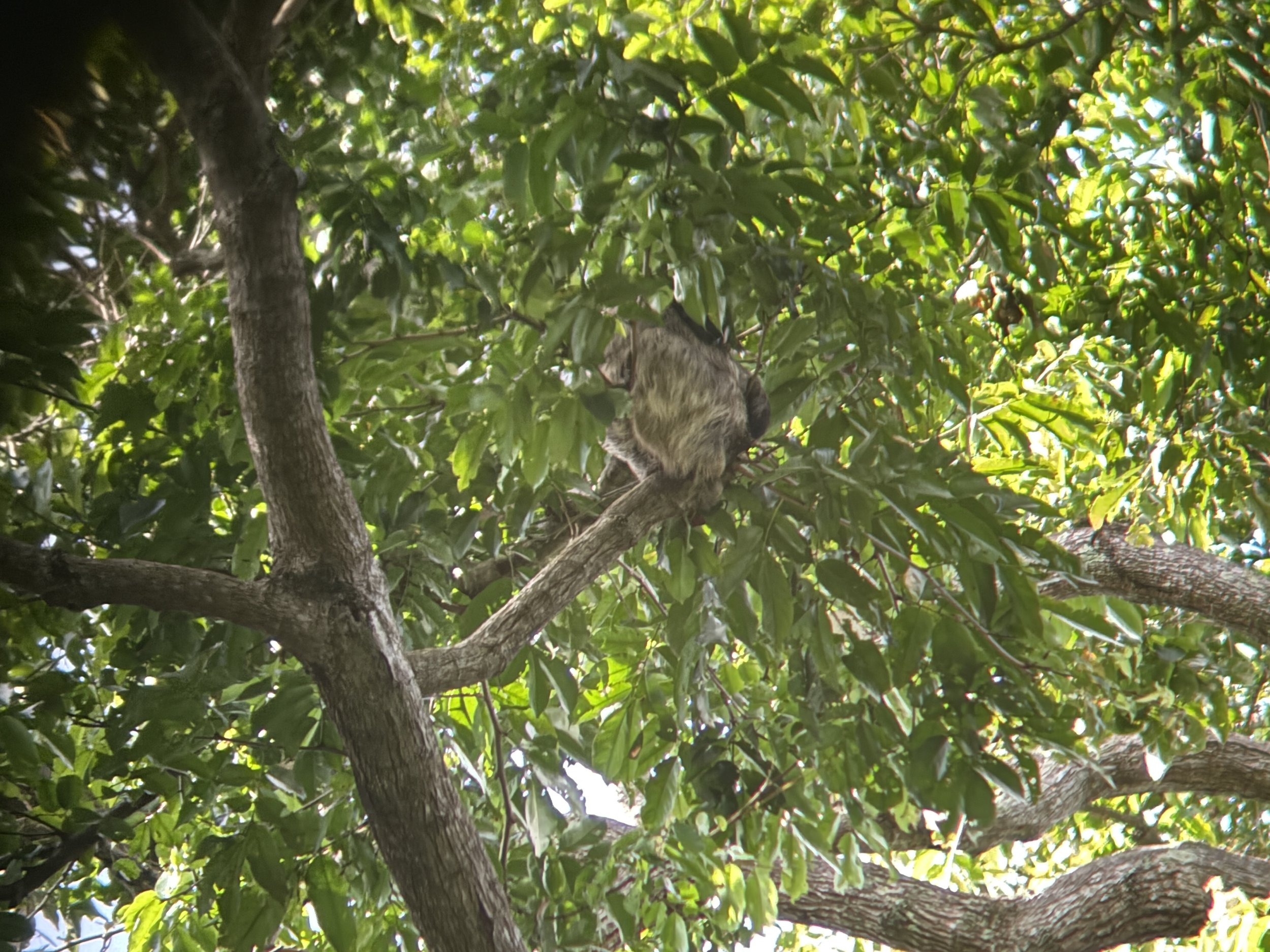
Debbie is doing well. Her small forest patch seems more than enough for her and the several juveniles she shares her home range with. As you know, Debbie lives in a narrow strip of forest between the beach and a busy road, and her seemingly nonchalant attitude towards this has given us valuable insights into how sloths cope with urban disturbances. With the holiday season approaching, we’re keeping a close eye on the already rising traffic levels and monitoring how this increase may influence her behaviour.
Tender
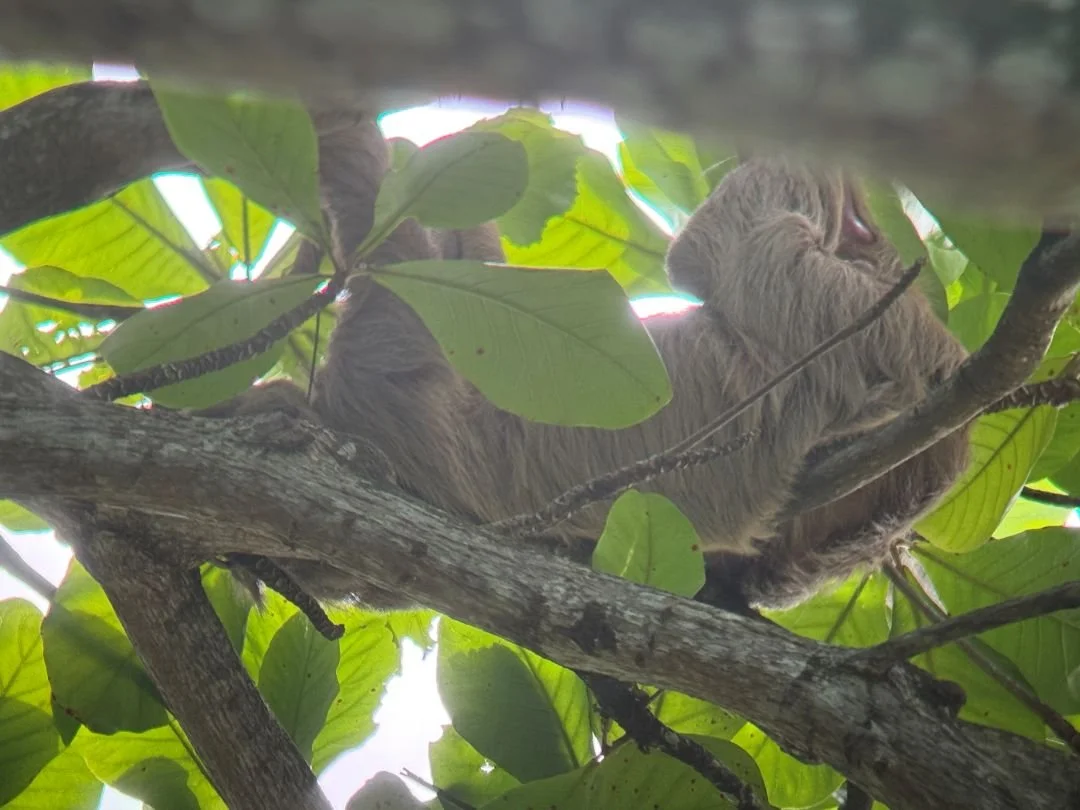
We have been struggling to locate Tender, as mentioned in our previous update, after he ventured away from his usual territory.
At the beginning of the month, the signal from his collar started behaving strangely again, possibly due to a malfunction. After some investigation with neighbors and nearby businesses, we found out that Tender had been seen walking along the ground at Baya Baya, a lovely beachfront café located about 300 meters from his original home.
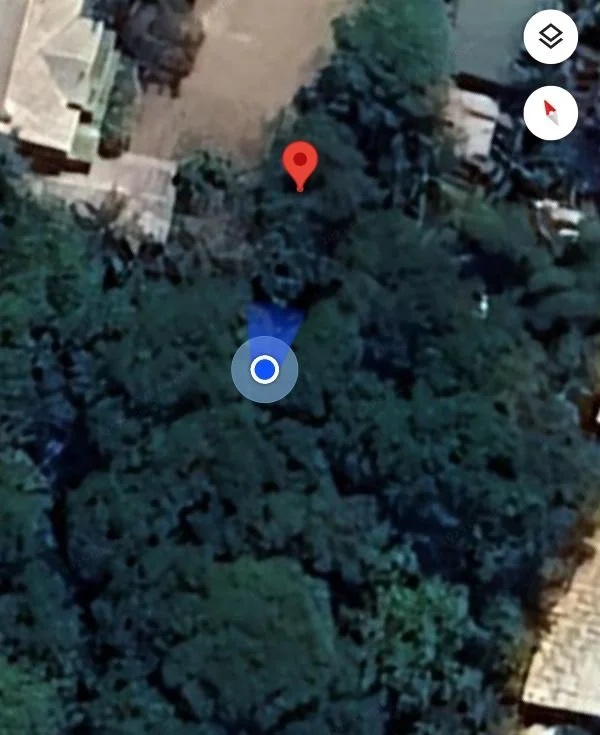
He was then last spotted moving into a nearby property full of almond trees next door to the café. The owner has five German Shepherds, so we are really hoping Tender stays high up in the trees. Dogs are one of the many urban risks sloths face here. Thankfully, the signal from his collar later appeared to return to normal.
Tender continues to show us just how challenging wildlife tracking can be in increasingly urban areas. At the moment, we are struggling to gain access to the property where his collar signal is coming from, so for now, it is a waiting game.
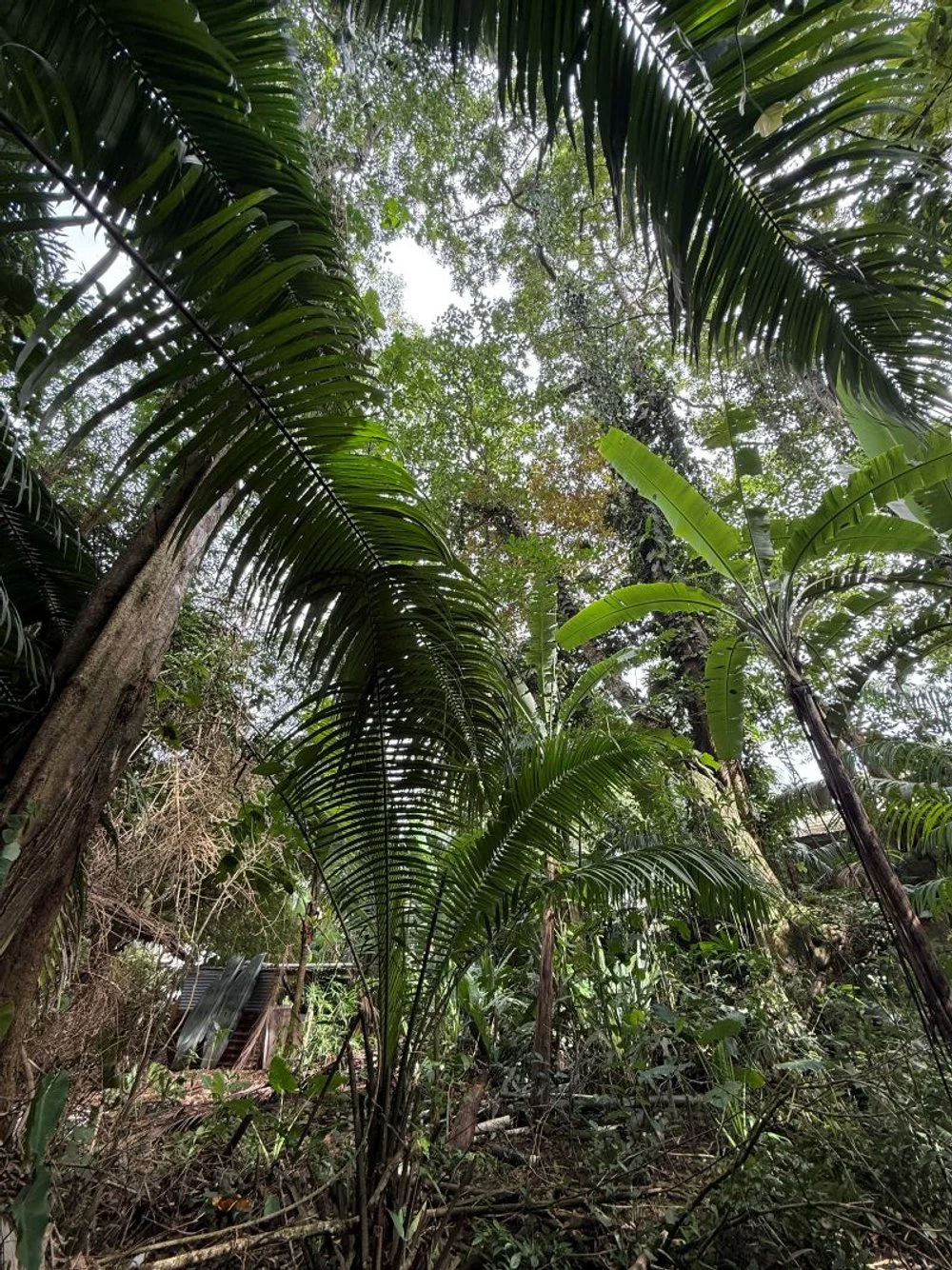
A sneak peek at the property, where we can't venture further.
Primary Forest Sloths
Ponder
Added on top of the harsh weather conditions this month, is the limited activation time of Ponder’s collar signal: only on Wednesdays. Fortunately, his collar is a GPS type, which means that even when we can’t reach him, we still receive his location throughout the month. The downside: we collected almost no observational data.
At the start of the month, the team, including Becky, who joined us that day, was surprised to find that Ponder had moved into a completely new area. It was new for him, but not for us: the team has surveyed this zone during census work. However, we rarely enter this forest patch, and there are no established trails. A steep, muddy slope took nearly 15 minutes of slipping and scrambling just to climb the first 10 meters. Although we didn’t spot him again in that location, the GPS data shows he has returned there several times!
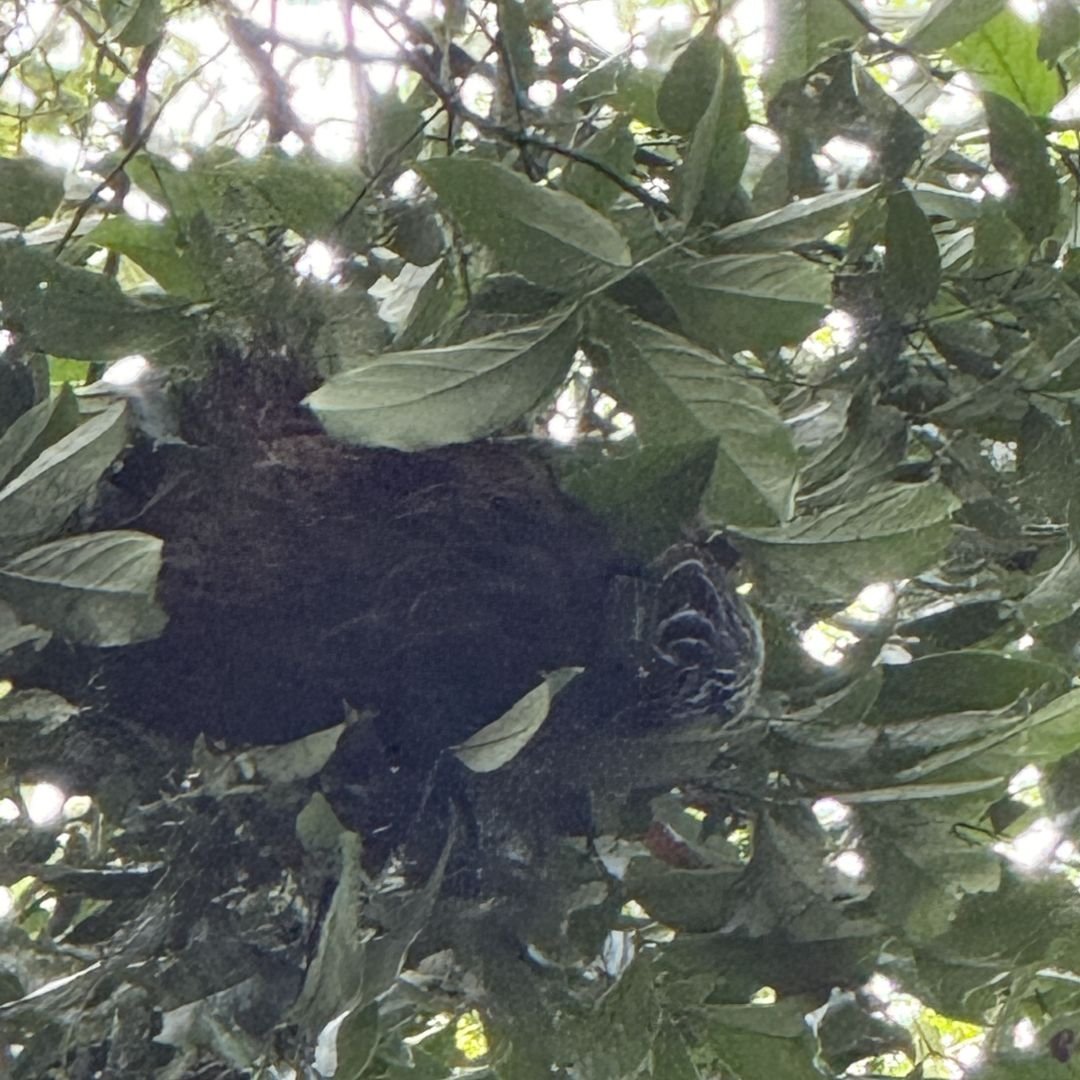
Later in the month, while we were in the primary forest searching for new sloths to collar, Dayber unexpectedly spotted Ponder by pure luck. This was especially funny because it wasn’t a Wednesday, meaning his collar wasn’t emitting any signal. Still, the collar was clearly visible (it’s much larger than the VHF collars), so there was no doubt: it was definitely Ponder.
Pipa
This month, tracking in the primary forest proved especially challenging. With part of the research team away on a field trip to La Selva, both tracker availability and vehicle logistics were affected. Adding to the difficulty, the frequent rainy days made the trails extremely muddy and often unsafe. As always, we prioritize dry days for tracking, but even after a heavy storm the day before, we still head out whenever conditions allow.
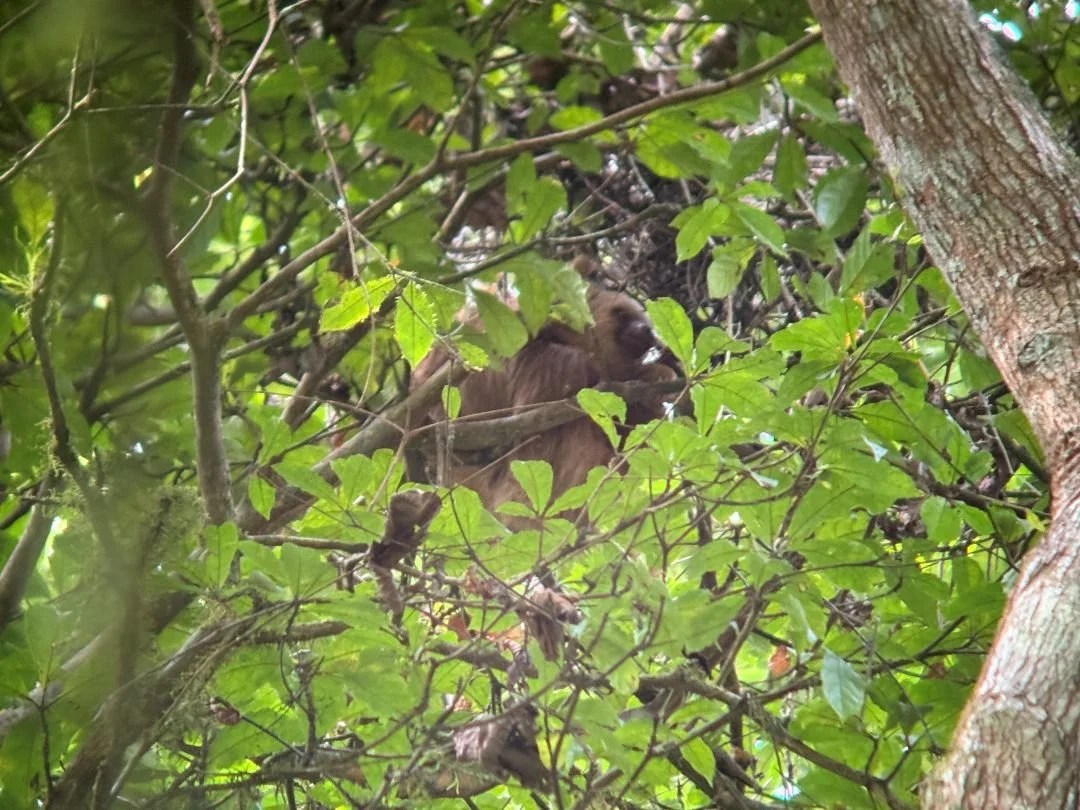
However, we are glad to report that after a full month of loyalty to one single tree, Pipa was spotted in a new tree. José managed to locate her in a large vine-covered tree, where the bright sky behind her silhouette made the little ball of fur just about possible to identify. This was a completely new tree for her! For the rest of the month, her signal consistently came from the same general area, but we couldn’t get another visual, those dense vines keep her well hidden. We’re hoping for clearer views (and less mud) next month.
Chill
At the beginning of the month, Chill was doing exactly what her name suggests, resting high up in one of her favorite large trees. It was very close to the area where we first collared her earlier this year, and José was able to spot her quickly from the road, as she was perched on the same familiar branch fork she has used before.
Toward the end of November, Chill’s signal continued to come from inside the forest, near trees she had used in the past. What caught our attention was that the signal appeared to be coming from a very low area, where there were no obvious trees. José wondered whether Chill might be on the ground briefly, perhaps to defecate or move between trees, but despite searching, she was not spotted. Importantly, the mortality signal was not active, indicating that she was still moving.
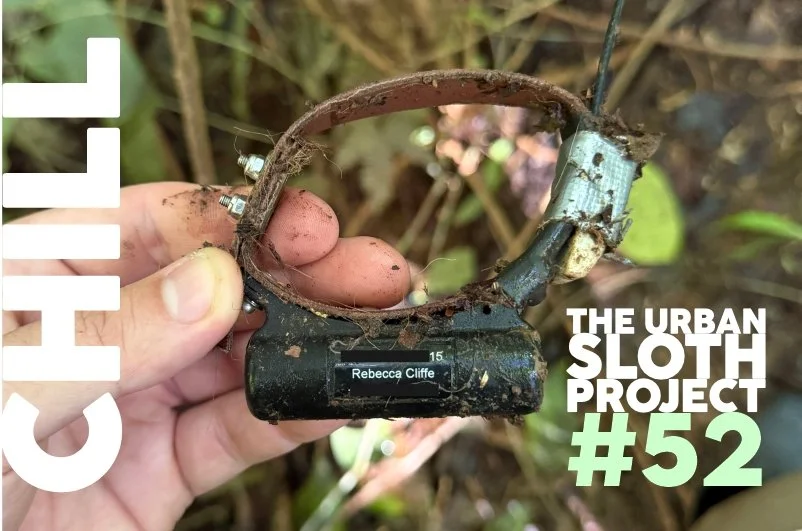
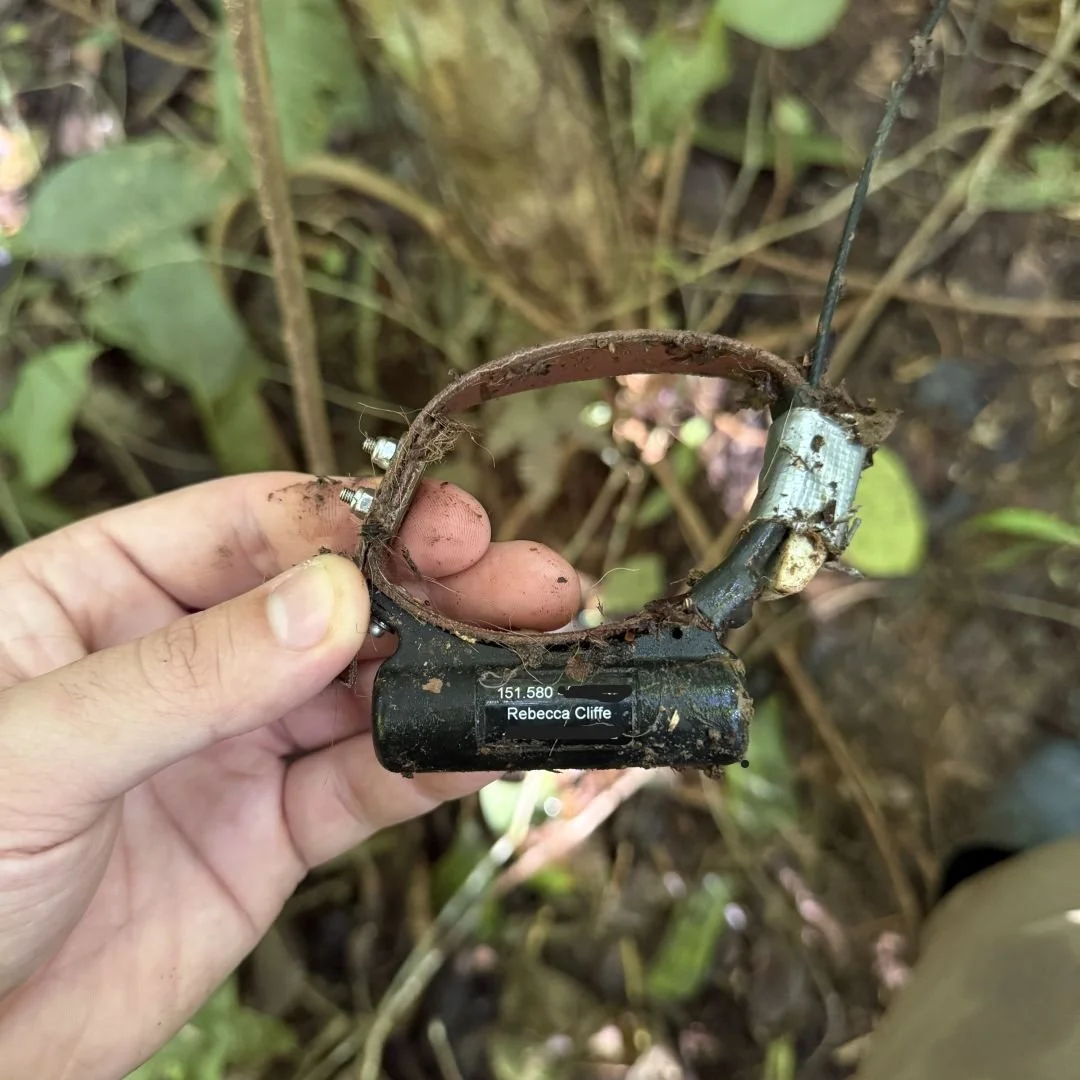
Then, in the first week of December, the mortality signal was triggered. This is the signal a collar emits when it has not moved for an extended period. José returned to the area, preparing himself for the worst. Instead, he found the collar lying on the ground.
It is rare, but not unheard of, for a sloth to manage to remove a collar, and this appears to be what happened here. Unfortunately, this means we have completely lost track of Chill. While unexpected, it marks the end of our ability to follow the small, slightly cranky sloth we came to know as Chill.
Thank you, truly, for standing with us and for supporting our work so consistently. Your generosity gives us the stability to plan ahead, to keep learning, and to protect sloths and their forest homes day after day. As we step into a new year, I wish you a gentle, hopeful start to what’s ahead, and I am deeply grateful to know that you are part of this journey with us.
All the best from the jungle,