March 2026
Update #55 of The Urban Sloth Project!
Pistachio
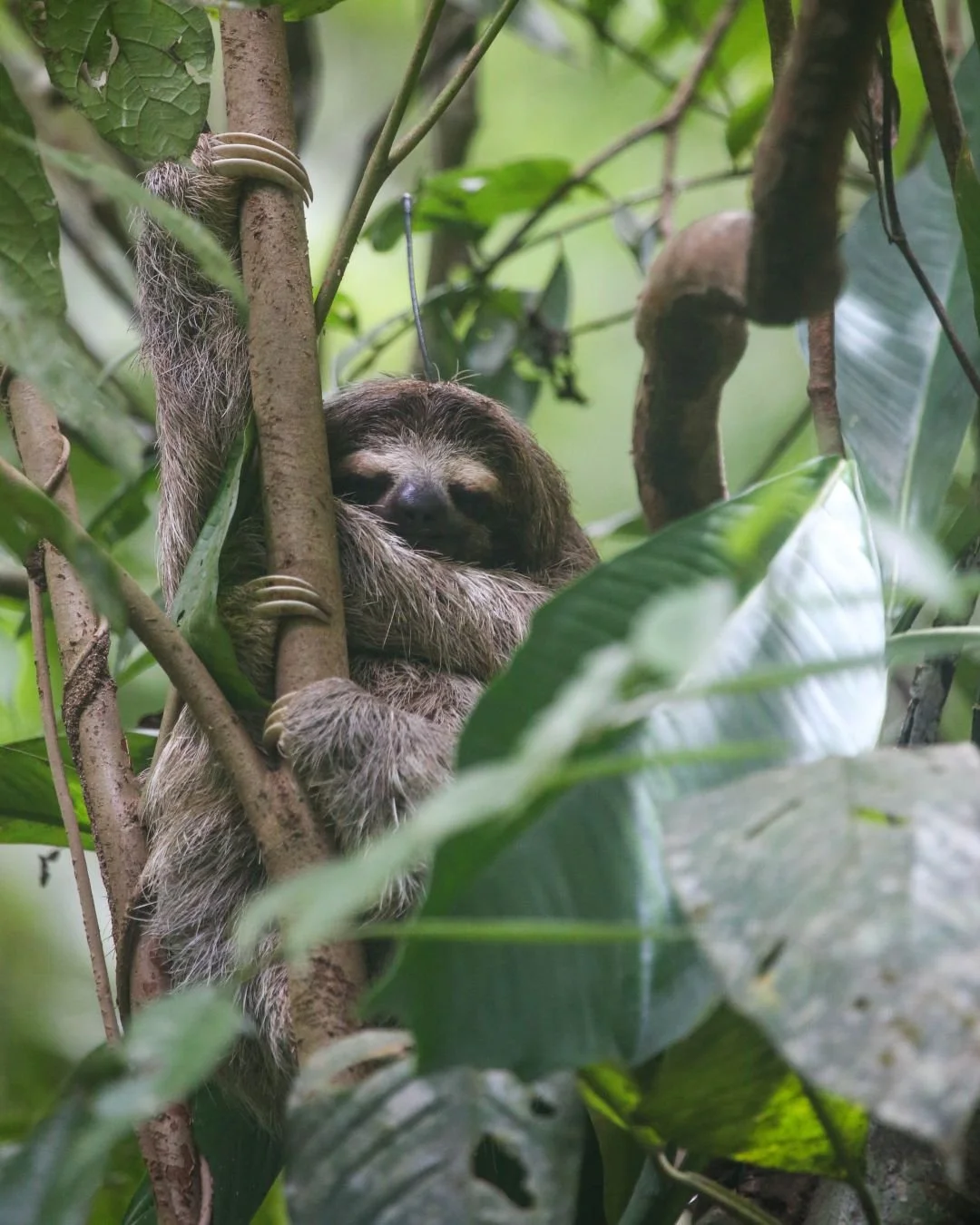
This month brought several sightings of Pistachio, who continues to spend most of his time in the private property beside Tasty Waves. He appears to be doing well and moving occasionally between nearby trees.
On one warm and sunny day, Pistachio was found sleeping in one of his favourite trees alongside two other sloths. Sharing a tree is not something we see every day, so it was a special observation to find him resting so peacefully with neighbours nearby.
During another visit on a cloudy day, Pistachio was located in a different tree than usual, suggesting he had moved slightly within his range. As usual, he was fast asleep and completely unbothered by the team observing him from below. On another occasion, he was found resting in the same tree as the mama Bradypus, again calmly sleeping through the team’s monitoring.
Later in the month, Pistachio seemed to explore a new favourite hangout spot near the property next to Tasty Waves. On a warm, sunny day he was spotted sleeping in a new tree there, hanging from vines in such a way that he looked almost like a little teardrop suspended in the canopy.
At times he was a bit harder to observe. During one tracking session he was tucked away deep in epiphytes, making it difficult to clearly see him or confirm his collar. On another cloudy day following a rainy night, Pistachio had moved again and was found sitting quietly among the vines. With his damp fur and slightly hunched posture, he looked a bit like a wet and grumpy cat waiting for the forest to dry.
Throughout the month, Pistachio was most often seen resting peacefully, enjoying long naps high in the trees and occasionally shifting between nearby spots. It’s wonderful to see him comfortable in his territory and making use of several trees within the area.
Luiza
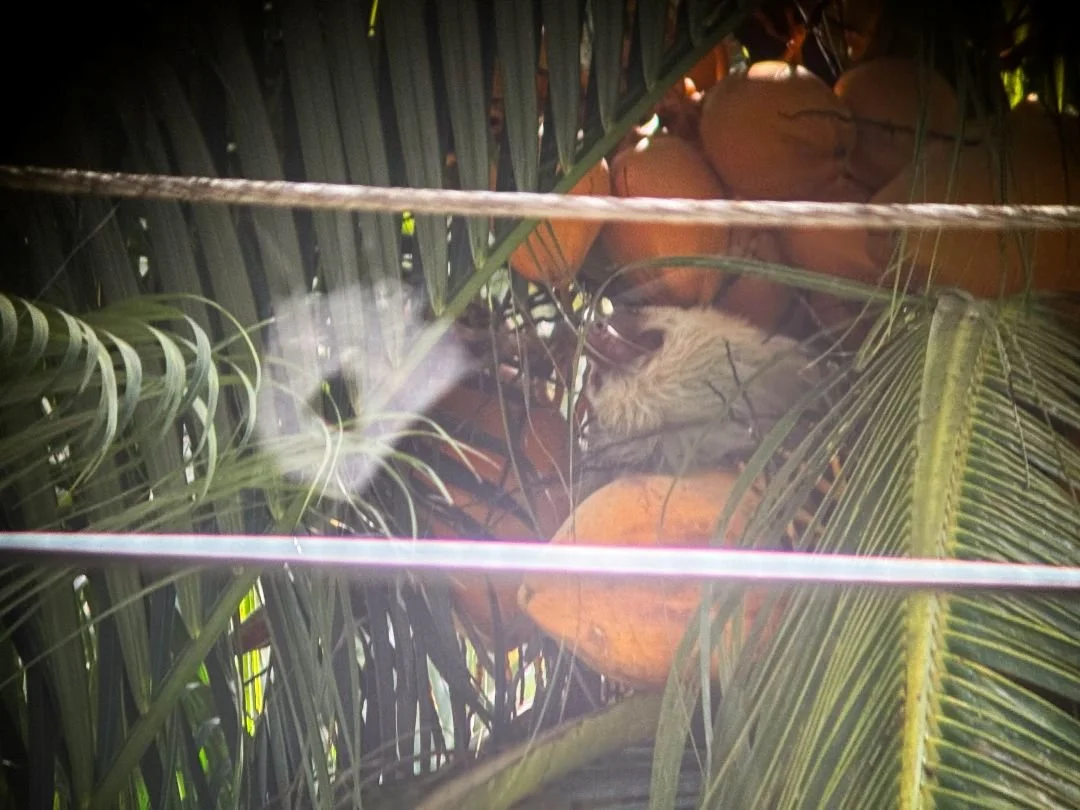
Luiza has been staying true to her unpredictable and evasive nature this month. Last month we had a strong feeling she may be close to giving birth as she was spending a lot of time low in the trees, but this month, her patterns were not that consistent, so we are unsure as to whether she is indeed pregnant or not! Some days she’s easy to find. Recently, we spotted her awake and alert in a new tree, sitting upright and curiously looking around the forest. After a while, she slowly climbed down the trunk to explore a bit, paused to scan her surroundings, and then calmly made her way back up into the canopy.
Other days… Luiza seems to enjoy a good game of hide-and-seek.
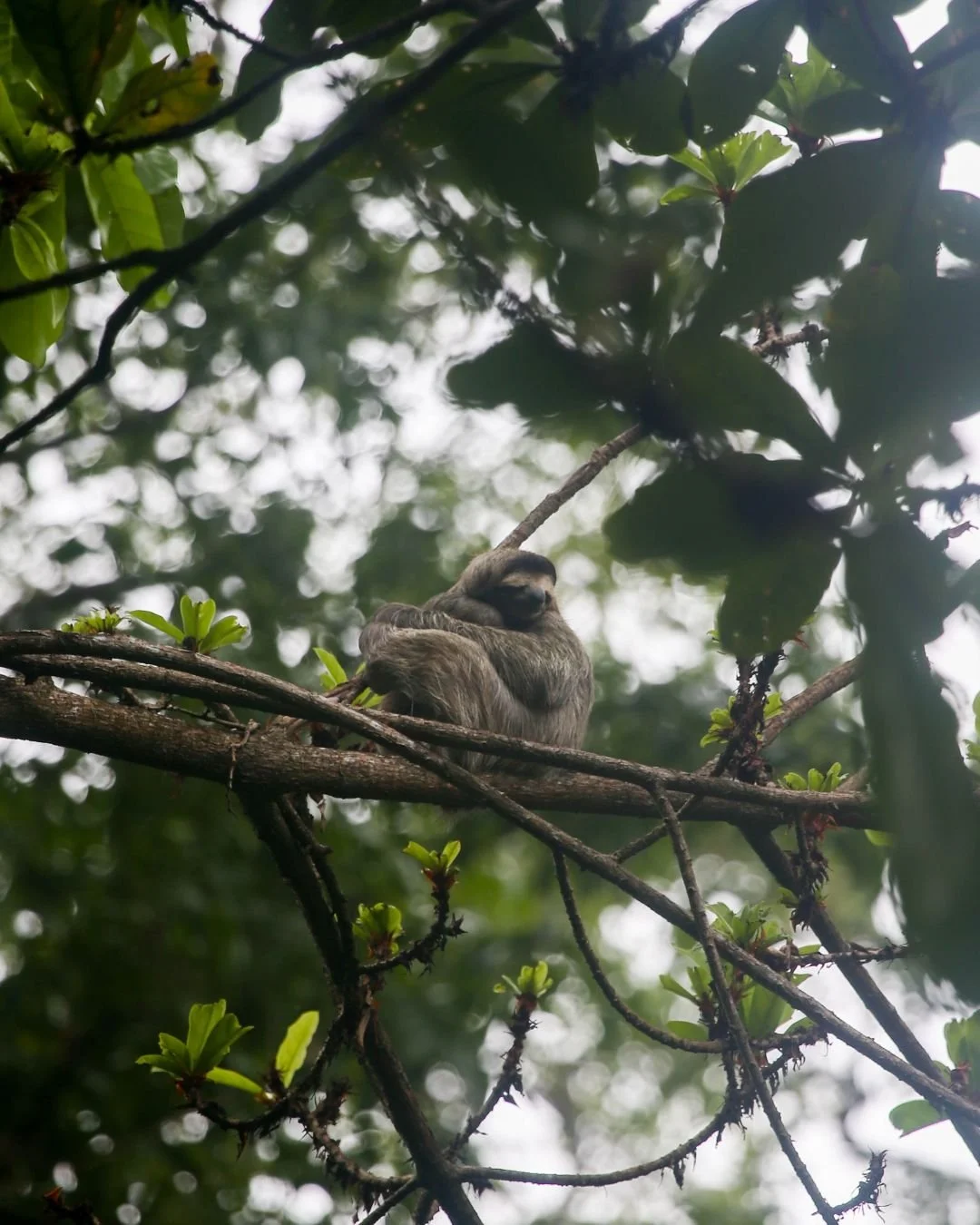
On several tracking days we picked up very strong signals from her collar, sometimes as high as 99, which meant she was definitely nearby. But despite knowing exactly which tree she was in, spotting her was another story. Once, the team found two sloths sharing the same tree, and although one of them was very likely Luiza, she was sitting in a position that completely hid the antenna and her face, making it impossible to confirm.
There were also days when the signal was strong but Luiza herself remained invisible. She was most likely resting high in the canopy or tucked away among dense vines, especially after rainy nights when sloths often seek extra cover.
The team even followed her signal deep into the forest at times, certain she was close, yet she managed to stay perfectly hidden.
But every now and then, Luiza makes things easy again. On a recent visit, she was back in a familiar tree and very active, moving around the branches, giving the team a clear view.
Deborah
Debbie has been spending plenty of time in one of her favorite roadside trees, a spot the team has come to know well during recent tracking days.
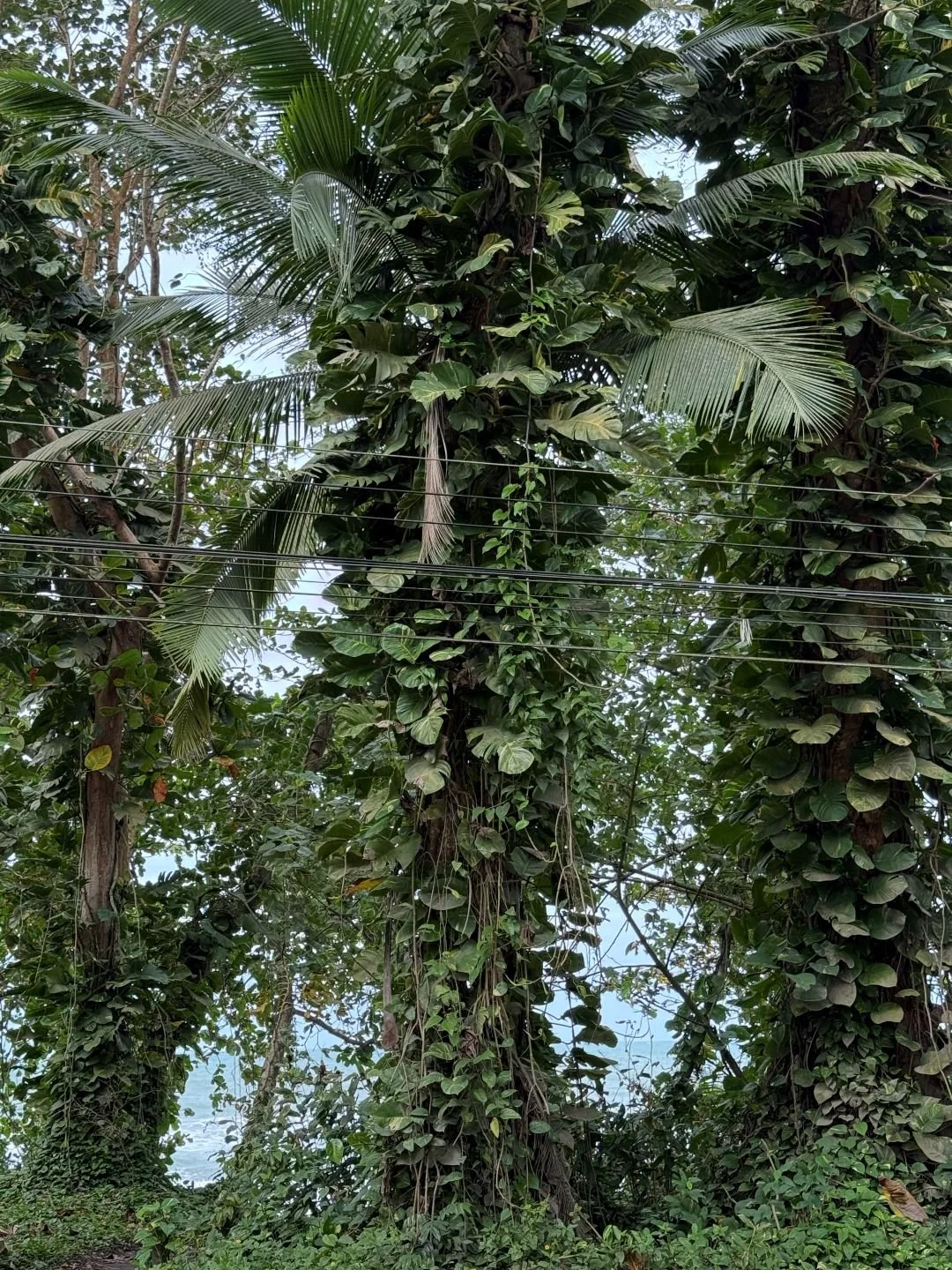
On one particularly beautiful day, we found Debbie resting comfortably in the tree, sharing the space with not just one but two other sloths. With three sloths in the same tree and the antenna difficult to spot, it was tricky to confirm exactly which one was Debbie.
Another day brought clear skies and hot weather, and Debbie was once again in her usual tree near the road. This time we were able to spot the collar, confirming it was her, although her baby stayed out of sight that day, likely tucked safely out of view.
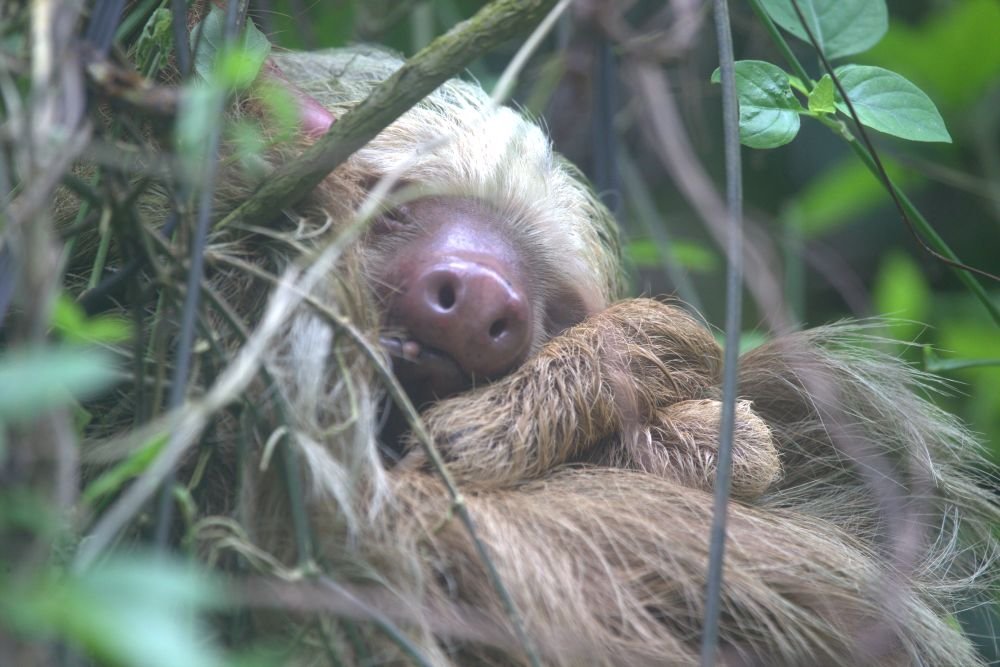
Debbie’s little one does make appearances from time to time, though. On a recent visit, the team was lucky enough to see Debbie perched high at the top of the tree with her baby, resting together in the canopy.
There have also been days when Debbie kept a lower profile. Despite strong signals from her collar, she wasn’t always visible, possibly hidden deep in the vines or resting high in the treetops. During one search, the team even spotted three other female sloths nearby, showing just how lively Debbie’s small coastal neighborhood can be.
Meet little Kiwi!
A big thank you to all of you—our VIP supporters—who took part in Debbie’s baby naming competition! We loved seeing the creativity in your suggestions. Some of our favorites included Cheese, Super Dave, Yellow, Slowl, and Thunderbeans, which definitely gave the team a few laughs.
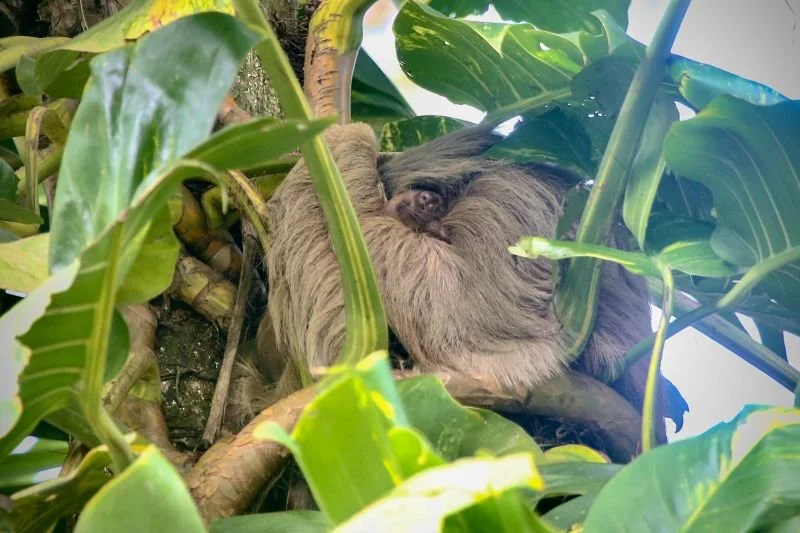
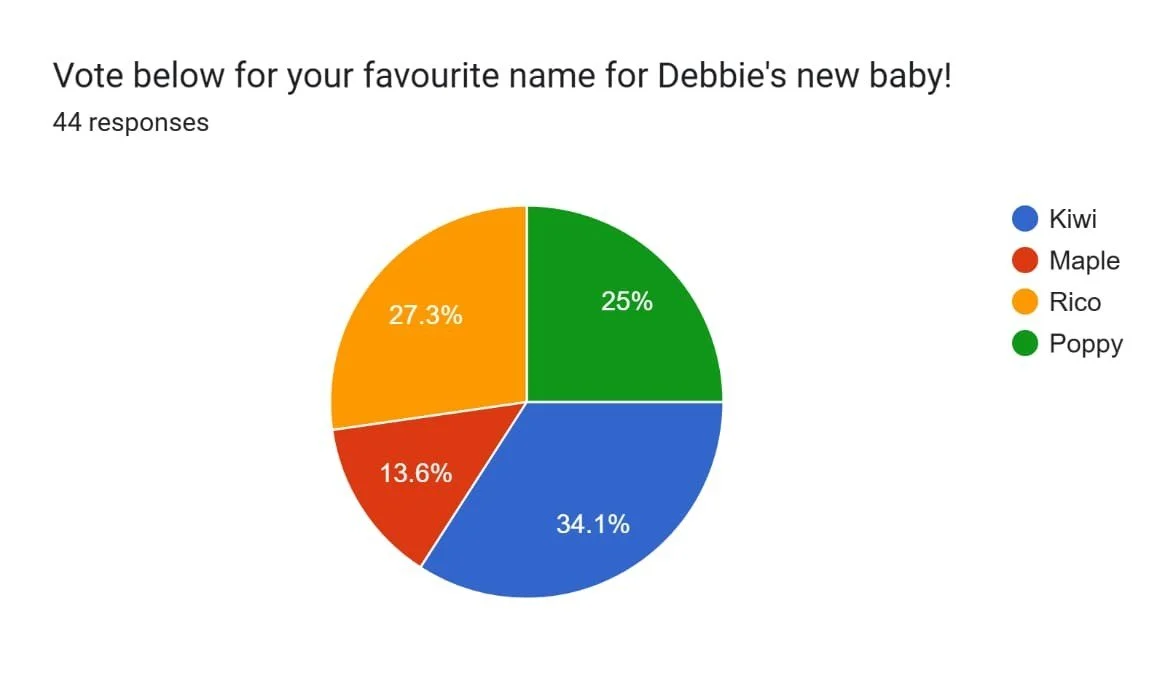
After gathering all your ideas, we selected four finalists and put them to a vote. The results were very close, but in the end Kiwi came out on top! 🥝
We want to give a big shoutout to Lee B., who suggested the winning name! Lee is one of our very first VIPs of SloCo, supporting our work since 2017, when we were just a small group of people dreaming big. Thank you, Lee!
Thank you again for helping us choose the name and for being part of welcoming the newest member of Debbie’s family. Below you can see the final voting results.
Tango
Following February’s rescue, Tango has now spent the past month recovering at the rescue center, and we wanted to share an update on his progress.
When Tango first arrived, the veterinary team performed a full clinical examination to assess the extent of his injuries. They discovered a very large botfly wound on his back that had become severely infected, with a significant amount of pus present. After the parasite was removed, it left a deep open cavity in the tissue. Fortunately, no additional botflies were found.
In addition to this wound, Tango had several injuries on both of his hind legs that were consistent with bite wounds, with the right leg appearing more severely affected than the left. After this more detailed examination, the veterinary team now believes that Tango was attacked by a dog instead of raccoons, as they had theorised in the initial examination. Dogs pose a significant threat to sloths when they are forced to the ground, where they are extremely vulnerable.
The team also observed ulcers on his tongue, which can sometimes occur due to stress, infection, or dehydration after traumatic events.
Despite these injuries, there were some encouraging signs early on. His heart rate and lungs both appeared normal, and he showed a healthy appetite almost immediately, beginning to eat leaves as soon as he was placed safely in his transport box.
Over the course of the past month, Tango has been steadily recovering under the care of the rescue center team. One very positive sign is that he has gained weight since arriving, which indicates that he is eating well and regaining his strength.
The team has also started discussing the next steps for his rehabilitation. At one point, there was consideration of placing him with the juvenile sloths at the center. However, Tango is quite large compared to them, so the current thinking is that he may be released directly back into the wild once his wounds have fully healed and the veterinary team is confident that he is strong enough to return to the forest.
For now, Tango continues to rest and recover while receiving careful monitoring and treatment. We are incredibly grateful that he was found in time and that he is showing encouraging signs of healing after such a difficult experience.
New Urban Sloths!
Martita
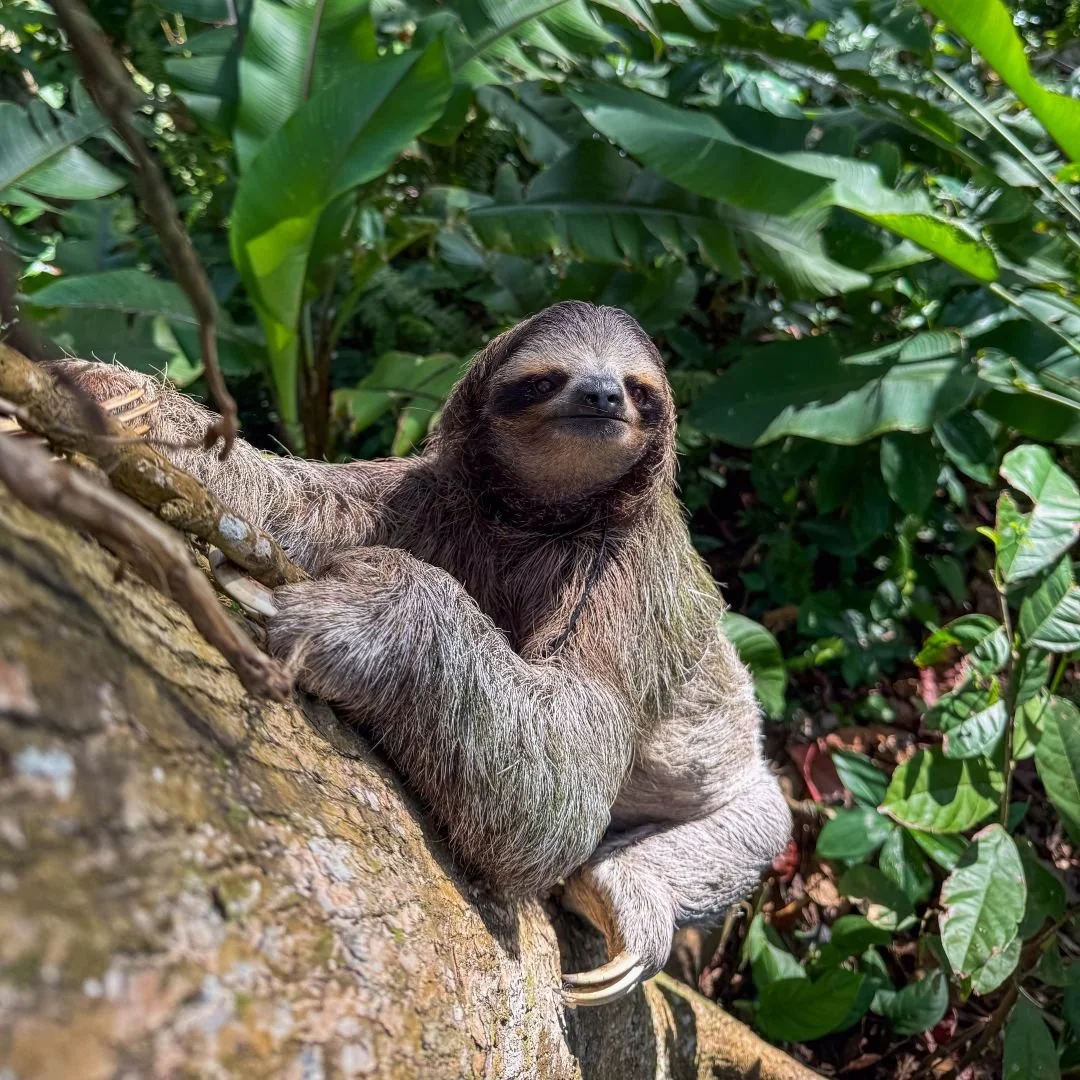
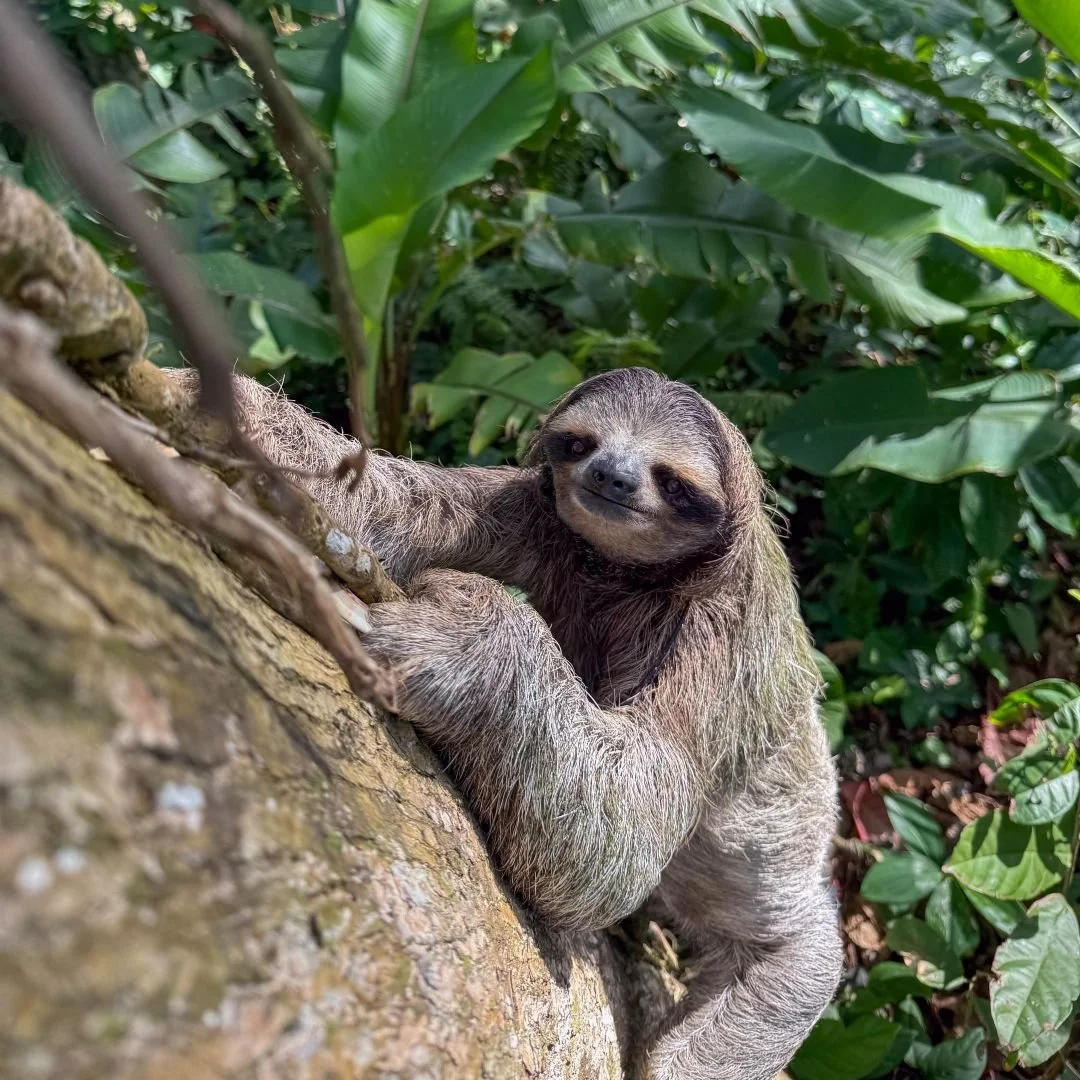
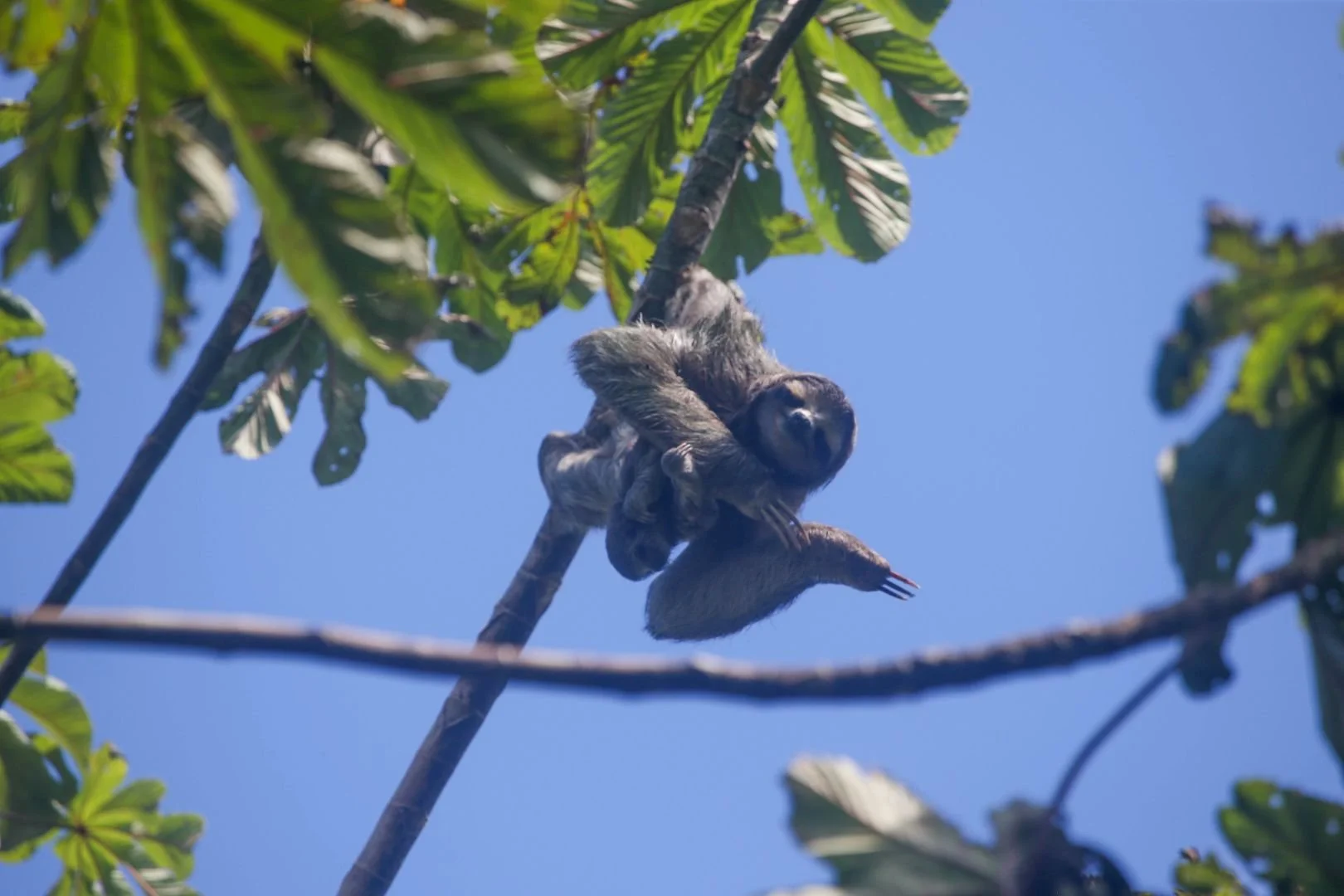
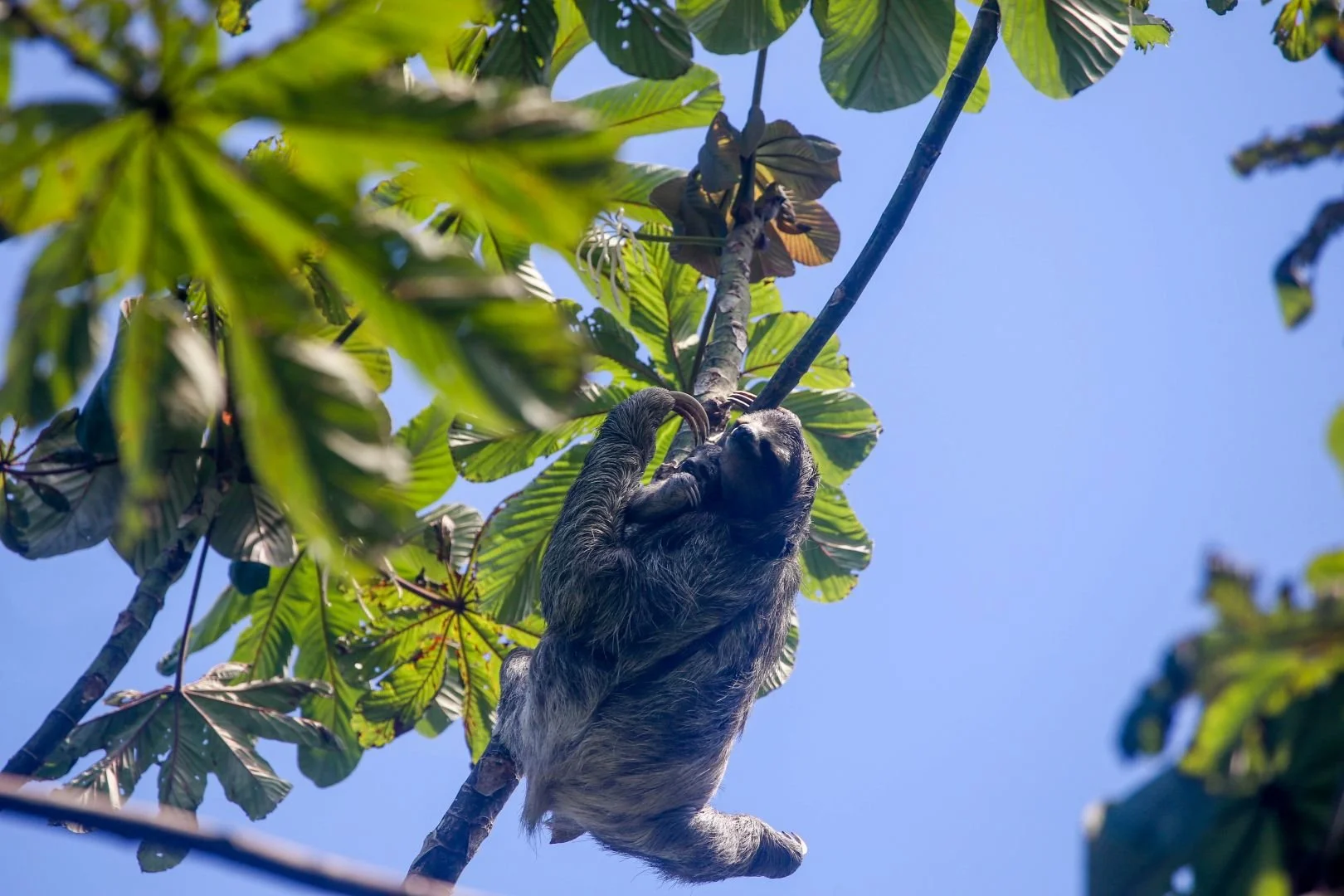
In late February, our team fitted Martita, a three-fingered sloth, with a tracking collar. The collaring took place while she was descending her tree to defecate, which provided a safe opportunity for the team to work. After she finished, the collar was carefully placed, and Martita was released back into the same tree where she had been found. Monitoring began the following week.
Then came a surprise.
Just one week later, when the tracking team located Martita again, they discovered she had a baby. This means the birth likely happened only a few days after the collaring. Since that moment, every monitoring session has confirmed the same reassuring sight: Martita carrying her newborn. We still don’t know the baby’s sex, but we hope to determine that soon.
During the first tracking sessions, Martita showed relatively high activity, moving between several trees in the area. She frequently used a Cecropia tree, along with a few smaller trees about 10–12 meters tall nearby. Over the course of the month, she explored roughly 40 meters from the original tree where the collar was placed, before eventually returning and settling back into that same general location.
Since giving birth, Martita has remained within a small and familiar area, consistently observed with her baby during each monitoring day, which is a good sign that both mother and offspring appear to be doing well.
Her neighborhood is also quite lively. Within the same area, the team has documented several other sloths, including two-toed sloths, a nearby male three–fingered sloth, and multiple additional females sharing the surrounding habitat.
For now, Martita has already given us some epic photographic moments and we are excited to follow the early days of a new sloth life in the canopy.
Christine & Mikah
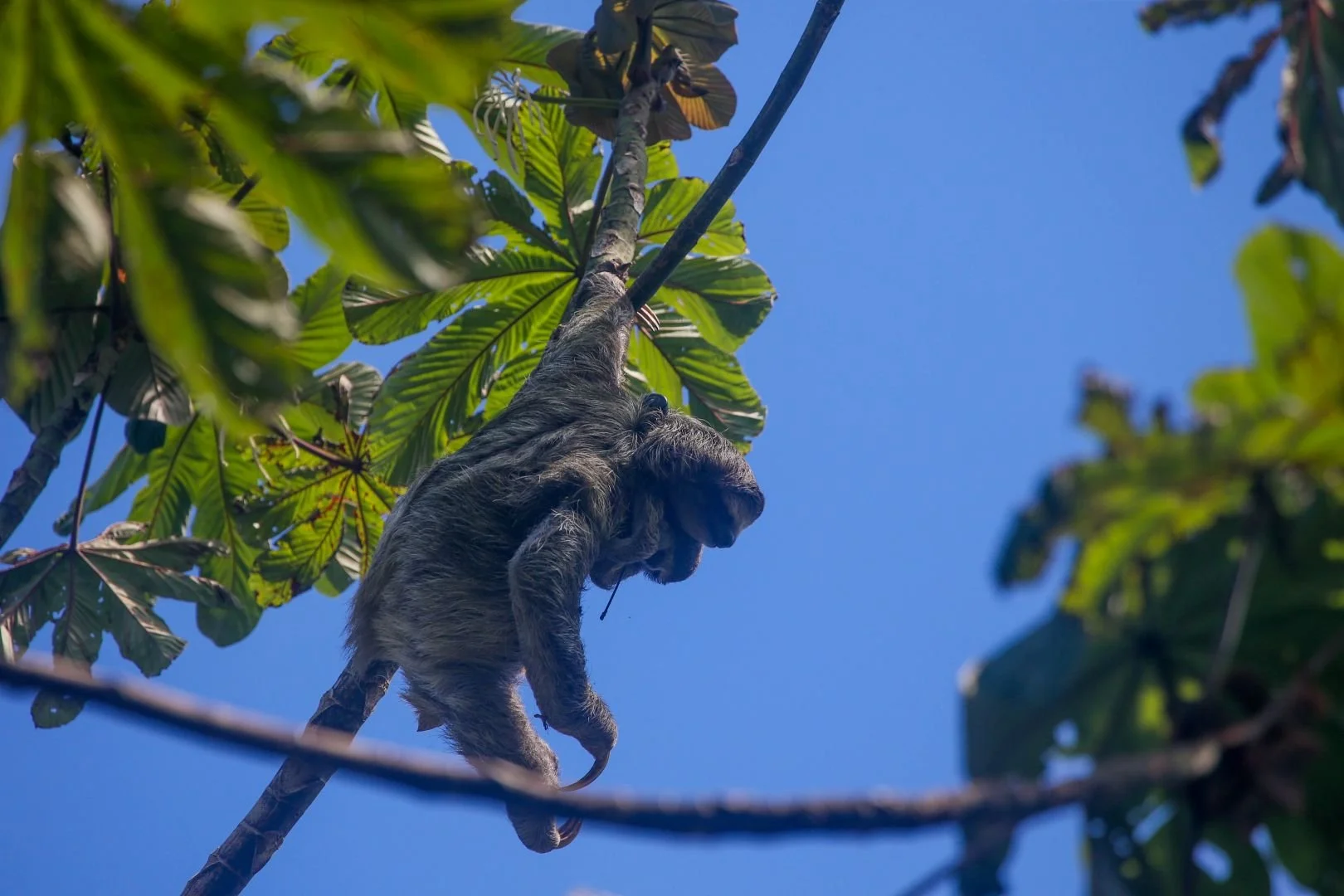
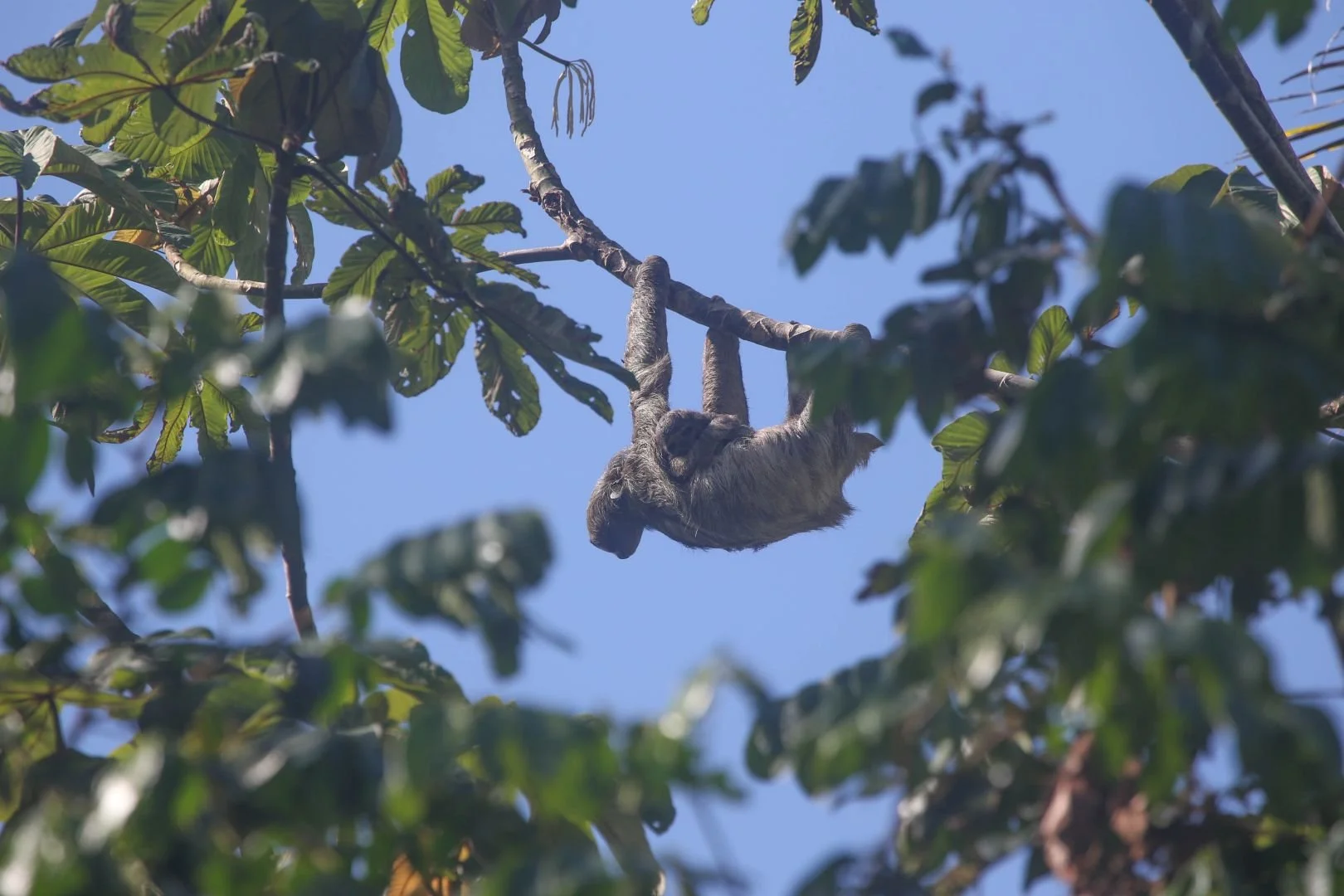
This month brought another very special new addition to the project: Christina, a three-fingered sloth, and her tiny baby Mikah.
When we came across the pair, we were delighted to have found a perfectly positioned sloth with a very young baby clinging tightly to her. Just the day before, we had collared Martita and had suspicions she may be pregnant, so being able to collar another three-fingered mother with a newborn was perfect for our study. We happened to be accompanied that day by two very special supporters, who were able to witness the moment and capture some wonderful photos. In honor of their family, the mother and baby were named Christina and Mikah, after the donors’ daughter and grandson.
Since the sloths were in such an accessible position, the team was able to carefully move forward with the collaring. Using a ladder, we gently reached the branch and lowered it toward Becky, who was able to safely catch both Christina and Mikah.
What followed was one of the calmest collaring procedures we’ve experienced. Becky even commented that Christina was the gentlest and most relaxed sloth she has ever worked with. Throughout the process, baby Mikah stayed firmly attached to mom, holding on the entire time.
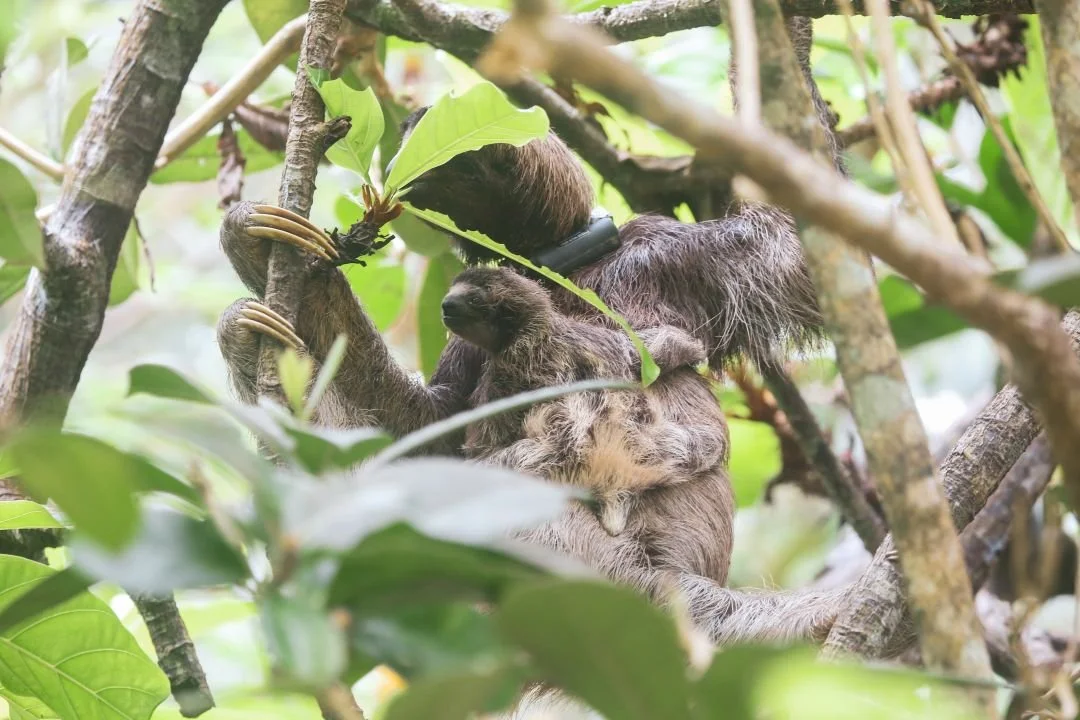
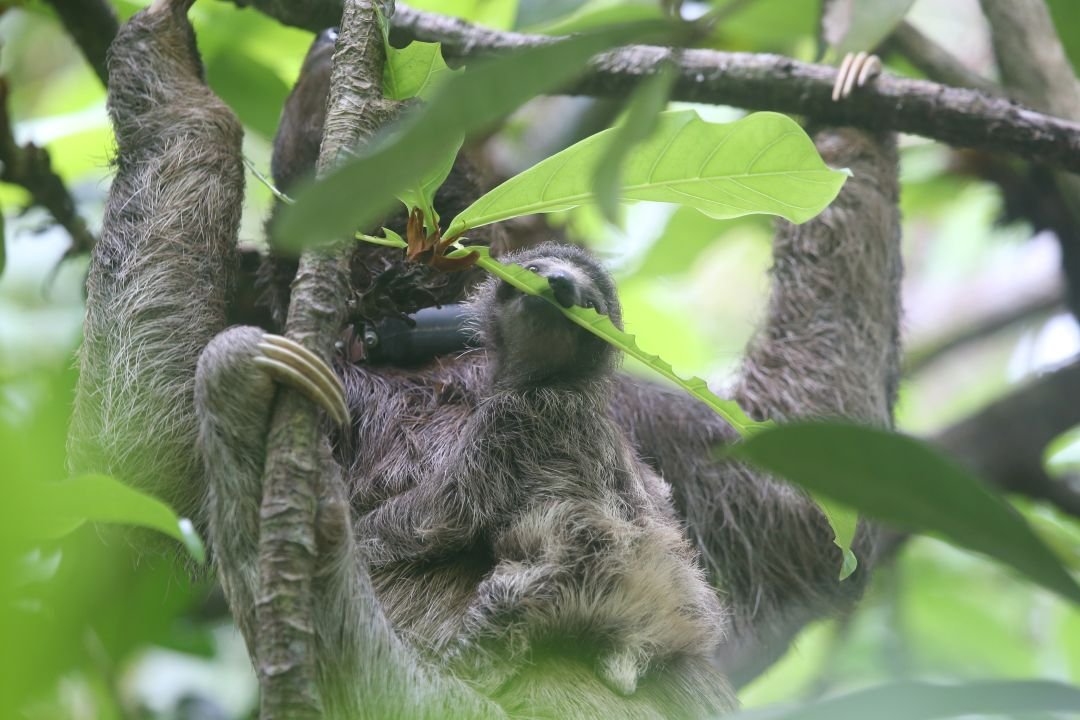
Once Christina was released back into the tree, she seemed completely unfazed by the experience. In fact, she immediately began eating, as if nothing unusual had happened, and Mikah followed her example. The baby is still extremely young, so this was likely one of its first attempts at nibbling leaves. It was a little clumsy, but a very sweet moment to witness.
We’re excited to now follow Christina and Mikah’s journey as part of the study and to watch Mikah grow during these early months of life in the canopy
Primary Forest Sloths
Lesmen & Wilberth
Last year in August, part of our team traveled across the country to the SWAROVSKI OPTIK Rainforest Reserve in the Osa Peninsula. After days of searching the dense primary rainforest, we were able to safely place tracking collars on two wild sloths, Lesmen and Wilberth, officially welcoming them to the Urban Sloth Project family.
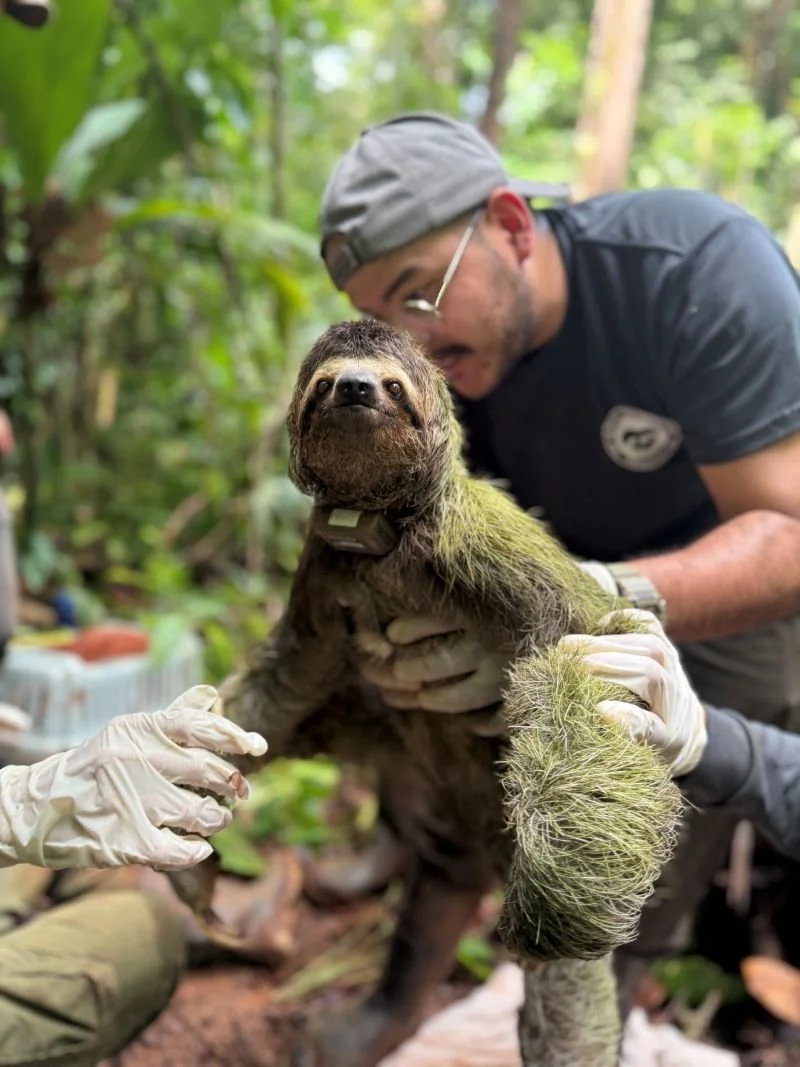
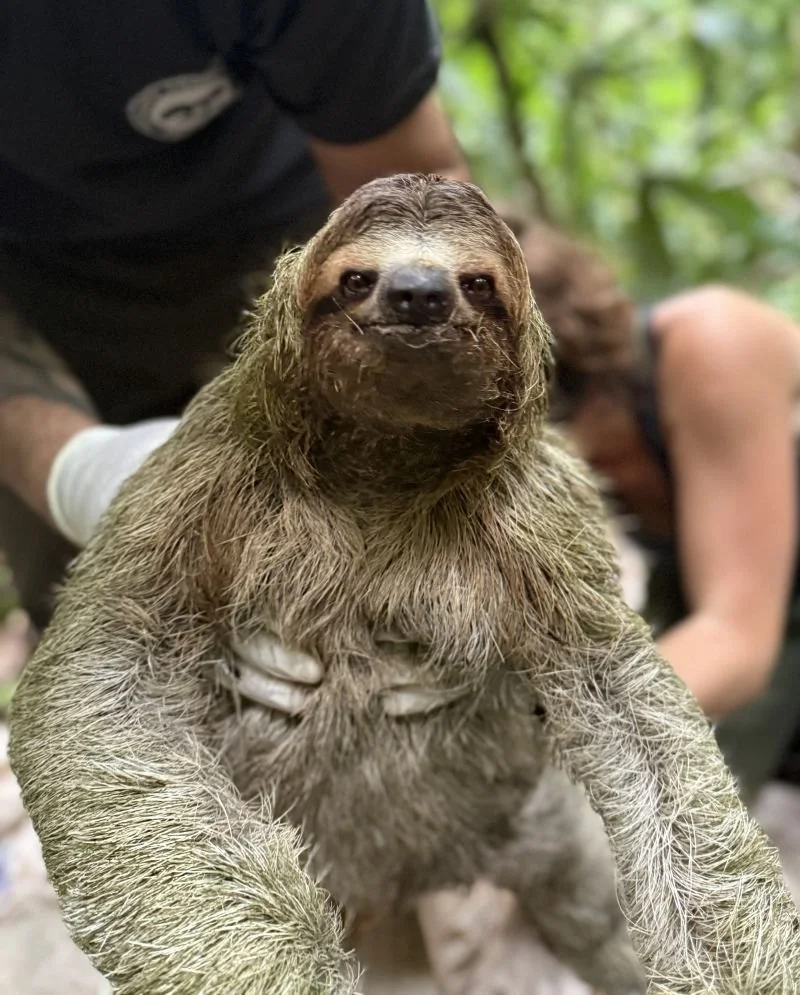
The lightweight collars we used were specially designed for sloths and included a programmable drop-off system, which automatically releases the collar after several months. This allows us to track the animals’ movements and habitat use without needing to handle them again.
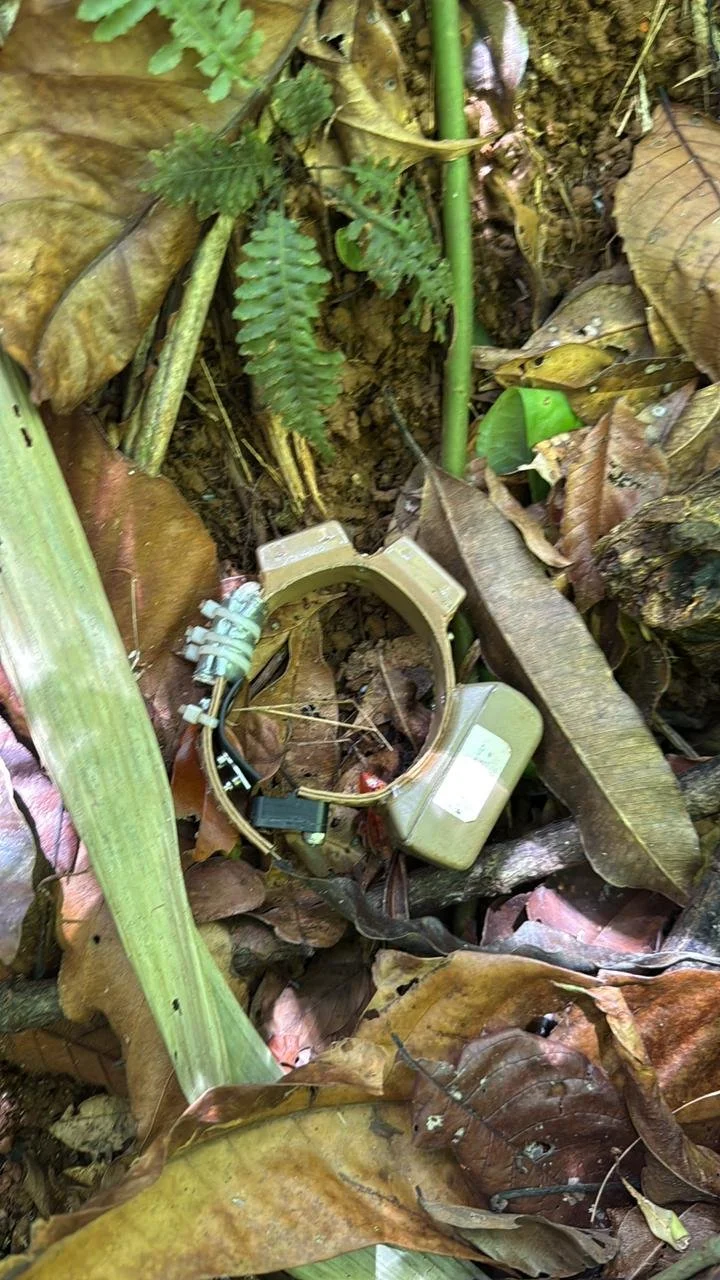
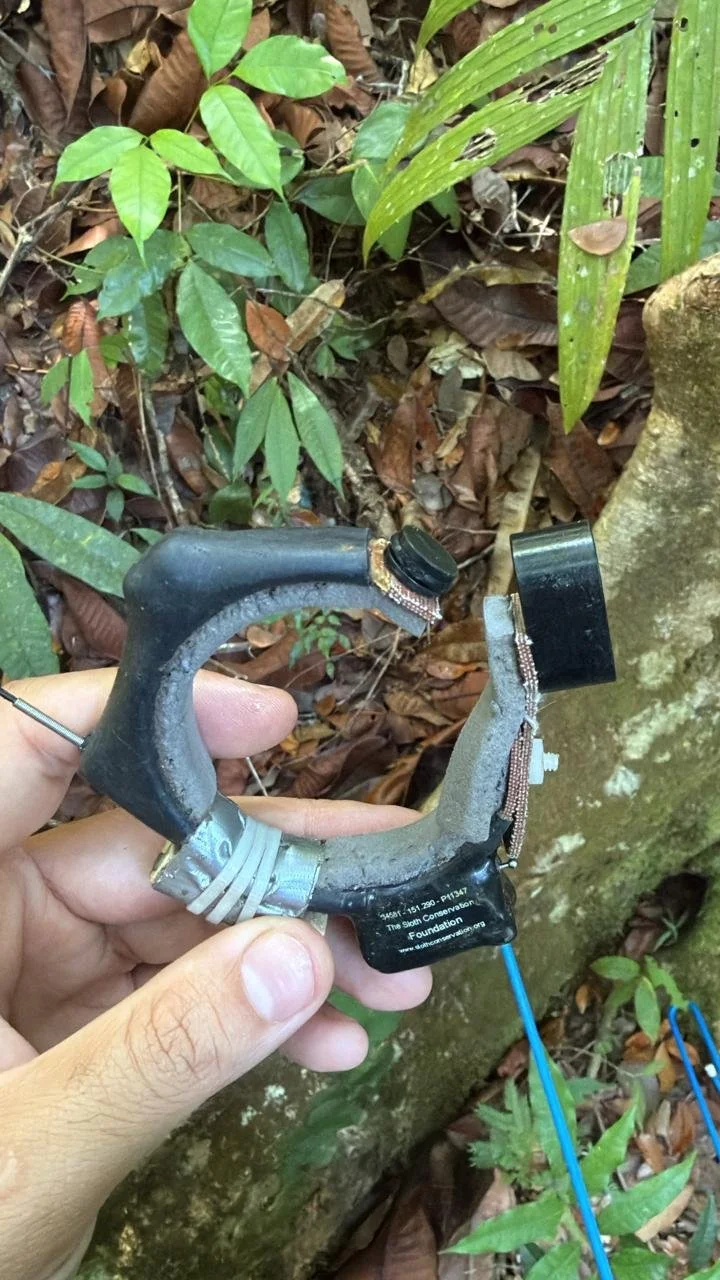
Fast forward to a few weeks ago when the drop-off system was activated, this now meant Lesmen and Wilberth’s collars and the valuable data in the data loggers attached to the collars, were somewhere on the forest floor and needed retrieving.
Last week, José, our lead researcher, made the long 16-hour journey back to Osa to recover the collars, this time without the rest of the team. We were hoping the collars had dropped cleanly to the ground, where they could be located along the forest trails - unlike one memorable experience in La Selva, when a collar released and got caught high on a tree branch!
But when José checked Wilberth’s signal, something unexpected happened. Instead of a mortality signal, which is what we normally expect from a collar that has dropped and remained still on the ground, the transmitter was sending a moving signal. For a moment, José worried that the drop-off mechanism might not have worked. Because the collars release based on a programmed timer, we don’t receive a confirmation when they actually detach. The only way to know for sure is to travel to the site and check.
If the collar had failed to release, it would have been a difficult situation. José might have needed to locate Wilberth in the canopy and attempt to climb the tree to remove the collar manually, an almost impossible task without the rest of the team.
Thankfully, when he reached the location, the collar was sitting safely on the forest floor.
Our best guess? A curious monkey may have picked it up and carried it around for a while, which would explain the moving signal José had been seeing.
For Lesmen’s collar, luck was on our side. José was able to locate it quickly and without much trouble, a rare and welcome success in fieldwork, where things don’t always go according to plan.
Recovering the collars is the final step in this phase of the project. They store months of valuable data about Lesmen and Wilberth’s movements and behavior in the forests of the Osa Peninsula, and we’re excited to begin exploring what their journeys can tell us about sloths in this unique ecosystem.
Pipa
This month, our team had several lovely encounters with Pipa in the primary forest, where she continues to thrive in her familiar territory.
During one of our monitoring days, the forest was especially sunny and windy. As we began tracking her signal, it was only medium-strong, so the team carefully searched the area where she had last been seen. After checking several nearby trees, we eventually located her a little deeper into the forest in one of her favourite trees.
Pipa was resting high in the canopy, right at the top of the tree. From below, she looked like a small curled-up bundle of fur nestled among the branches. The sunlight filtered through the leaves and occasionally illuminated her little nose while she rested. With a better viewing angle, the team was also able to clearly see her tag and confirm her identity.
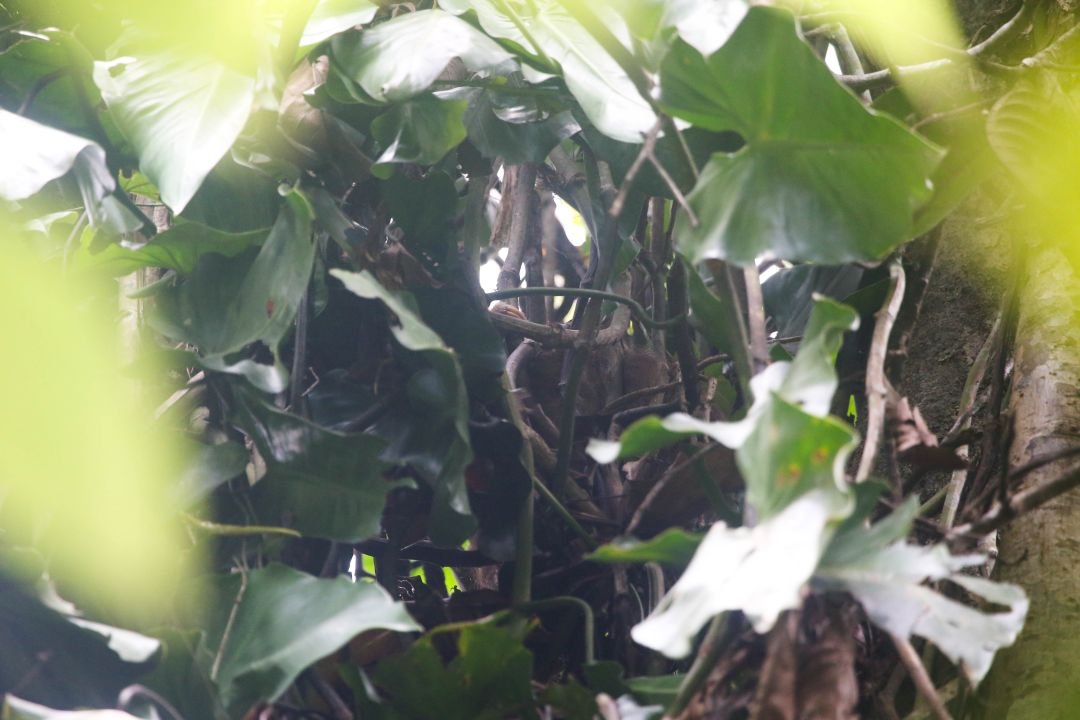
Can you spot Pipa’s fingers?
She appeared very comfortable in her chosen spot, enjoying the warmth of the sun while the breeze moved through the canopy. The wind gently passed through the branches, helping to keep her cool as she relaxed high above the forest floor.
Throughout the month, Pipa remained within her known range and continued to favor some of her usual resting trees deeper in the primary forest. It is always reassuring to see her using these familiar areas, suggesting that she feels safe and settled in her habitat.
Moments like these give us a quiet glimpse into the daily life of a wild sloth—resting peacefully, enjoying the sun and breeze, and moving slowly through the forest she calls home.
Flash
This month we had some lovely observations of Flash, who seems to be doing well and continuing to explore his surroundings.
On one warm and sunny monitoring day, the team began searching in the same area where Flash had been found the previous week. After carefully scanning the trees, we noticed he was no longer in his usual spot. As we continued looking around, we realized that Flash had chosen a new tree nearby to spend the day in.
He was calmly resting on a branch, wrapped comfortably around it in classic sloth fashion. Flash looked completely relaxed and didn’t seem bothered at all by the team observing from below. While he remained peacefully still in the canopy, the team had a slightly less graceful moment on the forest floor—there was a lot of stumbling and slipping while trying to collect all the monitoring data!
On another day, Flash was found sleeping in a tree above the river. Tucked among the branches, he appeared to be enjoying a very quiet and peaceful nap while the water flowed below him. It was a beautiful and tranquil sight to see him resting so comfortably in such a scenic spot.
It’s always wonderful to observe Flash in different areas of the forest and learn more about the trees and locations he prefers. Each sighting helps us better understand his movements and habits in the wild.
Thank you for supporting Flash and helping us continue to monitor and protect him.