April 2026
Update #56 of The Urban Sloth Project!
Pistachio
Pistachio remained in one of his favorite trees above the building of the chocolate and coffee shop Caribeans. Some days he was visible, whereas other days, a strong signal in our receiver indicated he was in that spot despite being unable to see him. Given the dense canopy and clusters of coconuts, it’s very likely he was curled up and well hidden in the shade, keeping cool and out of sight. Even with plenty of activity from people at the nearby café, Pistachio remained quiet and undisturbed, perfectly blending into his surroundings.
At the base of the tree, the team found several large clumps of feces that did not initially appear typical of healthy sloth droppings, so samples were collected for further study. However, we are not overly concerned, as we also collected a very similar sample from a neighboring tree, which we confidently attributed to another sloth.
During the same session, the team also spotted a sloth high in a tall tree behind a nearby kitchen, bordering a neighboring property. At first, we considered that it might be Pistachio and even thought we saw what could have been a collar. However, due to the height and visibility, we were unable to confirm this. Despite this uncertainty, the signal remained strong and consistent within the area. A calm month for Pistachio, remaining in the usual spots.
Luiza
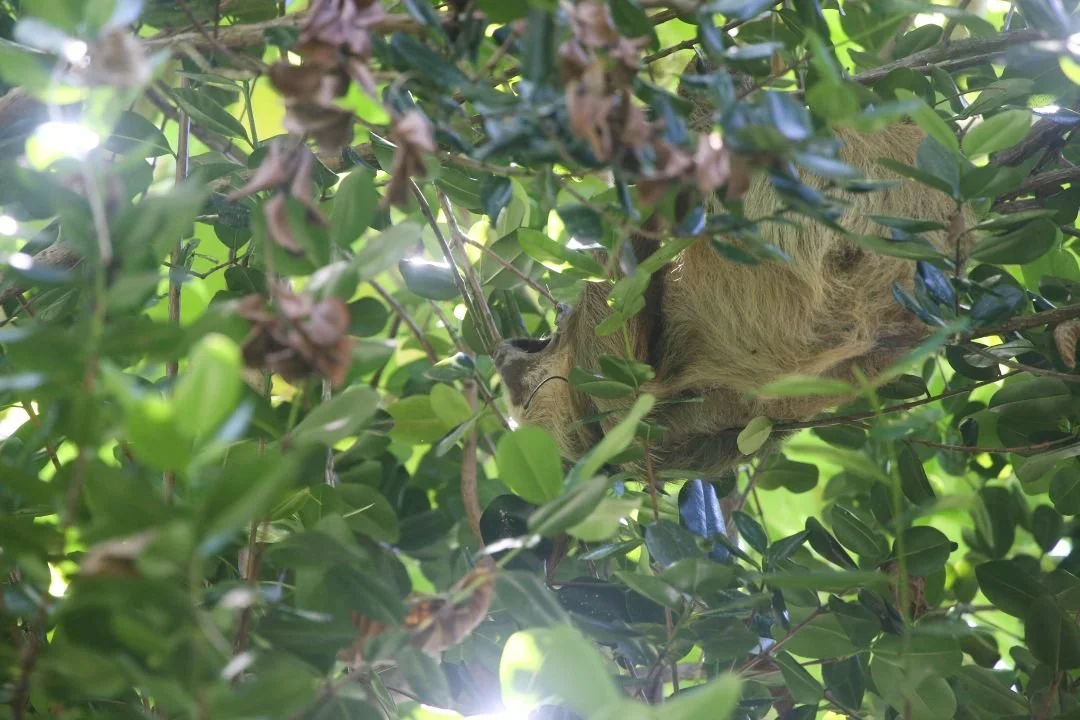
Luiza has been spending most of her time high in some of the tallest trees near the road, where dense foliage and height make visual confirmation difficult. Despite often picking up a strong signal on the receiver, actually locating her proved to be quite a challenge. Sometimes all we had to go off was a bit of fur or a poking limb. At one point, the receiver signal pointed towards what looked like an arm with a claw extending from the canopy, but it was impossible to confirm whether it was truly her.
Much like last month, Luiza’s behavior continues to raise some interesting questions that keep us wondering whether she may be pregnant or even have a baby.
She’s been found alongside male sloths on several occasions, and it has been over six months since her last baby, meaning she is due soon!
Very little is known about reproduction and birth in three-fingered sloths. The gestation period is estimated to be around 4 to 6 months (much shorter than the 11.5-month gestation period in two-fingered Choloepus species). This is because there has not been an officially recorded case of a Bradypus sloth becoming pregnant and giving birth in captivity, as their extremely fragile nature makes them incompatible with life in captivity.
In the last few days of the month, Luiza appears to have shifted her position, moving away from the roadside and returning deeper into the forest.
Deborah
This month brought some special (and at times slightly mysterious) moments with Debbie and her baby.
On one occasion, Debbie seemed determined to stay hidden. The team followed a strong signal into the trees, but she was nowhere to be seen at first. After a careful search, we finally spotted a sloth tucked deep within a curtain of vines. While we couldn’t clearly confirm the antenna or collar at that moment, there were some promising clues: a distinct separation around the neck that looked very much like a collar, and a strong signal in that exact spot. Although we couldn’t be 100% certain, all signs pointed to it being Debbie. Her baby Kiwi, however, remained completely out of view, hidden safely in the foliage.
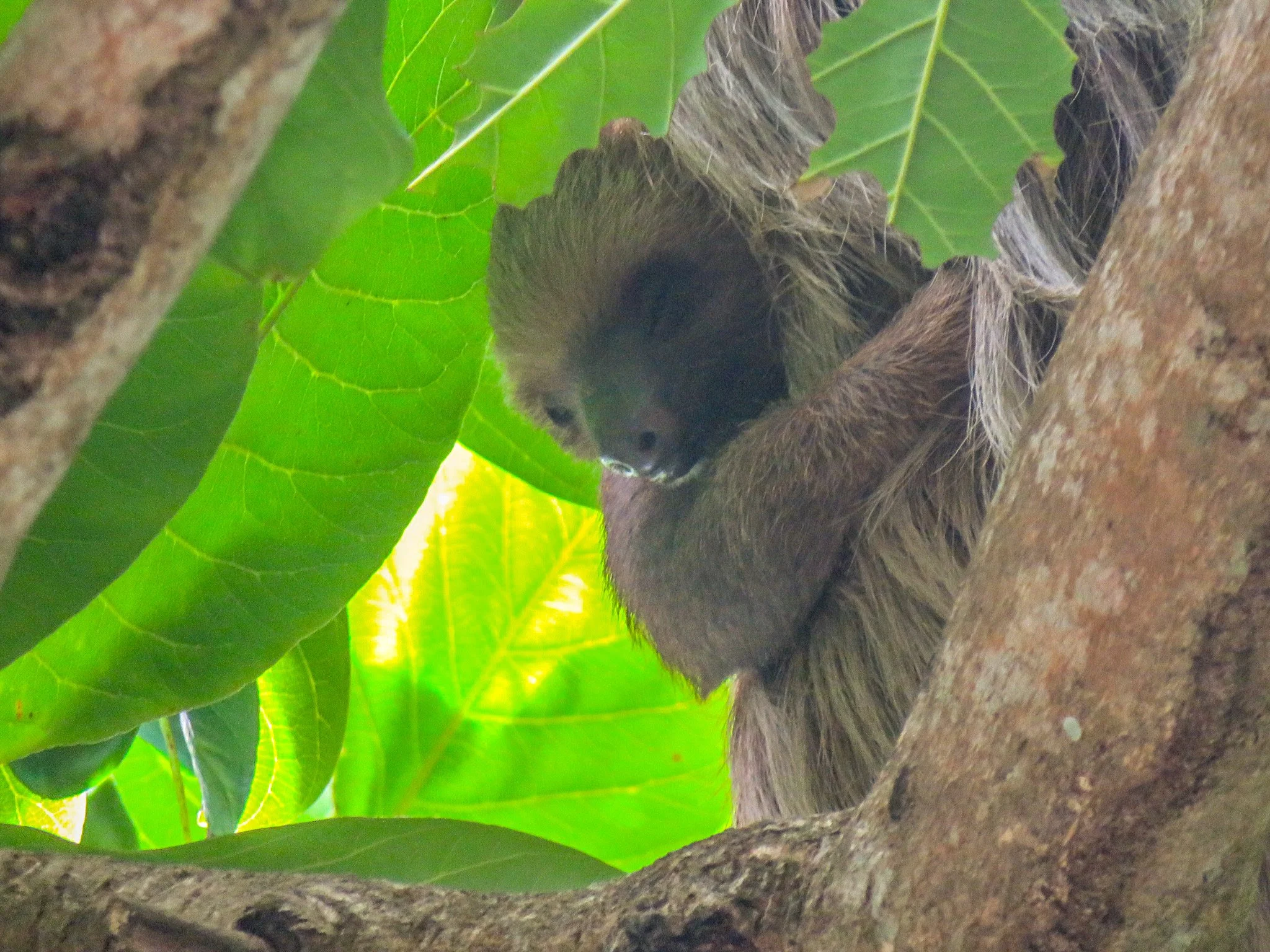
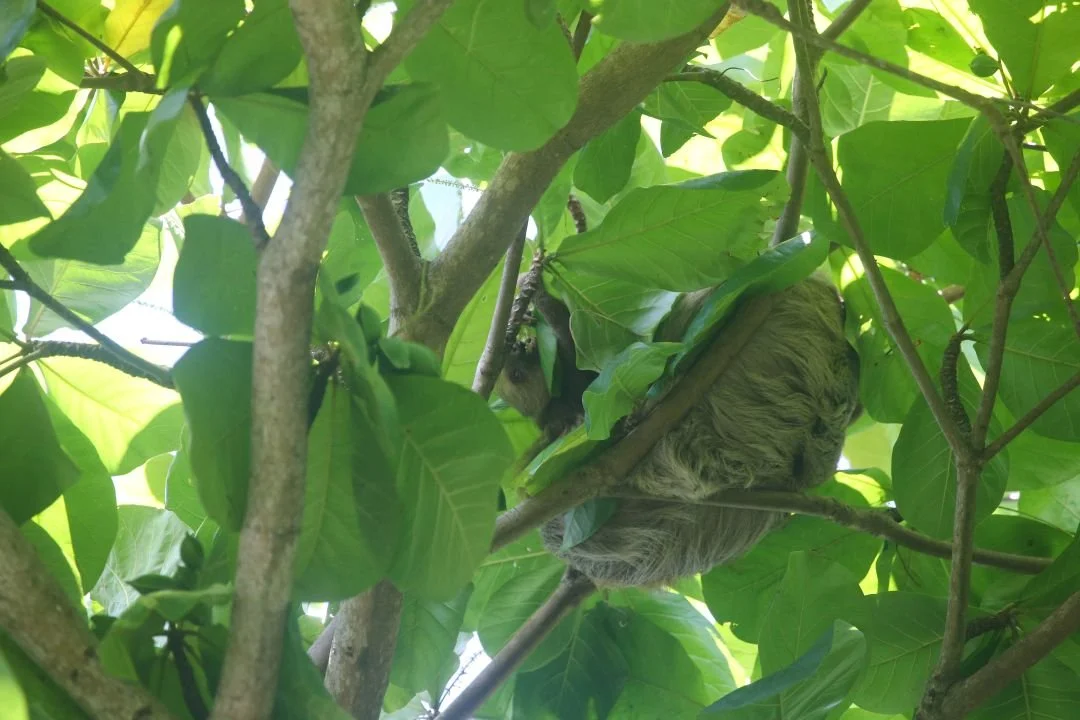
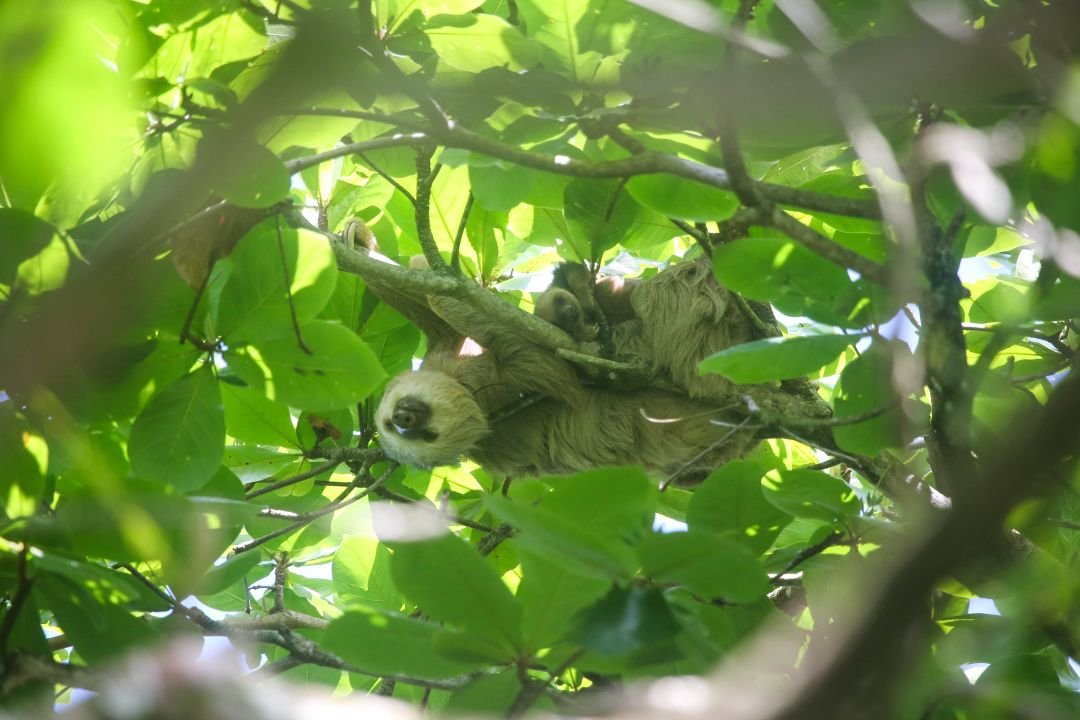
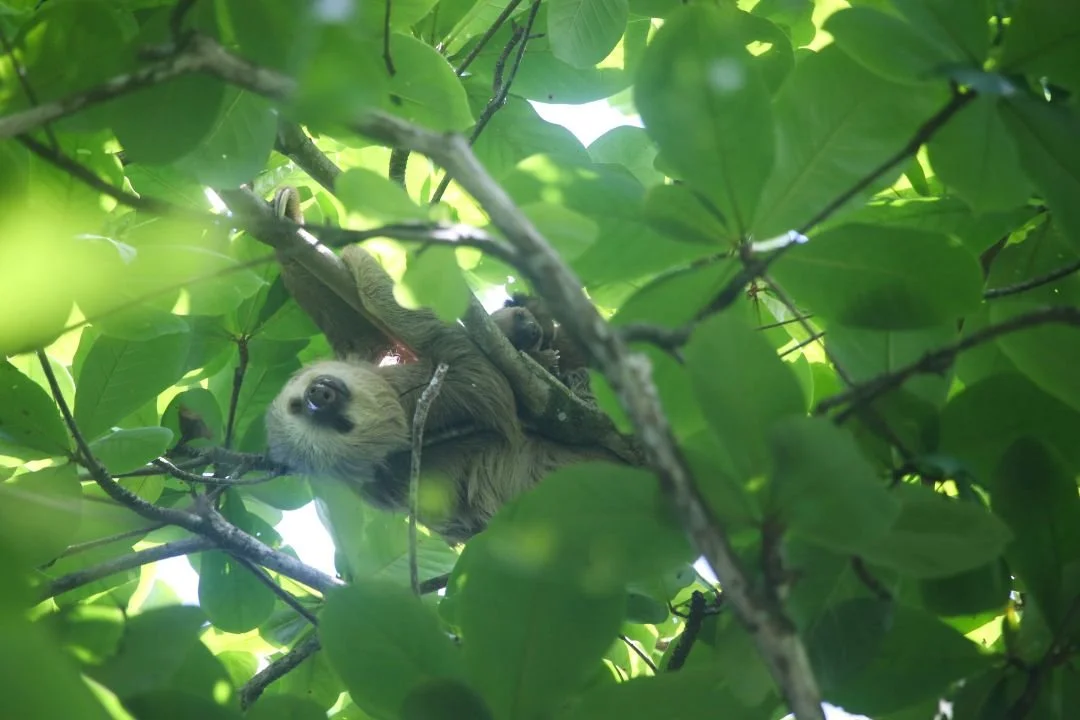
Later in the month, we were able to confirm her location more precisely. Debbie was observed in a tree near the beach, moving gracefully through the canopy with her baby securely with her. She eventually settled into a comfortable spot to rest and enjoy the sunshine.
What followed was a beautiful glimpse into their daily life: her baby slowly woke up, looked curiously toward the camera as if noticing the team for the first time, then calmly began to feed before drifting back to sleep curled up in Debbie’s lap. As we watched, the antenna was clearly visible, confirming her identity.
Overall, Debbie seems to be favoring trees close to the beach, where she continues to care for her baby while enjoying the coastal canopy.
Martita
This month, Martita showed that sloths may just have a taste for Indian food! ….
For most of the month, Martita stayed true to form, spending her time in her favorite trees and rarely moving far. During several observations, we were able to spot her baby resting comfortably on her belly, showing encouraging signs of healthy growth and development.
However, things became more exciting later in the month when Martita made a bold move: She crossed the road. While we have observed sloths crossing in this area before, it is always a risky journey. Sloths are extremely vulnerable on the ground, so we were very relieved to confirm that both Martita and her baby made it safely to the other side.
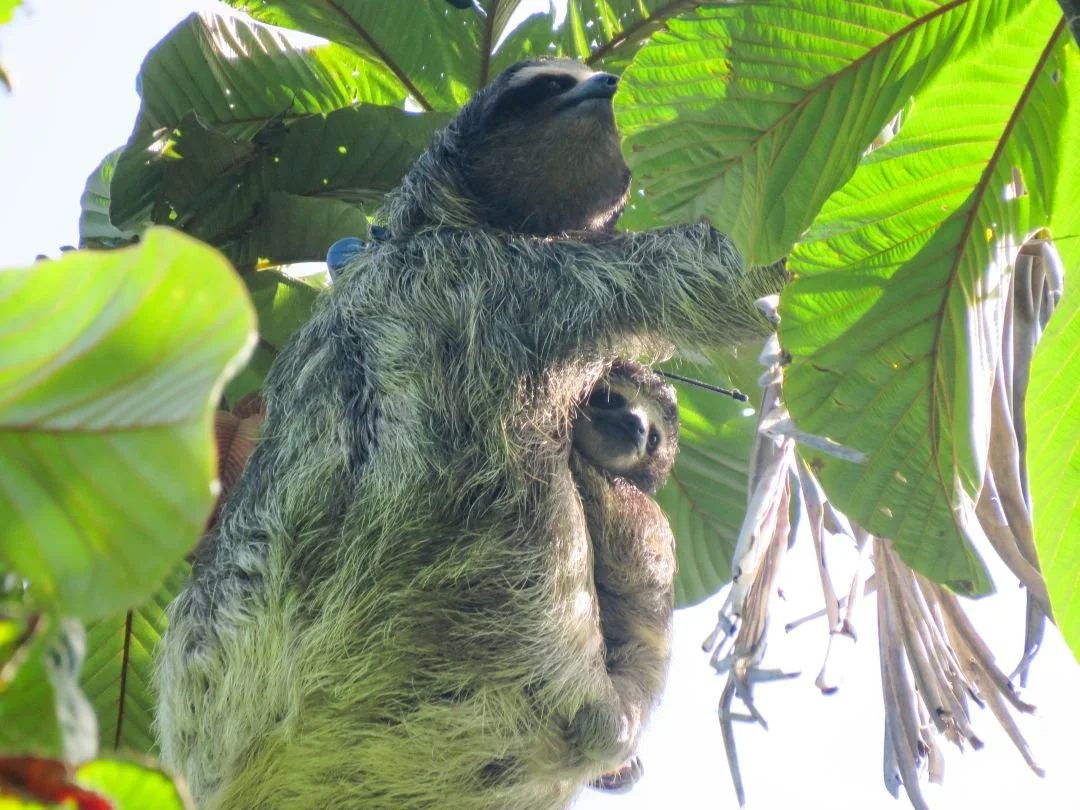
Following her crossing, Martita was tracked to the unexpected location of an Indian restaurant. To get there, she likely navigated through canopy connections spanning three different properties, showing just how resourceful and determined she can be. We like to think the scent of tandoori drifting through the trees was simply too tempting to ignore!
This movement also highlights an important concern. The need for a wildlife bridge in this area is becoming increasingly clear, as crossings like this pose significant risks. Unfortunately, obtaining the necessary permissions remains a challenge, but observations like Martita’s help strengthen the case for improved connectivity.
Looking ahead, we will be reaching out to local landowners to help improve monitoring and protection in this area. As Martita and her baby continue to navigate this urban landscape, the team will be keeping a close eye on their movements and gathering as much information as possible.
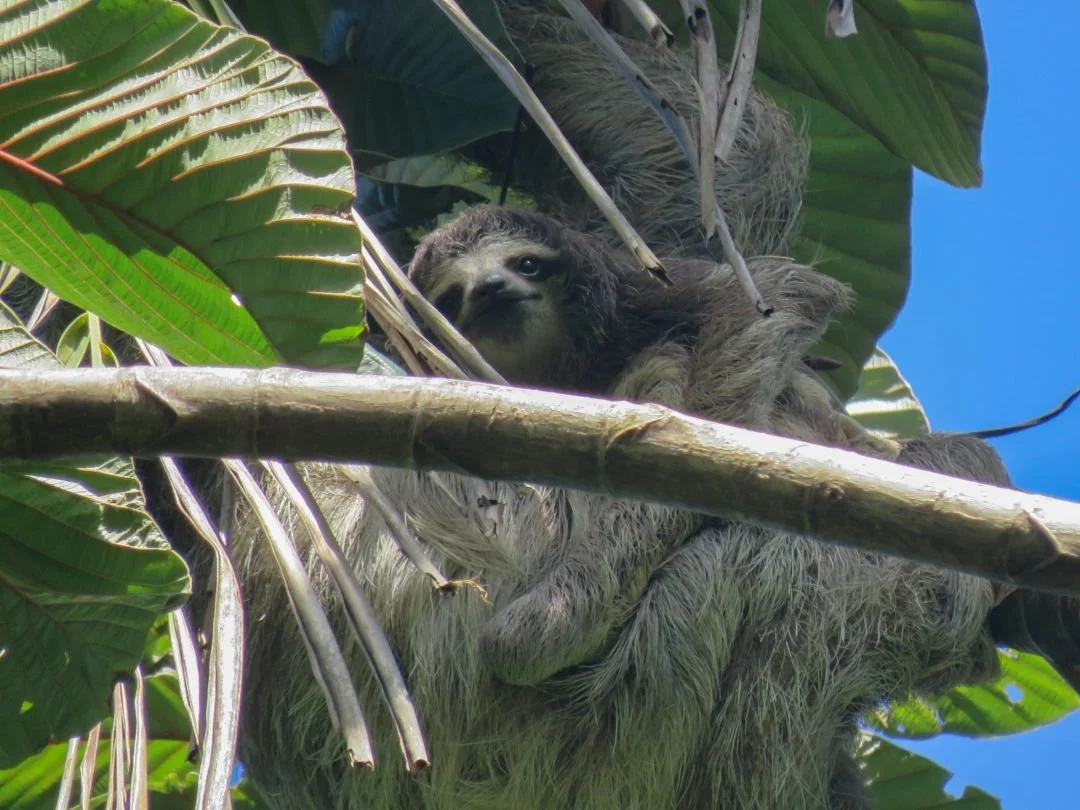
Help us name the baby!
Christine & Mikah
Christine has been found consistently high up in the trees, sunbathing with her baby, Mikah. She clearly shows a preference for high, sunlit areas.
On one of the days, when the pair were lower down, Mikah showed some sweet behaviors. At times, she seemed to be observing us, then went back to feeding in the trees before curling into Christine’s arms and drifting peacefully to sleep.
We are so happy to see that both mum and daughter are doing well.
Tango
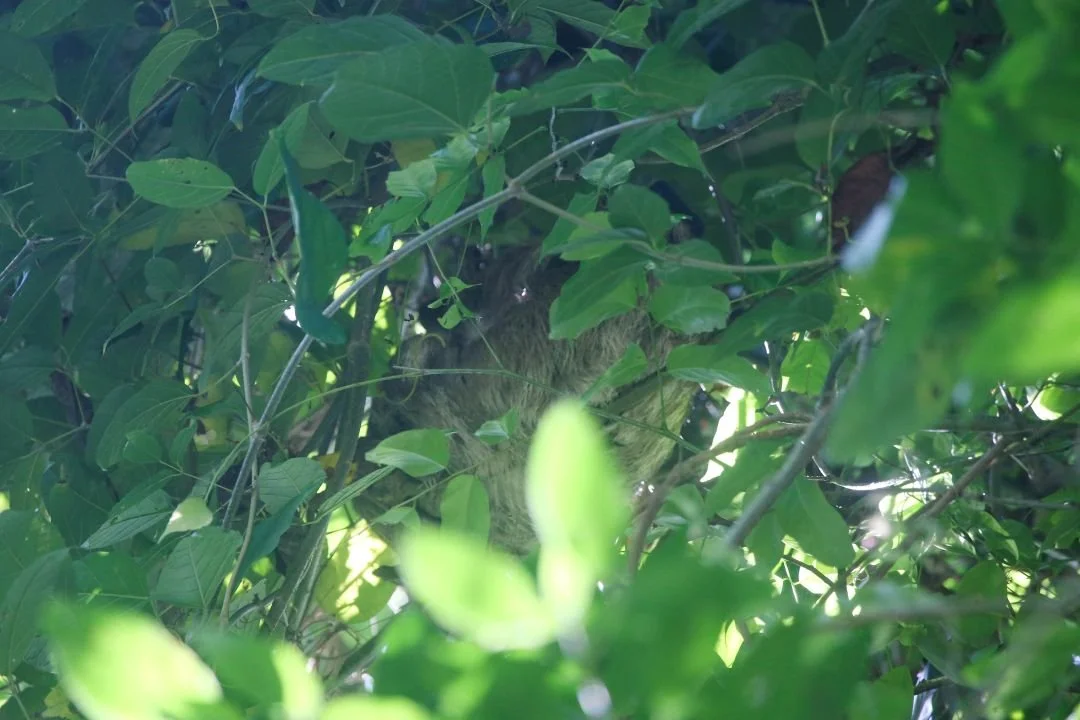
Tango is still recovering at the rescue center, but there’s good news. According to the veterinary team, he’s making steady progress and getting closer to being ready for release.
New Urban Sloths!
Nigel
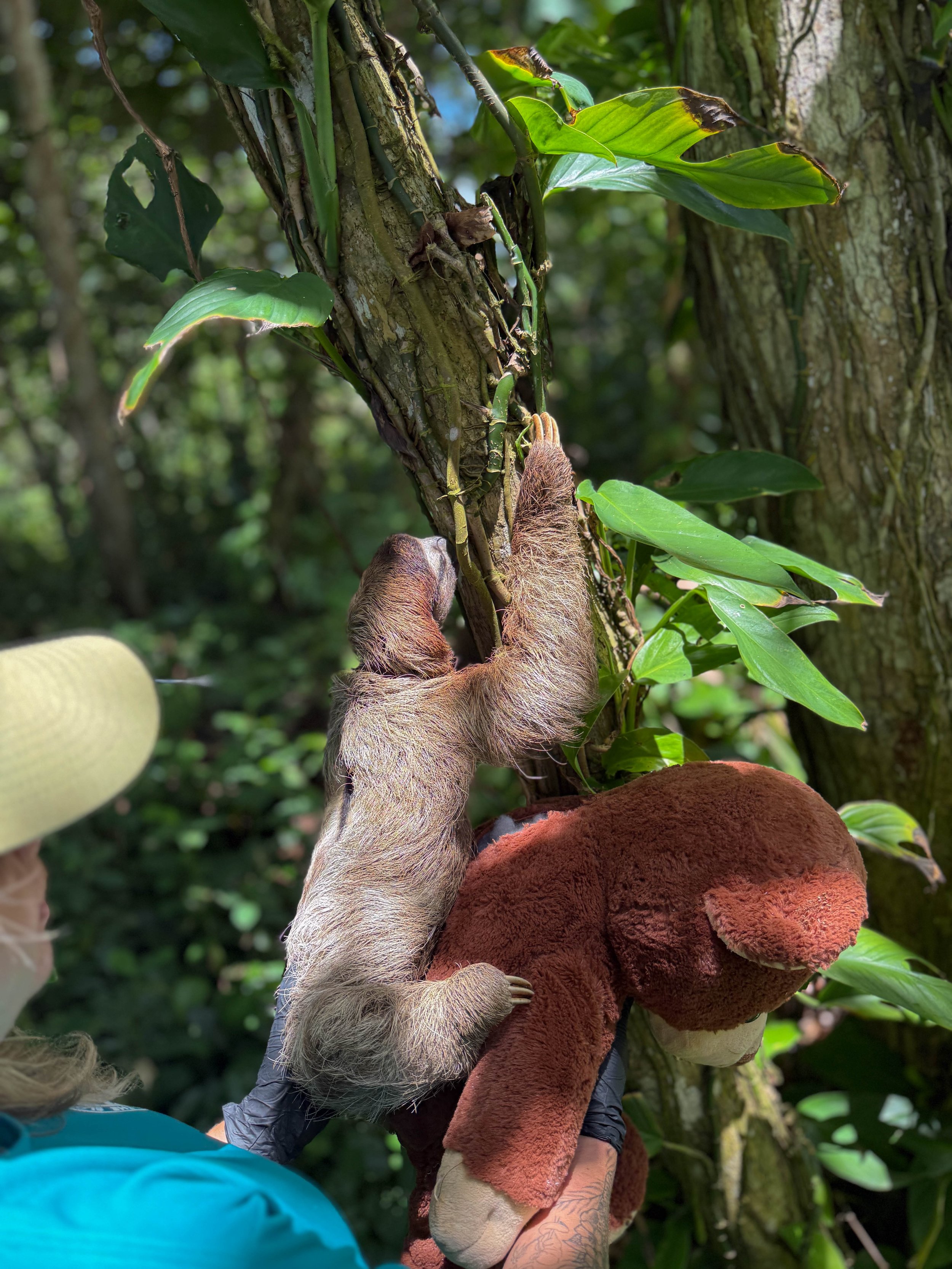
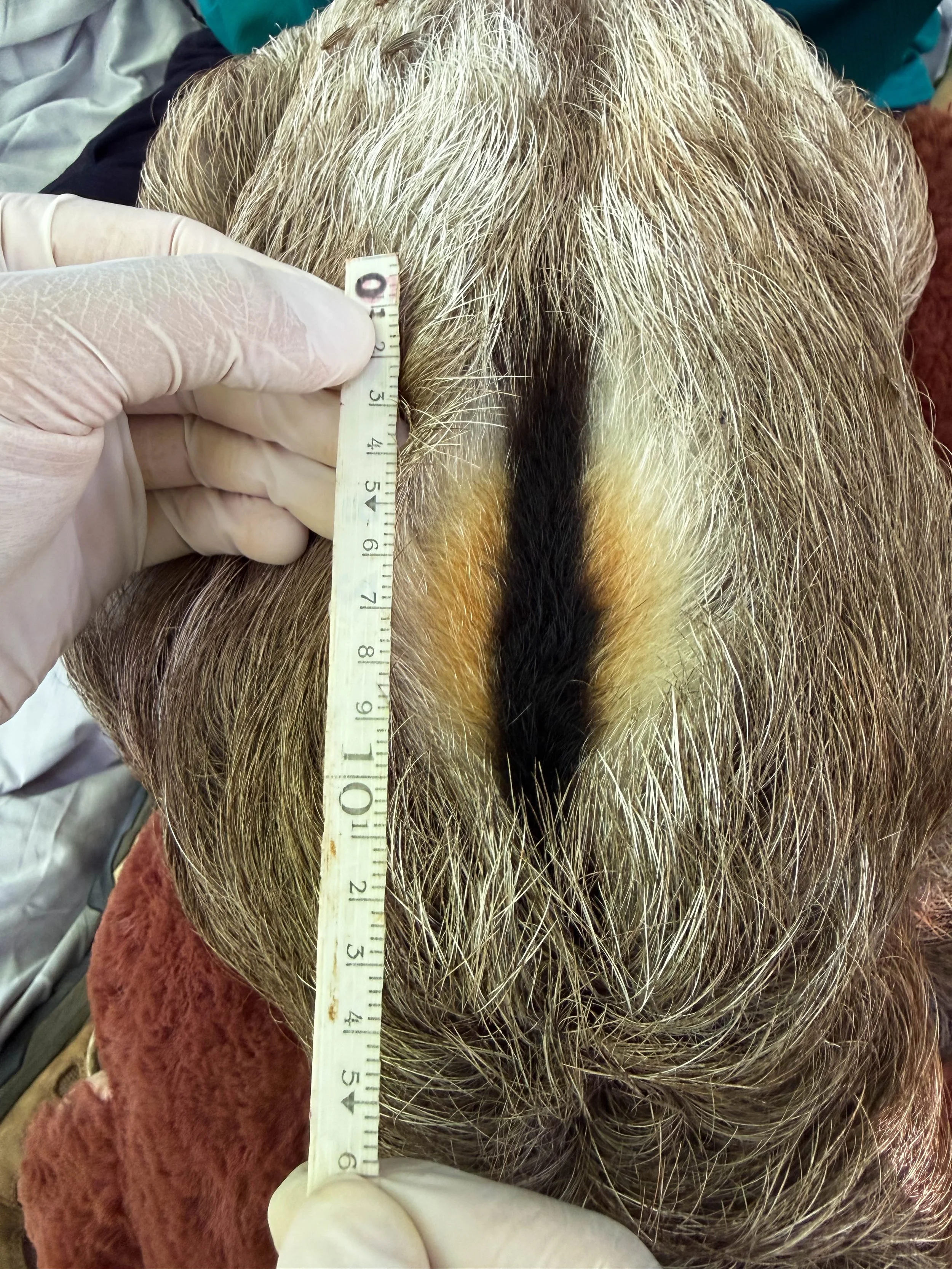
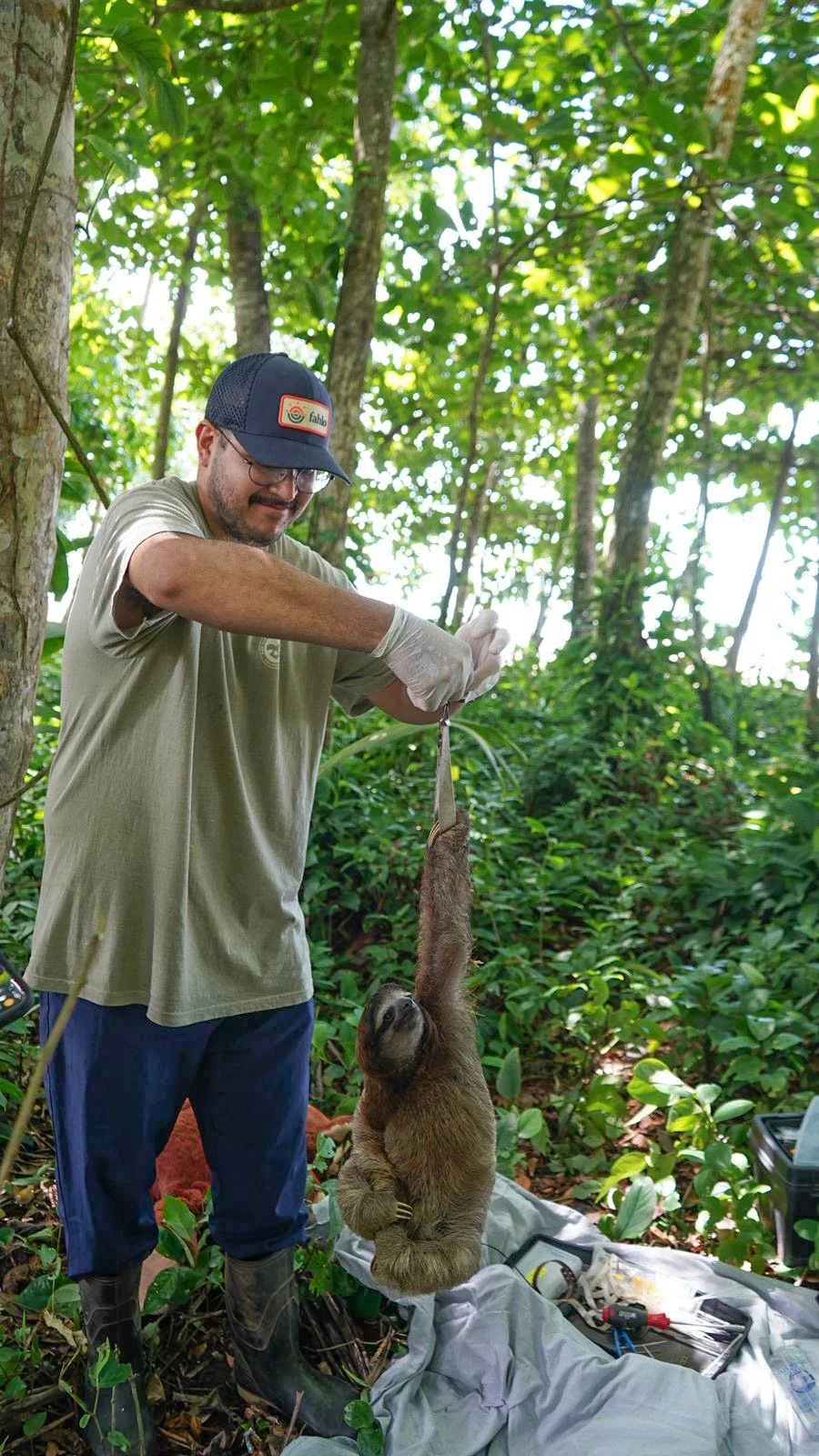
Welcome our newest sloth to join the USP Research family! Nigel is a young male full of energy, curiosity, and personality. From the moment we found him, it was clear that he’s an active individual who enjoys moving through the canopy rather than staying in one place for too long. He spends his time climbing up and down trees, exploring his surroundings, and making the most of sunny days.
During our first observation, Nigel was basking intensely in the sun, soaking up the warmth high in the canopy. In between sunbathing sessions, he was also attempting to feed, showing a healthy and natural curiosity about his environment. At one point, he was spotted near a three-year-old female, adding an interesting social element to the sighting.
His behavior is already giving us a glimpse into his lively character. He was seen hanging by his back limbs, casually scratching his arms, and then returning to a relaxed position with his head facing out toward the ocean, as if taking in the view.
Nigel appears to be in great health and is already proving to be a playful and engaging individual to follow. We’re looking forward to learning more about his movements, habits, and personality in the months ahead.
Primary Forest Sloths
Pipa
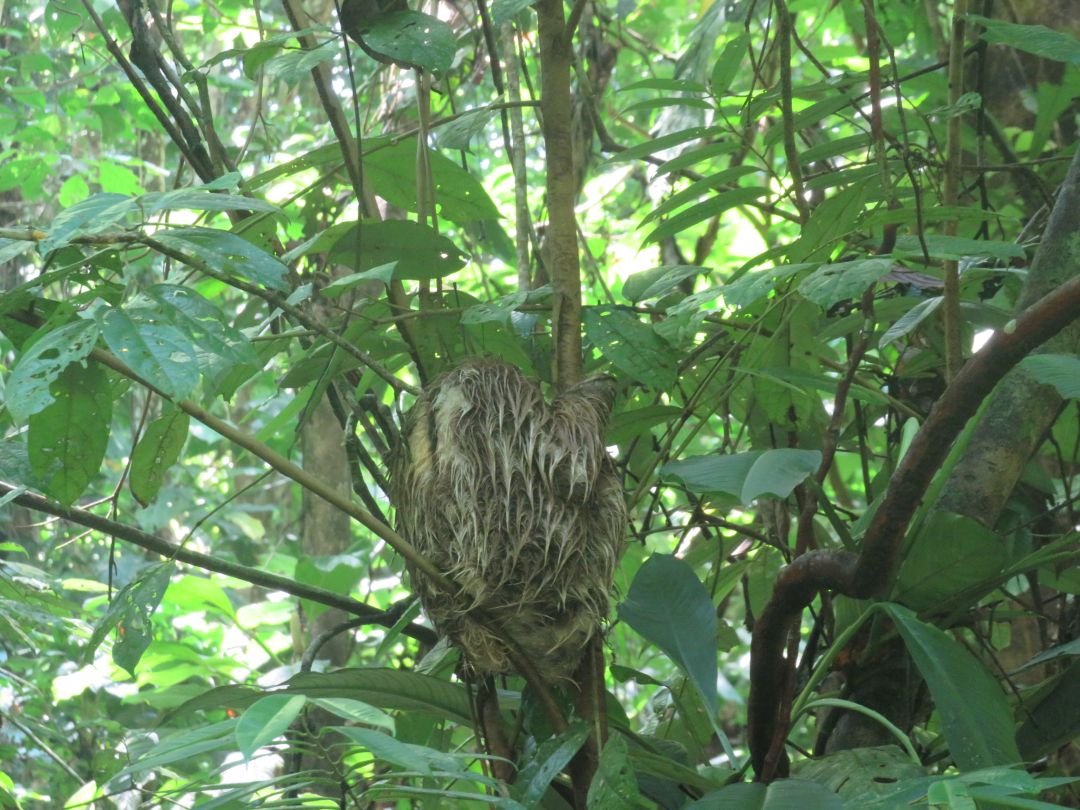
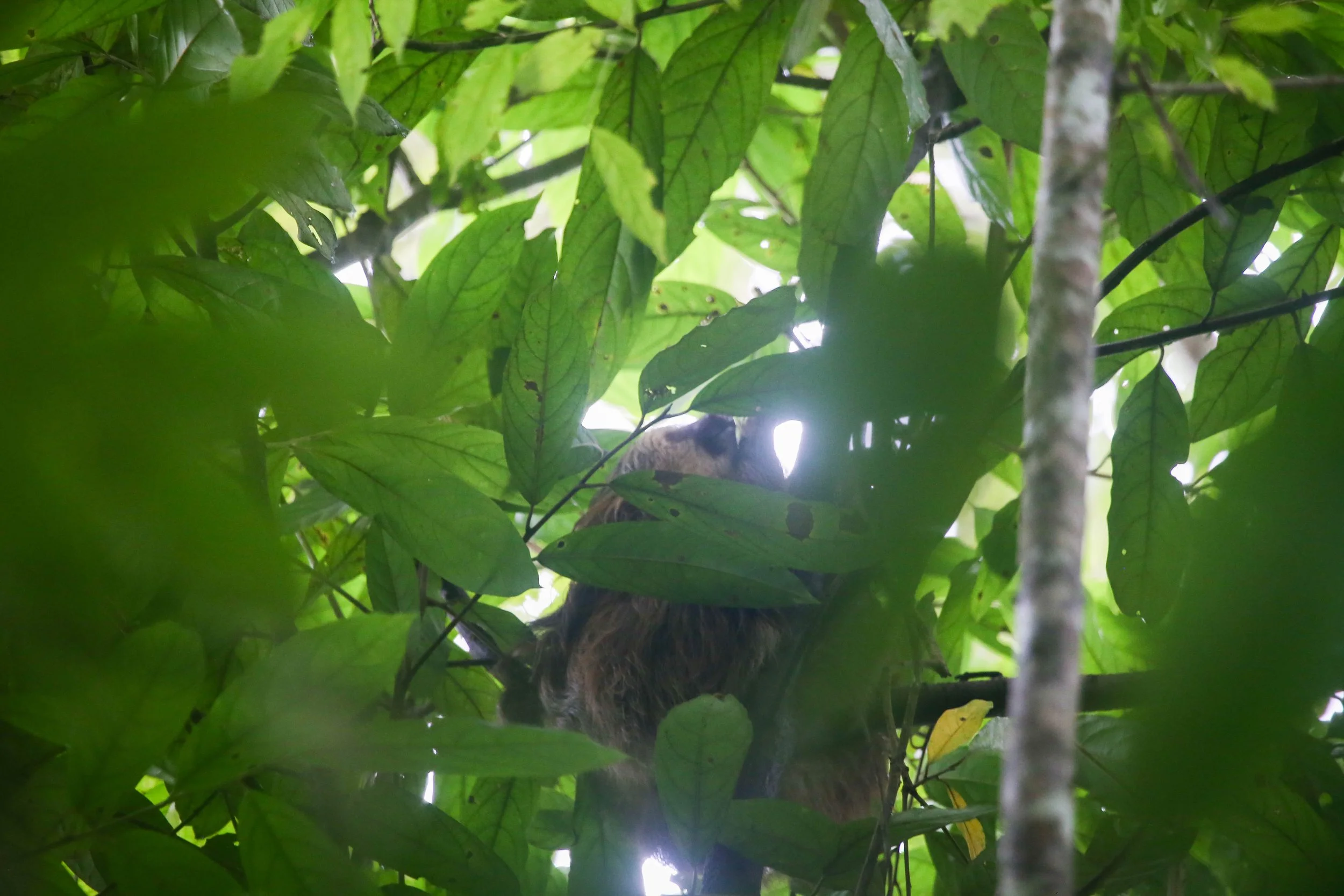
Appropriately named Pipa (meaning ‘coconut’ in Costa Rica), she spends much of her time curled into a tight little ball, looking remarkably like a coconut herself high up in the trees, making her incredibly hard to find. Pipa remained in the same few trees, staying well hidden among dense vines and branches. For a few days, strong and consistent signals confirmed her presence high up in the canopy of some tall trees near the road. These days we weren't actually able to spot her either.
Following a night of heavy rain though, Pippa was found high in the canopy of one of her favorite trees, taking advantage of a warm, sunny morning to dry off.
Flash
It was a sunny day with a light breeze. Flash was in one of his favorite trees near the river, staying low as usual. He was moving around, possibly looking for food. Around midday, he looked at us with what seemed like a small smile for the photo. The night before had heavy rain. When we picked up the signal again, he was at the top of a tree, trying to dry himself in the sun. His fur was still wet but looked very nice after the rain. He stayed curled up, enjoying the first sunlight of the day. Flash is always calm and peaceful, usually moving slowly or feeding in the trees.