June 2026
Update #58 of The Urban Sloth Project!
Luiza
This month, Luiza reminded us that even the best technology isn't perfect.
Unfortunately, her collar battery has stopped working, meaning we can no longer rely on the tracking signal to locate her. For most sloths, this would be frustrating enough, but for Luiza, our famously elusive canopy specialist, it presents an even greater challenge. With her love of the tallest treetops, she has an incredible talent for disappearing completely from view.
Thankfully, we know that every sloth eventually comes down from the canopy, and we have a good idea of the area she calls home. It's now simply a matter of patience until the perfect opportunity presents itself to safely recapture her and fit one of our new, improved collars.
Over the coming months, we'll be gradually replacing collars on all of our tracked sloths. Unfortunately, we've discovered that this particular batch has not been as reliable as expected, with several batteries failing earlier than anticipated. While it's a little frustrating, it's all part of working with wildlife technology in the field, and every challenge helps us improve the way we monitor and protect our urban sloths.
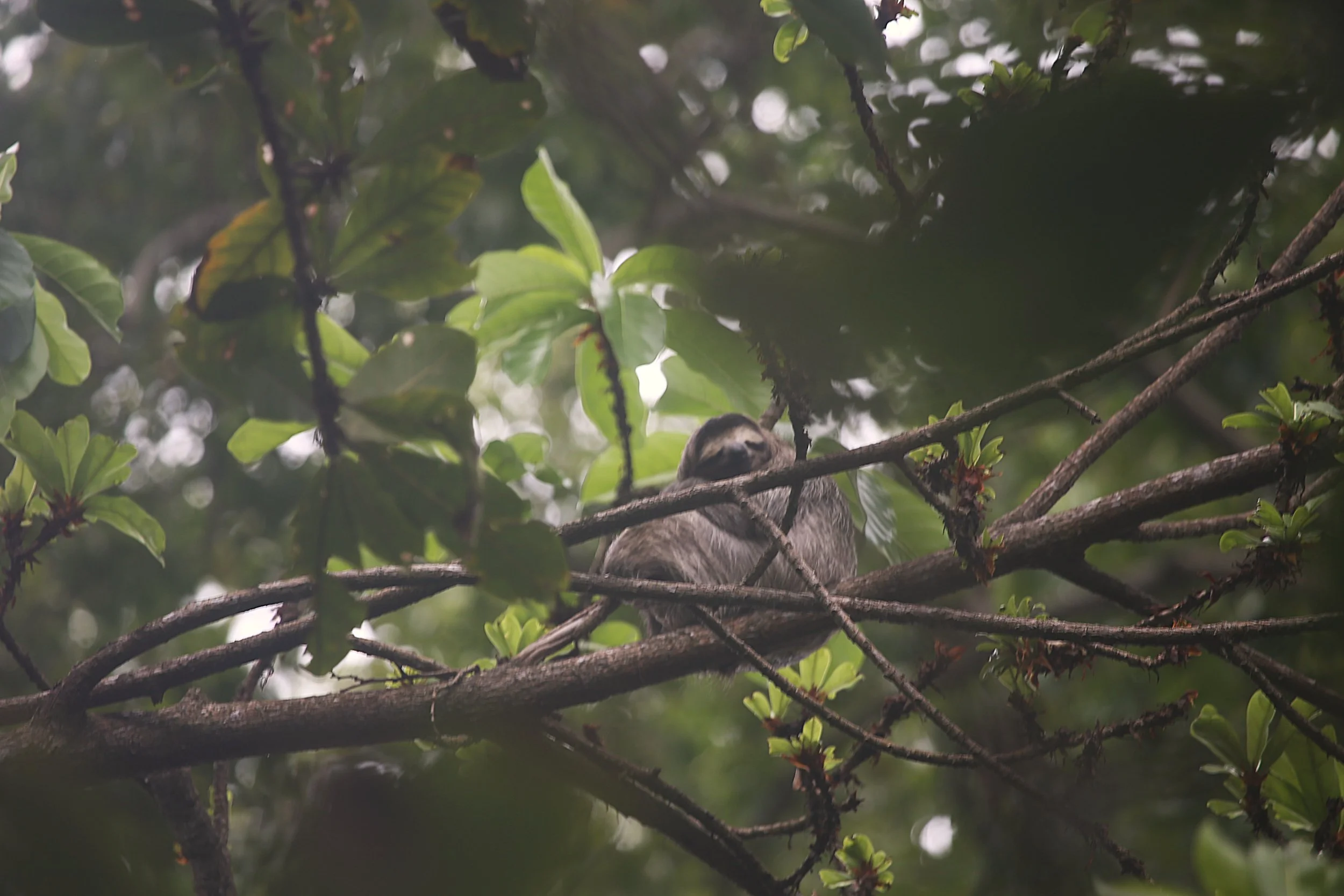
Luiza, back in March.
Martita
Martita has remained remarkably faithful to her new territory behind the Indian restaurant, where she has now spent the last few months. Although her collar battery has unfortunately failed, we've still been able to monitor her through careful observations, regularly confirming her identity by spotting the collar itself high in the canopy.
Until a couple of weeks ago, Martita was almost always accompanied by her baby. Then, during one of our tracking sessions, we noticed an exciting milestone: her youngster was resting alone in a nearby tree. Although still within the same cluster of trees, the baby had chosen its own branch, suggesting it has now begun the gradual journey toward independence. Young sloths remain close to their mothers for some time after becoming more independent, so we expect to continue seeing the pair in the same general area over the coming months.
As luck would have it, we were able to safely capture Martita's adventurous little one this month. Now officially named Patty, she has become a new member of our Urban Sloth Project - but we'll save the details of her story for the section below!
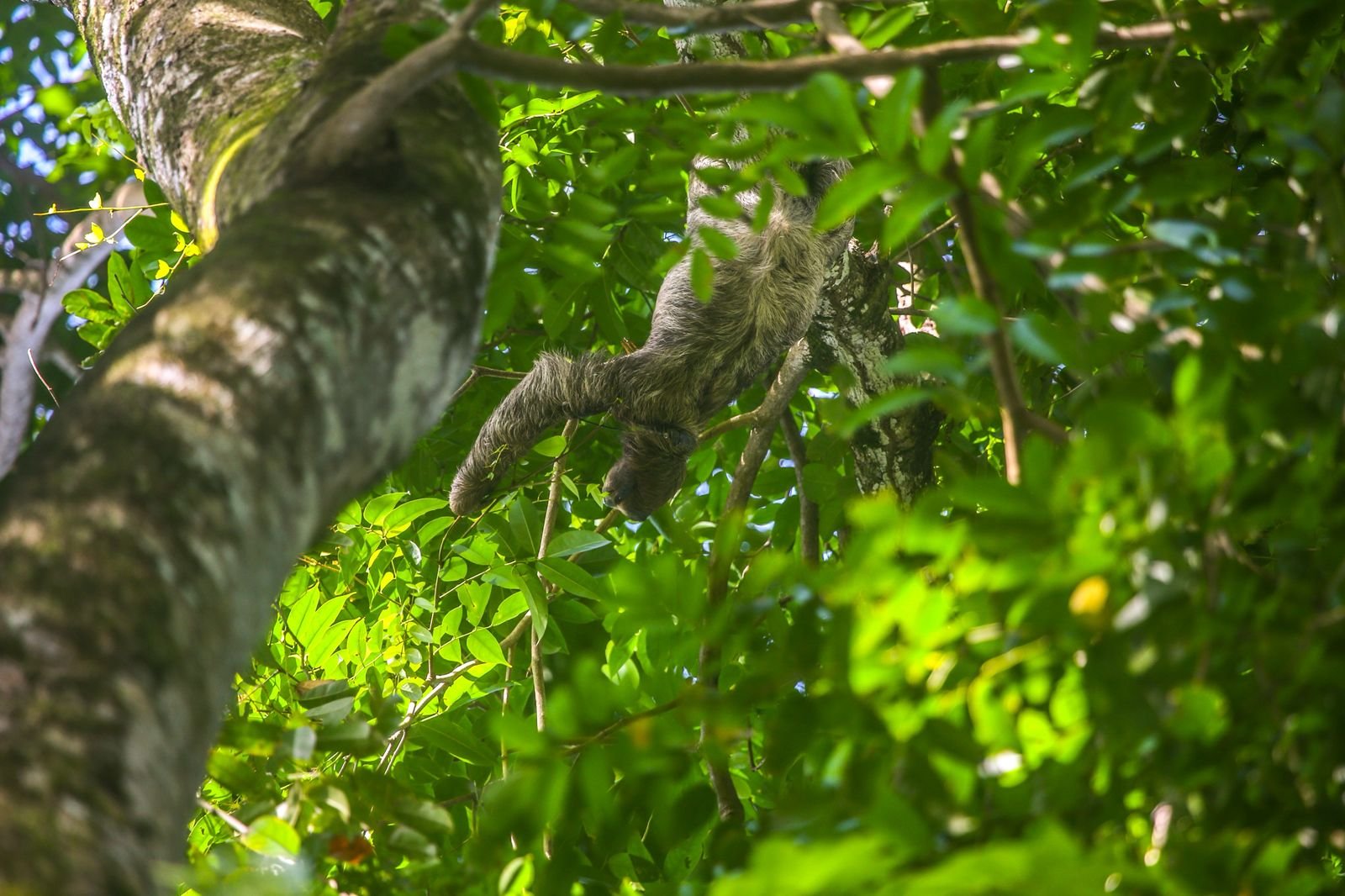
Unfortunately, replacing Martita's collar has proven much more difficult. She has an uncanny ability to remain high in the tallest trees, well out of reach, so for now we continue monitoring her visually while waiting for the perfect opportunity to fit a new collar.
Martita's movements have also directly contributed to another important conservation success. Based on her repeated road crossings, together with reports from the restaurant owner of several sloths crossing in the same location, we identified this as a priority site for a new wildlife bridge.
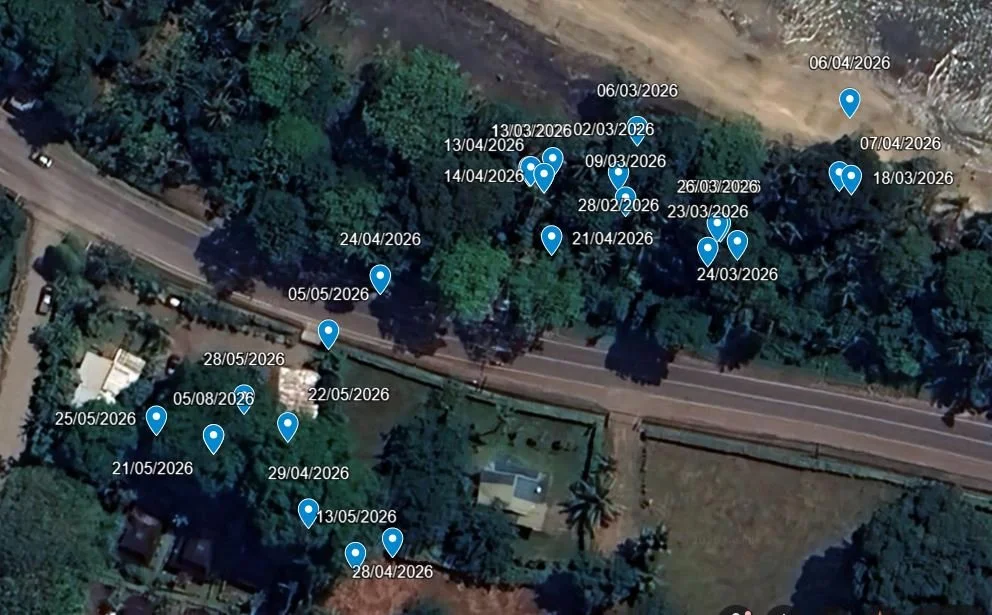
Martita’s GPS points
The bridge has now been installed in collaboration with ICE, Costa Rica’s electricity and telecommunications service provider, creating a much safer crossing point for sloths and other wildlife.
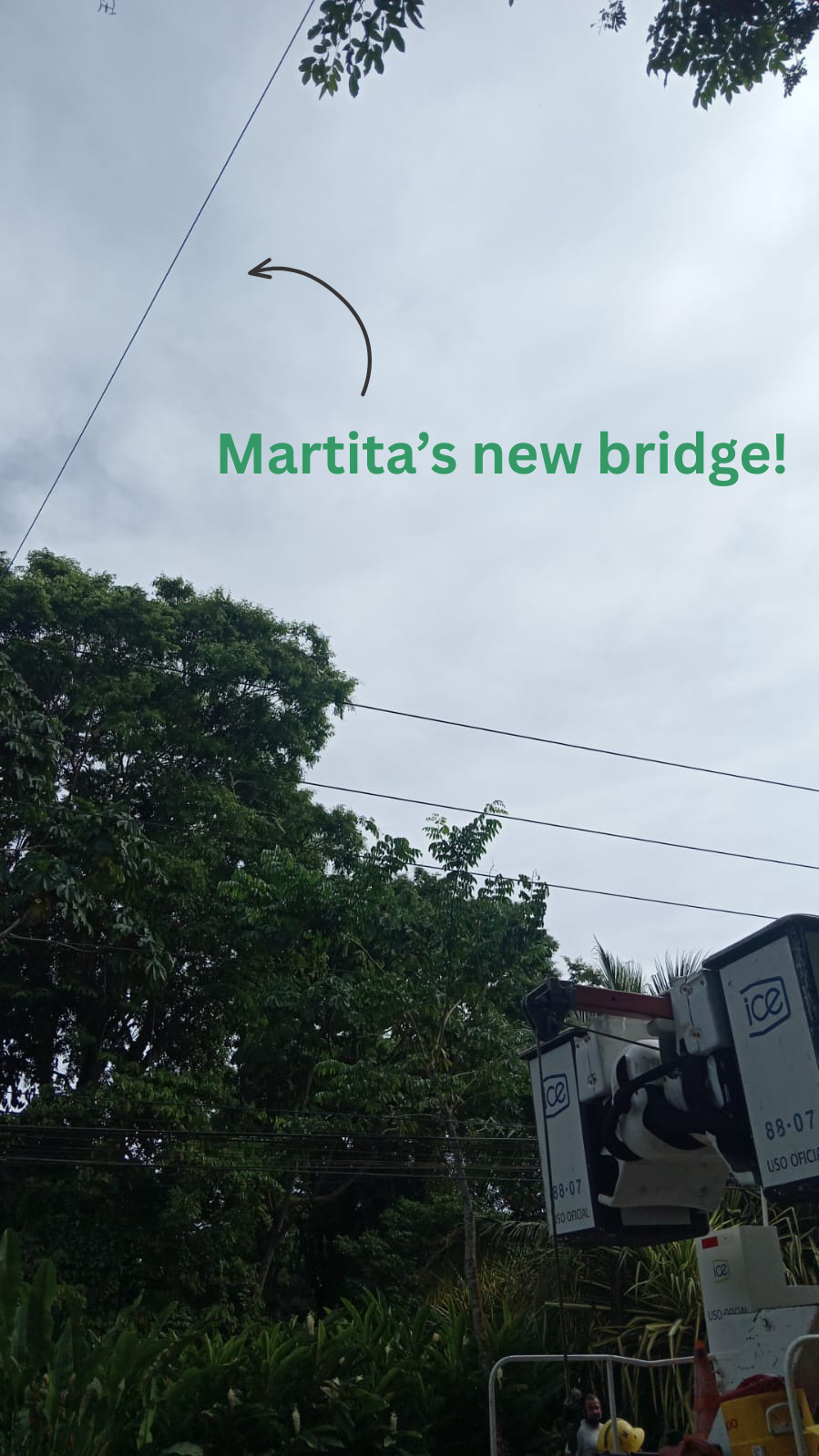
Even more excitingly, it hasn't taken long for other animals to discover it. Monkeys have already begun using the bridge to move into Martita's patch of forest! We just hope our quiet little sloth doesn't mind having some rather energetic new neighbours.
Pistachio
Pistachio seems to have taken a break from his favourite hangout beside the Caribeans Café, just as we were hoping to catch him to remove his collar! Instead, he has been spending his time high in the nearby palm trees, making him practically impossible to access.
The good news is that Pistachio has now completed his role in this stage of our research. Having been monitored since December 2024, he has provided all the movement data we need. The next step is to safely retrieve his collar so we can download the information stored on the data logger and begin analysing it. We're excited to see what his data will reveal about the daily lives of urban sloths and how they navigate such a human-dominated environment.
Once we've recovered the collar, Pistachio will continue life without one, while the data he has helped us collect continues to contribute to our research and conservation efforts.
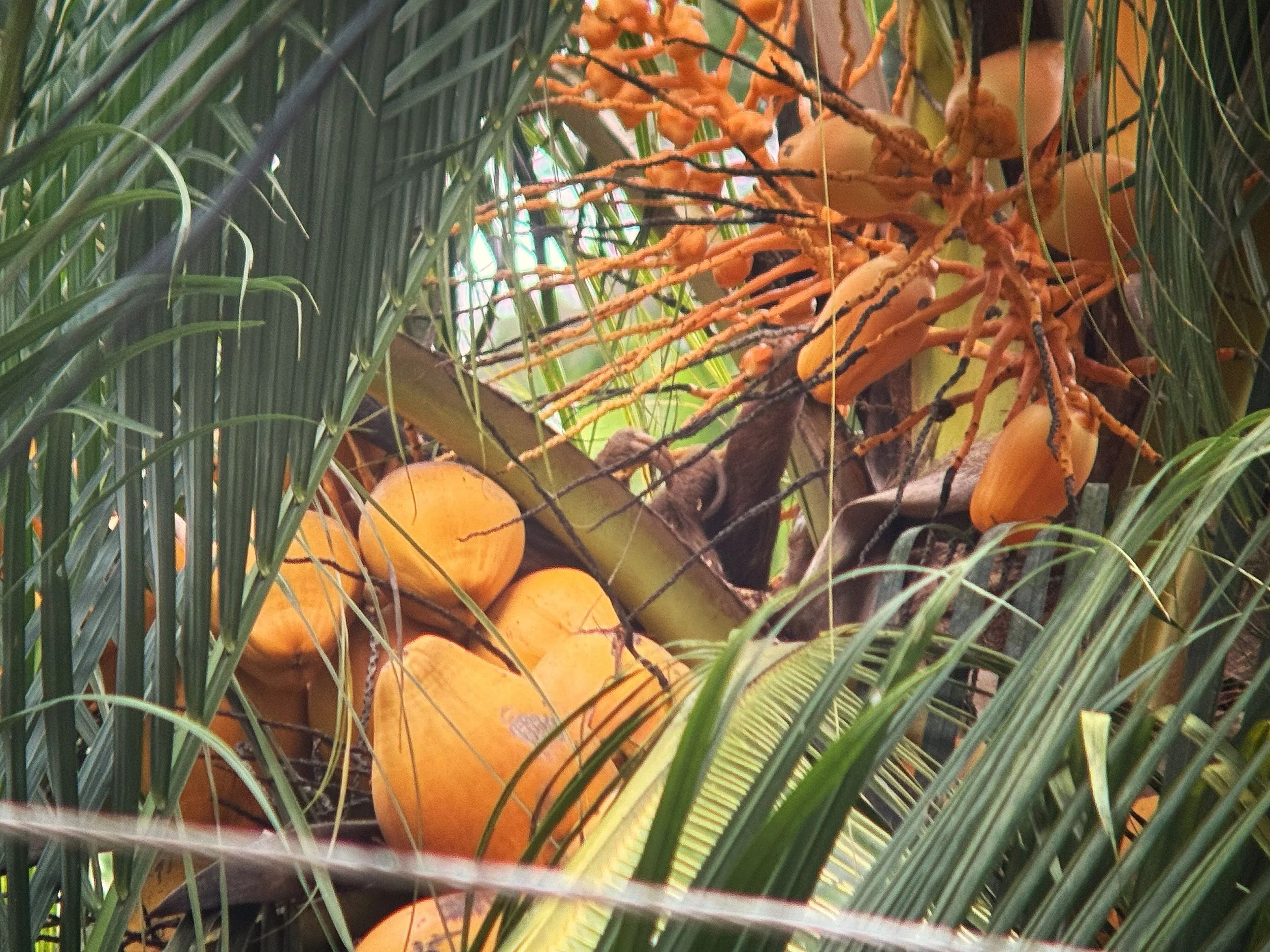
Only Pistachio’s claws are visible, as he remains hidden high in the palm.
Debbie
Debbie continues to spend most of her time high in the almond trees near the beach, where she and Kiwi remain almost inseparable.
Over the past month, it has been wonderful to watch Kiwi grow. With each sighting, the youngster looks more and more like Debbie, and photos of the pair together reveal just how similar their faces have become. Whether sleeping, feeding, or stretching out to enjoy the sunshine, mother and baby are almost always found cuddled closely together, a reminder that Kiwi is still relying on Debbie.
As Kiwi continues to grow, we're beginning to prepare for an exciting next step. The team has been looking for the perfect opportunity to safely capture and collar her, but they have a habit of staying frustratingly high in the canopy! We'll have to wait until she is in a more accessible height before we can fit her with a collar.
Once collared, Kiwi will become one of the few young two-fingered sloths ever tracked through the critical stage of dispersal. Following her movements will give us a rare opportunity to understand how juvenile sloths leave their mother's territory, establish a home of their own, and navigate life in the narrow strip of coastal forest that Debbie calls home.
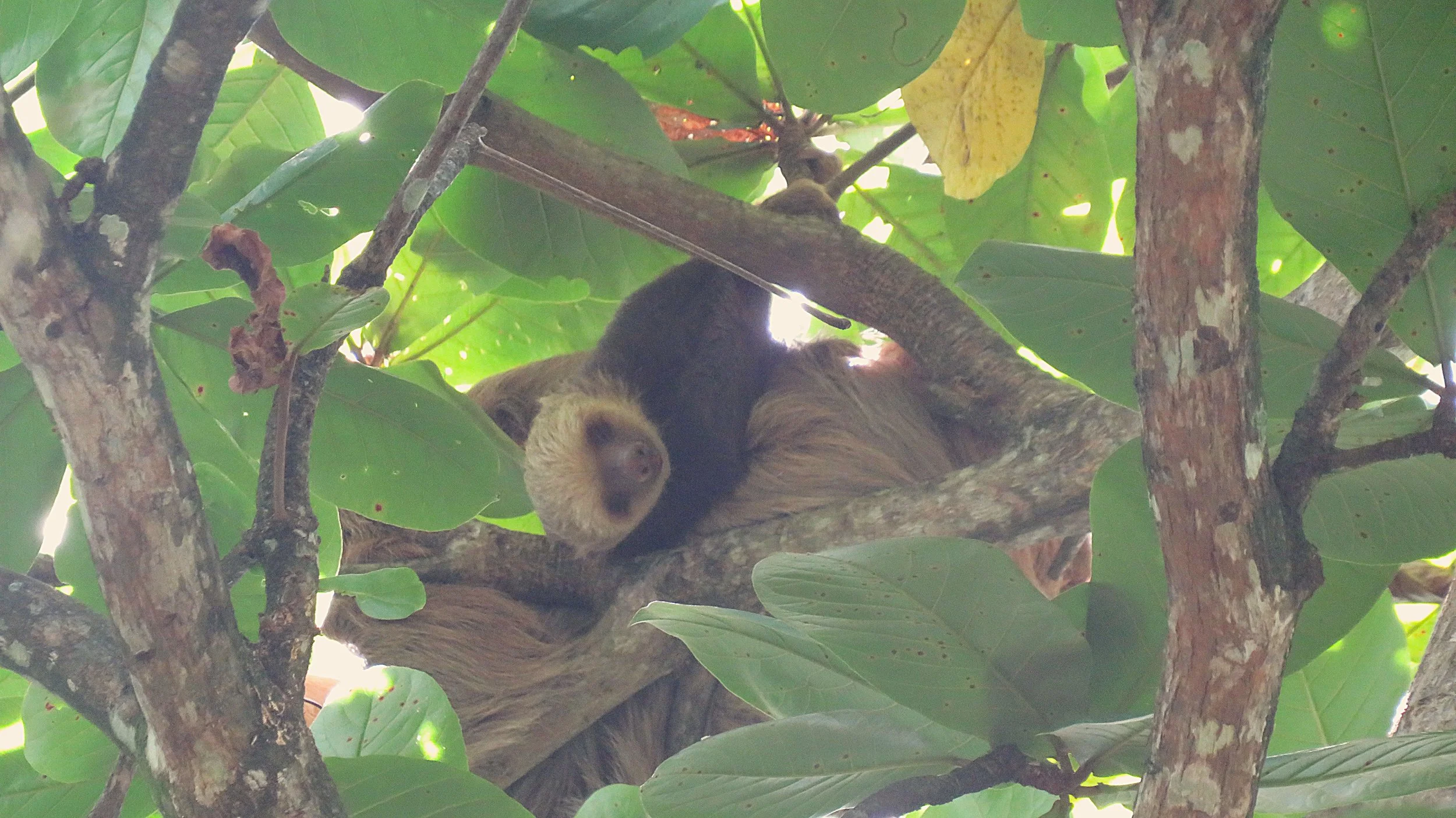
Kiwi, hanging from her mum’s back.
Tango
Tango has continued to make encouraging progress at the rescue centre and is now entering the final stages of his treatment. The veterinary team will soon carry out one last health assessment and, if everything looks as it should, he'll be given the all-clear to begin planning his return to the wild.
After everything Tango has been through, making sure he is released at exactly the right moment is far more important than releasing him quickly. Every sloth is assessed carefully to ensure they are physically fit and ready to survive independently before returning to the forest. We're hopeful that the next update will bring the news we've all been waiting for, that Tango is finally ready to head home to the canopy.
Nigel
Nigel is continuing to settle into life as a young adult and has become one of our most enthusiastic users of the new wildlife bridge design in the maritime zone. Watching him confidently move through these connected treetops is exactly what we had hoped for when installing the bridges, and it's encouraging to see them already becoming part of his regular routine.
A memorable tracking day this month came just after a heavy rainstorm. As the rain clouds cleared and the Caribbean sun reappeared, the team followed a strong signal and found Nigel making use of what has become his favourite "toilet", the base of a tall coconut palm. Like all three-fingered sloths, Nigel climbs down from the canopy about once a week to defecate, and on this occasion, we arrived just after he had finished. Fresh, green droppings beneath the tree confirmed we'd caught him at exactly the right moment before he calmly climbed back into the canopy. This was particularly exciting for the team as we are currently collecting fresh fecal samples from our tracked sloths as part of a study investigating the sloth gut microbiome, the remarkable community of microorganisms that helps them digest a diet made almost entirely of leaves. Samples collected from known individuals like Nigel allow us to better understand how gut microbes vary between sloths and sloth species and how they may be influenced by diet, habitat, and urban living.
Later in the month, Nigel gave us one of our favourite sightings yet. Resting in a tree overlooking the Caribbean, he lay stretched across a branch with his arms folded, looking as though he were relaxing in a hammock. With the ocean behind him and the breeze gently moving through the trees, he looked completely at peace, like a true Caribbean local simply enjoying another beautiful day.
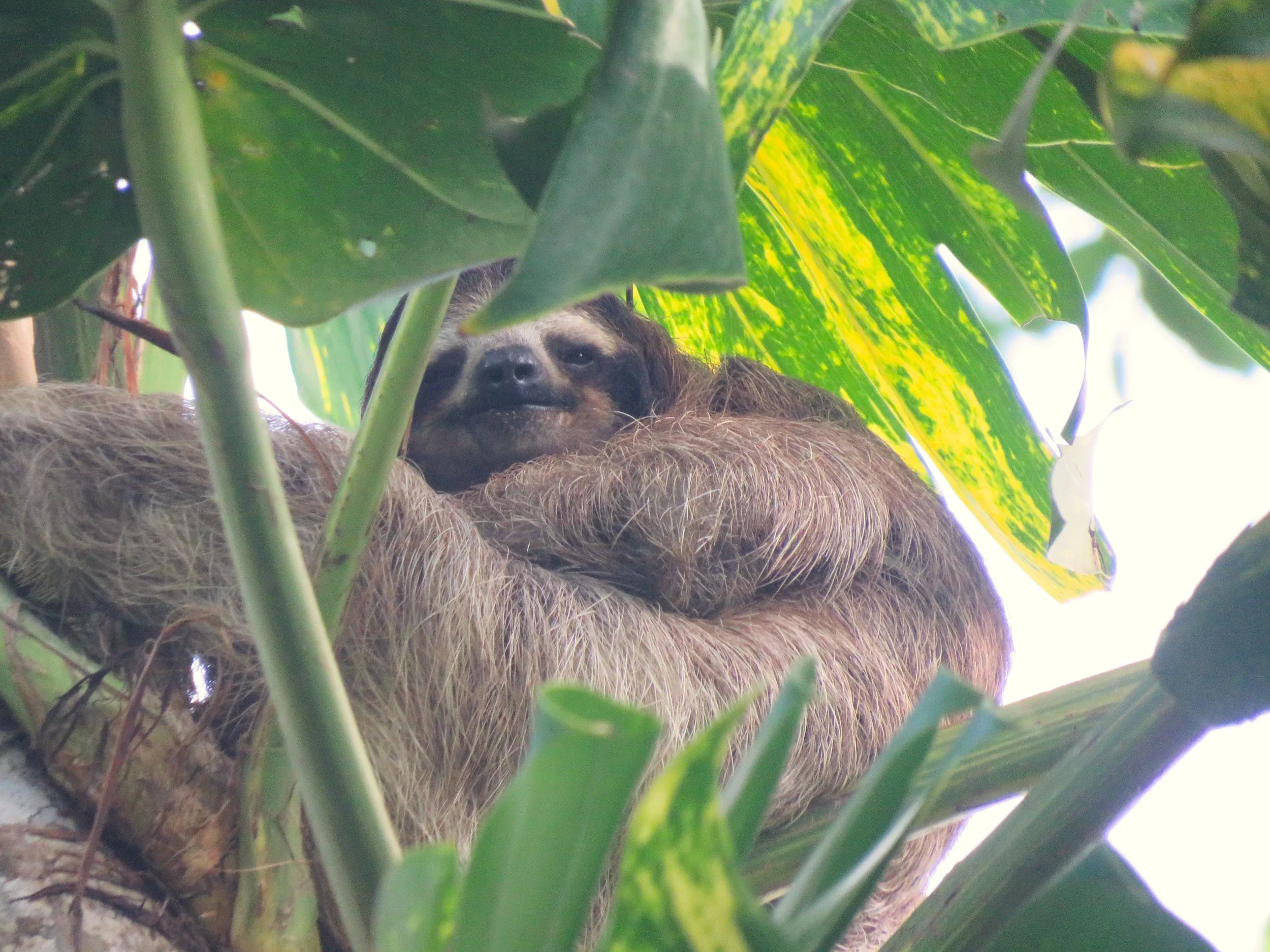
Nigel looking straight at the camera.
Christine
This month brought a rare event as we found Christine and Mikah at ground level.
Similar to Nigel’s story, we were extremely lucky to encounter mother and daughter during one of their toilet trips. The chance encounter gave us the perfect opportunity to replace Christine's collar as part of our project-wide recollaring effort.
Our initial idea was to collar Mikah too but after trying the collar on her, we quickly realised she was still too small to be collared. For now, Mikah will continue exploring the canopy collar-free.
One of the most memorable discoveries of the month came when we located Christine in the largest tree we have ever recorded during the project. The trunk was so enormous that it stretched beyond the length of our measuring tape. The giant chilamate tree was completely wrapped in a strangler fig, creating a towering tangle of vegetation that provided an impressive home for both mother and daughter.
When Christine and Mikah descended from the canopy, they had fresh strangler fig sap smeared around their mouths, providing a clue as to what they had been feeding on before their journey to the ground.
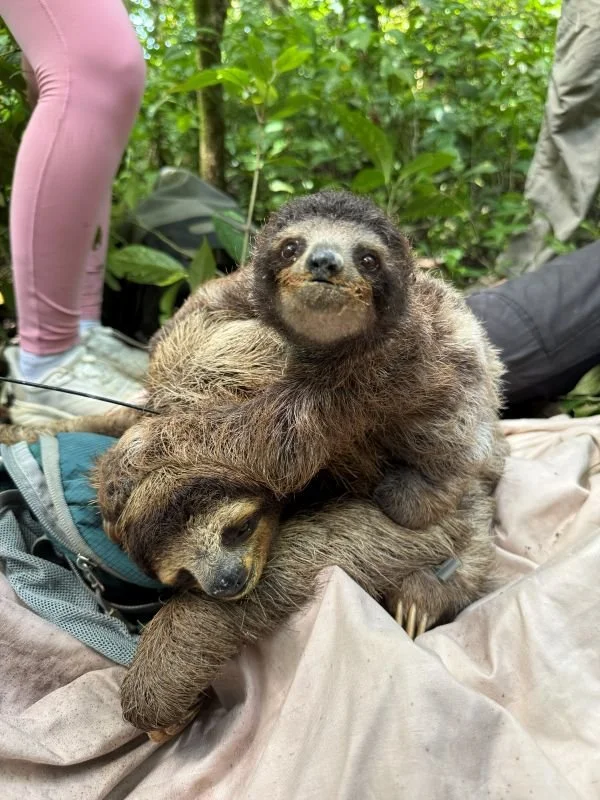
New Urban Sloths!
Patty
This month marked an exciting milestone as Patty, Martita's youngster, officially became the newest member of our Urban Sloth Project.
We first met Patty when Martita was collared several months ago. At the time, she was a tiny infant clinging tightly to her mother's belly. Now, at around three and a half months old, she has already begun taking her first steps towards independence.
During one tracking session, we found Patty resting low in a tree close to Martita's favourite patch of forest. With such a rare opportunity, our climber was able to safely capture her with ease. After carefully weighing and measuring her, we confirmed that she was large enough to be fitted with a tracking collar.
Although Patty is a similar age to Christine's youngster, Mikah, there is one important difference. Patty is already living independently from her mother and weighed around 200 grams more than Mikah, making her ready to safely join the project. Every decision about collaring is made on an individual basis, with the welfare of each sloth always coming first.
After completing all the health checks and fitting her collar, Patty was released back into the same tree as Martita, exactly where she belonged. Over the following days, we continued to observe her nearby. She remained in the same cluster of trees as her mother, although usually at a lower height, showing that while she's becoming more independent, she still prefers to stay close to home.
In another lovely update, the restaurant owner even reported spotting Patty during one of her weekly trips to the ground to defecate, which is a wonderful example of how engaged local businesses have become in helping us monitor the sloths that share their neighbourhood. We're incredibly excited to follow Patty's journey as she gradually establishes a territory of her own over the coming months.
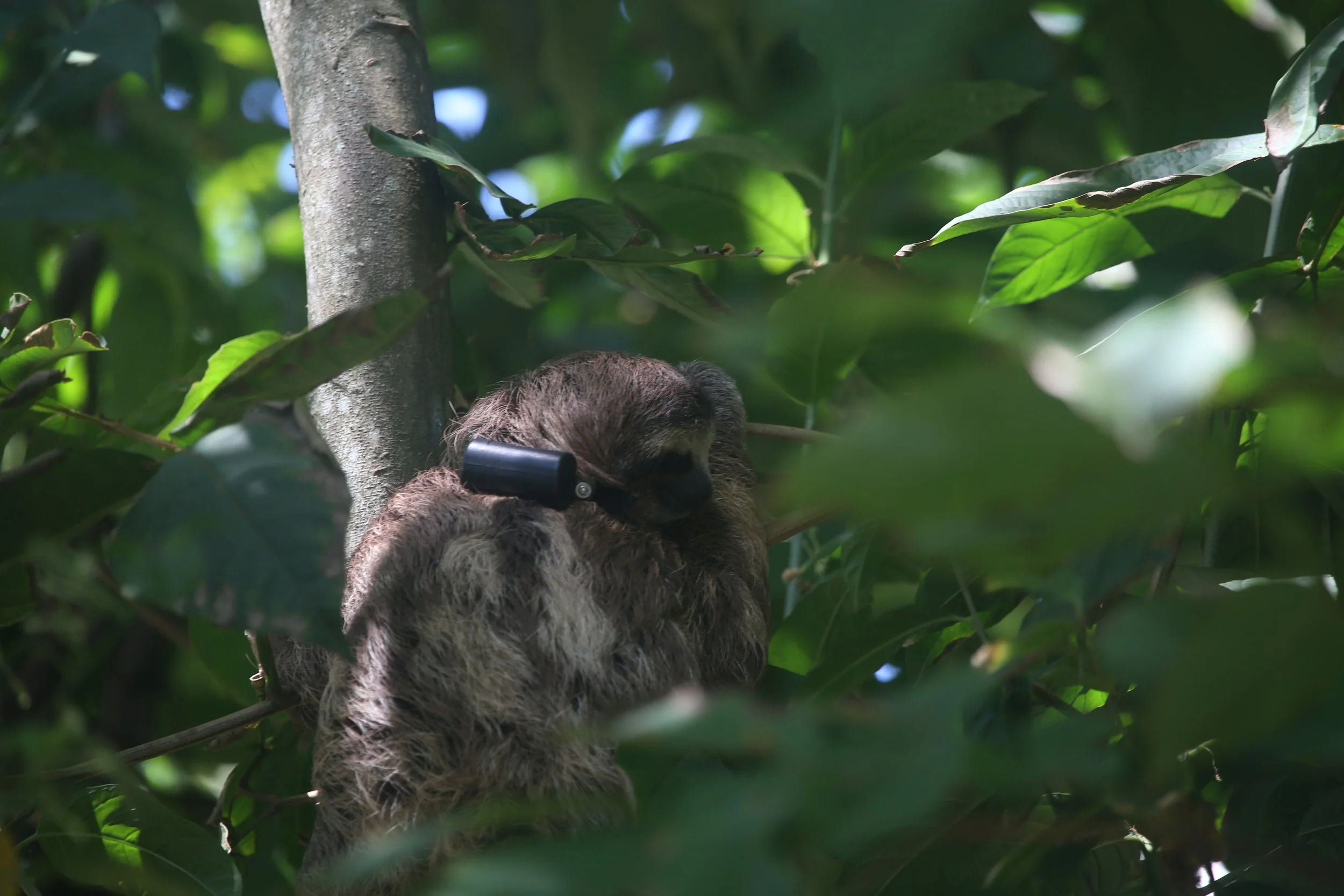
Daffodil
This month, we were delighted to welcome Daffodil, a female two-fingered sloth, as one of the newest members of our Urban Sloth Project.
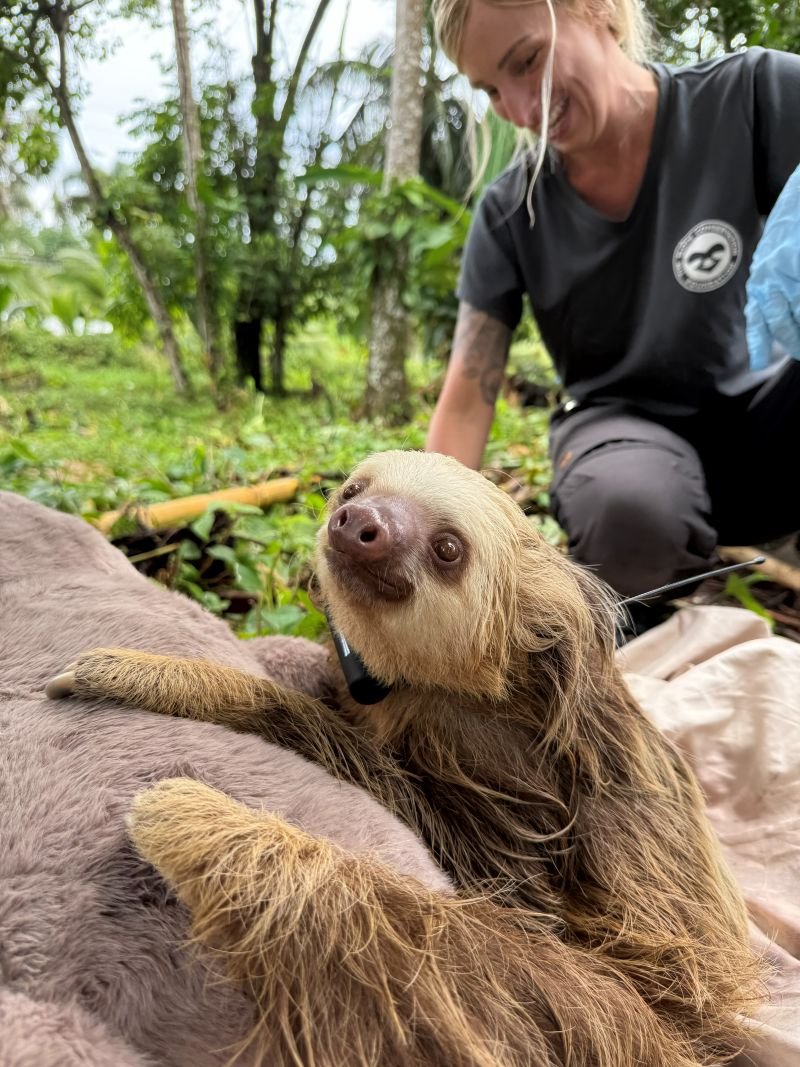
Her story began unexpectedly during a tour with some of our wonderful supporters. While searching the cecropia trees for Bob and another female we had been monitoring, who we suspect may be pregnant because of her noticeably enlarged abdomen, we spotted a different sloth resting unusually low in the canopy, just four metres above the ground.
Recognising this rare opportunity, Dr.Cliffe carefully climbed a ladder and safely retrieved Daffodil. After completing her health assessment, measurements, and fitting her with a tracking collar, she was released straight back into the same tree.
Daffodil clearly wasn't interested in staying still for long! As soon as she was released, she energetically climbed back into the canopy, moving confidently through three or four neighbouring trees before finally settling out of sight. It was a reassuring sign that she had handled the entire process well and was eager to get back to her normal routine.
Over the following days, we continued to find Daffodil in the same small cluster of trees, although by then she had returned to the much calmer pace of life we'd expect from a sloth. We look forward to getting to know her movements, personality, and favourite hangout spots as she settles into life as one of our newest tracked sloths.
Bruce
This month, we also welcomed Bruce, a male two-fingered sloth (Choloepus Hoffmanni), to the Urban Sloth Project.
Bruce provided one of the smoothest and easiest captures we have had in quite some time. After locating him curled into a tight ball in a noni tree, Deyber expertly climbed a ladder to reach him while four team members carefully supported the ladder from below. Remaining calm throughout the entire process, Bruce showed exactly why sloths have a reputation for taking life slowly.
Once safely reached, he was encouraged to cling onto one of our brand-new "sloth-catching" cuddly toys. These soft toys provide a comfortable object for sloths to hold onto during handling, helping to reduce stress and making the process safer for both the animal and the team. Bruce happily embraced the stuffed sloth toy before being carefully passed down to Dr. Cliffe for his health assessment and collar fitting.
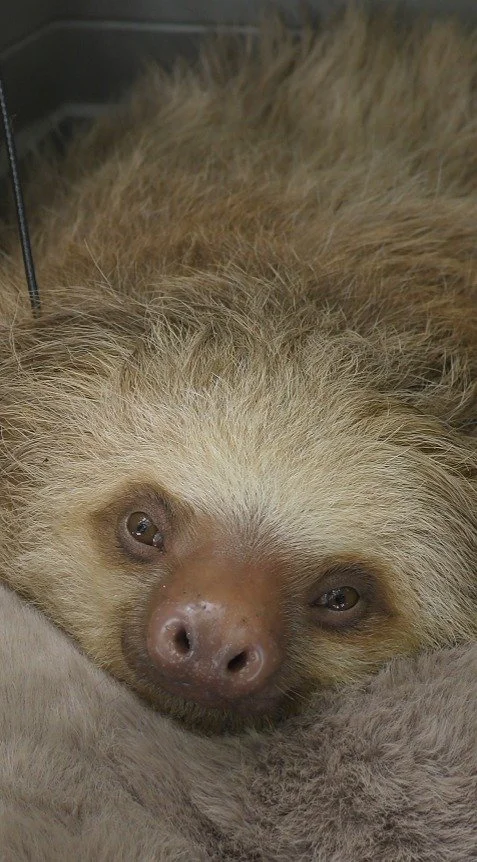
Bruce was named in honour of the father of one of our supporters, making his addition to the project particularly special.
After all the measurements, checks, and collaring were complete, Bruce was returned to exactly where he had been found. Without hesitation, he calmly climbed straight back up the same tree and disappeared back into the canopy, seemingly unfazed by the entire experience.
We look forward to learning much more about Bruce's movements, habitat use, and personality in the months ahead.
Bob
The day we found Bob began very differently from how it ended. The team was in the office, while Becky was out with a film crew, when we suddenly received an urgent call: a sloth had been spotted on the ground in an area with poor connectivity and needed to be collared immediately. Within just five minutes, we were on the move and heading into the field.
We arrived to find Bob, a mature male three-fingered sloth (Bradypus variegatus), calmly crossing the ground, moving through an area of scattered trees. As soon as he was safely intercepted, we carried out the full protocol on site, recording measurements and fitting his collar before releasing him back into a nearby cecropia tree, which he appeared to be actively trying to reach.
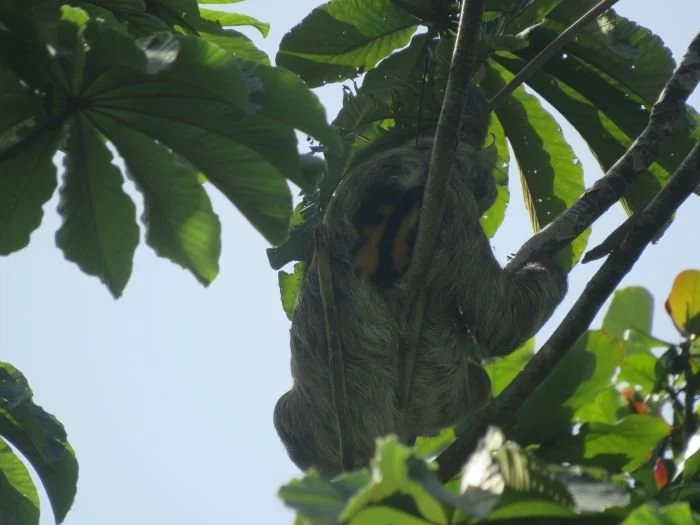
Bob looking quite at peace after the collaring.
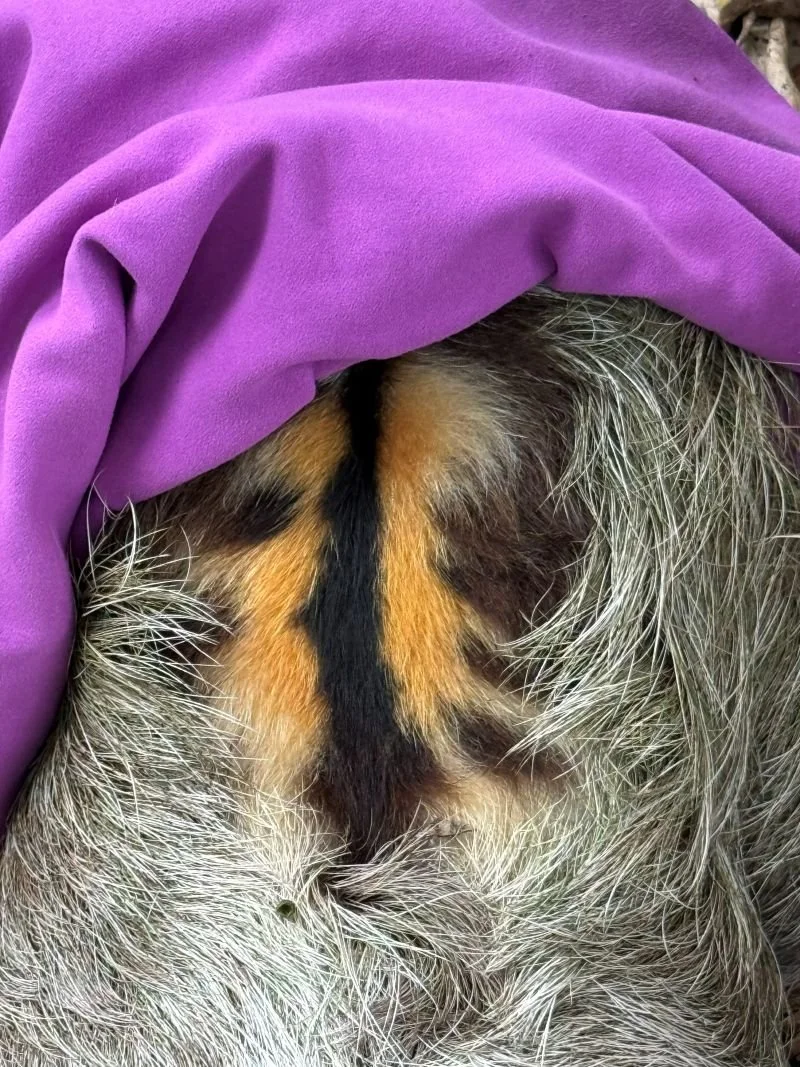
Bob handled the entire process with remarkable calm. A healthy, fully mature male with a striking bright speculum.
Since his release, Bob has remained in the same general area for several weeks of monitoring, sharing the landscape with a diverse community of wildlife including woodpeckers, masked tityras, and crimson-fronted parakeets. This part of the maritime zone continues to reveal just how rich and dynamic this coastal ecosystem really is.
Primary Forest Sloths
Pipa
Pipa stayed faithful to her usual corner of the primary forest this month, rarely venturing far from her favourite trees. She continues to show a strong preference for this small patch of forest, where food and shelter seem to provide everything she needs.
One of this month's tracking sessions turned into a true rainforest adventure. Following a morning of heavy rain, the forest floor was slippery, the leaves were still dripping with water, and the team followed a strong signal deep into the forest. This is one of the more challenging areas to work in, where dense vegetation and wet conditions mean we always have to stay alert for snakes.
After searching for some time, one of the team members spotted what looked like a dark lump through a pair of binoculars high in the canopy. At first, it was impossible to tell whether it was simply a cluster of rain-soaked leaves or a sloth curled into a ball. After a closer look, we finally confirmed it was Pipa, perched nearly 30 metres above the ground at the top of a towering tree.
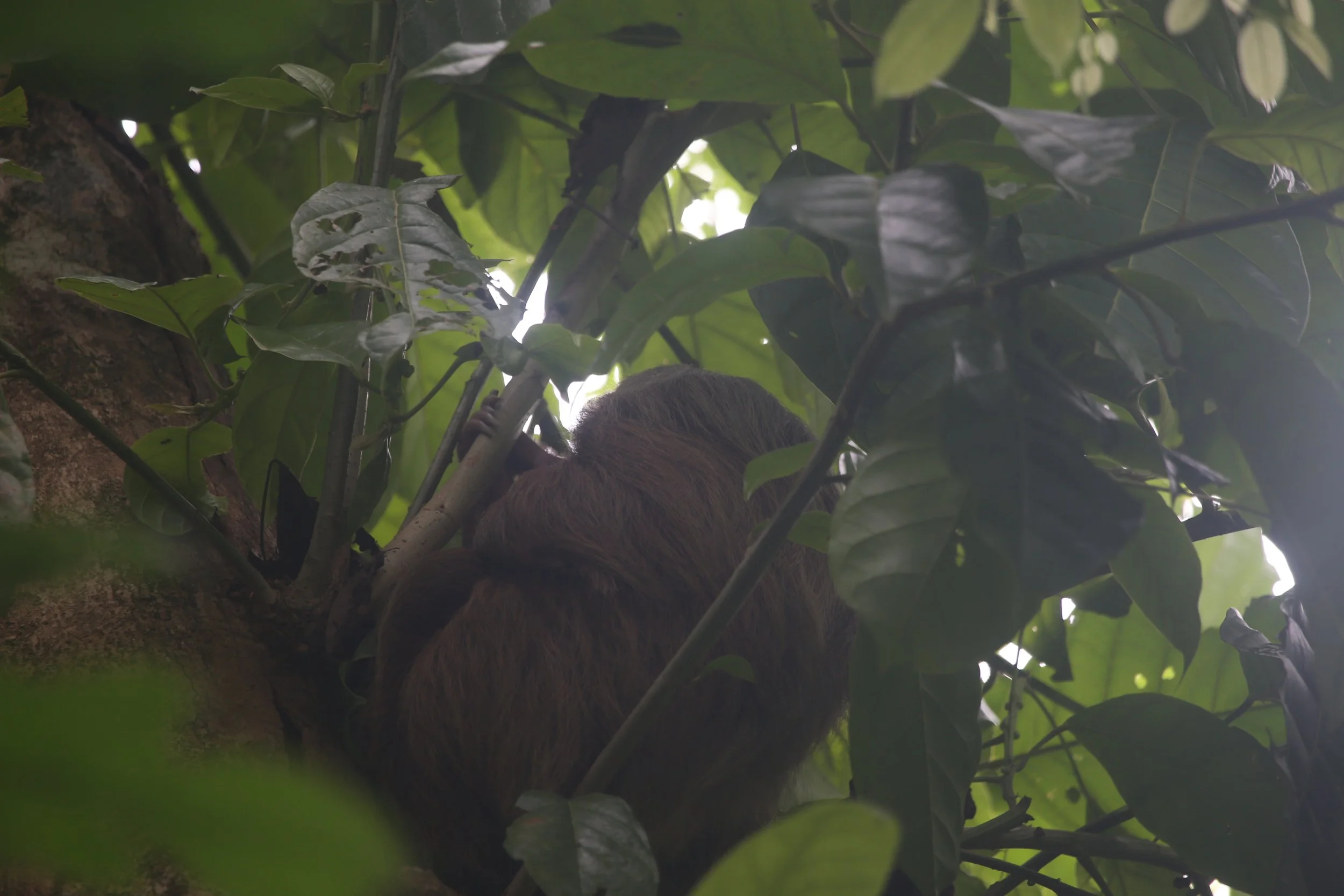
Pipa, true to her name (which means "coconut" in Costa Rica), is usually curled into a tight little ball high in the canopy.
Flash
Flash reminded us this month why he is one of the most difficult sloths to spot in the forest.
After a period of rain, the forest was dripping with water and every trunk, vine, and branch seemed to blend into the next. Flash, who is slightly smaller than a fully grown adult, has exceptionally good camouflage, and in these conditions he seemed to disappear completely. Flash typically prefers the middle levels of the canopy rather than the highest branches, but that doesn’t make him any easier to find.
On another tracking day, finding him proved equally challenging. The signal was bouncing heavily between two large palm trees, making it difficult to pinpoint his exact location. After a careful search, we finally spotted him nestled among a network of lianas and hanging vines attached to a large tree. From that angle, we were able to confirm the collar and finally put a face to the signal.
However, we did have one moment of good fortune during the month, when we managed to spot him in a perfectly clear and fully visible position, offering a rare and rewarding view of this otherwise elusive sloth.
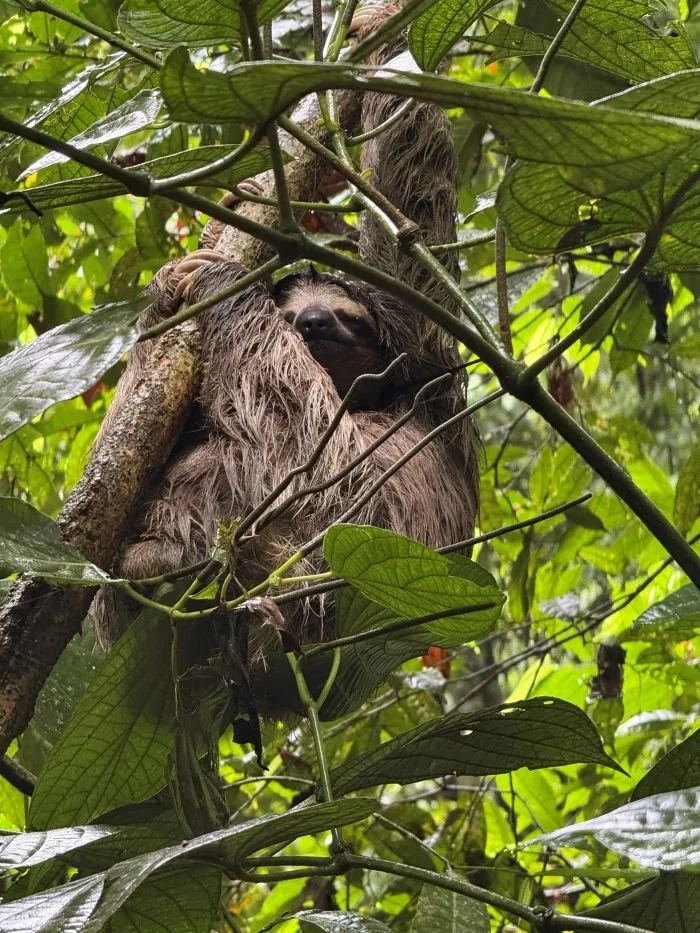
Now that’s a peaceful face!
Thank you, as always, for being part of the Sloth Fellowship and for supporting the work we do every day for Costa Rica’s wildlife.