
Costa Rica Approves Landmark Law Requiring Wildlife Crossings in Public Infrastructure
On August 4, 2026, Costa Rica's Legislative Assembly unanimously approved legislation that makes wildlife crossings and other mitigation measures a legal requirement in public infrastructure projects whenever scientific evidence shows they are necessary to maintain ecological connectivity and ensure the safe movement of wildlife.
Approved with 56 votes in favor and none against, the legislation amends Costa Rica's Organic Environmental Law (Law No. 7554) by adding a new Article 31 bis.
For a country that protects nearly 6% of the world's biodiversity, this represents another important milestone in ensuring development and conservation can move forward together.
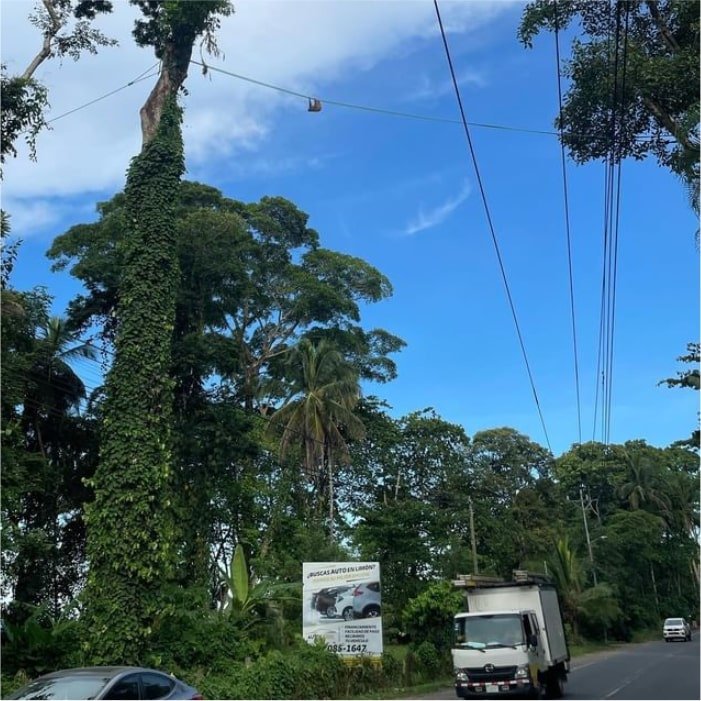
Two-fingered sloth using one of our canopy bridges in Costa Rica
Wildlife Connectivity Is Now Part of Costa Rican Law
The new legislation recognizes a simple but powerful reality: roads, bridges, and other public infrastructure can fragment habitats, isolate wildlife populations, and prevent animals from reaching food, mates, nesting sites, and shelter.
Under the new law, public infrastructure projects must incorporate wildlife crossings or other mitigation measures whenever expert scientific evidence demonstrates that ecological connectivity has been disrupted. The legislation applies to both terrestrial and aquatic wildlife, ensuring that mitigation measures are considered for a wide range of species and ecosystems.
Wildlife Crossings Must Be Planned From the Start
One of the strongest aspects of the new legislation is that wildlife mitigation can no longer be treated as an afterthought. The law requires that wildlife crossings and other environmental measures be considered during the earliest stages of project planning, including pre-investment and budgeting.
Developers must:
Conduct scientific studies to identify wildlife movement routes and roadkill hotspots.
Design appropriate mitigation measures based on those findings.
Obtain approval from Costa Rica's National System of Conservation Areas (SINAC).
Include the costs of construction and long-term maintenance within the project budget.
This shifts wildlife protection from a voluntary measure to a standard component of infrastructure design.

Sloths are vulnerable to roadkills, dog attacks, or human harassement.
Existing Roads Must Also Reduce Their Impact
The legislation does not require every existing road to be retrofitted immediately, but whenever roads undergo maintenance, rehabilitation, widening, or major improvements, the responsible institutions must evaluate opportunities to reduce habitat fragmentation and improve wildlife connectivity.
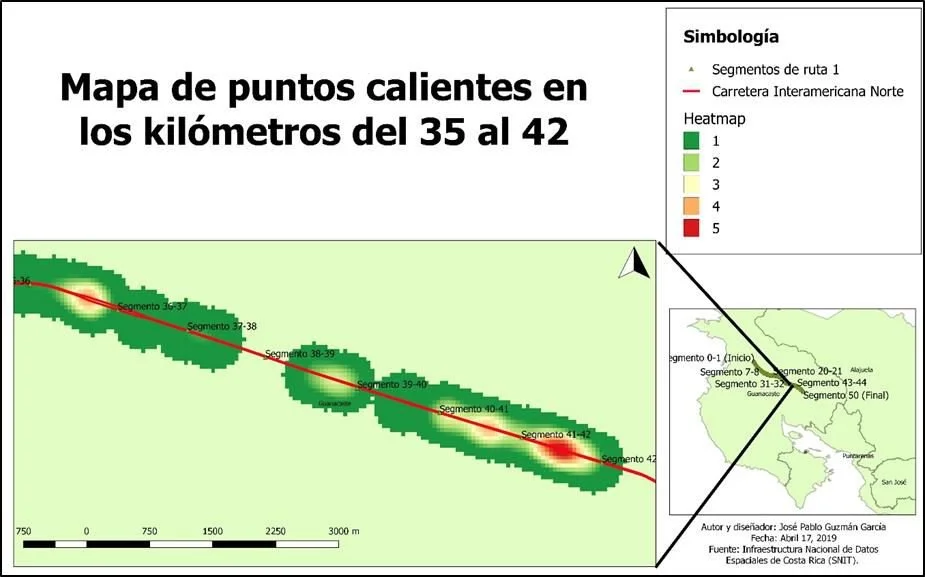
Roadkill hotspots map, from kilometer 35 to 42 | Correlation Between Road Physical Characteristics and Wildlife Vertebrate Roadkill on the North Inter-American Highway, Costa Rica, José Pablo Guzmán García, Universidad Latina. Revista Ecología y Desarrollo Sostenible
Priority areas will be identified using scientific evidence and in coordination with SINAC. Within 24 months of the regulations entering into force, SINAC must begin identifying the country's most important wildlife crossing points and ecological conflict areas across existing infrastructure.
Science Is at the Heart of the Law
One of the most encouraging aspects of the legislation is its emphasis on evidence-based conservation. Developers must carry out technical and scientific studies to identify areas where wildlife movement has been disrupted.
The law specifically requires consideration of roadkill hotspots, using biological research and existing wildlife mortality records to prioritize locations where mitigation will have the greatest conservation impact.
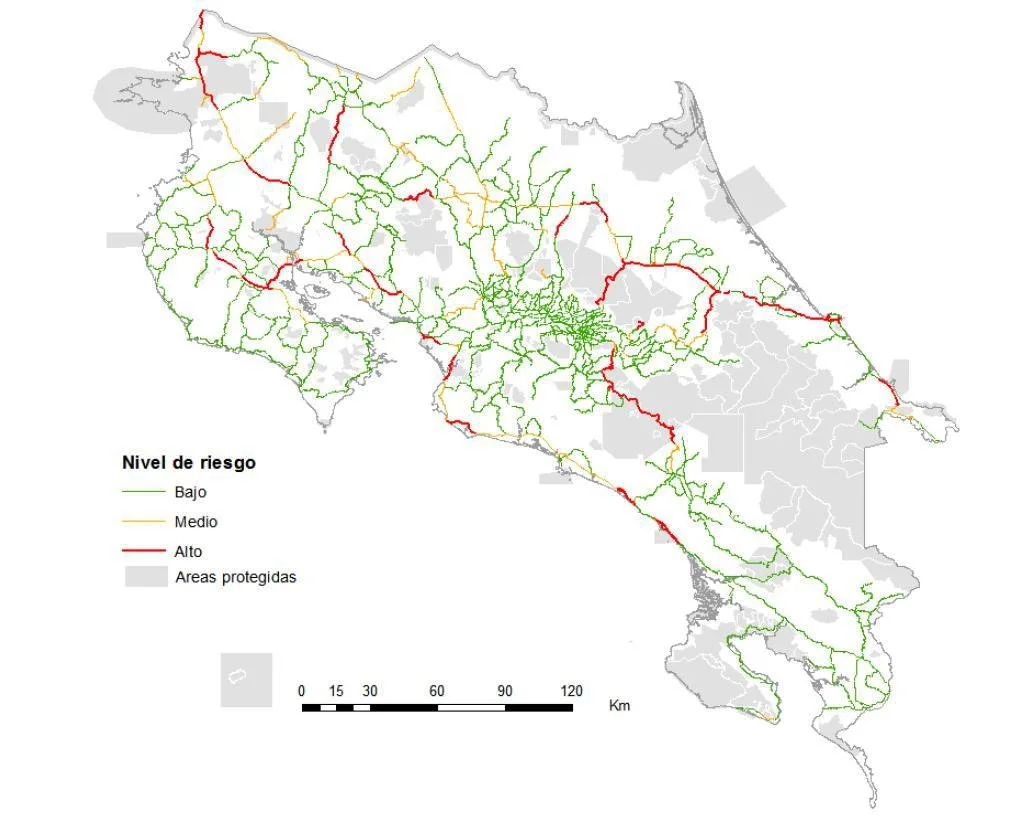
Source: Wildlife roadkill hotspots in Costa Rica. Adapted from Gutiérrez Sanabria (2017), National Road Risk Assessment for Wildlife, Master's Thesis, National University of Costa Rica. Estado del Impacto Vial y Medidas Ambientales para la Vida Silvestre, Costa Rica. Surcos Digital
The National Environmental Technical Secretariat (SETENA) will also verify that these wildlife protection measures are incorporated into projects before granting environmental approval.
Why Wildlife Crossings Matter
Roads are among the greatest threats to wildlife worldwide: they fragment habitats, isolate animal populations, disrupt migration routes, and increase mortality from vehicle collisions.
Researchers from Universidad Latina compiled more than 19,000 documented wildlife roadkill records from studies conducted across Costa Rica between 1996 and 2025.
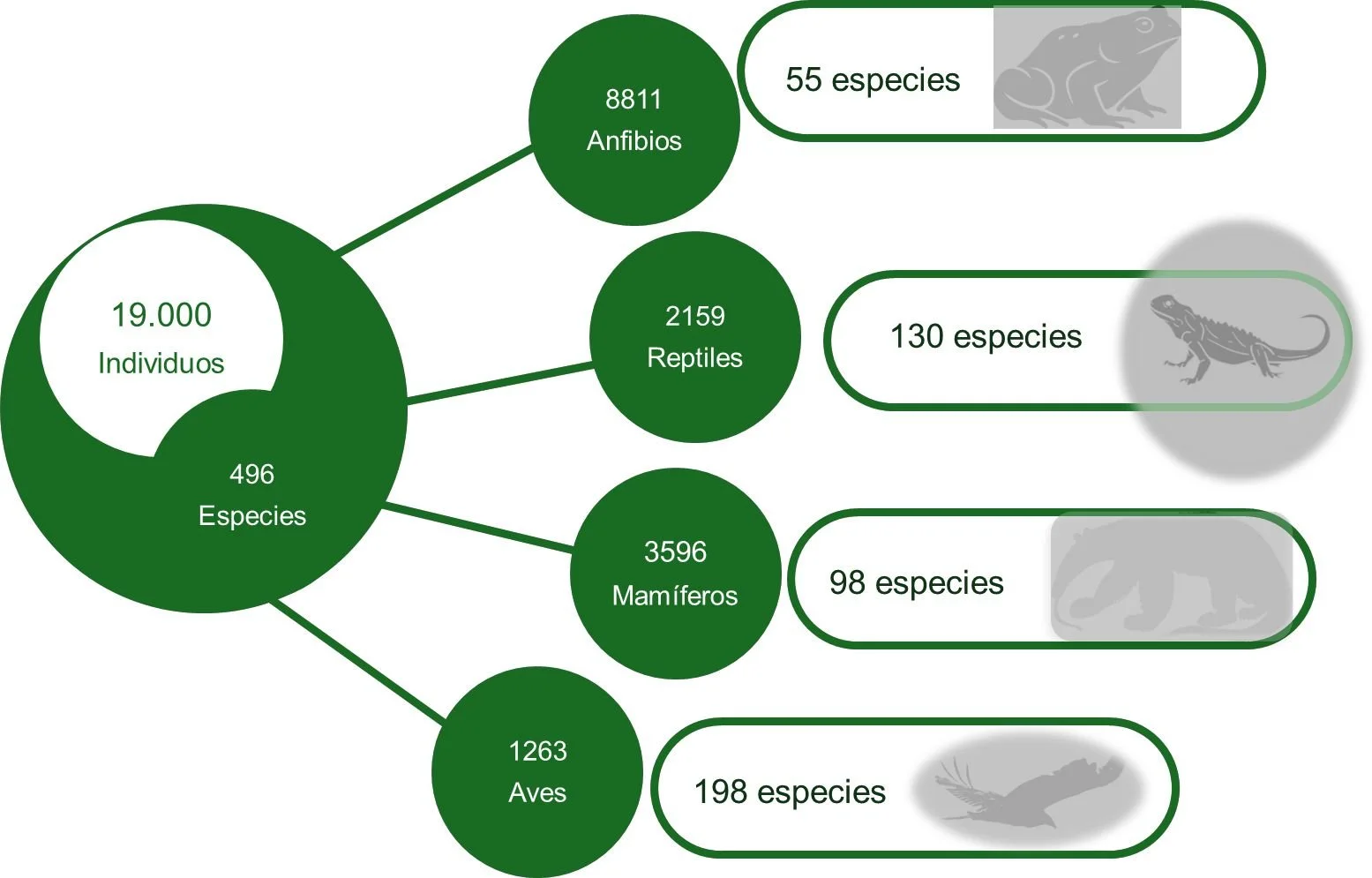
Source: Estado del Impacto Vial y Medidas Ambientales para la Vida Silvestre, Costa Rica. Surcos Digital
Costa Rica Already Has Proof That Wildlife Crossings Work
This legislation builds upon years of successful conservation initiatives already taking place across Costa Rica. Organizations working throughout the country have demonstrated that wildlife crossings are not only possible, but highly effective when they are installed in the right locations.
According to organizations supporting the legislation, Costa Rica's Wildlife Crossing Monitoring Protocol, developed by Panthera and the Inter-American Development Bank (IDB), compiled results from 19 studies conducted between 2011 and 2023 and documented 59 wildlife species using crossing structures throughout the country.
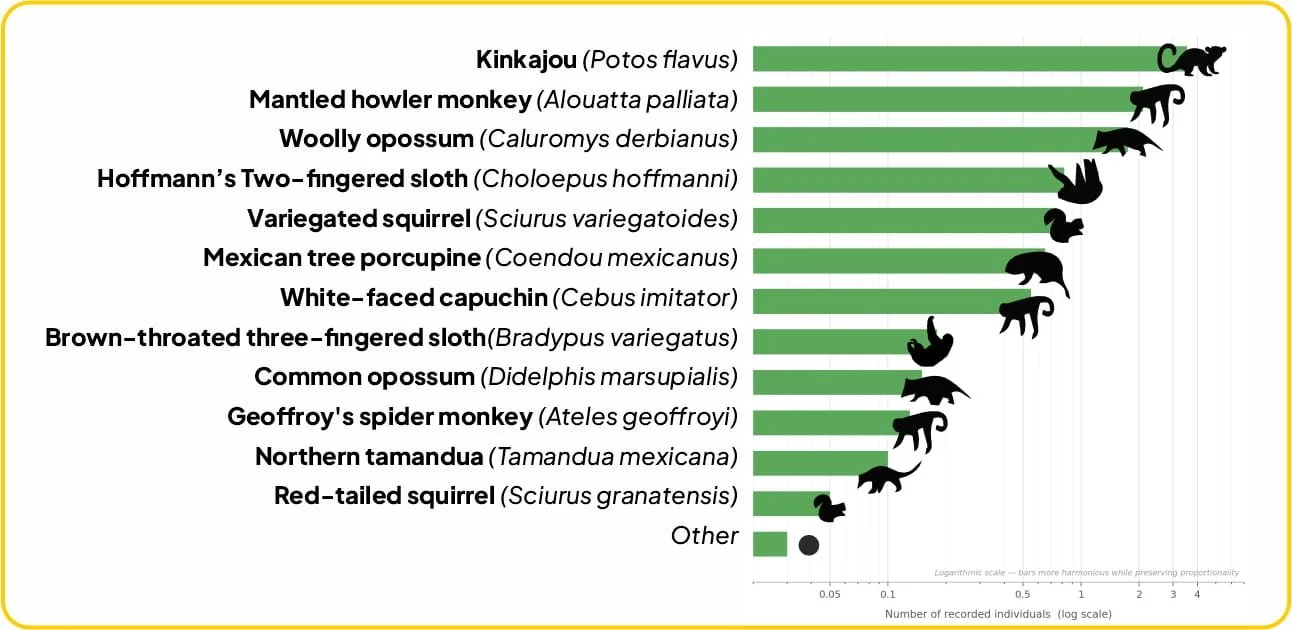
Species using SloCo’s canopy bridges in Costa Rica’s South Caribbean
At SloCo, we've seen this firsthand. Across our network of more than 400 canopy bridges in Costa Rica's South Caribbean, we have collected thousands of records from camera traps and videos submitted by members of the local community, documenting sloths, monkeys, kinkajous, squirrels, porcupines, and many other arboreal species safely using these structures.
In many cases, wildlife begins using a newly installed canopy bridge within the first 24 hours, demonstrating just how quickly animals recognize and adopt these safe crossing points when they reconnect fragmented habitat.
What This Means for Sloths
For sloths, habitat fragmentation is one of the greatest conservation challenges. As forests become divided by roads, power lines, and urban development, sloths are often forced to descend to the ground to continue their journey. Moving on the ground exposes them to vehicles, domestic dogs, and other dangers that they would rarely encounter in the canopy.
Our team is also actively working to identify wildlife mortality hotspots through long-term monitoring, GPS tracking, community reports, and roadkill data. Identifying these conflict areas is essential for determining where future mitigation efforts will have the greatest impact.
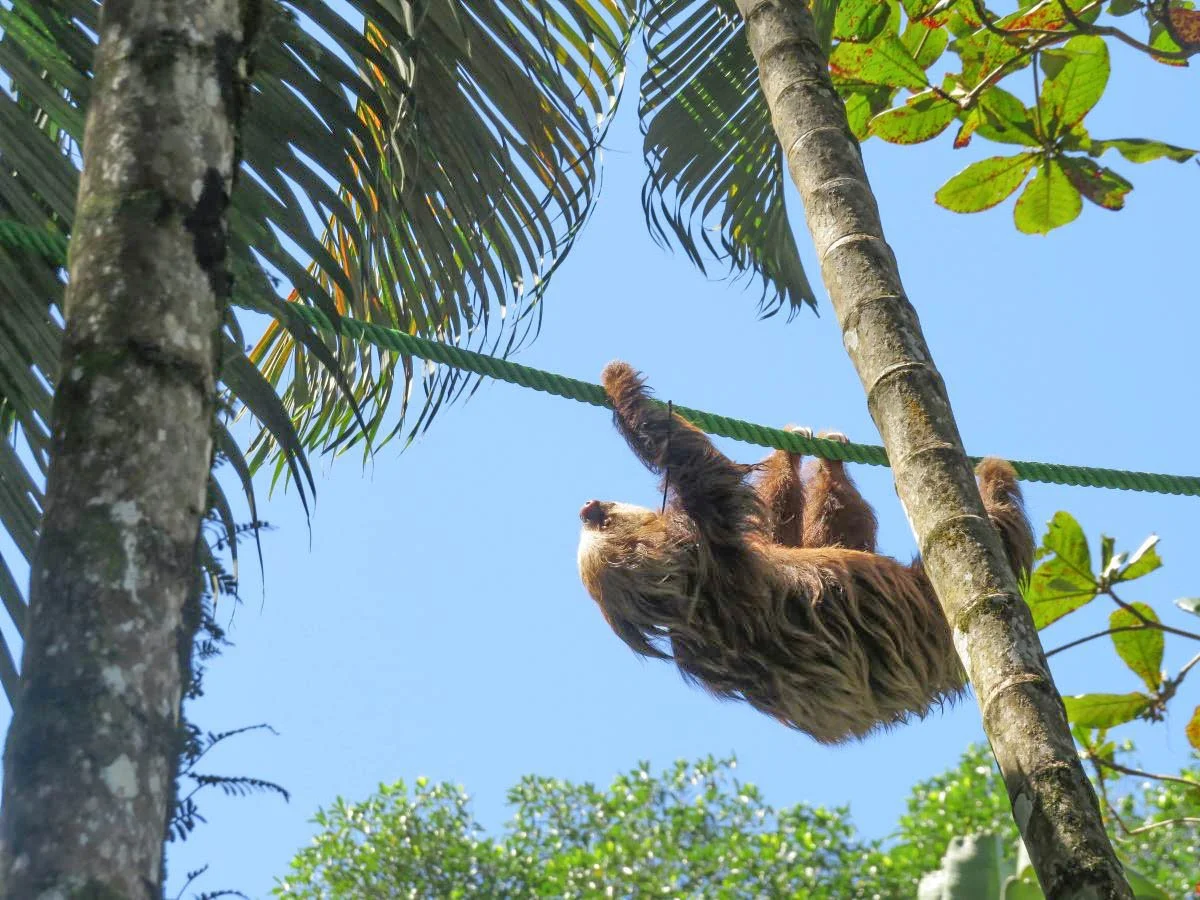
Tango, a two-fingered sloth we’re monitoring, using a canopy bridge
Installing canopy bridges over major roads is not always straightforward. These projects often require permits, coordination and collaboration with Costa Rica's electricity provider, ICE, since many crossings pass near electrical infrastructure.
This new legislation represents an important step toward streamlining those efforts. By recognizing ecological connectivity as a legal requirement, it creates a stronger framework for collaboration between public institutions and sets an important precedent for making Costa Rica's urban and rural landscapes more connected for wildlife.
