
For sloths, monkeys, and other tree-dwelling animals, branches are much more than part of the landscape. They are pathways that allow them to move through the forest, find food, shelter, and mates. But what happens when a road, a house, or a new development interrupts those pathways?
Animals that depend on the forest canopy may be forced to come down to the ground, where they face dangers such as vehicle collisions and dog attacks. They may also attempt to cross using power lines, putting themselves at risk of electrocution.
To help solve this problem, The Sloth Conservation Foundation (SloCo) installs rope bridges that reconnect trees in areas where the forest has been fragmented.
Putting Our Sloth Bridges to the Test
As part of her master's thesis at Wageningen University & Research, researcher Renske van der Hoek investigated how animals use the rope bridges installed by SloCo.
The research was supervised by Dr. Pim van Hooft from Wageningen University & Research and Dr. Rebecca Cliffe, founder and Executive Director of The Sloth Conservation Foundation, with field support from our Connected Gardens Project team.
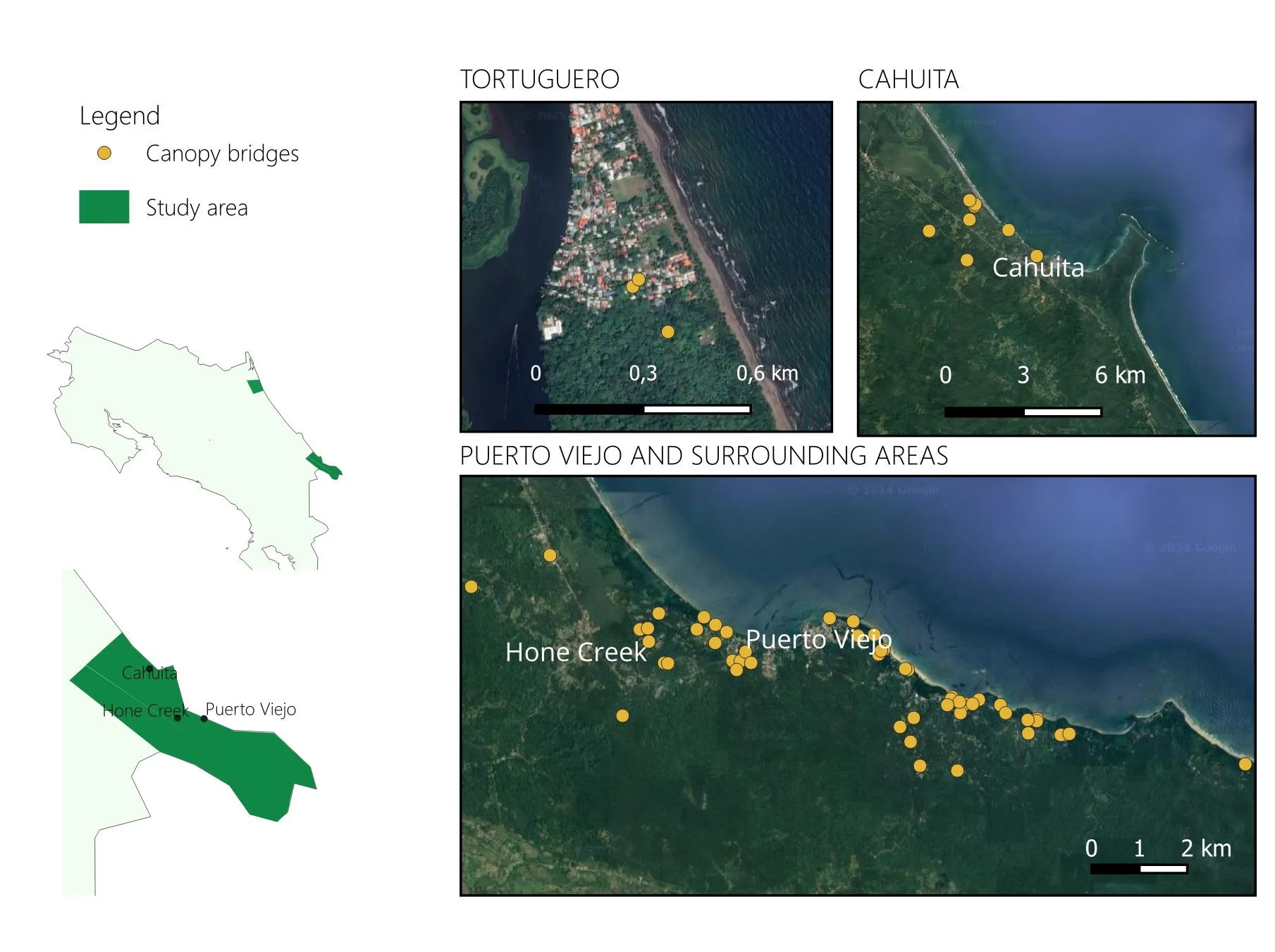
The goal was to understand which animals use the bridges, when they cross, and which characteristics might influence how frequently they are used. To find out, Renske monitored 61 rope bridges, including 58 located between Cahuita and Manzanillo and three in Tortuguero.
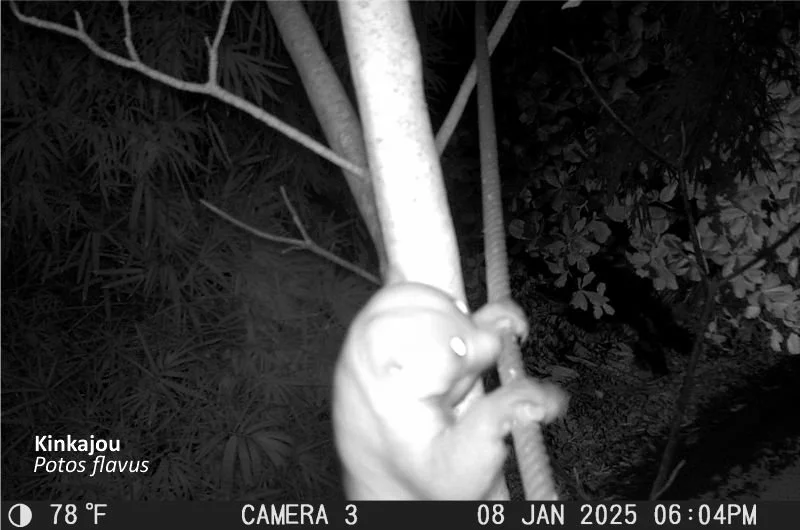
Motion- and heat-activated cameras were installed to record animals crossing the bridges, even at night. Each bridge was monitored for at least 90 days.
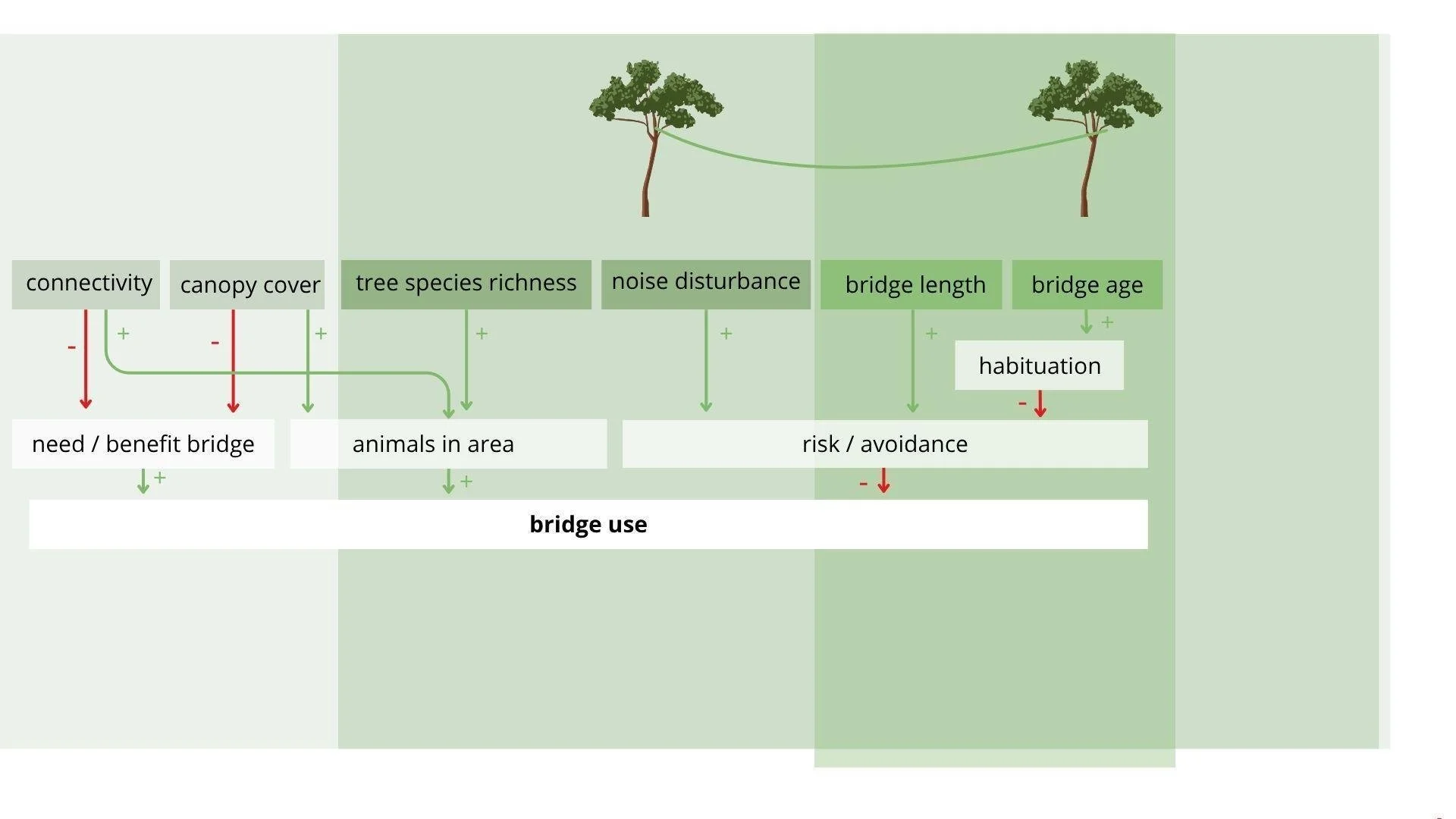
Along with identifying the species and recording their crossing times, Renske examined factors such as bridge length, how long each bridge had been installed, surrounding vegetation, and noise from human activity.
More Than 3,000 Crossings and 12 Mammal Species
The results showed that these simple rope bridges are used by a wide variety of animals. During the study, the cameras recorded:
3,250 crossing events
12 mammal species
46 out of 61 bridges with recorded animal crossings
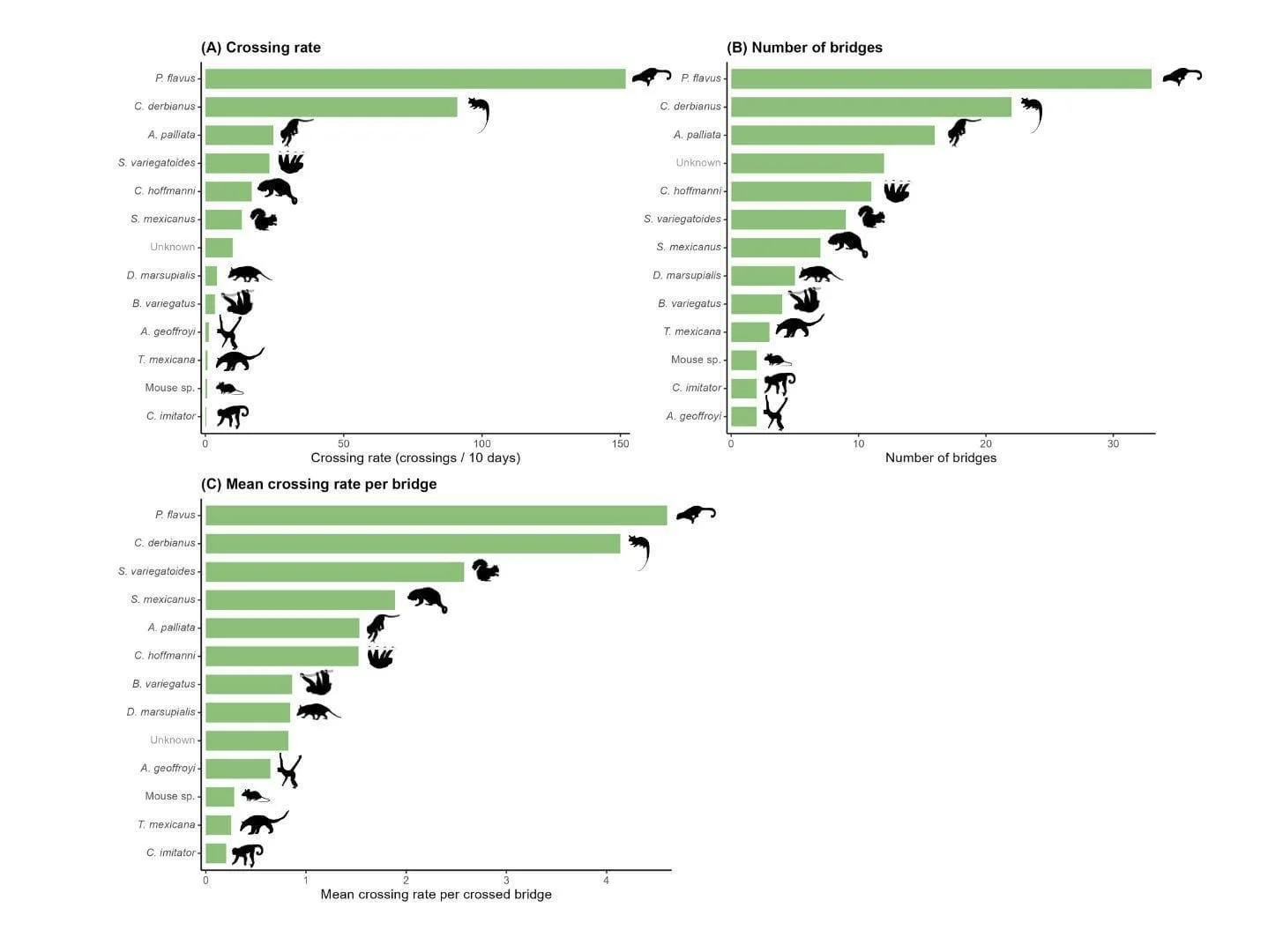
Among the most frequent users were kinkajous, woolly opossums, and howler monkeys.
The cameras also captured something particularly interesting: spider monkeys (Ateles geoffroyi) using artificial canopy bridges, a behavior that, according to the study, had not previously been documented for this species.
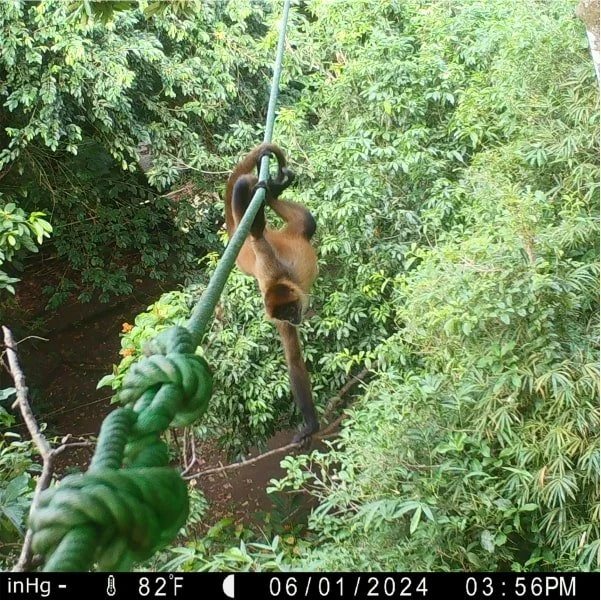
Spider Monkey using a canopy bridge in Tortuguero.
Do Sloths Use Rope Bridges?
Yes! Both sloth species found on Costa Rica's Caribbean coast were recorded crossing them
Two-fingered sloth (Choloepus hoffmanni)
Recorded crossings: 201
Bridges used: 11

Three-fingered sloth (Bradypus variegatus)
Recorded crossings: 40
Bridges used: 4
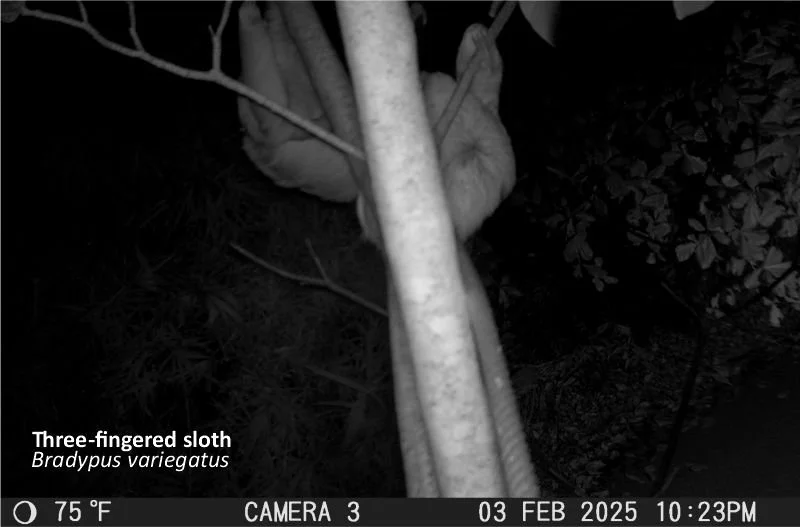
These numbers represent crossing events, not individual animals. The same sloth may have used a bridge many times.
Although two-fingered sloths were recorded more frequently, the results confirm that both species can use these structures to move between trees. This is especially important because sloths depend on connected forest canopies and have a very limited ability to move safely on the ground.
What Makes Some Bridges More Popular Than Others?
One of the most interesting findings was that not all bridges received the same number of visitors. Some were used hundreds of times, while others recorded no crossings at all during the monitoring period. So, what makes the difference?
1. Animals May Need Time to Get Used to Them
Bridges that had been installed for longer recorded more crossings and a greater variety of species. This relationship was particularly clear for two-fingered sloths and kinkajous.
One possible explanation is that some animals need time to discover the bridges, become familiar with them, and incorporate them into their regular routes. This means that a new bridge with no recorded crossings isn't necessarily a bridge that doesn't work.
That's why long-term monitoring is so important when evaluating their effectiveness.
2. Shorter Bridges Attract More Species
Another important finding was that shorter bridges were used by a greater variety of mammals. Longer bridges can also be used, but they may be less attractive to some species, possibly because they move more or feel less stable.
This finding can help us improve the planning of new canopy connections by prioritizing shorter bridges whenever the location allows.
3. Bridges in Areas With More Human Activity Are Also Being Used
One of the more unexpected results was that bridges located in areas with higher levels of human-related noise were more likely to record crossings than those in quieter locations. More research is needed to understand this relationship. The study found an association between noise and bridge use, but that doesn't mean animals prefer noisy environments.
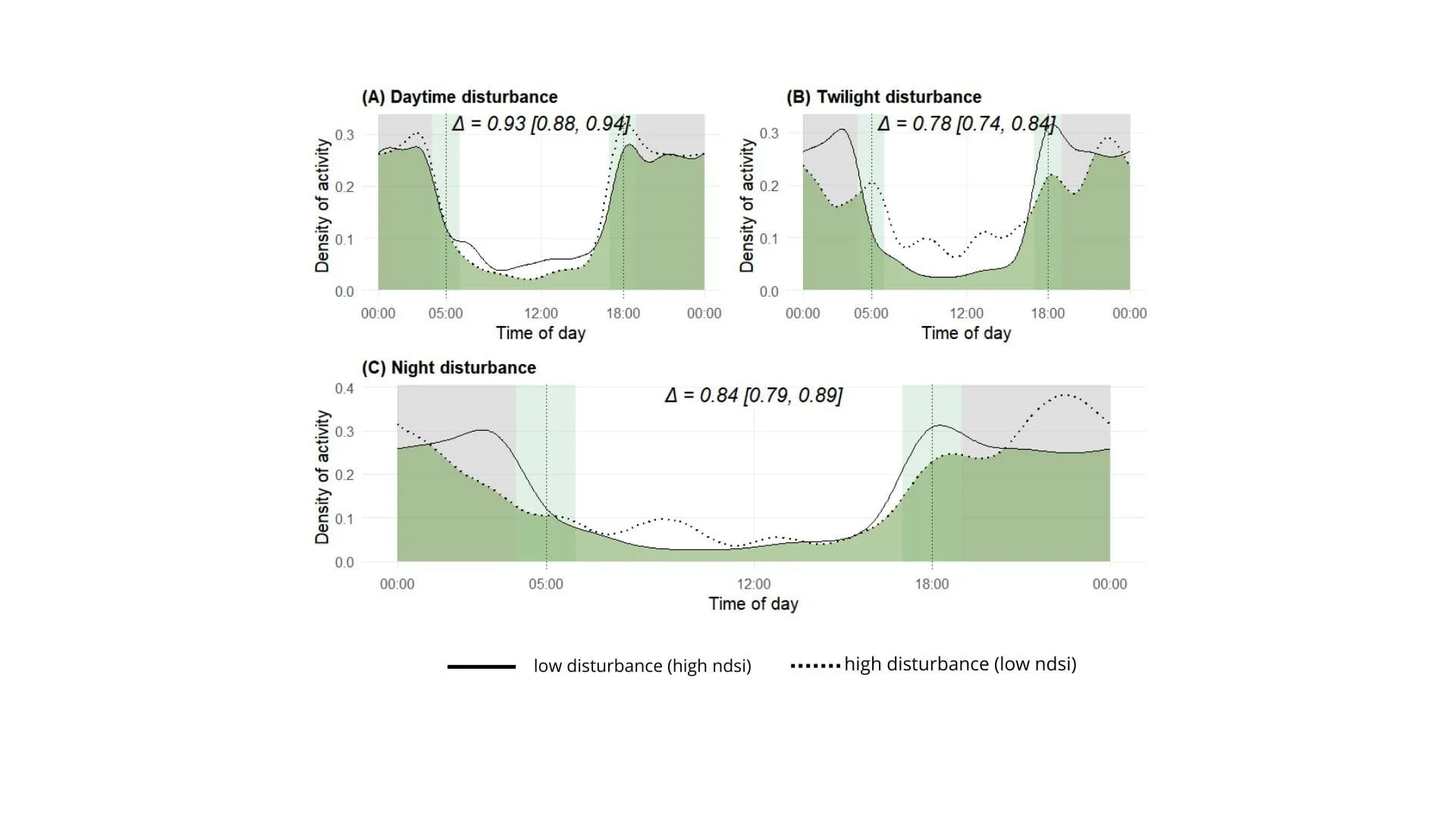
When Do Animals Cross?
The cameras also revealed something that would be difficult to discover through human observation alone: most crossings happened at night or around dusk. However, each species had its own schedule.
Two-fingered sloths used the bridges mainly at night, while three-fingered sloths showed more variable activity patterns, with a tendency to cross during the day. Howler monkeys and some squirrel species were also more active during daylight hours.
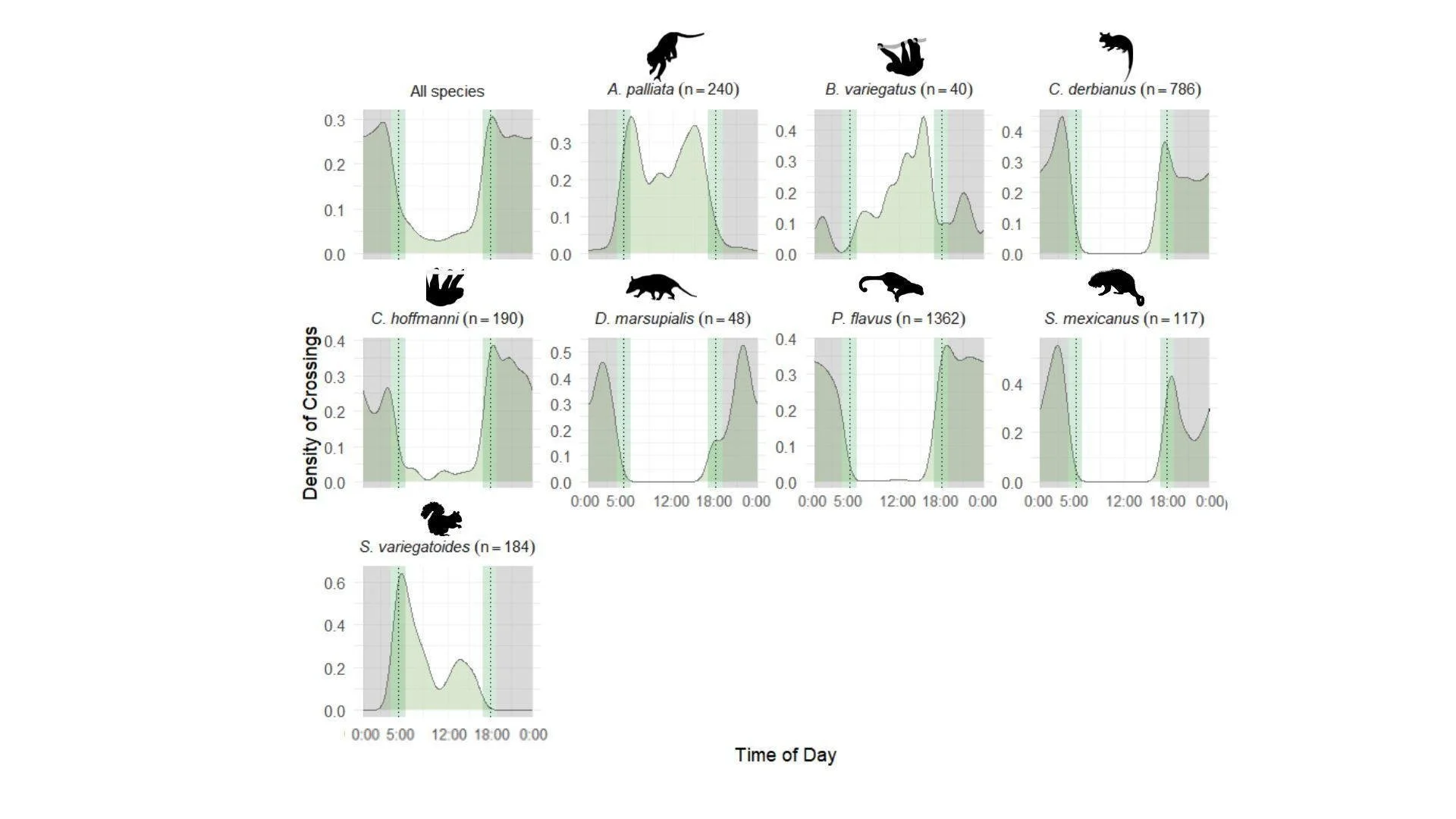
This shows why camera monitoring is so valuable for studying wildlife. Many of the movements we're trying to understand happen when nobody is watching.
What Did We Learn, and How Can We Improve?
This is the first large-scale study of how sloths and other tree-dwelling mammals use single-rope wildlife bridges in fragmented tropical forests.
The findings show that even a simple rope can help reconnect forest canopies and provide safer routes for wildlife. Because these bridges are affordable, easy to install, and effective even in areas affected by human activity, they offer a practical solution that can be expanded to protect more wildlife.
And although these results are encouraging, there's still an important question to answer: How much do rope bridges actually help reduce road collisions, electrocutions, and other threats to wildlife?
Future research will need to examine these impacts to better understand how canopy bridges contribute to animal survival.
Connecting Trees, Protecting Wildlife
At The Sloth Conservation Foundation, our Connected Gardens program works to restore habitat connectivity in communities along Costa Rica's Caribbean coast.
But connectivity doesn't depend on bridges alone. The trees supporting them, the branches animals use to reach them, and the vegetation connecting gardens to the forest are just as important.
Thanks to Renske's research and the work of our Connected Gardens team, we now know a little more about how animals use these artificial pathways and how we can continue improving them.
Scientific Reference
Van Der Hoek, R. (2025). Canopy lifelines: Patterns and predictors of rope bridge use by sloths and other arboreal mammals. Master's thesis, Wildlife Ecology and Conservation Group, Wageningen University & Research.
Supervisors: Dr. Pim van Hooft and Dr. Rebecca Cliffe.
