
How One Sloth's Tracking Data Got a Canopy Bridge Built
A mother sloth crossed a road with her baby clinging to her belly. We built a canopy bridge for them.
Martita is a wild three-fingered sloth (Bradypus variegatus) and one of the animals we've been following as part of our Urban Sloth Project, a long-term study into how sloths navigate landscapes that have been carved up by roads, buildings, fences, and powerlines.
We found her the way we find many of our study animals: on a routine tracking day, looking for another sloth, while she was heading down to the ground for her weekly bathroom trip. We fitted her with a VHF collar and started monitoring her movements.
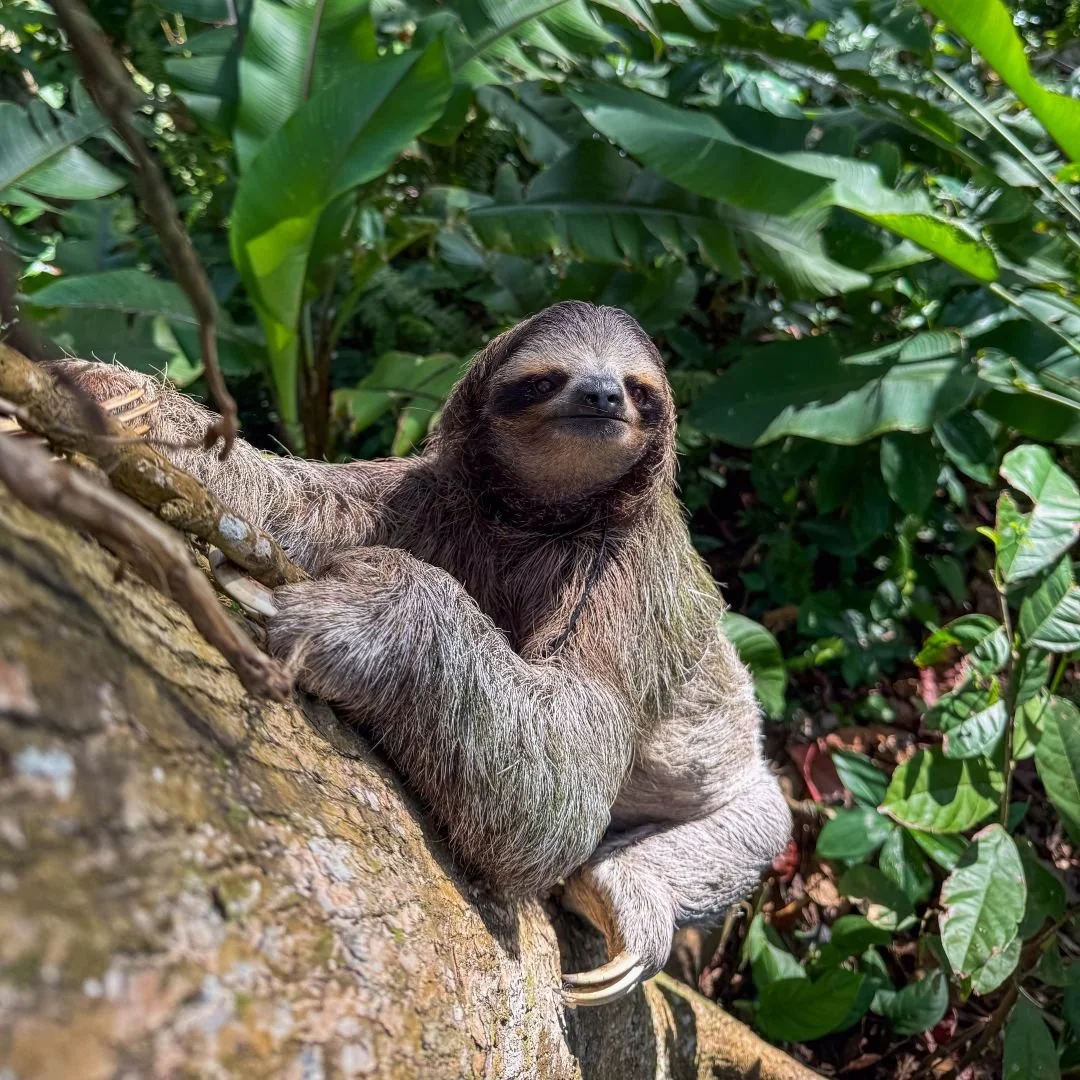
Martita
A few days later, she gave us a wonderful surprise. She was carrying a tiny baby on her belly. We named the little one Pati, after a traditional Caribbean pastry.
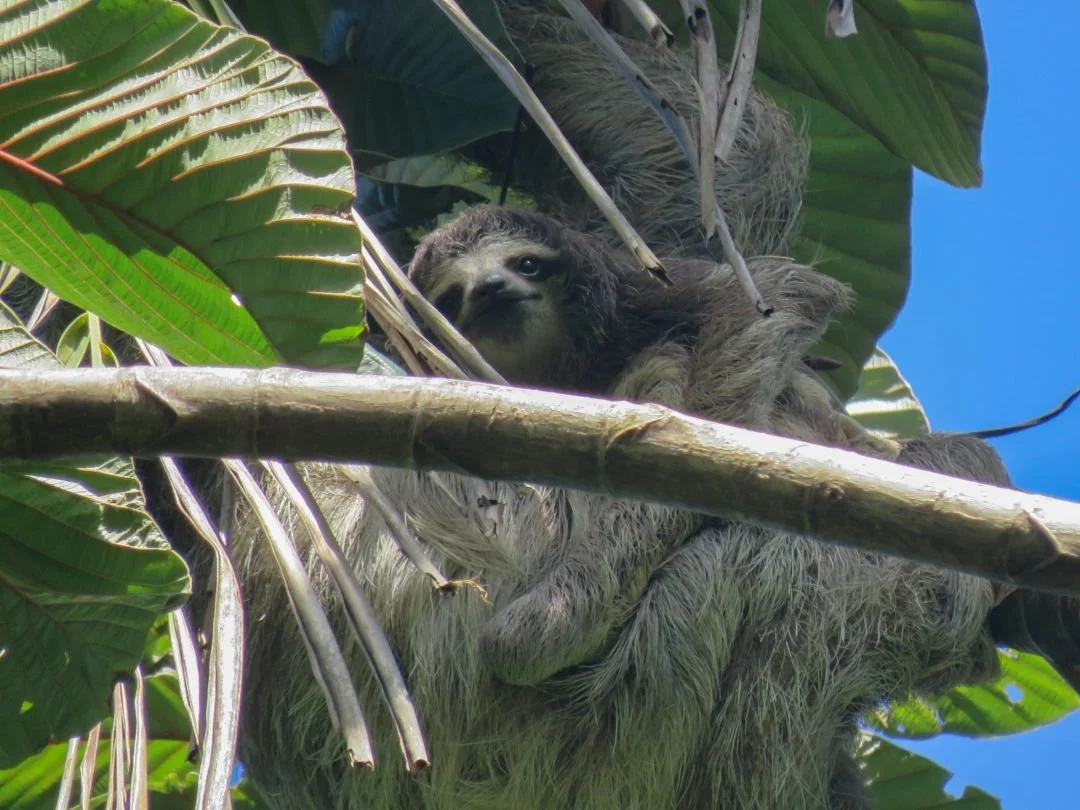
The adorable baby Pati!
When the Signal Crosses the Road
Months into monitoring Martita, her collar started giving weird signals. Tracking sloths can be genuinely tricky: sometimes the collar signal bounce on trees or infrastructure, and you have to triangulate carefully to find the animal. Once we worked it out, the signal led us somewhere unexpected: across the road.
Martita, with Pati pressed against her chest, had crossed a live road.
Ground-level crossings put sloths at serious risk. Vehicles, dogs, and direct human contact are all hazards that sloths are simply not equipped to handle.
But it also gave us something important: documented evidence, tied to GPS coordinates, of exactly why that stretch of road mattered.
From Tracking Data to a New Bridge
We had been hoping to secure a canopy bridge at this location for some time. Canopy bridges give arboreal animals a safe route across without ever touching the ground. SloCo has installed and monitors hundreds of these bridges across the South Caribbean of Costa Rica, and we know they work.
Getting permission to install a canopy bridge above a road or a street requires coordination from the utility companies whose infrastructure lines the roads; a process that often takes weeks or months.
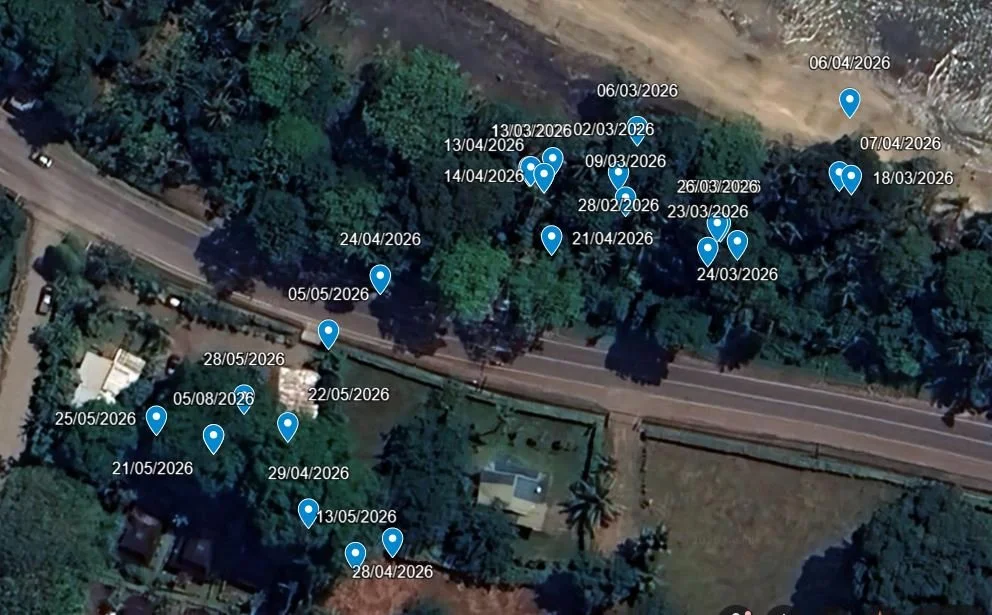
Some of the GPS points that helped us prove Martita crossed the road
When we brought Martita's tracking data to the Instituto Costarricense de Electricidad (ICE), Costa Rica's national electricity provider, it made the case in a way that a general request never could. Here was a specific animal, at a specific location, making a specific dangerous crossing, with a baby.
So in June, we installed bridge SC-398 together.
The Results Were Faster Than Expected.
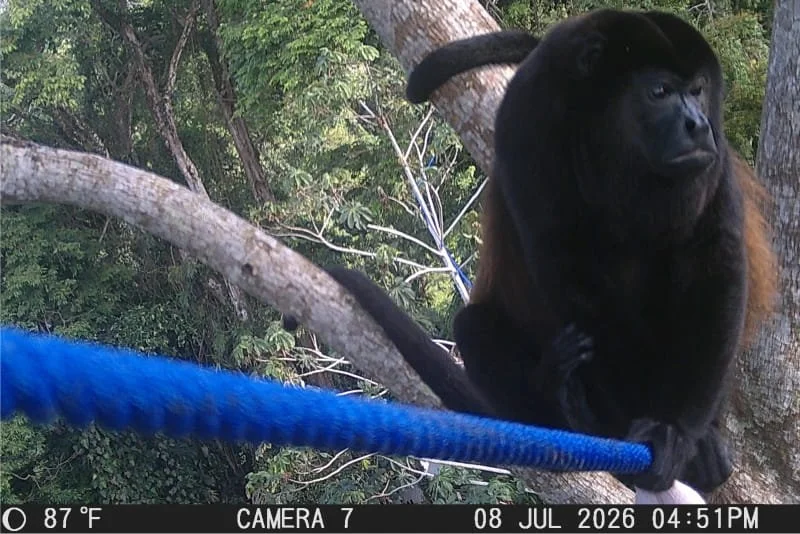
Within a day of the bridge going up, an entire troop of howler monkeys crossed it. Since then, they've been using it regularly.
Monkeys are quick to adopt new bridges; sloths take longer, and for good reason. They're cautious animals, and a new structure in their territory needs time to become familiar.
But monkeys are not the only ones using this bridge. We recently received a report of a sloth using it. We can't confirm this is Martita, but we can confirm that Martita is not the only sloth living in that area! In fact, Martita is occasionally spotted closer to other female sloths.
Martita Spotted Using Her Bridge!
We were genuinely happy when Martita finally used the bridge. She didn't cross to the other side of the road on this occasion, she used a section connecting two trees she already frequents. But that matters. She's learning it's there and she's getting comfortable with it. And when the moment comes that she needs to cross again, the bridge will be waiting.
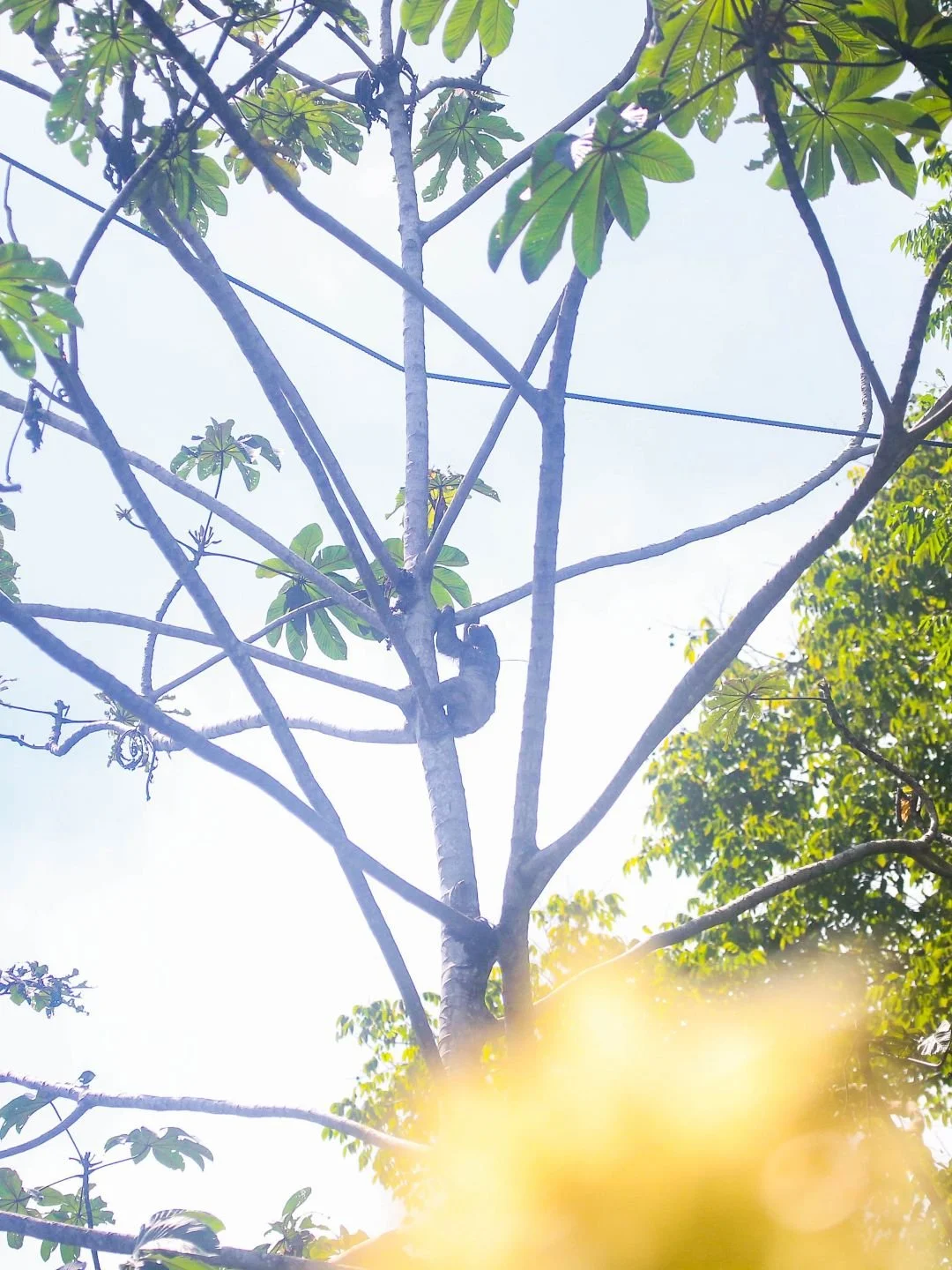
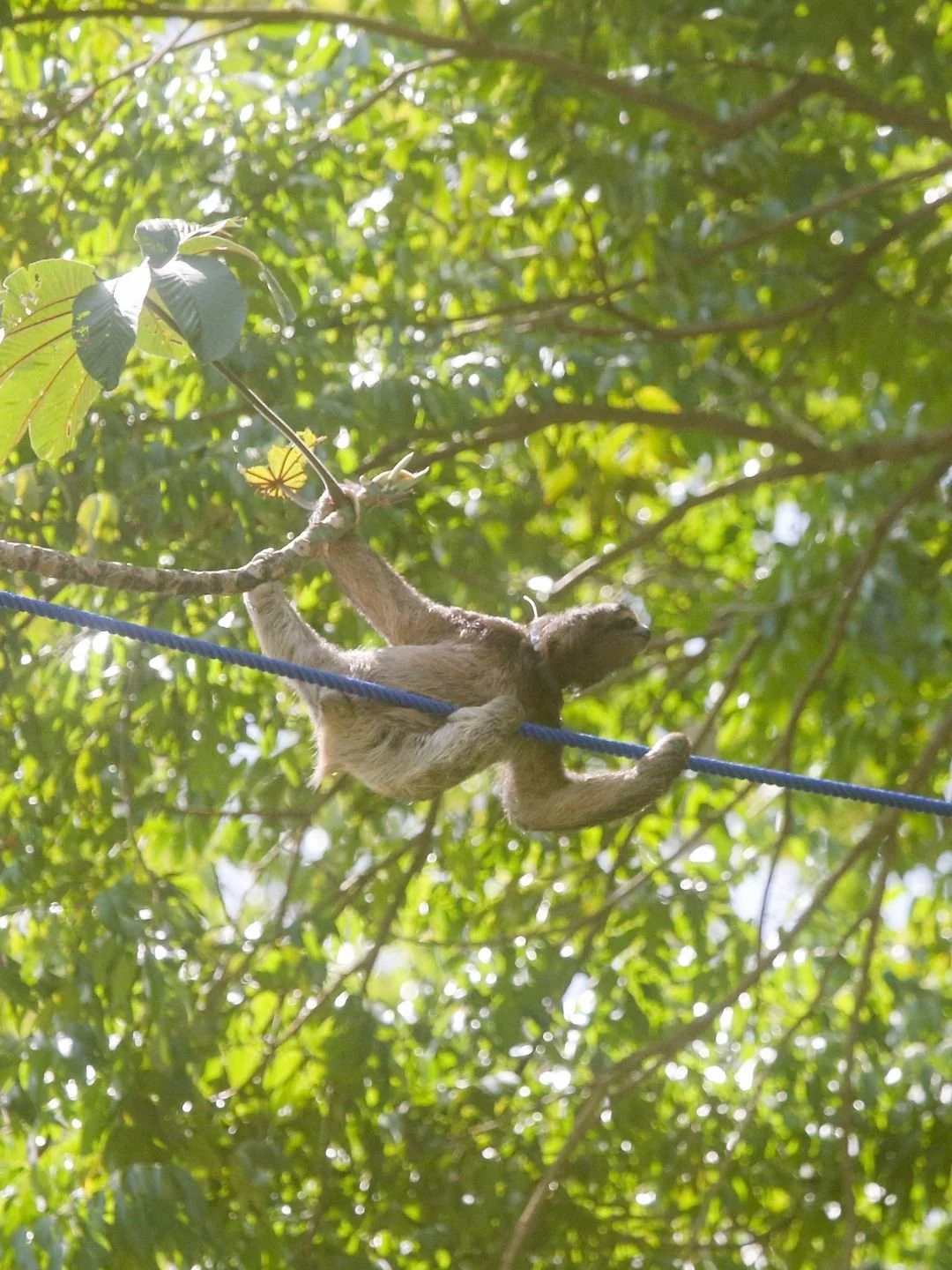
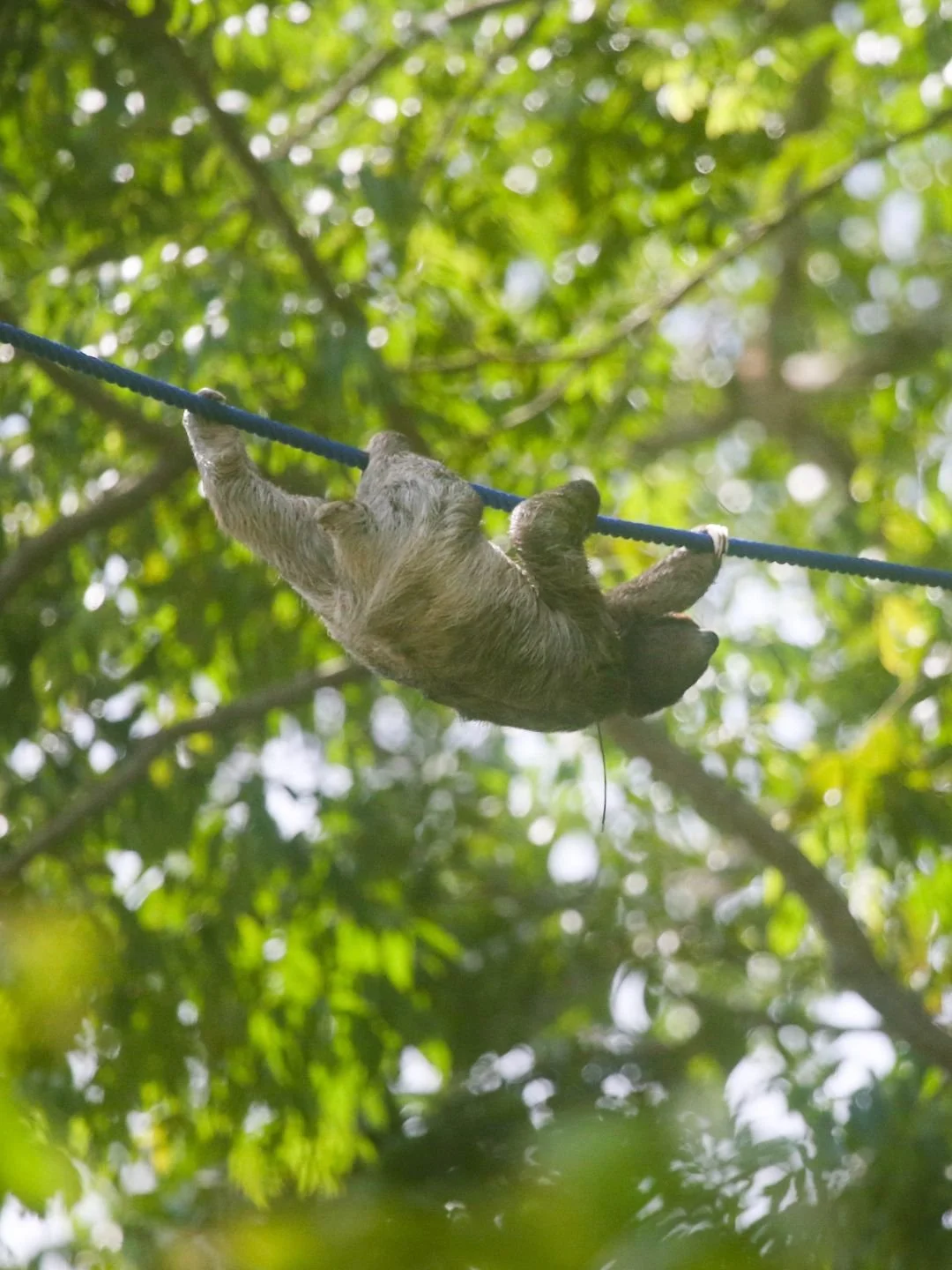
The adorable baby Pati is no longer living with his mother Martita, and is now an independent sloth with his own little collar, also part of our research! Would Pati use the bridge in the future?
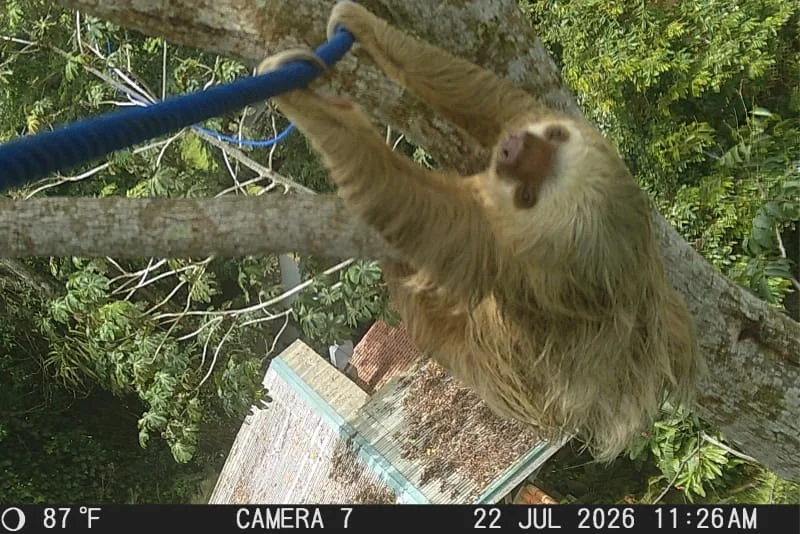
A bridge that now serves an entire community of wildlife
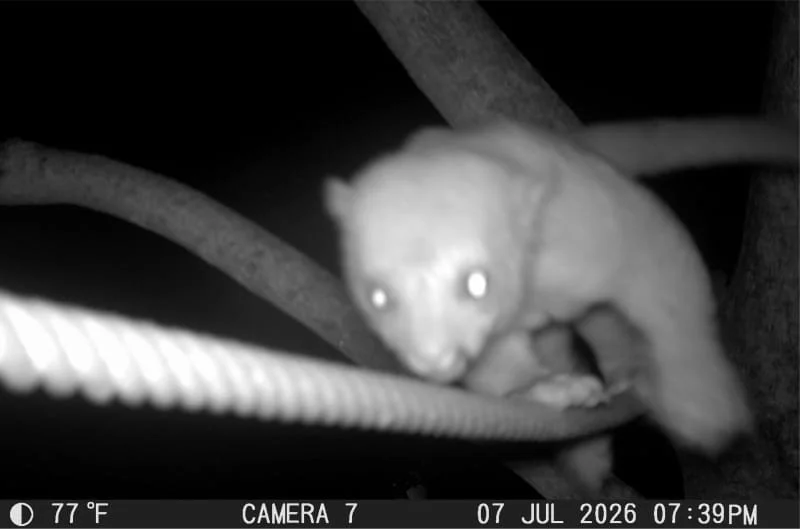
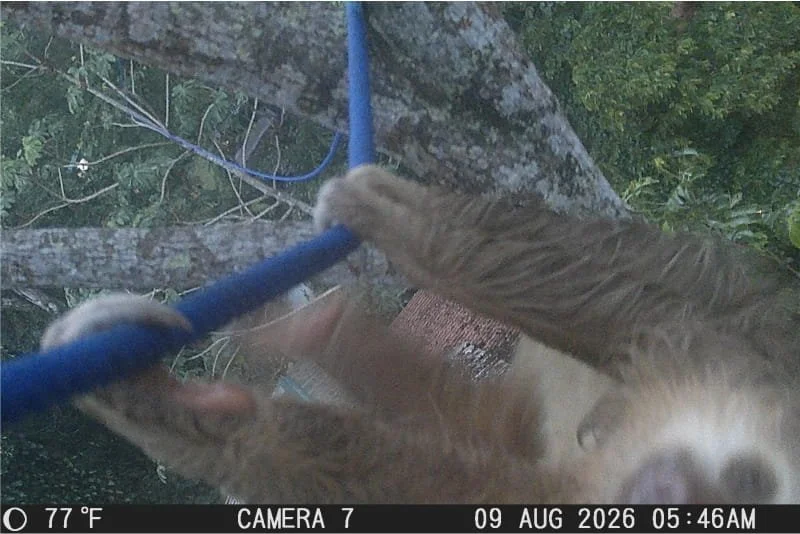
Camera trap images from bridge SC-398 already show frequent use by howler monkeys, kinkajous, and even two-fingered sloths!
Why the Urban Sloth Project Exists
The area where we work in Costa Rica is not a pristine rainforest. It's a place where sloths live alongside roads, houses, parking lots, and agricultural land, because that's what their habitat has become. The Urban Sloth Project is built on the belief that to protect sloths in these environments, we first need to understand how they actually experience them.
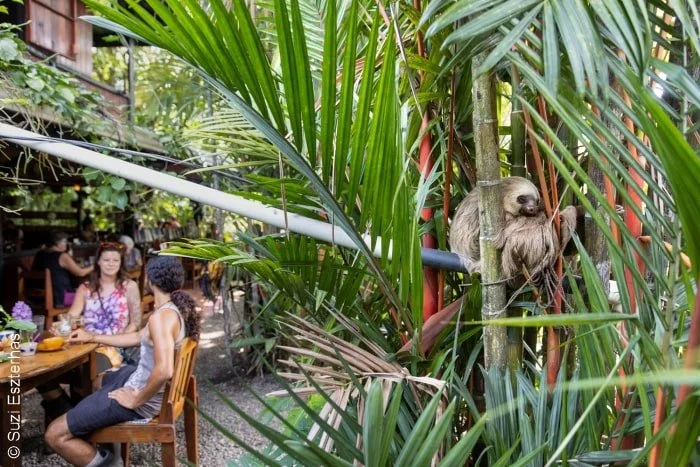
That means following individuals like Martita for months and years. Mapping where they go, what routes they use, where they get into trouble. Building a picture that's detailed enough to act on.
The bridge at SC-398 is what that looks like in practice. One sloth's data, translated into a structure that now serves an entire community of wildlife. That's the whole point.
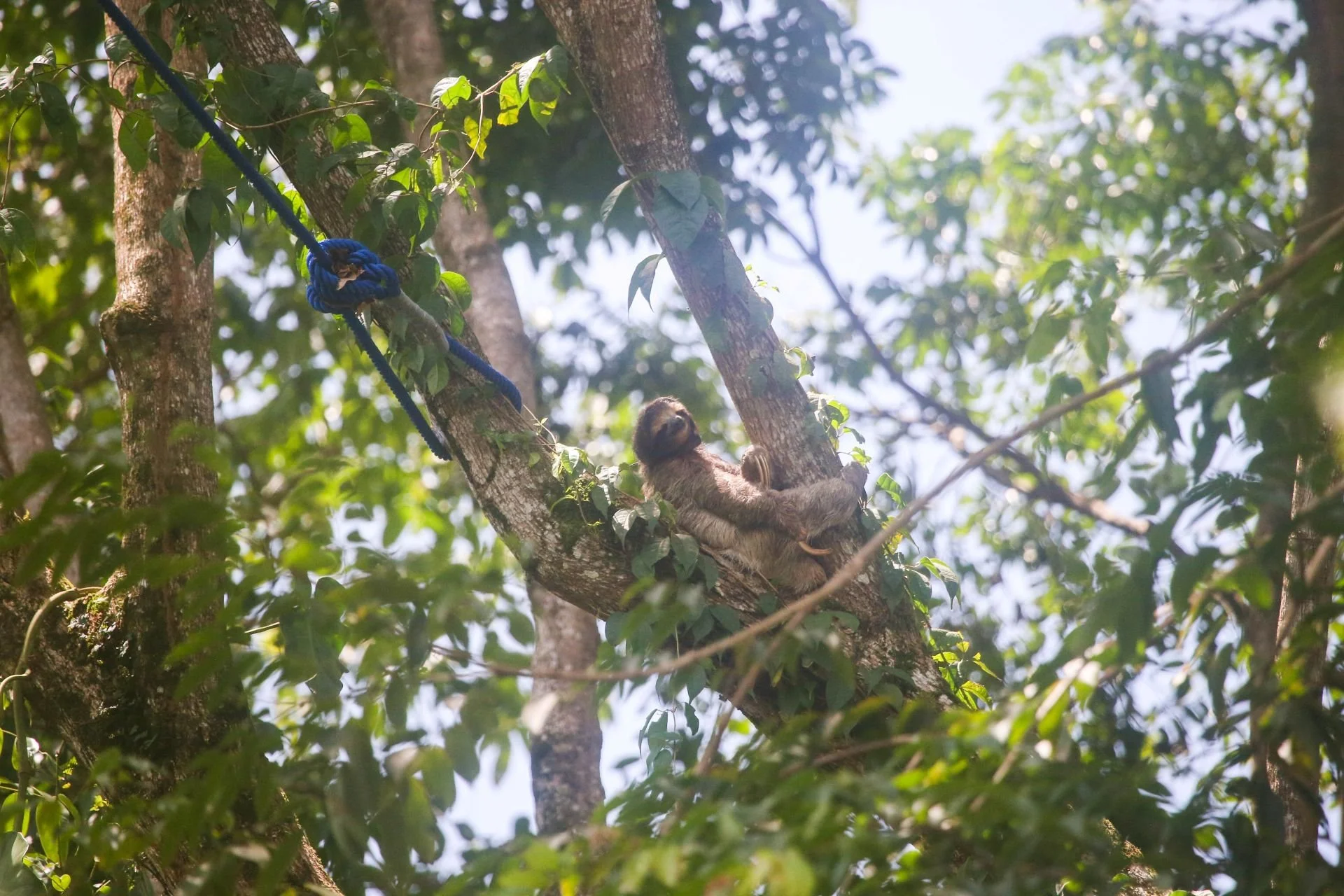
Martita resting after crossing the canopy bridge
If you'd like to support work like this — the tracking, the data, the negotiations, and the bridges — you can sponsor a Sloth Crossing or adopt a sloth and follow their story directly.
Bridging with Laws
The timing of Martita's story feels meaningful. Just weeks after we installed bridge SC-398, Costa Rica's Legislative Assembly unanimously approved a landmark bill requiring wildlife protection measures in new and existing public infrastructure. The legislation adds Article 31 bis to Costa Rica's Organic Environment Law, making ecological connectivity a mandatory legal requirement rather than an optional mitigation measure.
For years, installing a canopy bridge meant navigating a maze of goodwill, permissions, and individual negotiations, exactly what we did with ICE to get this bridge approved. That process worked for Martita. But for new infrastructure projects, the law will now require wildlife crossings to be considered from the planning stage, with financing built into the project budget from the start.
What we had to fight for case by case will soon be the baseline. That's the kind of systemic change that makes individual stories like Martita's matter beyond themselves, proof that bridges work, proof that the data justifies them, proof that it's worth writing into law.
Check the map below to see +400 canopy bridges!
