
How Maned Sloths Are Helping Build a Sustainable Economy in Brazil's Atlantic Forest
For the first time, researchers have measured the economic impact of land-based wildlife-watching tourism in the Atlantic Forest along Brazil's northern Bahia coast. The study focused on visitors who come to observe birds, the northern maned sloth (Bradypus torquatus), and the black porcupine in the Aruá Forest reserve, near Praia do Forte in the municipality of Mata de São João.
The findings highlight something conservationists have long understood: protecting forests is not only good for biodiversity, it is also good for local economies.
This research was developed through a partnership between the Instituto Preguiça-de-Coleira (IPDC), Entre Parques, and Aruá Observação de Vida Silvestre, using visitor data collected during 2025 and 2026.
The Economic Value of Wildlife Watching Tourism
Based on an average visitor expenditure of R$1,580 per trip (approximately US$300) and approximately 2,140 visitors annually, the study estimated that wildlife tourism in the Aruá Forest generates:
R$3.4 million (approximately US$646,000) in total sales
R$730,000 (approximately US$139,000) in household income
R$1.6 million (approximately US$304,000) in added value to the local GDP
62 jobs
R$94,000 (approximately US$17,900) in tax revenue
These estimates were calculated using the Money Generation Model (MGM), an internationally recognized methodology that combines visitor numbers, average spending, and an economic multiplier. Rather than measuring only the money spent directly by tourists, the model also captures how those expenditures ripple through the local economy, supporting hotels, restaurants, transportation providers, wildlife guides, and other local businesses.
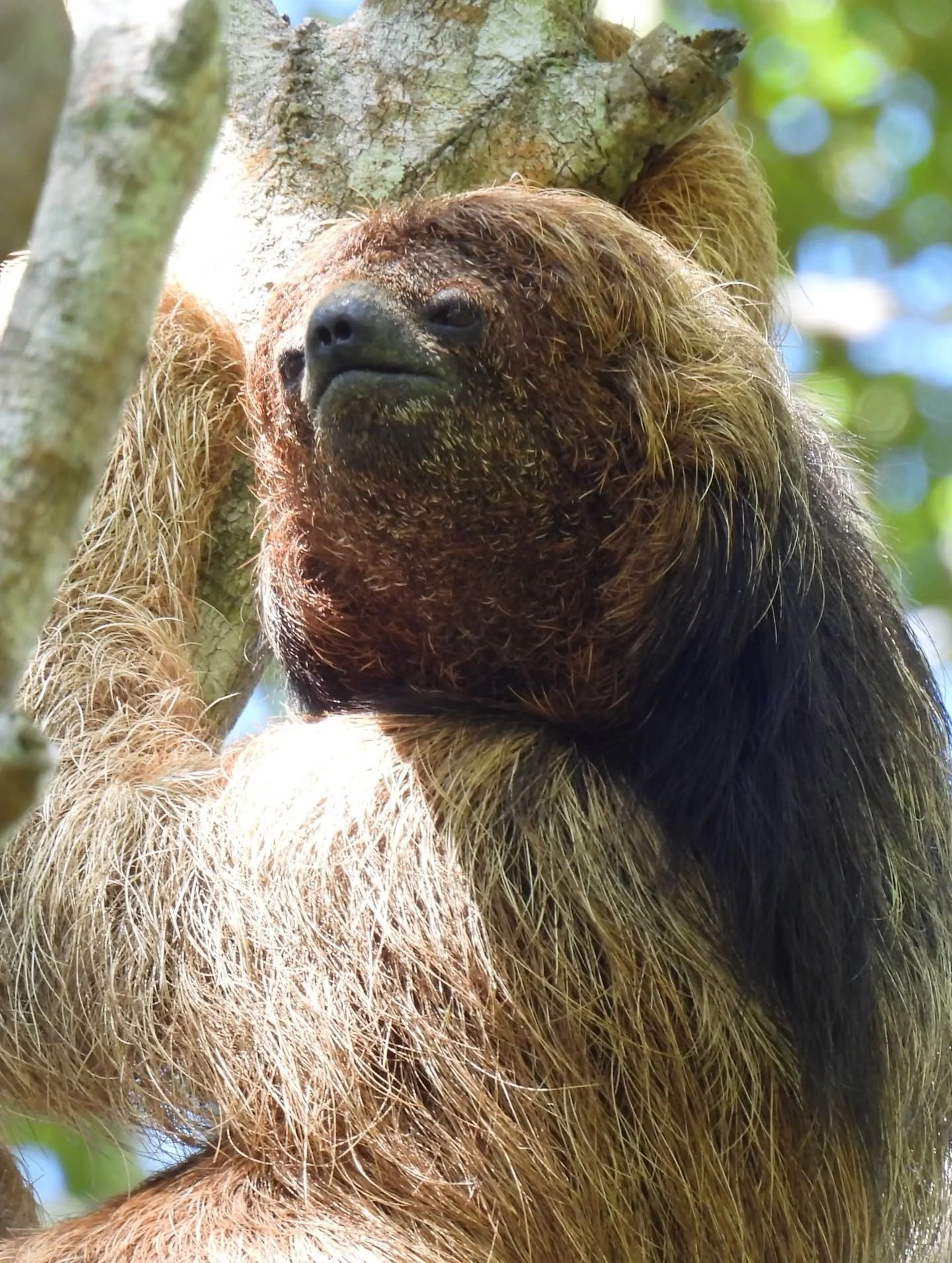
Northern Maned sloth (Bradypus torquatus) | Credit: Aruá Observação de Vida Silvestre
A Growing Nature Tourism Economy, on Land and at Sea
Nature tourism has already proven its economic value in Praia do Forte through another flagship attraction: humpback whale watching.
A recent study by Spanholi et al. (2025) evaluated the economic contribution of whale watching by surveying 128 visitors during the 2023 whale season through the Projeto Baleia Jubarte.
That research found an average daily visitor expenditure of R$841.73 (approximately US$160) per person, with a total economic impact estimated between R$4.4 million and R$9.3 million (approximately US$836,000 to US$1.77 million), supporting 85 to 122 jobs and generating between R$416,000 and R$816,000 (approximately US$79,000 to US$155,000) in indirect tax revenue.
Together, these two studies paint a much bigger picture. They show that wildlife tourism is already an important economic driver for the region, creating jobs, supporting local businesses, and demonstrating that conservation delivers measurable economic benefits alongside environmental ones.
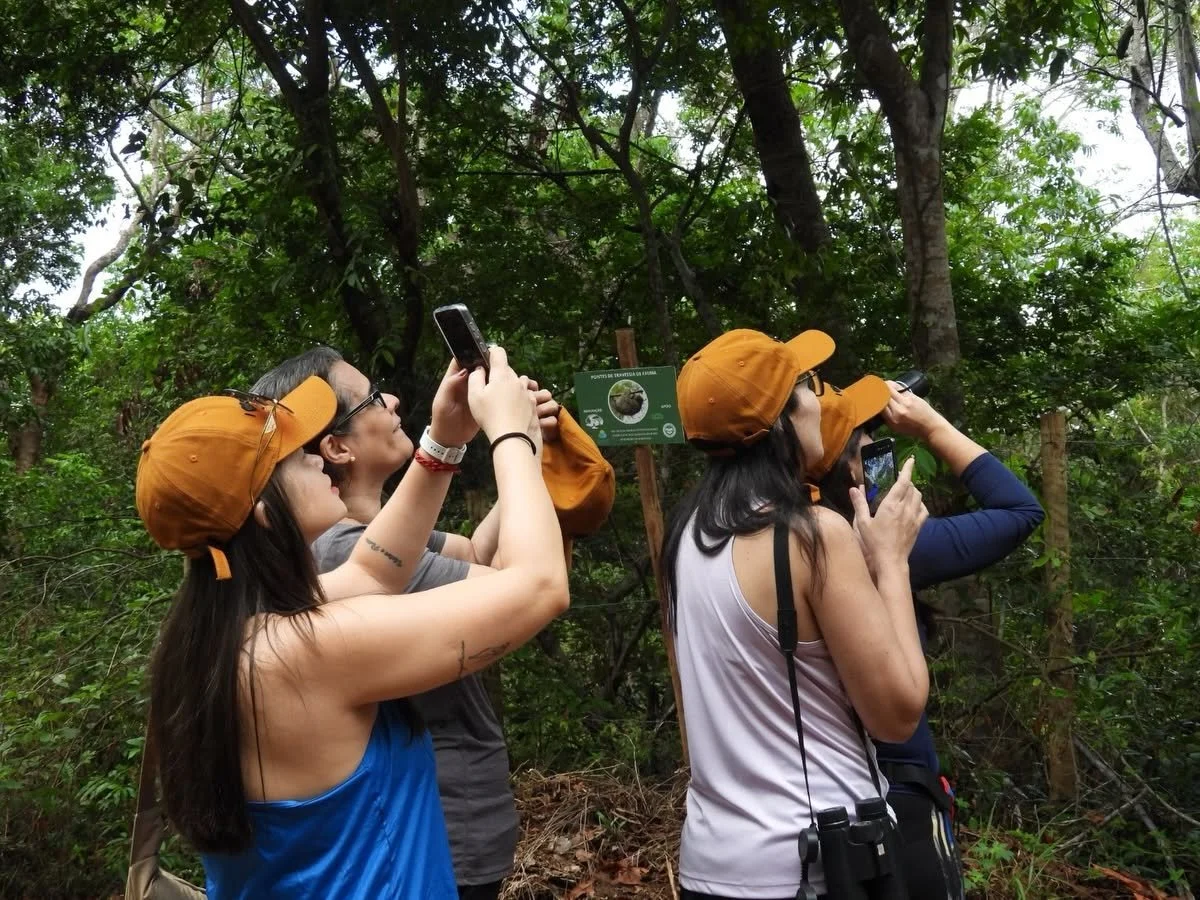
Tourists spotting sloths | Credit: Aruá Observação de Vida Silvestre
Why Measuring Nature's Economic Value Matters
Beyond the numbers, the study reinforces an important message. Demonstrating the economic value of healthy ecosystems helps shift conservation from being viewed as a cost to being recognized as a long-term investment in sustainable development.
Standing forests do far more than protect endangered wildlife. They create jobs, generate income, strengthen local businesses, increase tax revenue, and provide communities with lasting economic opportunities that depend on keeping ecosystems healthy.
As more communities recognize that conservation and economic development can go hand in hand, nature-based tourism has the potential to become one of the strongest incentives for protecting forests for generations to come.
Read the original article (in Portuguese) here.
