
From Parking Lot to Little Forest | Connected Gardens Update #3 August 2025
Connected Gardens began with a simple idea: any garden or property can become part of a living biological corridor. In the South Caribbean, where urban spaces often fragment the forest, our mission is to restore habitat and reconnect it with canopy bridges so wildlife can move freely and safely. Today we want to share a story that perfectly shows how this project works and why it matters.
Paradise Chiquita: Three Lots, One Vision
Paradise Chiquita is a coastal property made up of three lots: one with the owner’s home and a rental cabin, one that is a patch of untouched forest, and one that was once cleared to serve as a parking lot for an old restaurant.
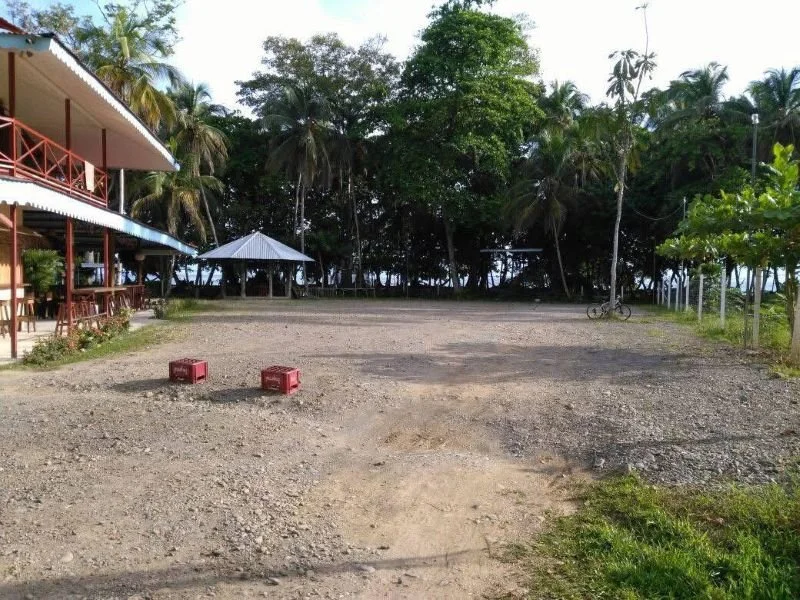
An old photo of the times where this used to be a beach restaurant parking lot.
The parking lot, which could hold more than 50 cars, replaced what had once been a wetland. It was stripped of vegetation and filled with gravel, and the change is still visible in old satellite images.
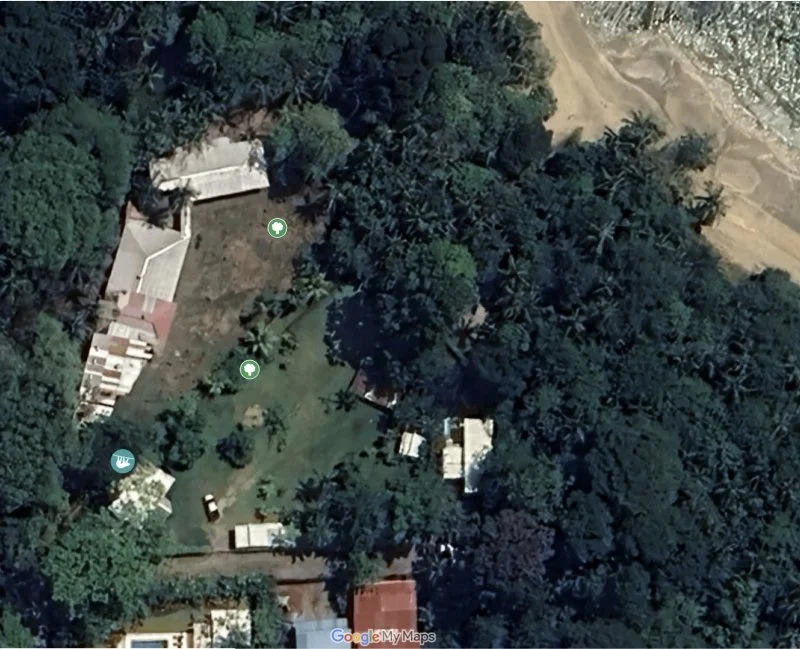
In 2021 Nicole became the new owner. Monica, who manages the property, reached out to us with a request: reforest the old parking lot so it could once again be part of the forest.
Tree #5,000 and Two Bridges
Across different planting sessions, we planted more than 270 trees on the property, including a milestone: our 5,000th tree in the Connected Gardens Project.
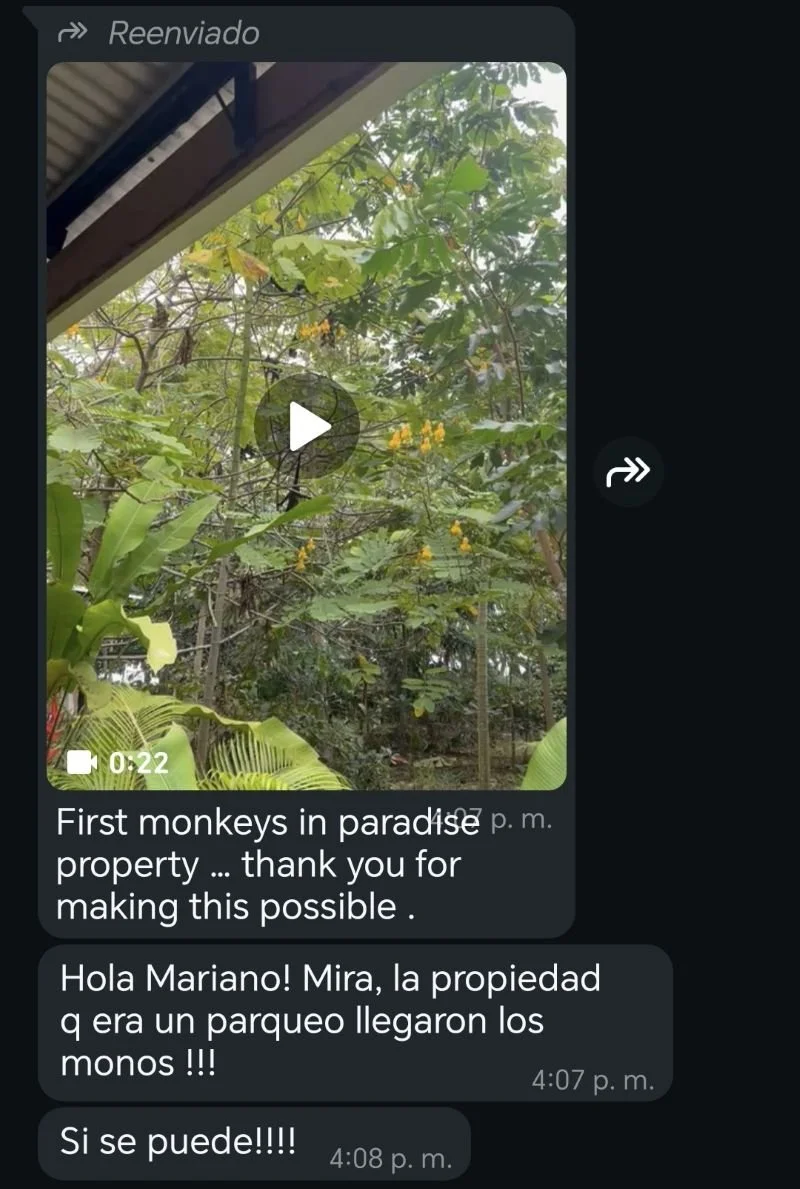
On the forested lot, we also installed two canopy bridges, SC-212 and SC-258, linking the property’s green spaces. Almost four years later, the parking lot has become a small but thriving forest, as Nicole shows us in the following video:
Native species like Cecropia, a favorite of three-fingered sloths, are now shading the ground.
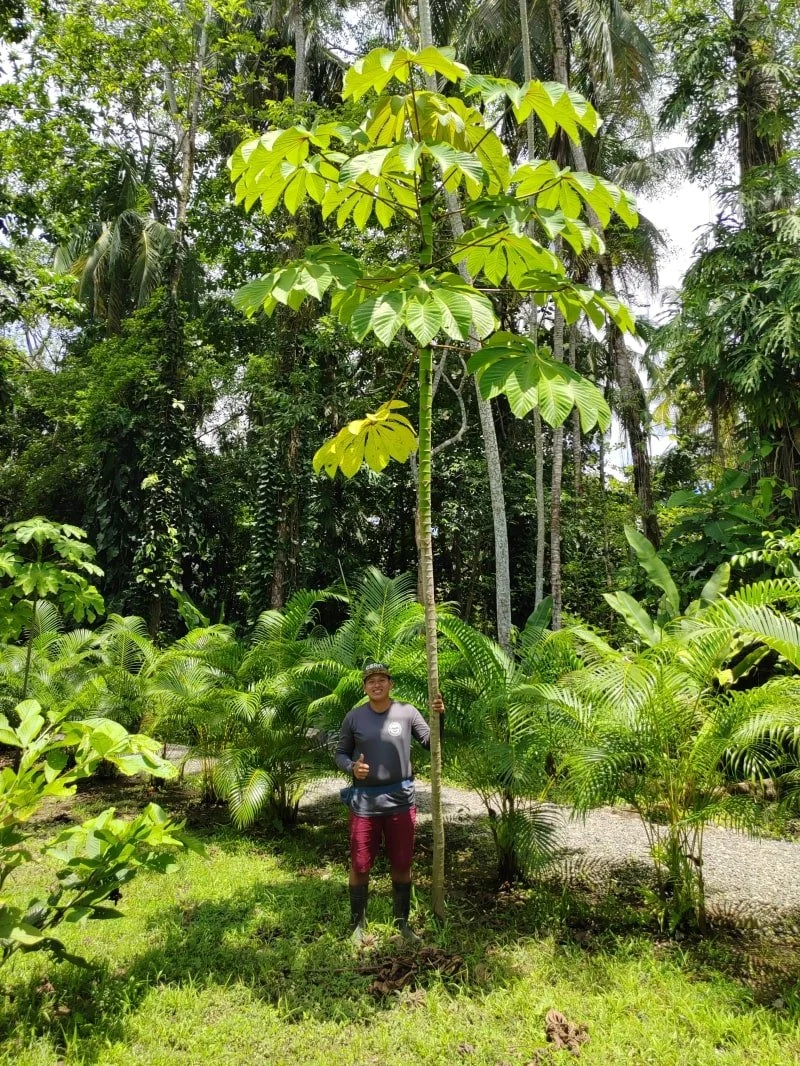
Diego next to one of the trees he planted in this property
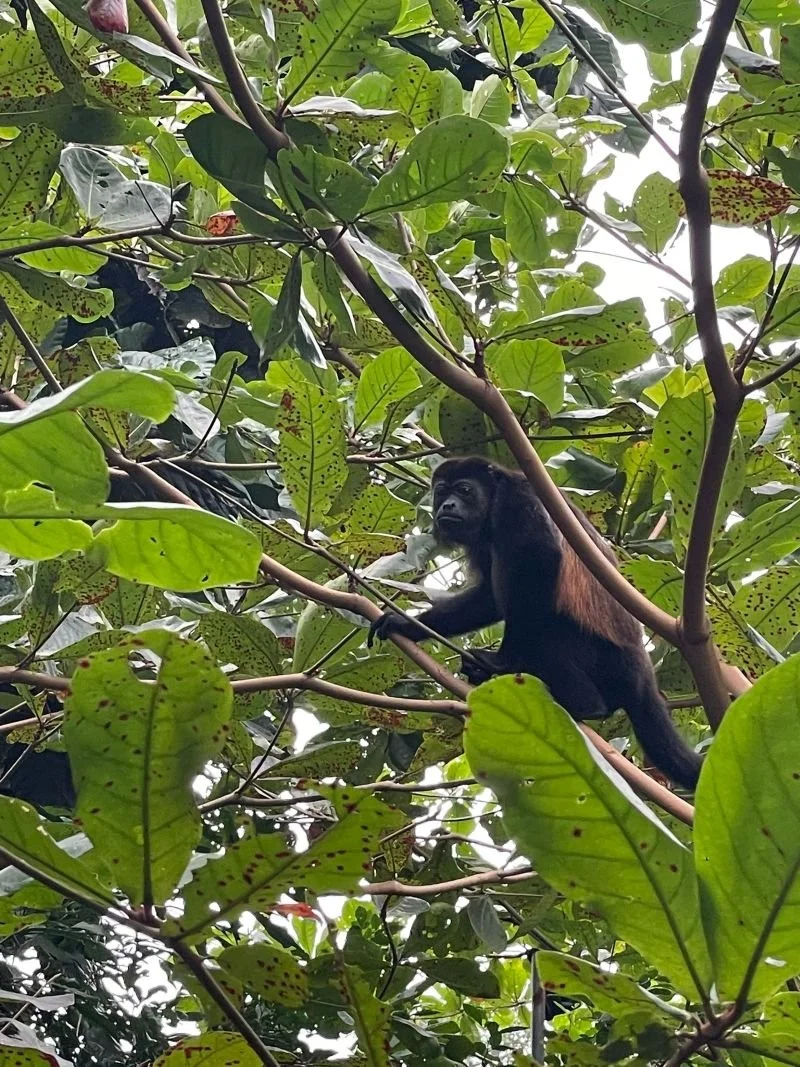
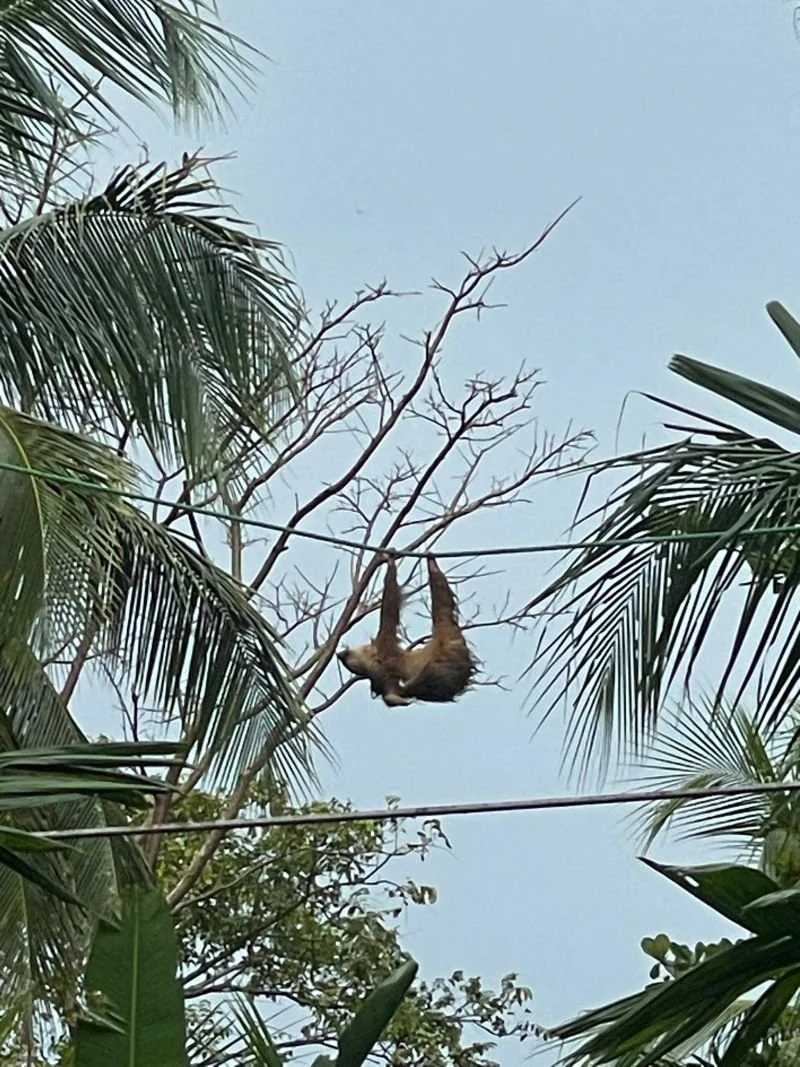
Fruit trees are producing food for both people and wildlife. And best of all, the animals have returned. Nicole has recorded monkeys and sloths in the trees, and a two-fingered sloth crossing bridge SC-212!
Restoration is Possible (And Necessary)
This story proves that even severely altered land can recover. It takes patience, planning, and a commitment to protect what grows back. Thanks to Nicole’s dedication and your continued support, this property now forms a stronger link in the South Caribbean’s forest network.
The Best Kind of Reality TV
And of course, here are the latest photos and videos of sloths and wildlife using the Sloth Crossing canopy bridges in recent months.
Help Us Keep Growing
We have now installed over 370 Sloth Crossings across the South Caribbean. Maintaining them is a full-time task, and planting more trees remains urgent as we work to close habitat gaps. If you can, please support this work again, whether by planting a tree, sponsoring a bridge, or contributing to ongoing maintenance!
I hope you’ve enjoyed this story, which has been in the making for years. See you in the next Connected Gardens update with more bridges, camera trap images, and wildlife using Sloth Crossings.
Thank you for being part of this connected community. Together, we can give the forest back to the wildlife that calls it home.
