February 2026
Update #54 of The Urban Sloth Project!
Pistachio
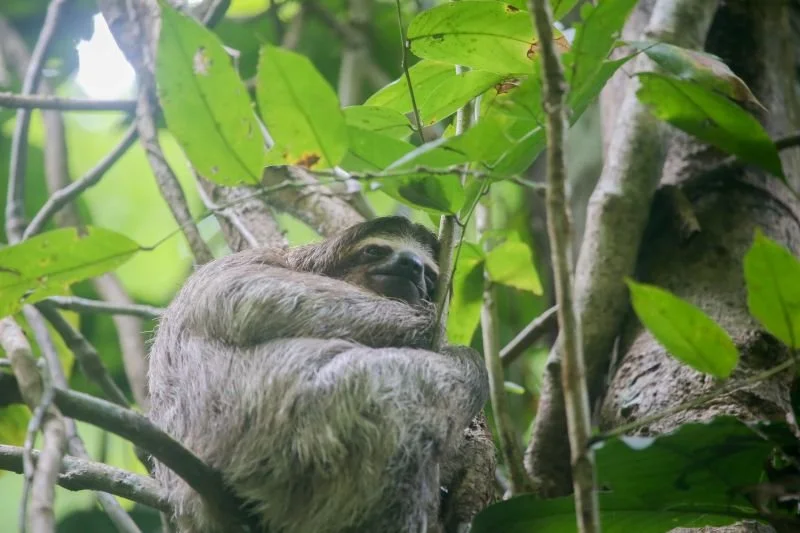
Pistachio’s usual resting spot at Caribeans Cafe, where he spends most of his time tucked into the vines above the restaurant, was recently trimmed back and largely removed. Since the vines are no longer providing the same cover, he has abandoned this spot for now.
Instead, he has shifted to the other side of the cafe, where he is frequently seen in a beach almond tree. He often shares this tree with a smaller, two-fingered sloth, suggesting some level of overlap or tolerance in their use of space.
Even more intriguing, Pistachio has begun venturing into a property on the opposite side of Tasty Waves, an area where we had never previously recorded him entering. Although he typically returns to Caribeans, his visits to this new property are becoming more frequent each week, suggesting a possible shift or expansion in his home range.
Adding to this movement pattern, we were recently sent a video of Pistachio crossing the road at night from the owners of Tasty Waves Cantina. Unfortunately, rather than using the wildlife bridge he was travelling on the ground. This confirms that he is moving extensively after dark and navigating between habitat patches in ways we hadn’t fully documented before.
In the video, you can hear one of the owners, Lydia, warmly calling out to the sloth, “Tango!” Tango also lives in that same area, so the confusion is completely understandable, especially in a place where more than one familiar face hangs around the palms. But if you look closely, this sloth is noticeably large, with that distinctive greenish tint to the fur that comes from algae growing in the hair. Thanks to the size and that mossy camouflage coat, we can confidently confirm that the sloth in the video is Pistachio.
With his original resting site altered and his movements increasing, we are left wondering: where will Pistachio choose to settle next?
Luiza
Luiza was especially active this month, moving frequently between the cliff lookout point and the main road area. When she goes to the area near the road it’s to specifically visit this one large Guarumo tree which we have records of her visiting since 2022. During her time there, she was observed near other three-fingered sloths, including females with babies and at least one male, suggesting increased social proximity within this area.
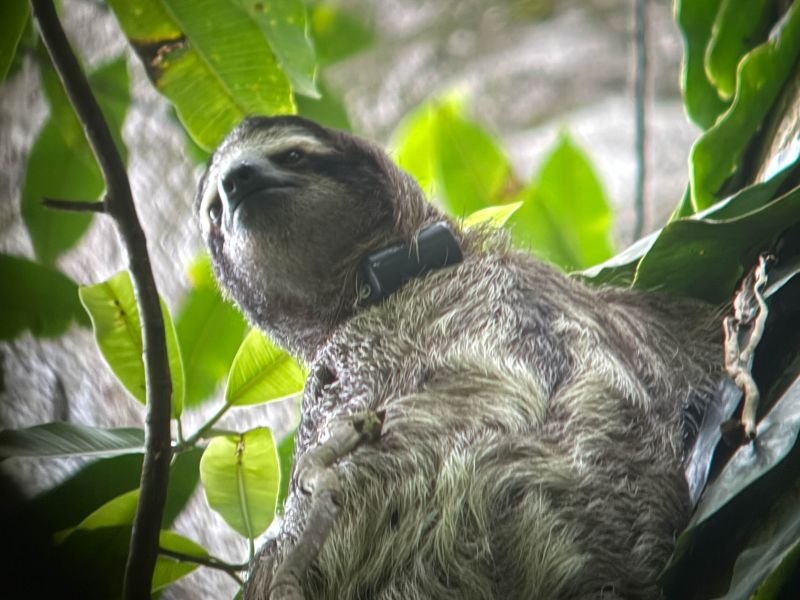
Despite heavy rains throughout the month, Luiza continued moving consistently and remained highly visible. She even provided quite a show for tourists, who often stopped to watch her, and to ask us what we were doing with our large tracking antenna.
She also spent time along the raised cliff forest patch (The so-called Talamanca Viewpoint). Due to slippery and potentially dangerous conditions caused by the rain, the team avoids entering that area during wet days. However, on clearer days, we were able to spot her safely from the viewpoint.
Luiza’s home range (see map below) measures no more than 100 meters at its widest point, and a public trail runs directly through it. Fortunately, this does not seem to disturb her, as she moves above it through the canopy, crossing safely from tree to tree.
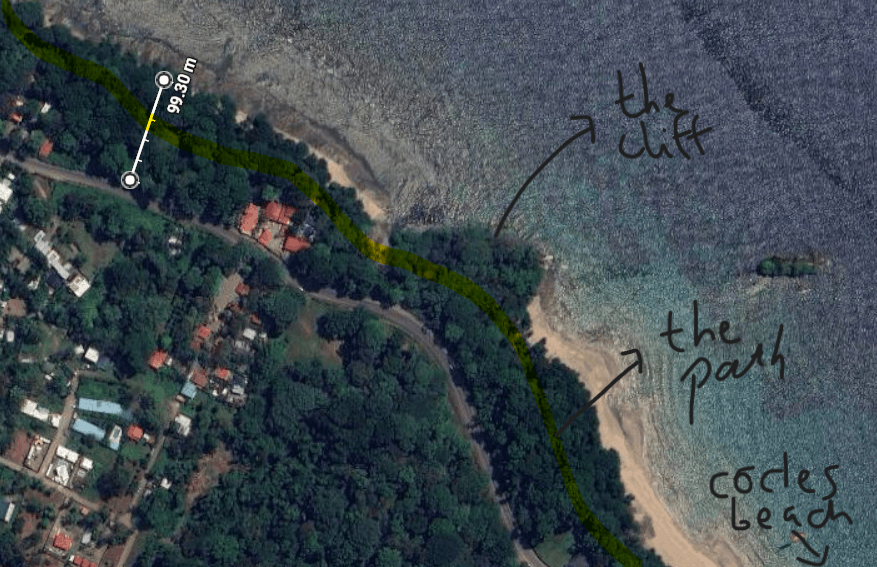
From the map, you can see how Luiza travels along the upper edge of the forest patch, up toward the cliff, and then down in the direction of Cocles Beach. Even within this relatively narrow strip of habitat, she makes full use of the vertical and connected canopy to navigate her range.
Toward the end of the month, Luiza was seen near the coastal forest trail that leads to Cocles Beach. While this is not a completely new area for her, she has been using some different trees there. Notably, she has been resting relatively low around 10 meters high over the last two days.
This is particularly interesting because female sloths often position themselves lower in the canopy around the time of birth. Giving birth high in the treetops can increase the risk of a newborn falling, so females may choose lower, more stable branches that offer better support and protection. In some cases, they also reduce their movements and remain in a smaller area as parturition approaches.
So this raises an exciting question: were we simply lucky with these lower sightings, or could this behavior indicate that Luiza may be preparing to have a baby soon? We are hopeful and will be watching closely in the coming weeks!
Deborah
This month, we were able to confirm that Debbie does indeed have a baby! This marks her second baby since joining the study, which is very exciting news for our long-term monitoring efforts.
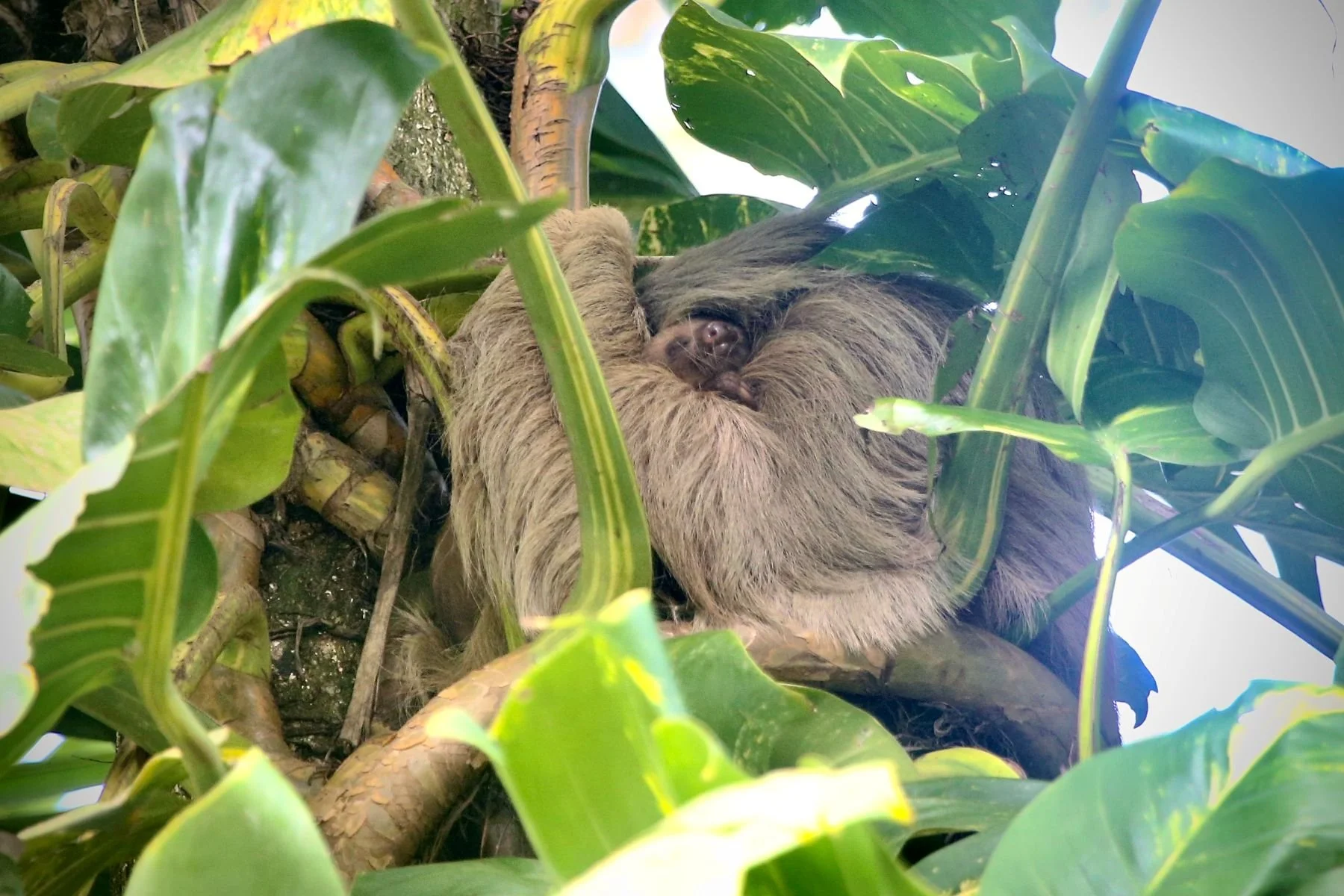
Deborah and her second baby!
She has remained within her usual home range and continues to frequently use a beach almond tree near the road. Spending most of the time resting among the surrounding vines, where she sits quietly with her newborn nestled safely against her. The baby appears healthy and is growing well. If development continues as expected, we hope to see the young one becoming more independent in about five months.
However, we are increasingly concerned about the condition of her habitat. Coastal erosion in this area has been intensifying, and sections of shoreline are steadily disappearing. Strong waves have been hitting the coast with greater force, accelerating the loss of sand and destabilizing trees along the beach. Several trees have already fallen due to the shifting soil, and although the damage is not yet extensive, the trend is worrying. As erosion progresses, the available habitat becomes narrower, reducing the number of safe trees available for Debbie and other wildlife. Habitat loss along the coastline not only limits resting and feeding options but can also increase exposure to roads and human activity as animals are pushed further inland.
For now, sea conditions appear to be calming, which may temporarily slow the erosion process. We will continue monitoring both Debbie and the condition of her habitat closely in the coming months.
Name Debbie’s baby!
We would love for you to submit up to three name suggestions for consideration. Please submit your suggestions by 10th March. Once submissions close, our team will create a shortlist and open a second-round vote exclusively for our VIP members. The final chosen name will be announced on our social media channels.
Tango
Since we collared Tango, he had been spending most of his time in the Tasty Waves Cantina area, using the same trees we know are shared by Tiki and Tender. He had been regularly crossing the wildlife bridge and was healthy and thriving!
At one point, we went about a week without seeing him. Although we were still receiving a signal from the antenna, it seemed to be coming from a neighboring property next to Tasty Waves, which we hadn’t been able to gain access to, meaning we couldn’t visually confirm his condition.
Shortly after, we found him at the base of a tree, partially submerged in stagnant sewage water and in very poor shape. He had significant wounds, and it was immediately clear that he needed help. We made the decision to transport him to the rescue center, where he is now recovering from his injuries.
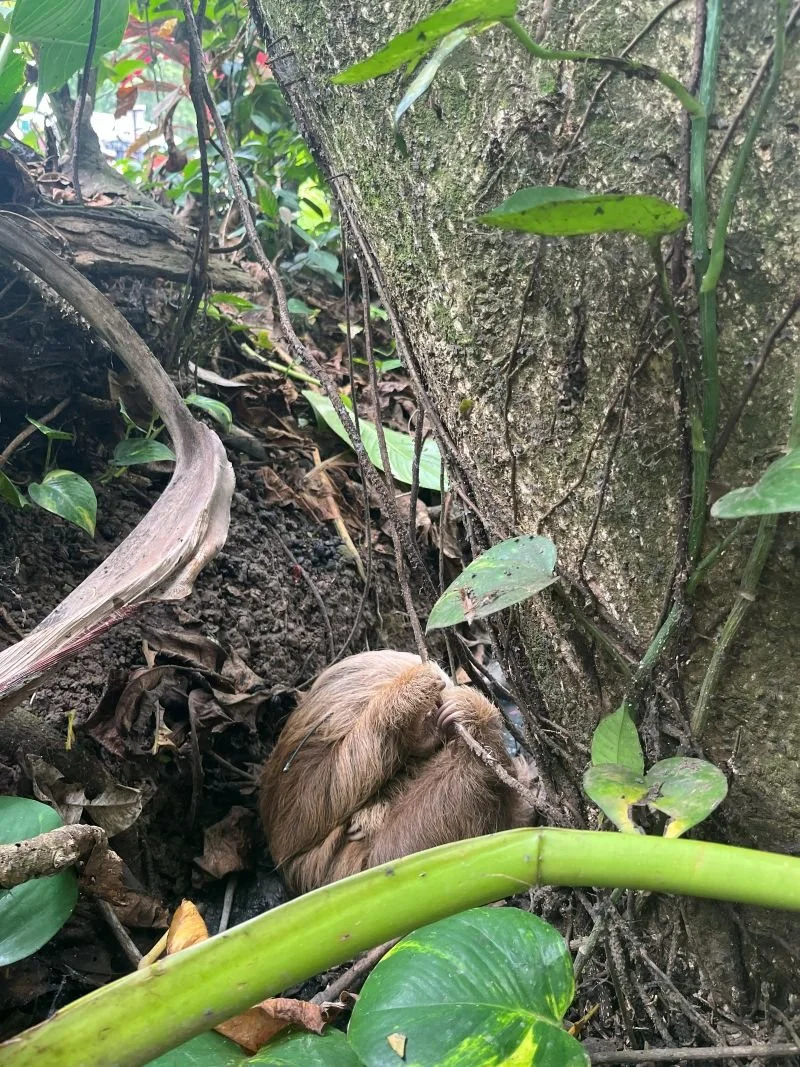
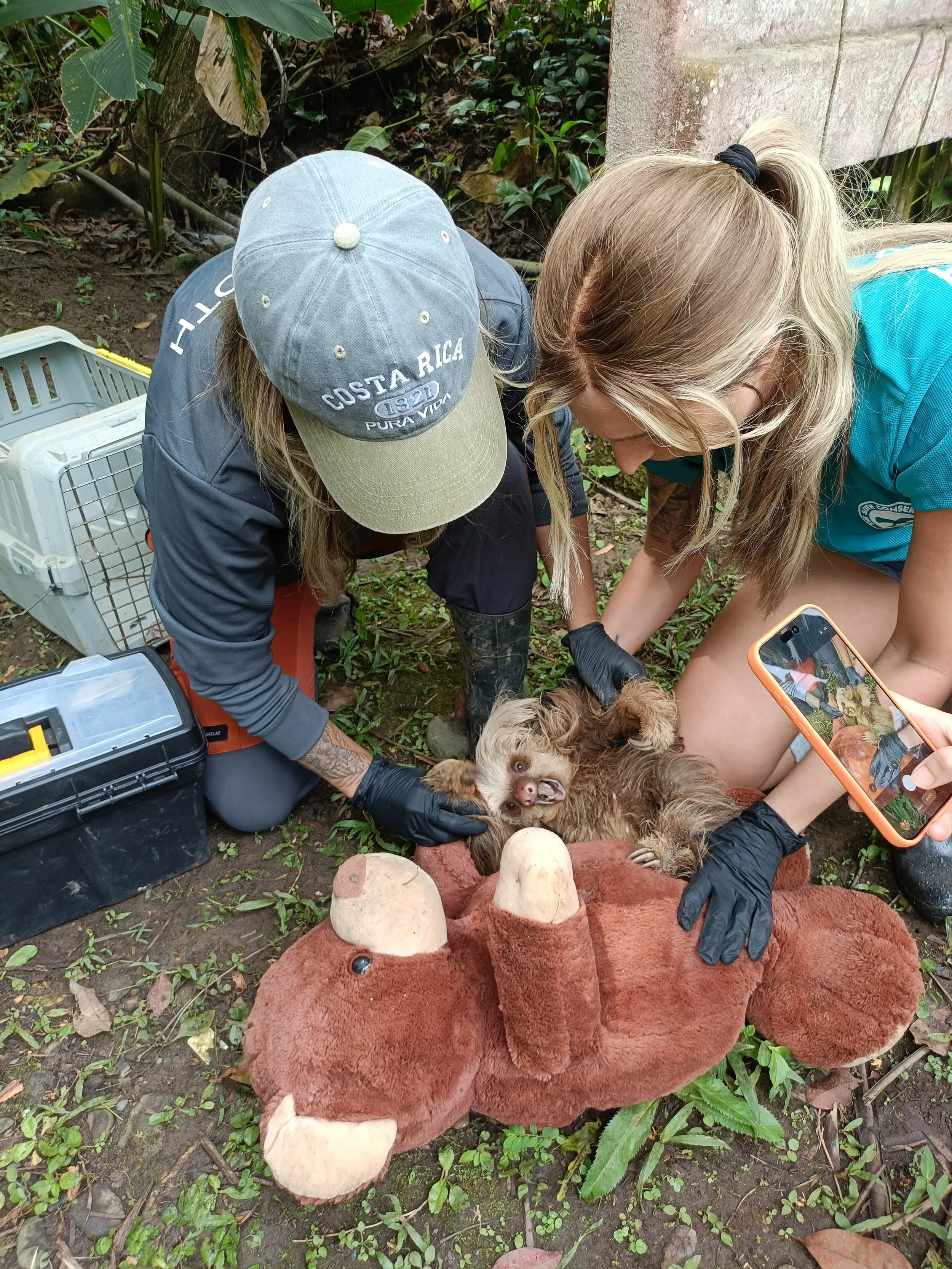
At first, we suspected a dog attack. Dogs are one of the biggest threats to sloths when they are on the ground. Sloths are extremely vulnerable at ground level - they move slowly, cannot defend themselves effectively, and have very limited ability to escape. In areas with free-roaming or stray dogs, attacks can happen quickly and are often fatal.
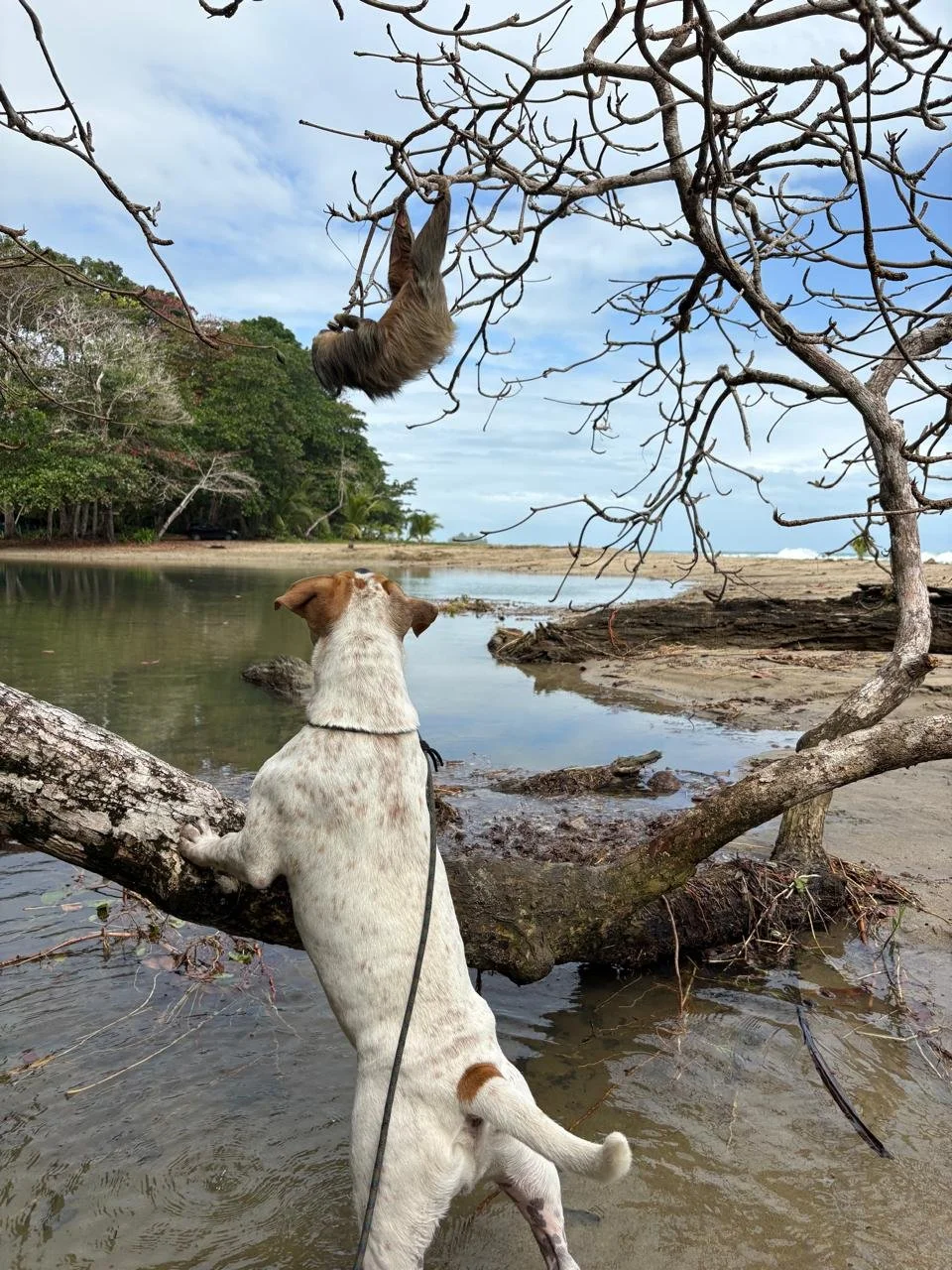
This ongoing risk is one of the reasons we neuter and spay around 100 dogs a year as part of our effort to reduce the number of stray and free-roaming dogs in the area. By working to humanely control the local dog population, we aim to lower the risk of wildlife attacks and create a safer environment for sloths and other species.
On this occasion though, veterinarians determined that his injuries are more consistent with a raccoon attack. This is especially concerning, as we have been observing raccoons using the same trees as Pistachio in recent weeks.
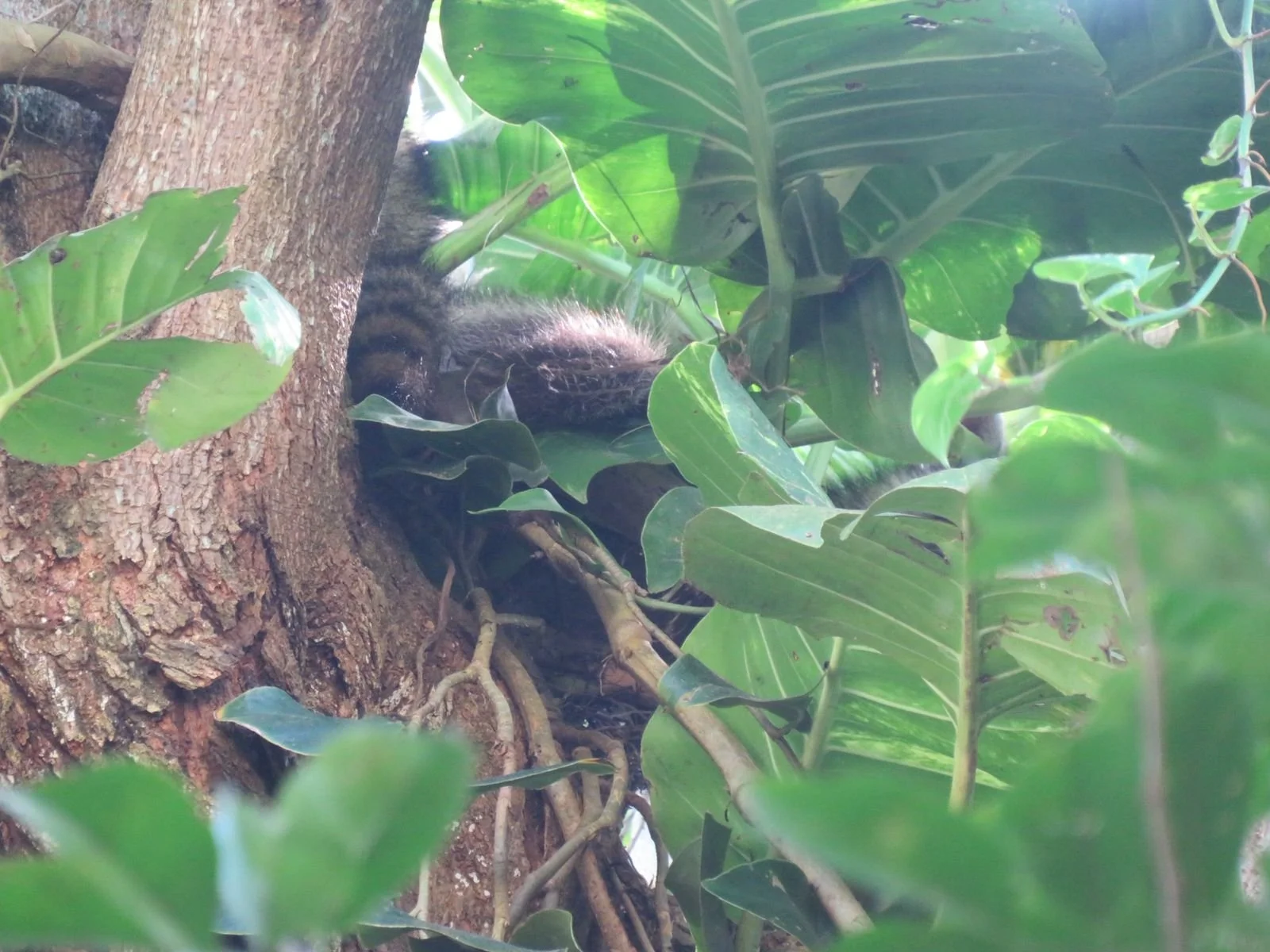
Raccoons often sneak into houses in search of food, especially in areas where human activity is close to natural habitats. When their natural diet is replaced with ultra processed foods from people, it can significantly alter their behavior, making them bolder and more dependent on human sources. In national parks, raccoons have even been known to open backpacks and steal tourists’ belongings, having learned that bags often contain easy snacks. Over time, this shift not only affects their health but also increases negative encounters between raccoons and humans.
Raccoons are highly adaptable and thrive in urban and semi-urban environments. Their growing presence in this area reflects a changing landscape, one that is becoming increasingly urbanized. Human settlements, along with the trash and food waste that come with them, attract raccoons and support larger populations. As raccoon numbers increase, their territories begin to overlap more with sloths, creating new pressures and risks within what was once safer habitat.
Tango’s situation is a reminder of how environmental change and urban expansion can directly impact wildlife. For now, we are hopeful and grateful that he is receiving the care he needs, and we will continue to monitor his recovery closely.
Tiki Doppelganger rescue
Earlier this month, we responded to a sloth with what appeared to be a broken leg, initially believing it was Tiki (Tango and Tender’s mom). After safely rescuing the animal and conducting a proper examination, it became clear that the leg was indeed fractured, so we are glad we intervened!
Once at the rescue center and examined more closely, we discovered that the sloth was not Tiki after all, but a male. He is now receiving care and recovering well.
Misidentifications like this can happen because sexing sloths in the field is not always straightforward. In many cases, males and females look very similar, especially from a distance or when they are high in the canopy. Unlike some other mammals, there are no obvious external features that make identification easy at first glance. In two-toed sloths, for example, the genitalia are not always visible unless you have a very clear angle, which is rarely the case in dense forest. Even in three-toed sloths, where adult females may have a dorsal patch, that marking is not always visible depending on posture, age, or lighting conditions.
When a sloth is partially hidden by foliage, curled up, or observed briefly, it can be challenging to confidently determine sex without a closer examination, which is something we only do when absolutely necessary and safe for the animal.
Primary Forest Sloths
Ponder
This month’s update on Ponder is a short one. At the beginning of February, his GPS collar was programmed to automatically release, allowing it to detach without the need to recapture him. This feature is especially useful in primary forest areas, where sloths are much more difficult to access and safely catch.
On February 4th, the team headed to our primary forest patch with the goal of retrieving the collar from the forest floor. The signal led us to a steep, slippery hillside that was challenging to navigate. After carefully searching the area, we successfully spotted the collar on the ground.
Ponder is now collar-free. With the collar released and successfully retrieved, this also marks the end of his participation in our tracking project, as he will no longer be monitored through GPS. We’re grateful for the valuable data he has provided and excited for him to continue life in the forest without a collar.
P.S. This also means that LESMEN’s collar in Osa has now released as well. We’ll be heading out next month to retrieve it!
Pipa
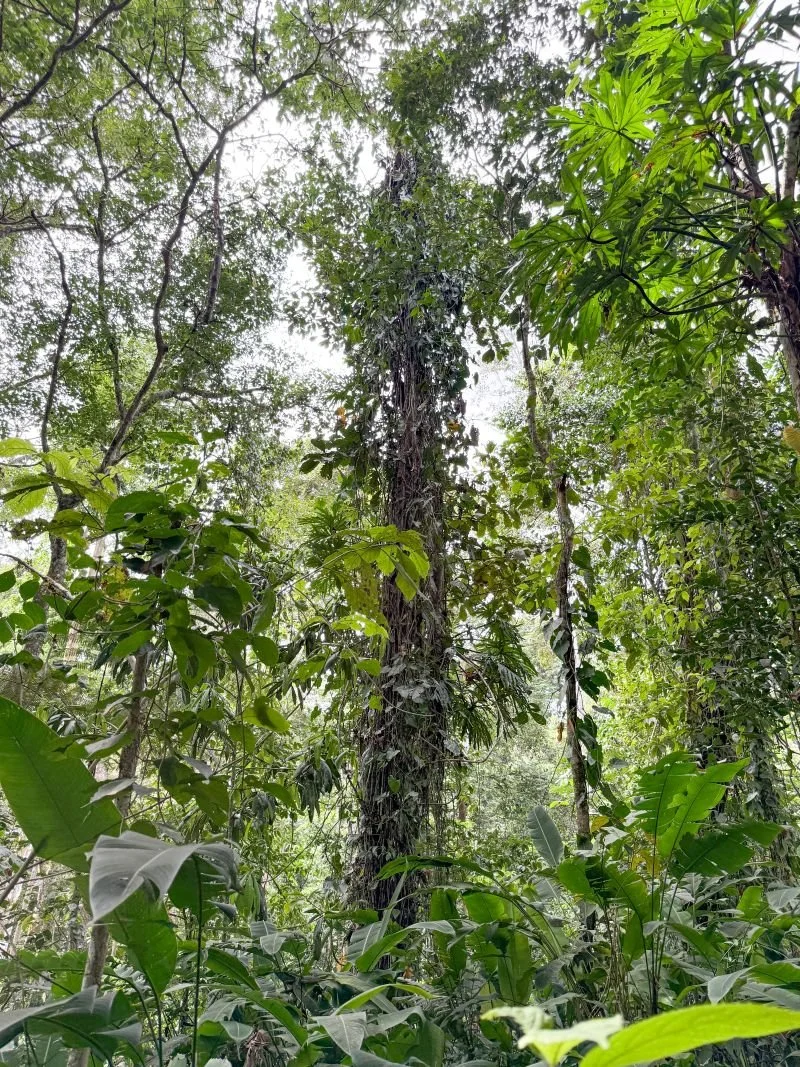
Pipa continues to use mostly the same area of the primary forest, although on some days she chooses a new tree nearby. This month’s tracking days were especially wet, with heavy rains brought by several cold fronts moving through the region.
On multiple occasions, we found her soaked, tucked deep within thick vines for shelter. Spotting her was a real challenge from a combination of the dense vegetation, and the poor visibility from the rain. Each time, it was almost impossible to take a clear photo. We could just barely make out the antenna from her collar, which confirmed it was her, but getting a clear view of her was a whole other story.
Despite the weather and the difficult conditions, she seems to be doing well and staying consistent within her home range.
Flash
Our primary forest sloth, little Flash, is small, elusive, and incredibly hard to spot. Every time we visit this area, we receive a strong signal from his collar, whether the day is stormy, sunny, or windy. The signal never fails us.
Yet despite that reliable connection, actually finding Flash within the dense forest canopy is another story. Hidden high among the leaves, he blends in perfectly, like a small ball of fur tucked into the treetops. Over the past month, we managed to spot him only once.
During this latest visit, the team searched the same area where we consistently detect his signal. It’s the very place he has remained since we first collared him! So far, there have been no long-distance movements within his home range. Flash is still young, and as he matures, he may begin to explore and expand his territory.