July 2026
Update #59 of The Urban Sloth Project!
Here on Costa Rica’s Caribbean coast, the rainy season arrived in full force. It seemed to rain almost every day. Roads were regularly blocked by fallen trees, power and internet outages became part of our routine, and many field days had to be rearranged around the weather.
We have also experienced unexpected problems with several tracking collars. Although the manufacturer estimates a battery life of around two years, the batteries slowly begin discharging as soon as they leave the factory. This means that the time spent in storage and travelling to Costa Rica counts towards their expected lifespan, even before the collars are fitted onto a sloth.
Reliable tracking technology is essential for long-term research, so we are now exploring how we can prevent similar problems in the future. In the meantime, our field team continues doing what it does best: adapting, searching, and getting very muddy!
An unexpected rescue
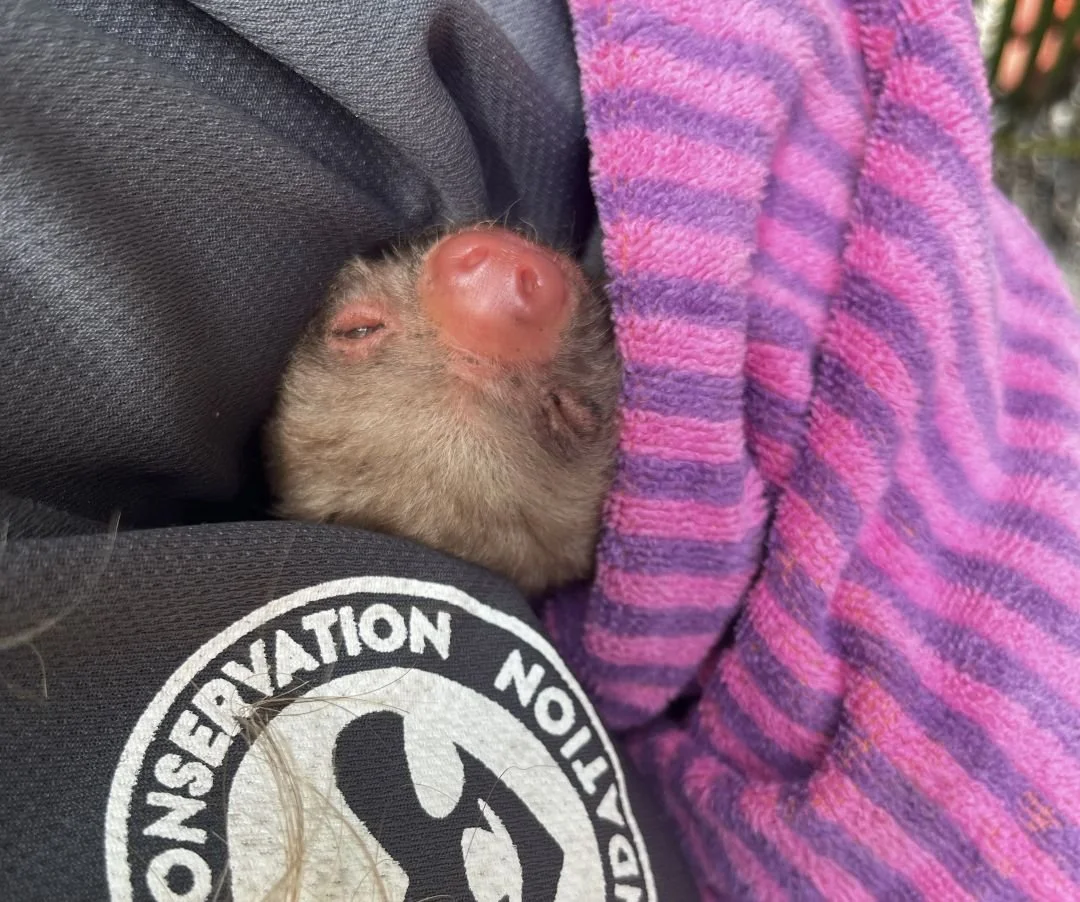
While tracking Pistachio near Tasty Waves Cantina, the team found a baby sloth who was clearly in need of help. The baby had injuries around the nose and eyes, as well as on the paws.
There were three sloths in the surrounding trees who could potentially have been the mother, but there was no safe way to confirm this in the field. Because the baby was not in good condition, the priority was to get the little sloth into professional care as quickly as possible.
The baby is now at the rescue center receiving veterinary attention. Our team also collected genetic samples, which may help us determine whether this is Tiki’s newest baby.
Luiza
Luiza’s collar battery stopped working much earlier than expected. We had anticipated that it would continue transmitting until the end of the year, so suddenly losing the signal left us without our usual way of locating her.
Thankfully, after several searches, our thermal drone finally detected Luiza high in the canopy. Spotting her from ground level would have been almost impossible, showing just how valuable this technology can be when monitoring an especially elusive sloth.
Unfortunately, Luiza was resting around 35 metres, or approximately 115 feet, above the ground. At that height, we could not safely reach her to replace the collar.
The good news is that, after following Luiza for so many years, we know her home range extremely well, including many of her favourite trees. For now, we will keep watching and wait for the right opportunity, either when she moves lower or when conditions allow our experienced climbing team to reach her safely.
Luiza may no longer have a working signal, but she has not escaped our thermal eyes!
Martita
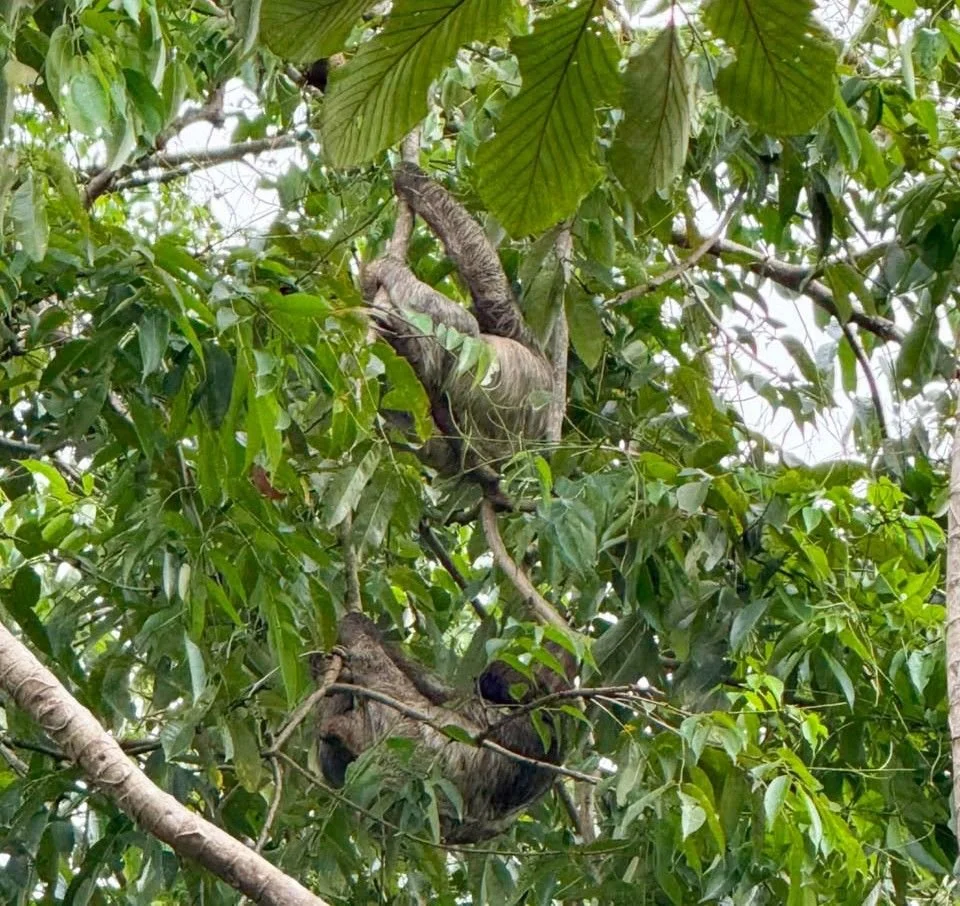
After spending some time out of sight, Martita finally reappeared near one of her familiar guarumo trees.
We first found her at approximately nine metres, or 30 feet, before she returned higher into the canopy at around 14 metres/ 46 feet. It is possible that she had recently descended to defecate before climbing back up, although we were unable to confirm this.
Martita close to another female sloth
Her baby Patty was also in the same area, exploring independently but still remaining close to his mother’s home range. Martita, meanwhile, was sharing a branch with another female sloth.
Her relatively low position gave us hope that we might soon have an opportunity to capture her safely and address her collar. As always, this will depend on her position, the weather, and whether Martita decides to cooperate!
Patty
Patty has quickly become one of the team’s favourites. He is curious, photogenic, and was extremely helpful during our microbiome research. Let’s just say he has been very generous when it comes to providing fresh poop samples!
At around five months old, Martita’s son is becoming increasingly independent while still remaining close to the area where he grew up. Every time we watch him, he seems to be learning something new, from choosing which leaves to eat to finding the right tree to use as a toilet.
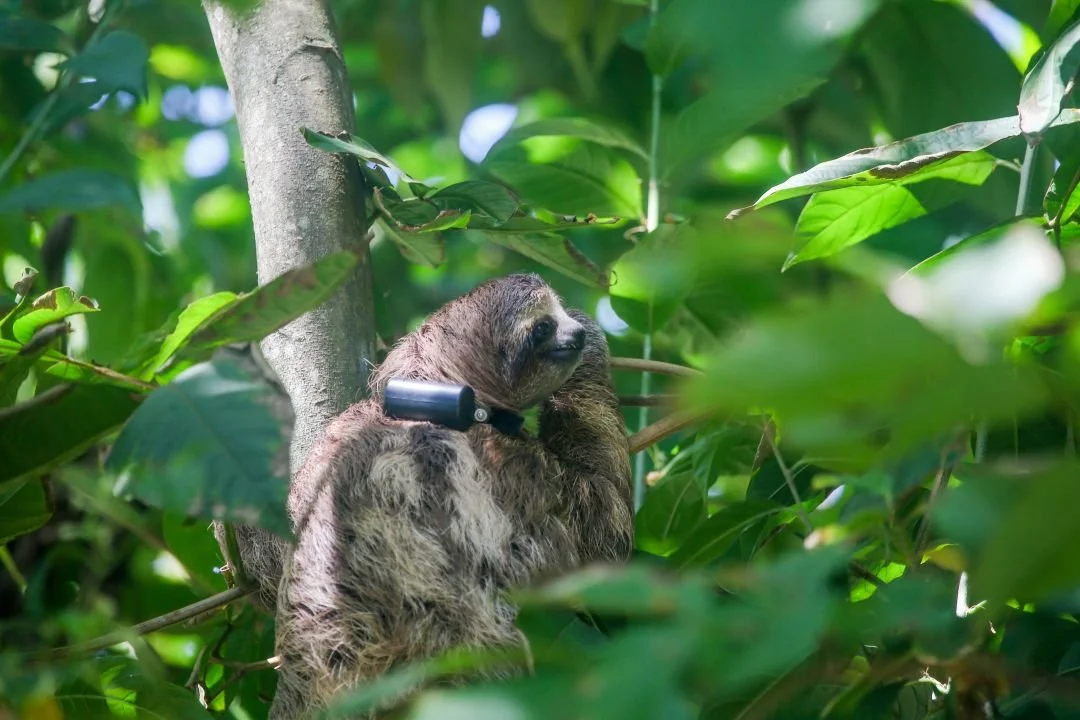
Patty has also become much more adventurous. He left the smaller trees he had been using and returned to one of the large trees behind the restaurant, where there are plenty of vines and food. More recently, he has been exploring the largest tree in the area, which is connected to a wildlife bridge.
The team has watched him moving skilfully among the leaves and branches, exactly as he once did alongside his mother. He still has plenty to learn, but Patty appears to be adapting very well to life as an independent young sloth in an urban forest.
Pistachio
Pistachio has been dividing his time between the trees near Tasty Waves and the palm trees where he loves to hide.
We need to replace his collar, but he has recently been staying much higher than usual, safely concealed among the leaves. It seems Pistachio may have worked out exactly what we are planning!
The restaurants became particularly busy during the World Cup matches, bringing more people and noise into his home range. Pistachio responded by moving less and remaining hidden in the trees.
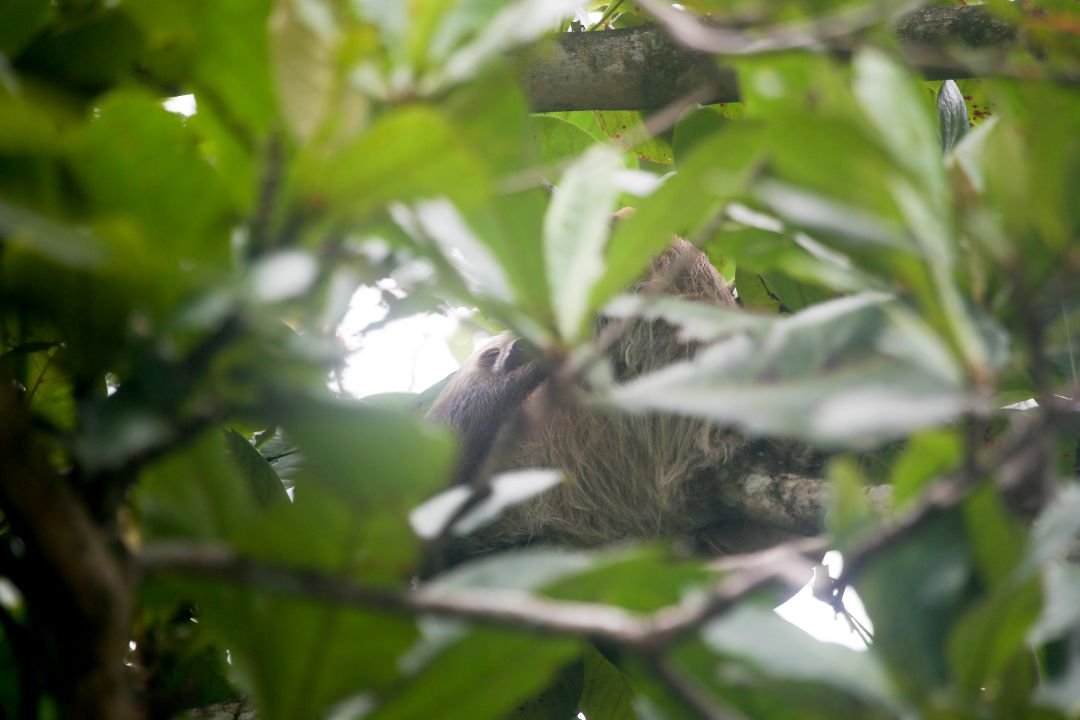
Since the vines were removed from the restaurant structure where he once slept, he has also been spending more time in the trees on a neighbouring private property. Thankfully, this month the team watched him use one of our wildlife bridges to reach a tall tree away from the busiest area.
Once there, he settled high in the canopy, calm and undisturbed by the restaurants and football fans below.
Debbie
Debbie and Kiwi remain, without a doubt, one of the sweetest pairs of sloths we monitor.
Kiwi is growing quickly, but that has not stopped her from staying close to her mother. Following one long and rainy night, we found them near the main road looking like two small, soaking-wet balls of fur. Debbie was curled tightly around Kiwi, with only the baby’s paws visible.
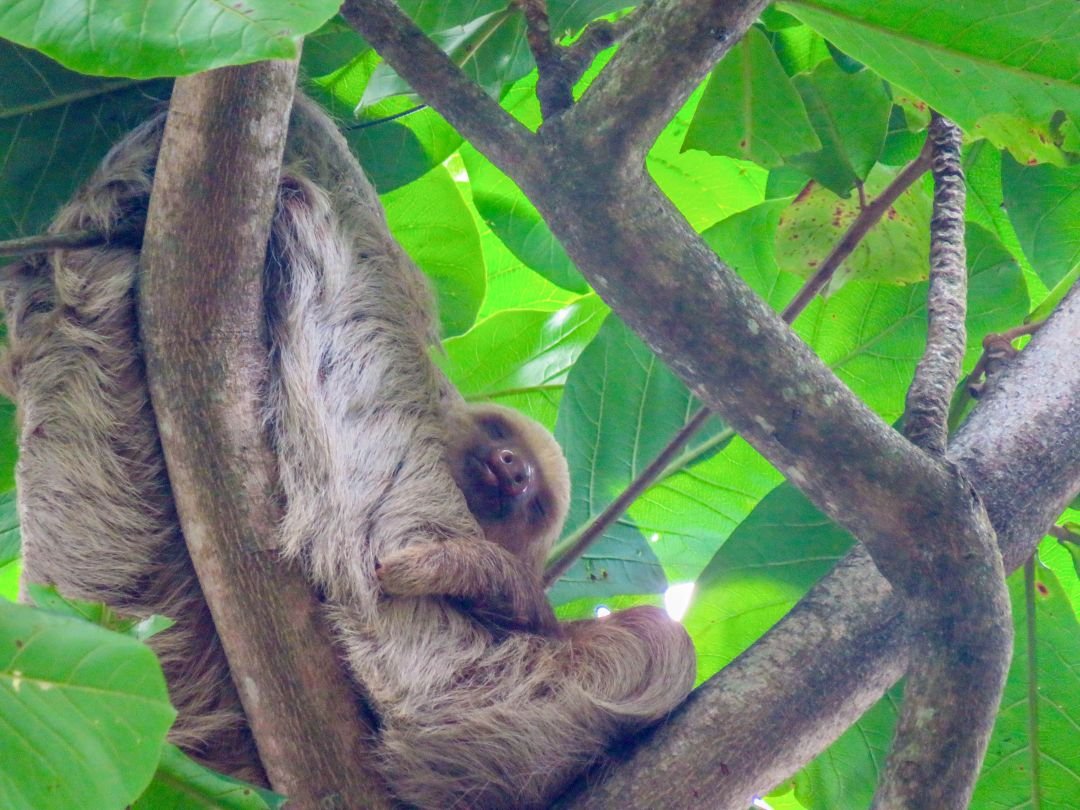
With the tide unusually high, the pair appeared to be keeping each other warm until the weather improved. They later moved into one of the almond trees by the beach, where they settled facing the sea.
Franklin was resting nearby, and seeing the three of them sharing the same area naturally made us wonder whether he could be Kiwi’s father. Proximity alone cannot answer that question, but it is certainly an interesting possibility.
For now, mother and baby continue enjoying the coastal canopy together, usually cuddled so closely that it is difficult to tell where Debbie ends and Kiwi begins.
Franklin
Franklin is usually somewhere near Debbie, close to the beach, providing the team with a calm and relatively easy start to the day.
Recently, he has moved slightly farther away from the road and closer to the sea. He often rests among the bamboo, although on rainy days he appears to prefer the protection of the almond trees.
During one observation, we found him asleep near Debbie and Kiwi. He barely acknowledged the team, lifting his head just enough for us to see the collar antenna and confirm his identity before returning to sleep.
After some of our more challenging sloths, we always appreciate Franklin’s cooperation!
Nigel
Nigel appears to have settled comfortably into the same area where we first found him. It offers everything a young sloth could need: large trees, guarumos, plenty of food, thick vines for sleeping, and several sloth neighbours.
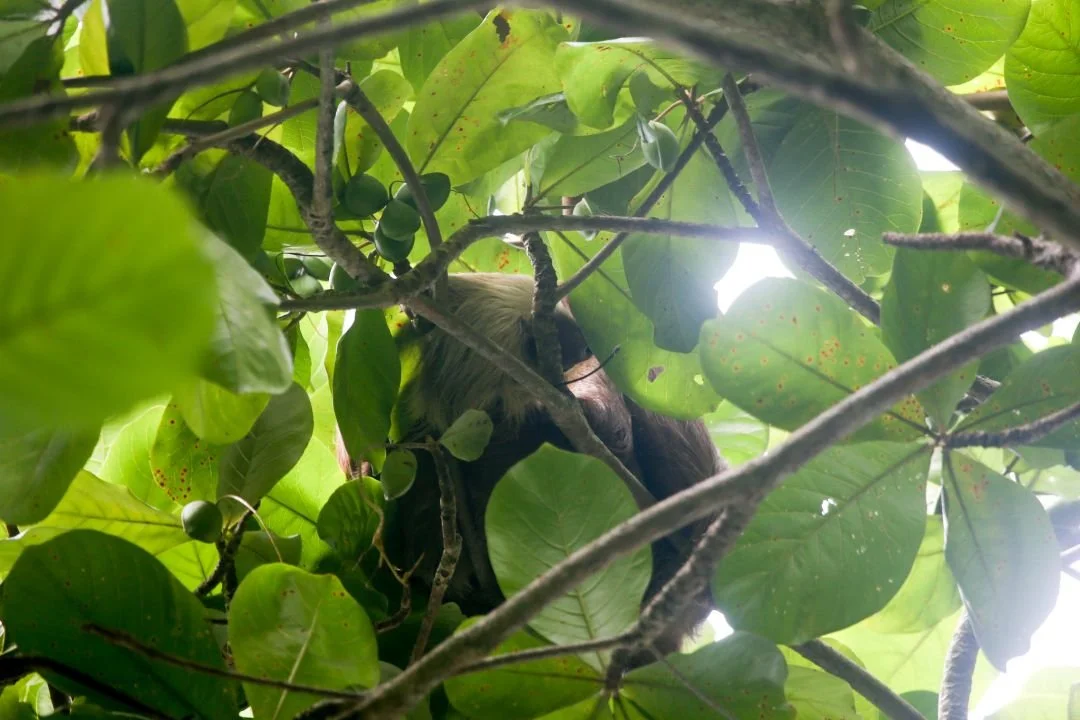
Although Nigel often rests quietly inside the vines, his tracking signal has recently become inconsistent, changing direction and strength as the team searches. We suspect there may be a problem with his collar, so we need to find him in a safe position before we can assess or replace it.
Nigel, however, has other ideas. Despite several searches, he has remained hidden among the trees.
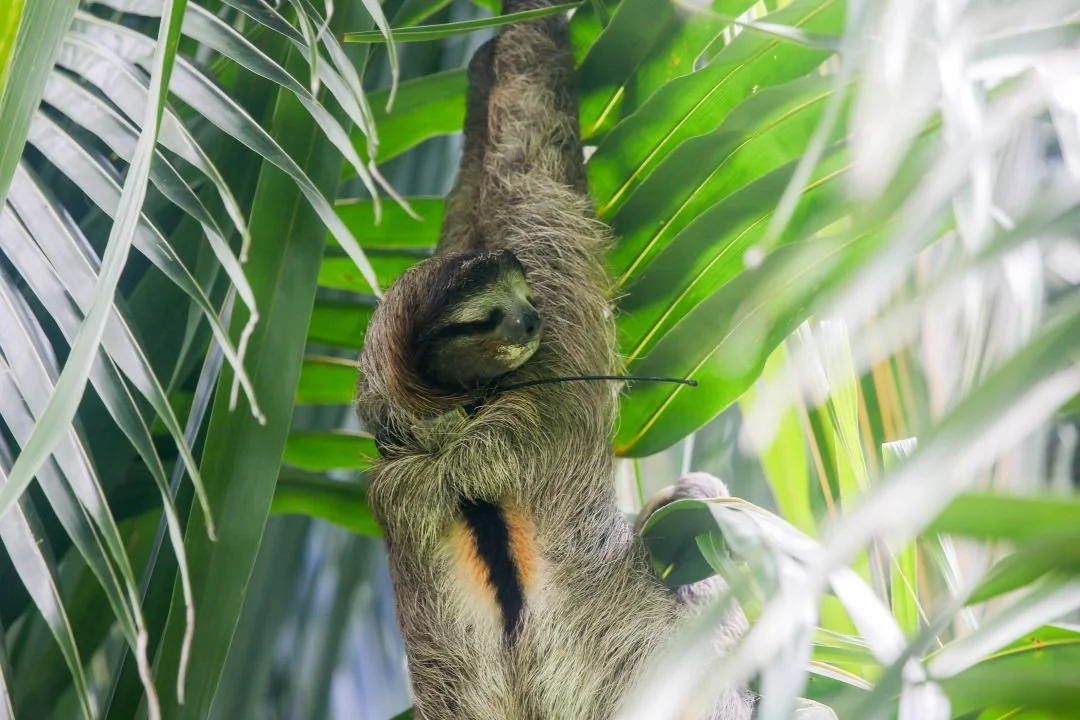
During one of these tracking sessions, the team also spotted a female two-fingered sloth with a newborn baby nearby. The baby has been named Xodo, giving us another tiny sloth to watch for during future visits.
Christine
Christina has officially earned the title of hide-and-seek champion.
Even when the telemetry signal tells us she is directly above our heads, she somehow disappears into the canopy. She seems much more willing to reveal herself when Amelia is tracking. Wherever Amelia goes, Christina suddenly appears. The rest of the team usually spends considerably longer searching, sometimes without finding her at all.
This month, we located Christina again near a hostel, but Mikah was no longer with her. Mikah has become independent and begun exploring on her own. Because Mikah is not wearing a collar, we cannot follow her movements through telemetry. However, we will continue watching the surrounding area and hope to spot her again soon.
Daffodil
Daffodil seems to have found the perfect place to live. Since joining the project, she has remained within the same small area overlooking the beach. With an ocean view, a constant sea breeze, and plenty of almond leaves, she has very little reason to leave her corner of paradise.
She is often curled up in the almond trees directly above passing tourists. Hundreds of people may walk beneath her without ever realising that a sloth is sleeping just above their heads.
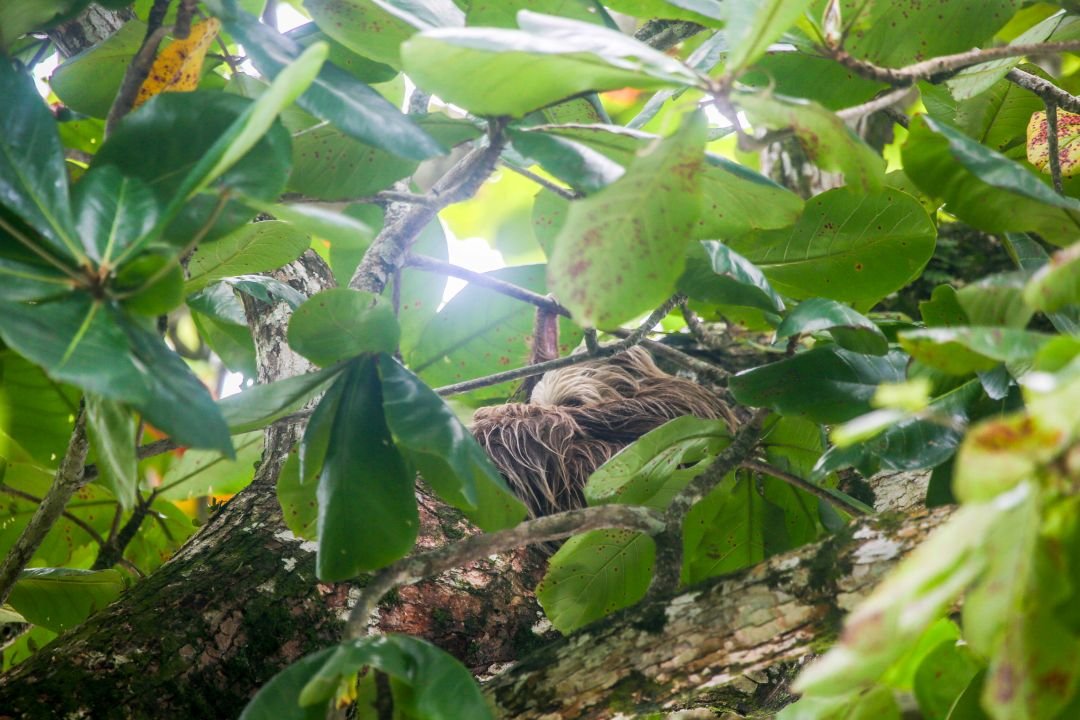
Bruce
Bruce continues to make excellent use of his urban home range. He remains within his usual area, navigating the trees and structures that form part of his daily environment.
This month, he even chose a light pole as his sleeping spot. He was surprisingly well camouflaged, although his choice of bed certainly showed just how comfortable he had become with city life.
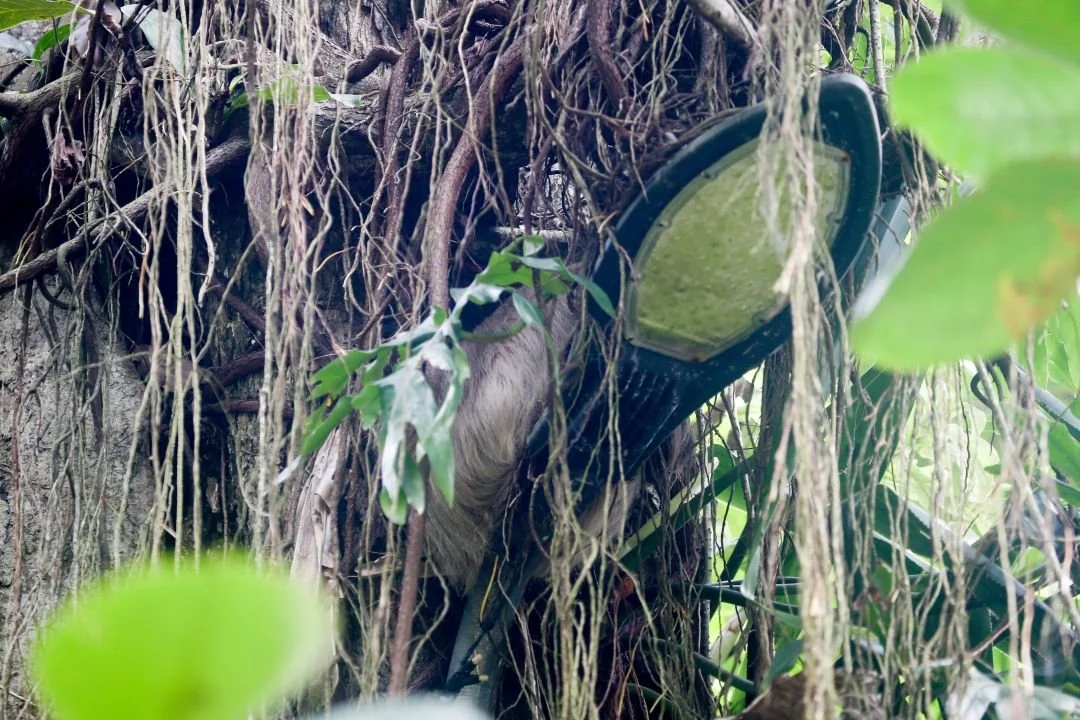
Urban sloths often have to incorporate human-made structures into their movements because natural canopy connections are limited. Observations like this help us understand how Bruce navigates this highly modified landscape and which connections remain available to him.
Bob
Bob remains happily settled in his small home range near the beach. One of his favourite spots is a guarumo tree standing in the centre of the area, where the team regularly finds him feeding, sunbathing, or simply relaxing in the rain.
On one occasion, we found Bob very low in the tree and suspected that he was preparing to defecate. However, the weekend brought plenty of noise from cars and people, and he soon abandoned the attempt and climbed back into the canopy.
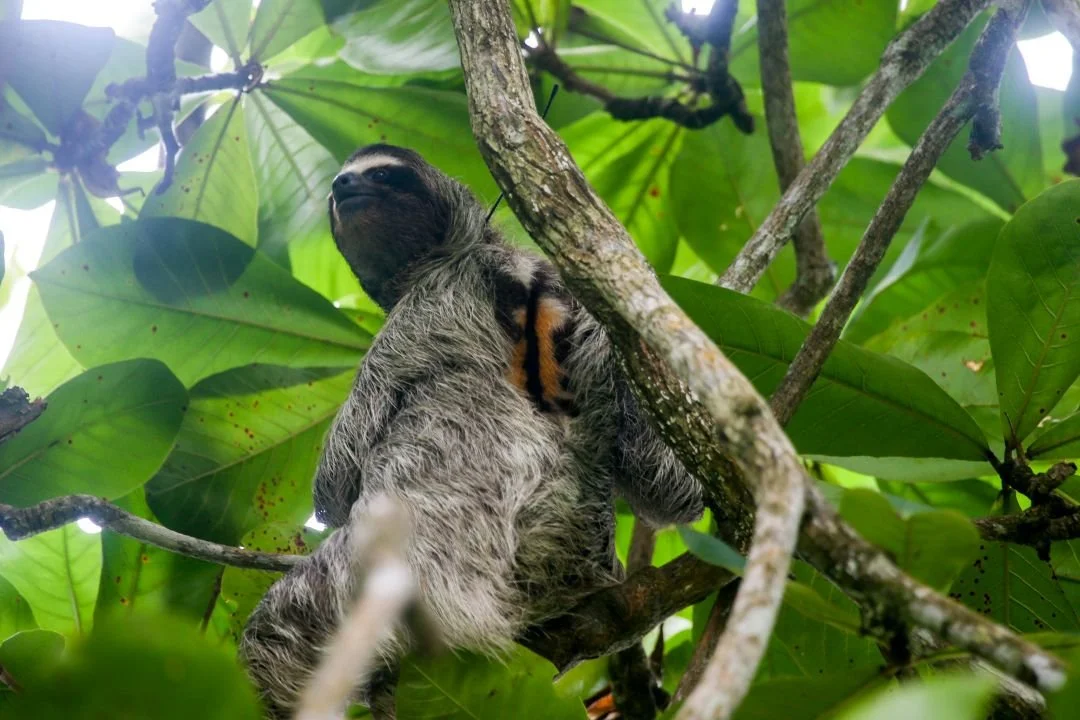
During another visit, his tracking signal appeared to be coming from the ground. We searched carefully, only to find him a little later climbing a tree approximately four metres, or 13 feet, above us. We had probably walked right past him while he was on the ground.
Bob may occupy a relatively small area, but he certainly explores every part of it.
Primary Forest Sloths
Pipa
Pipa remains the queen of the primary forest hills. She has a favourite area, but she keeps us guessing by choosing a different tree almost every time we visit.
Finding her means climbing the same muddy hill, carefully checking every branch before grabbing it and watching for the terciopelo snakes that also seem to favour this part of the forest.
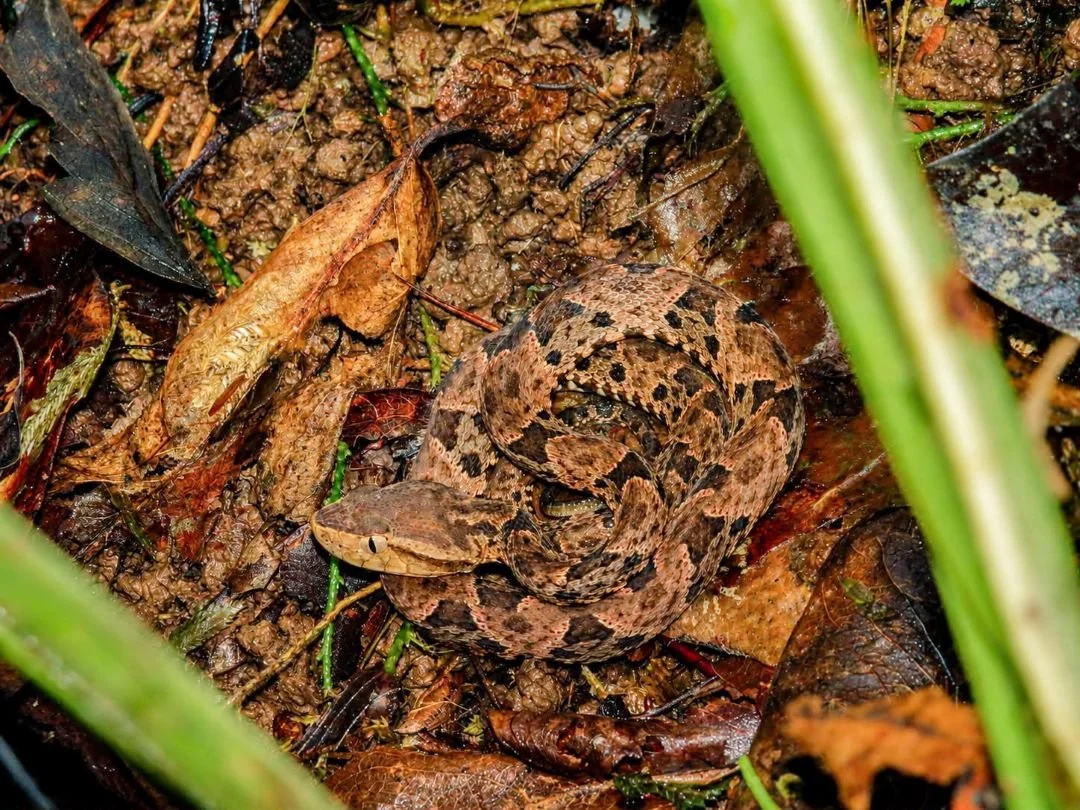
The terciopelo (Bothrops asper), also known as the fer-de-lance, is the most medically important venomous snake in Costa Rica, accounting for more than 70% of all snakebite cases in the country.
Following one long, rainy night, we found Pipa completely soaked and resting on a branch where she could catch a little wind and sunshine. The forest around her was still incredibly humid, with the wet leaves reflecting a beautiful deep green.
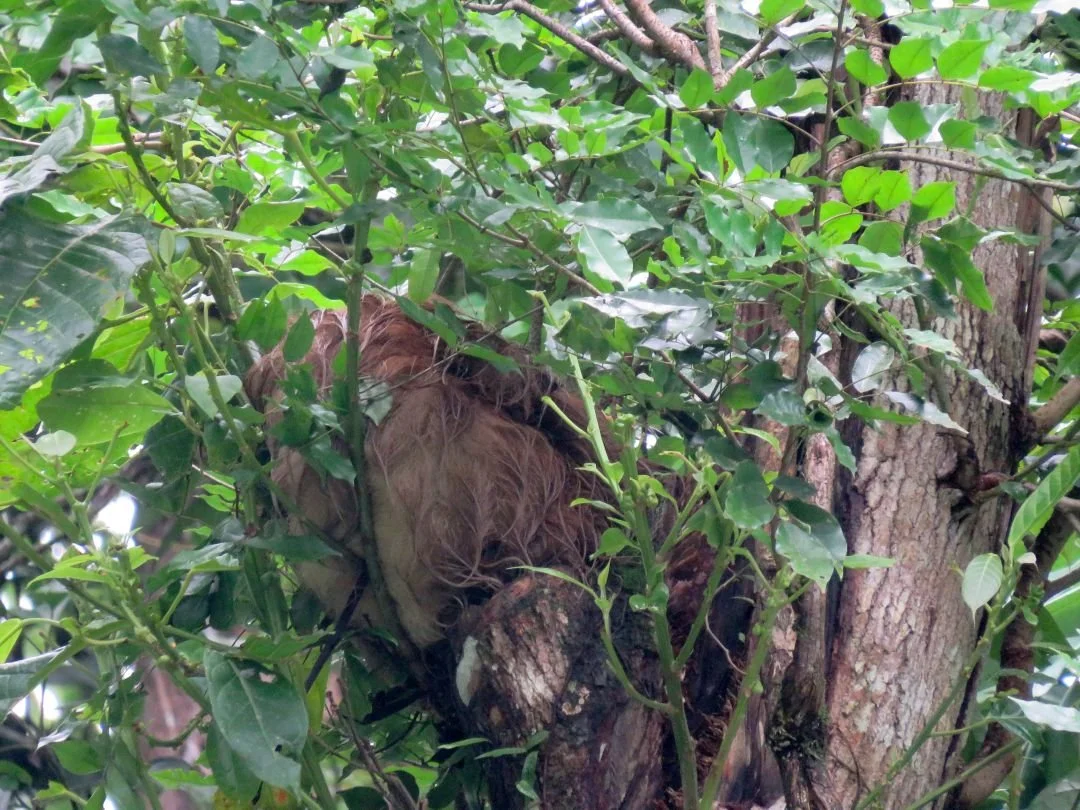
On another day, we spotted a two-fingered sloth near the bottom of Pipa’s usual hill, but the tracking signal showed that it was one of her neighbours. We eventually isolated Pipa’s signal in one of her familiar trees and found another sloth hidden among the vines. Although the position made it impossible to confirm the collar, the strong signal and familiar branch suggested that this one was probably Pipa.
Even with telemetry, Pipa still likes to make us work for every sighting!
Flash
Flash loves to keep us on our toes. One day, he is exactly where we left him. Next, he has moved to the opposite side of his territory, turning an ordinary tracking session into a muddy and slippery hike.
Although he moves around regularly, Flash continues to remain within his familiar home range in the primary forest. As he grows into a young adult, we have noticed him exploring new areas and spending more time higher in the canopy. It is encouraging to see him moving so confidently through the forest.
Curiously, Flash also seems much easier to find whenever José joins the tracking team. Whether José has a special talent or Flash simply likes him more, we are yet to determine!
Team Sloth HQ - Little Update!
Thank you, as always, for being part of the Sloth Fellowship and for supporting the work we do every day for Costa Rica’s wildlife.