
If you walk through the forests of Costa Rica's South Caribbean coast, you'll notice that no two forests are quite the same. And in many places, roads, houses, and agricultural land have changed the forest landscape completely.
For sloths, these differences matter. They spend almost their entire lives in trees, relying on the forest canopy for food, shelter, and movement. But how do different forest conditions affect where sloths live? And what happens as their habitat continues to change?
These are some of the questions that Catalina Pérez García is investigating as part of her PhD research, working with The Sloth Conservation Foundation (SloCo). Her work contributes to two of our ongoing research projects: The Great Sloth Census, which aims to better understand wild sloth populations, and the Urban Sloth Project, which investigates how sloths cope with increasingly fragmented and urbanized environments.
And the first results are giving us a fascinating glimpse into the relationship between sloths and the forests they call home.
Not All Forests Are the Same
Forests can look very different from one another, even within the same region. Some have tall, mature trees and relatively open spaces beneath the canopy. Others have a dense network of smaller trees, branches, vines, and vegetation growing at different heights.
These characteristics make up what scientists call forest structure.
To understand how forest structure might influence sloths, Catalina and the research team studied 11 forest sites along Costa Rica's South Caribbean coast, including areas around Cahuita, Cocles, Punta Uva, and Manzanillo.
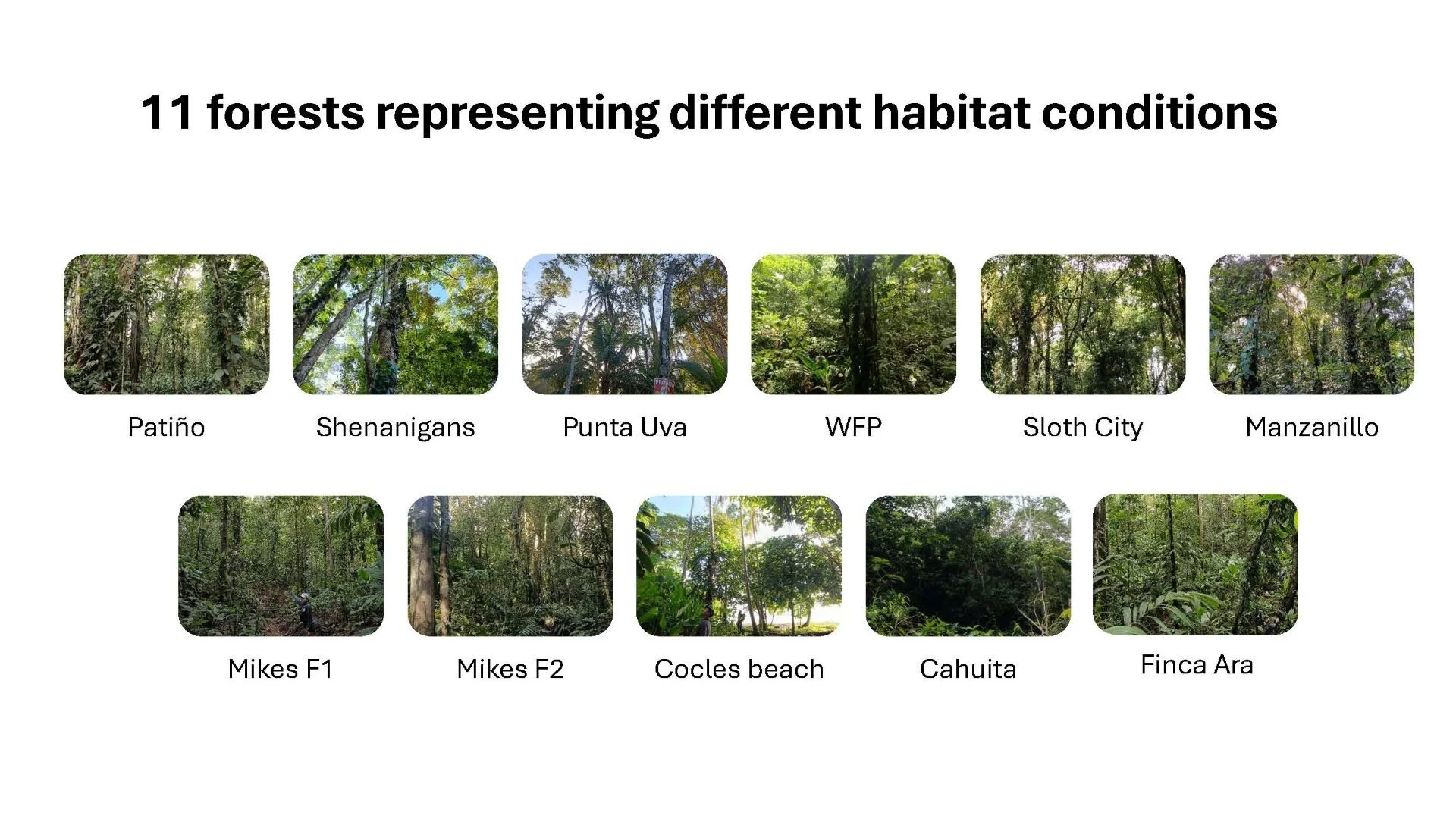
At each site, they measured different characteristics of the vegetation, including tree size, forest development, canopy cover, and vegetation complexity.
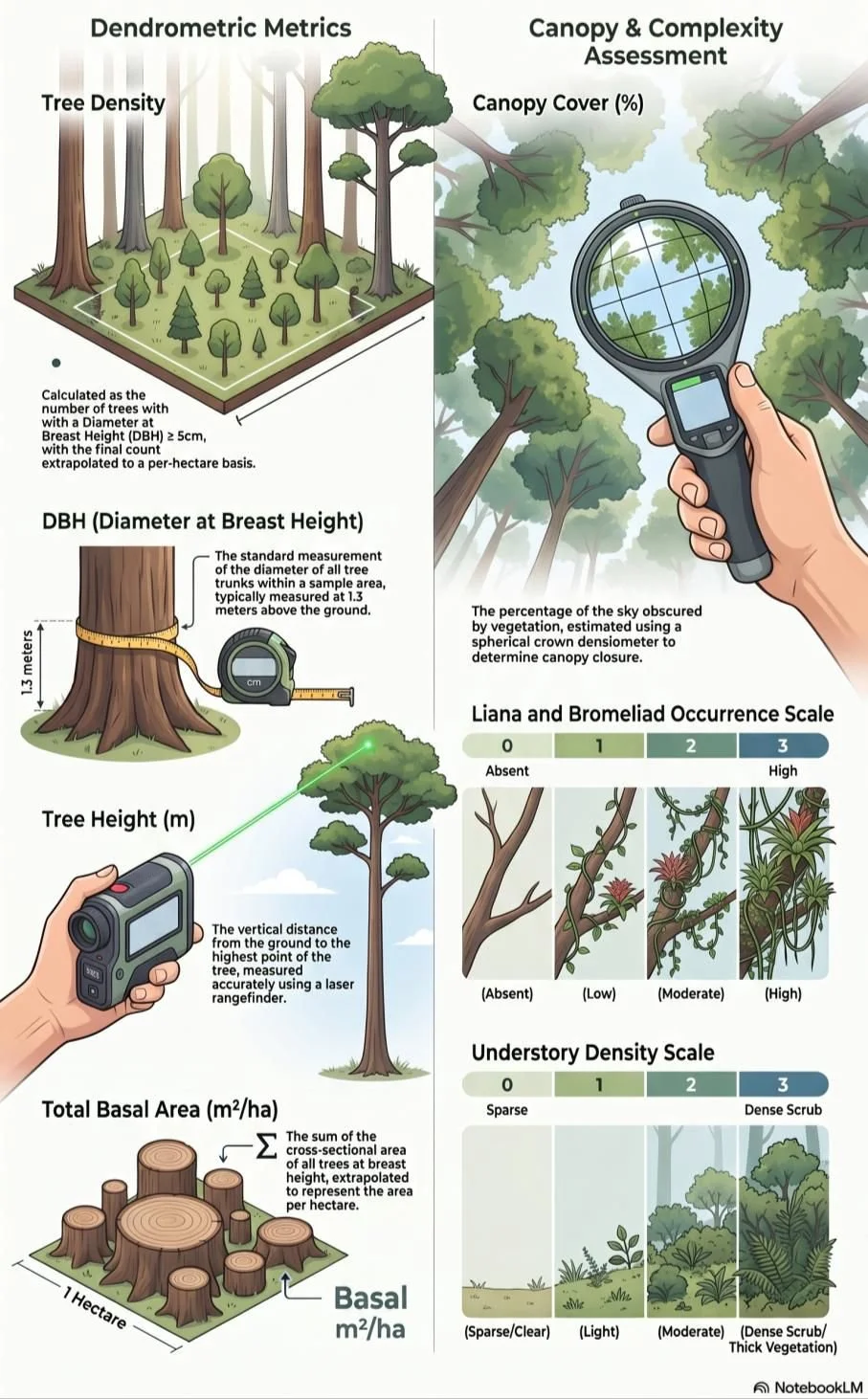
They then grouped these measurements into two main habitat gradients: one describing how structurally developed a forest is, and another describing canopy closure and vegetation complexity.
This allowed them to compare very different forests and investigate whether certain conditions were associated with more sloth detections.
But first, they needed to find the sloths.
The Great Sloth Census: Finding Sloths in the Wild
One of the biggest challenges in sloth conservation is that we still don't have reliable population estimates for many areas where sloths live. That's why SloCo launched The Great Sloth Census in 2023.
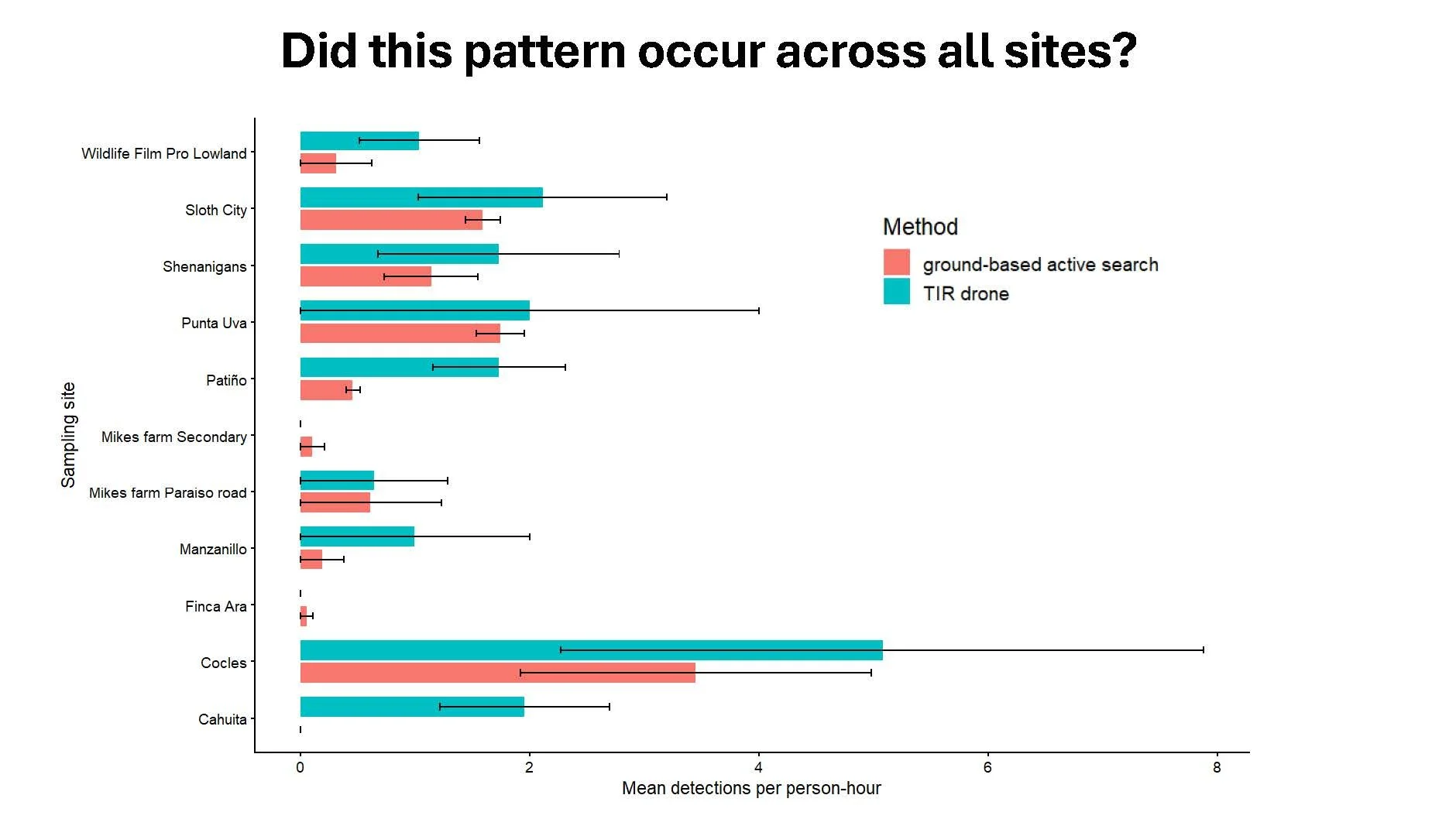
During the first stage of the project, our team tested three methods for finding sloths: trained human observers, thermal drones, and a specially trained scat detection dog named Keysha.
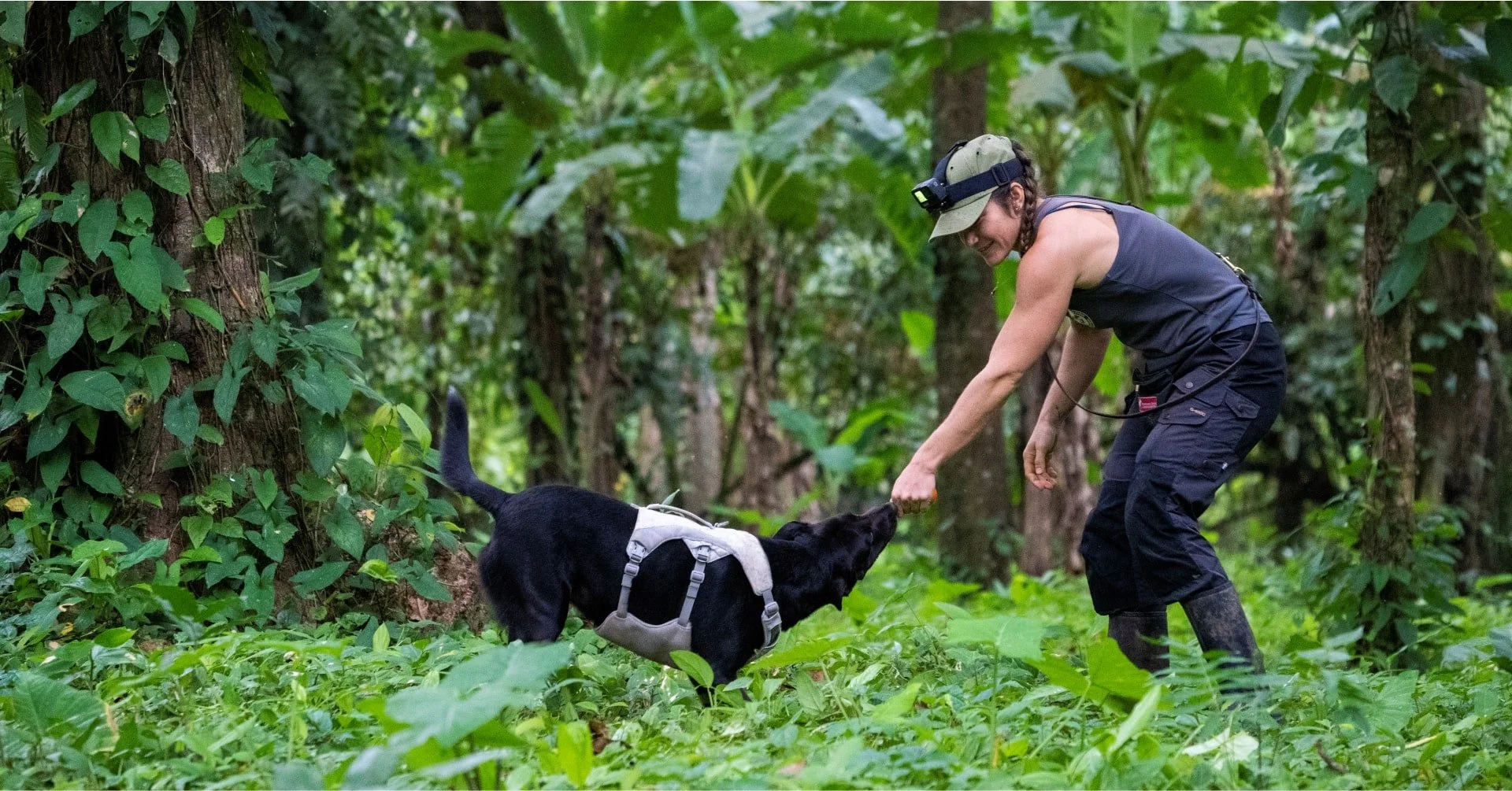
Keysha and Tamara
As part of her research at Lund University, Anne Kirstine Rosenkvist Kaad compared the effectiveness and efficiency of these three methods. Her findings showed that human observers detected the most sloths, while thermal drones required less human effort. The scat detection dog proved to be the least effective and efficient method.
Based on these results, we decided to continue using ground-based observations and thermal drones. You can read more about this first stage in our blog, The Great Sloth Census: The Dog Days Are Over.
Studying Sloths Across 11 Different Forests
Catalina's research takes the project further, investigating how the characteristics of different forests may influence the number of sloths we detect, and what those observations can tell us about their ecology.
Between August 2024 and April 2026, the research team carried out 66 survey events across 11 forest sites.
The surveys involved searching for sloths from the ground and using thermal drones to detect animals hidden in the canopy. Researchers also recorded information about the trees, the animals' locations, and the surrounding vegetation.
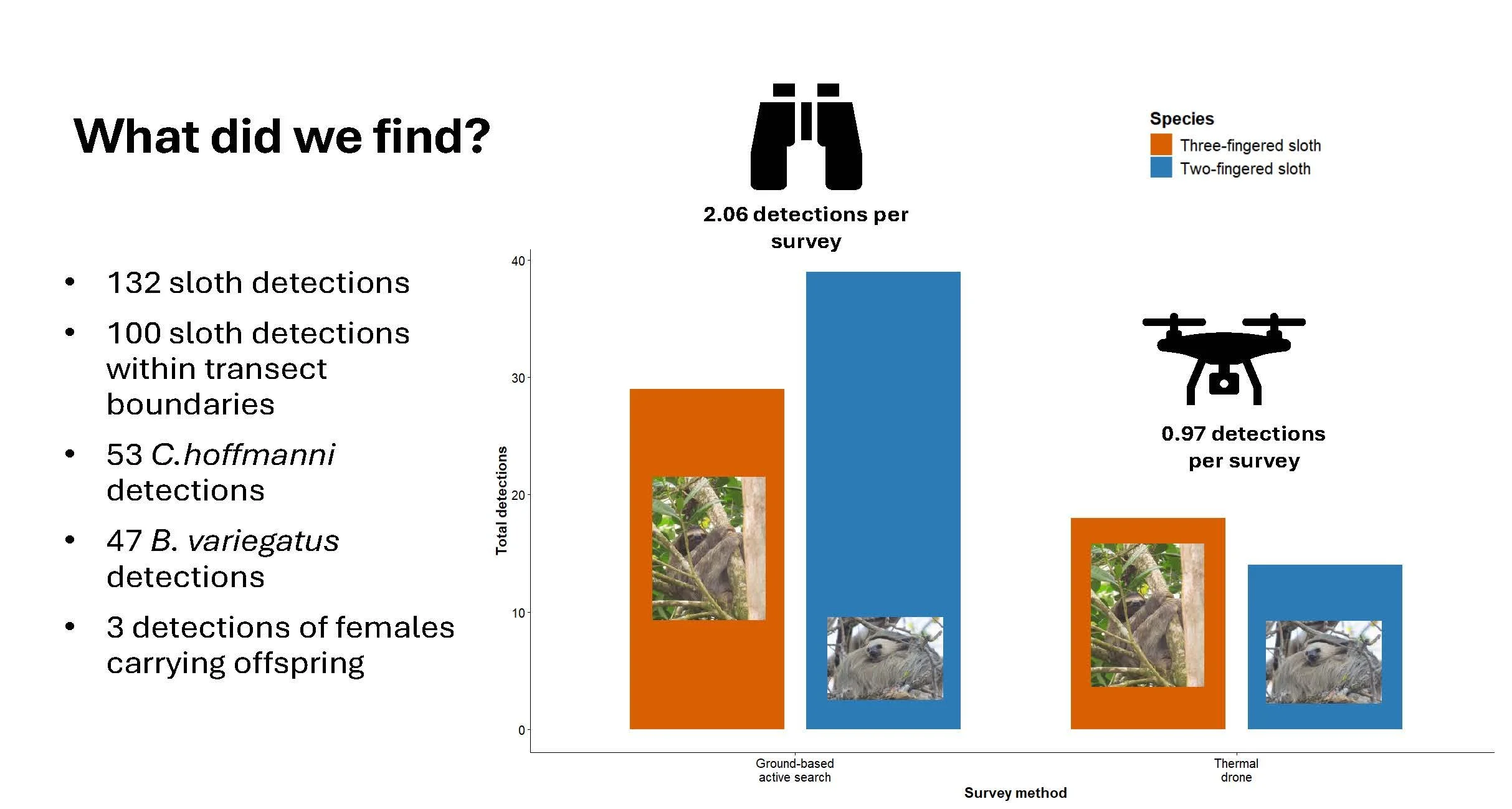
In total, the team recorded 132 sloth detections, including 100 within the established survey boundaries.
Of those 100 detections, 53 were Hoffmann's two-fingered sloths (Choloepus hoffmanni) and 47 were brown-throated three-fingered sloths (Bradypus variegatus).
Where Were the Most Sloths Found?
When compared the results across the different forest sites, some locations stood out. The highest estimated relative densities were recorded in:
Cocles: 13.7 sloths per hectare
Punta Uva: 4.67 sloths per hectare
Sloth City: 4.33 sloths per hectare
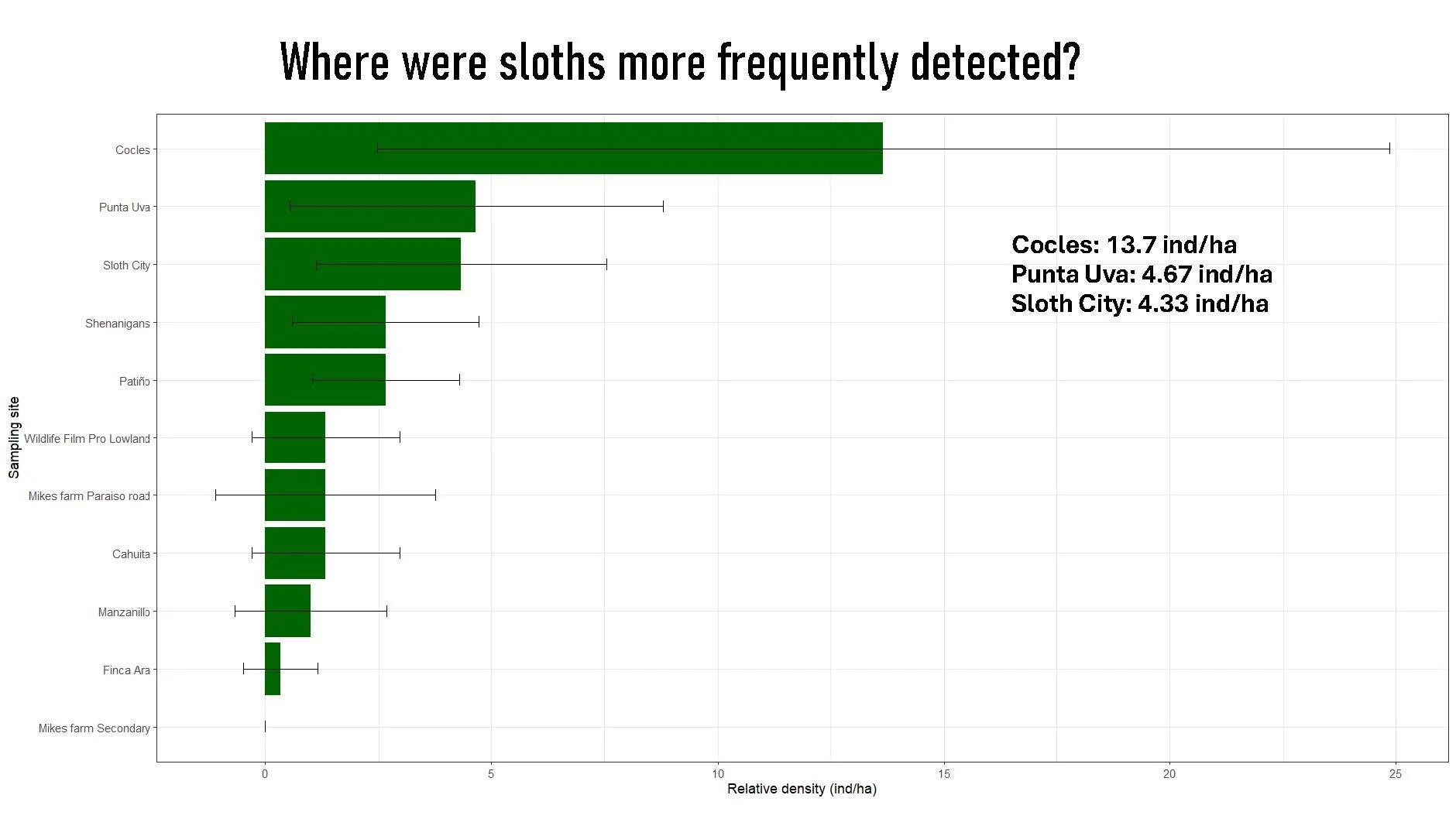
Cocles and Punta Uva are coastal areas where the vegetation includes beach almond trees, sea grapes, noni trees, and palms. Sloth City, on the other hand, is characterized by tall sangrillo trees.
Cocles had a particularly high estimated relative density compared with the other sites. But why?
Was it because the forest provided better food resources? Were the trees more suitable for sloths? Or were the animals simply easier to find there? These are questions that the research is still investigating.
The figures represent preliminary estimates of relative density, rather than definitive counts of the number of sloths living in each forest. And understanding that distinction becomes especially important when we look at the next finding.
Do Sloths Prefer Less Complex Forests?
One of the most unexpected results was that forests with greater structural complexity tended to have lower observed relative sloth densities. In other words, researchers generally recorded fewer sloths in forests with denser, more complex vegetation.
At first, this might seem surprising. Wouldn't a forest with more trees, branches, and vegetation provide better habitat for animals that spend their lives in the canopy? Possibly. But the results don't necessarily mean sloths prefer simpler forests.
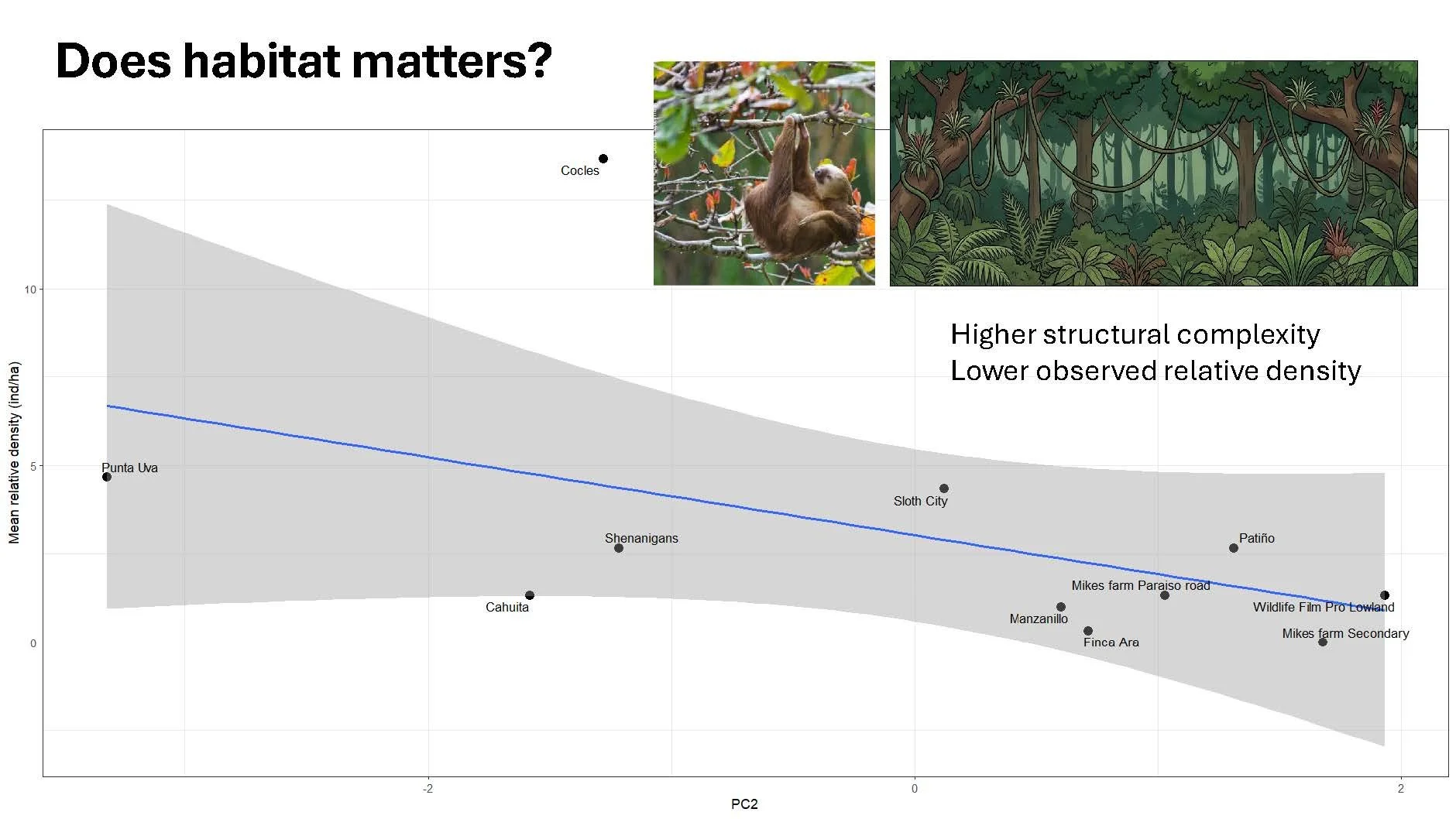
There are several possible explanations. Dense vegetation can make sloths much harder to spot. Even thermal cameras can struggle when branches and leaves obstruct an animal's heat signature. It's also possible that differences in food availability, tree species, or the way sloths use different habitats influence where they are found.
For now, the research has identified a relationship between forest structure and observed sloth density, but it hasn't established what causes that relationship.
Are there really fewer sloths in more complex forests, or are we simply missing the ones hiding among the leaves? That's one of the questions we hope to answer as the research continues.
Do Two-Fingered and Three-Fingered Sloths Use Forests Differently?
Costa Rica's South Caribbean region is home to two sloth species: Hoffmann's two-fingered sloth (Choloepus hoffmanni) and the brown-throated three-fingered sloth (Bradypus variegatus). Although they share the same forests, these species have different diets, behaviors, and ecological requirements. And Catalina's preliminary findings suggest that they may also respond differently to forest conditions.
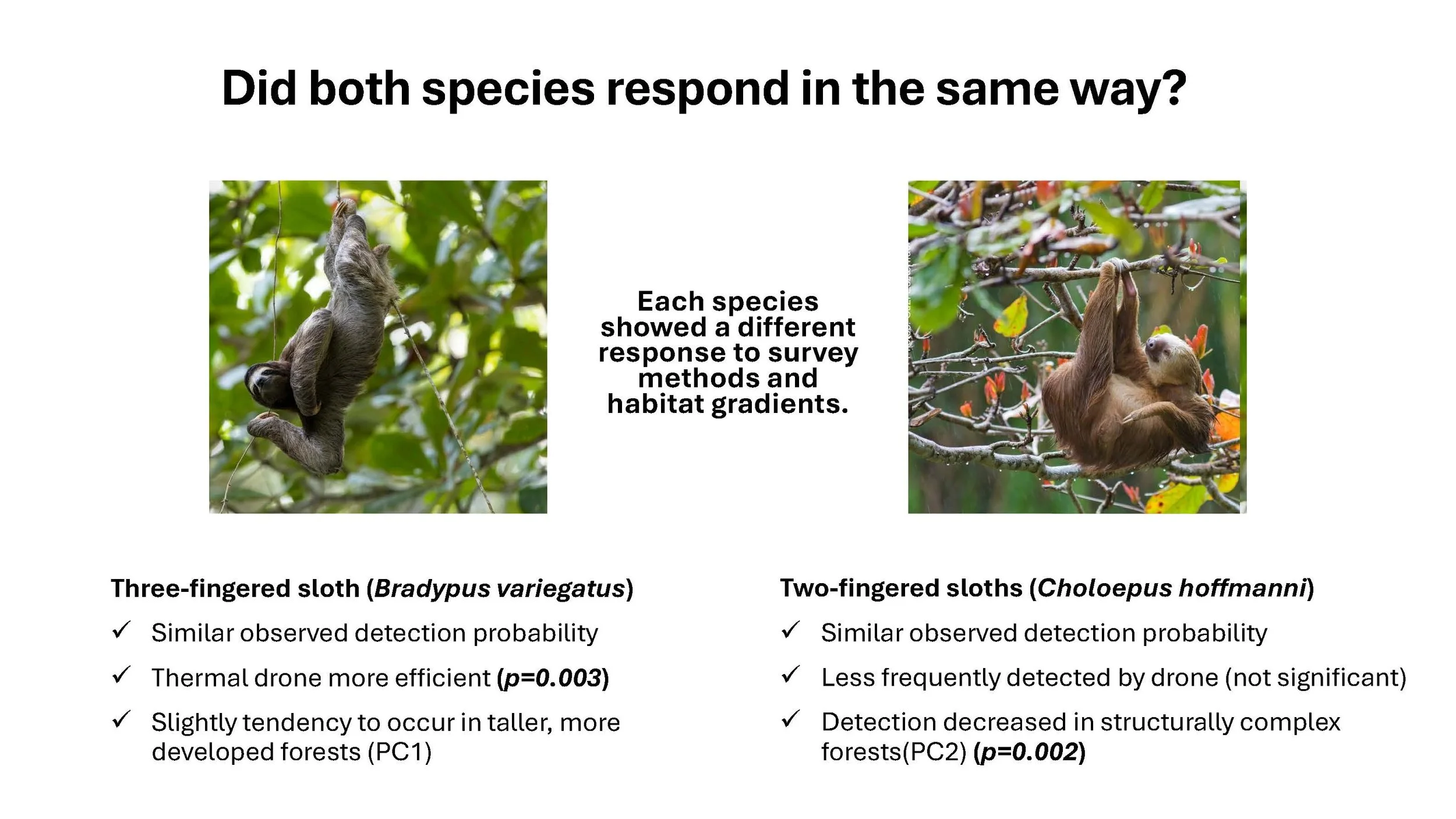
Three-Fingered Sloths
Brown-throated three-fingered sloths showed a slight tendency to be detected in taller, more structurally developed forests. However, this relationship was not statistically significant, so the researchers cannot yet conclude that these sloths favor this type of habitat.
Two-Fingered Sloths
For Hoffmann's two-fingered sloths, the researchers found a different pattern. Their detections decreased significantly in forests with greater canopy closure and vegetation complexity.
But once again, it's important to distinguish between where animals live and where researchers can find them. This pattern could reflect differences in habitat use, detection difficulty, or a combination of factors.
Understanding these differences matters because conservation strategies that benefit one sloth species may not necessarily have the same effects on the other.
Why Does This Research Matter for Sloth Conservation?
One of the biggest challenges in sloth conservation is that we still lack reliable population estimates for many areas. Most sloth species are currently classified as Least Concern on the IUCN Red List, but for several species, the available population information remains limited.
And here in Costa Rica, we're seeing firsthand how habitat fragmentation, roads, power lines, and urban development are putting increasing pressure on wild sloths.
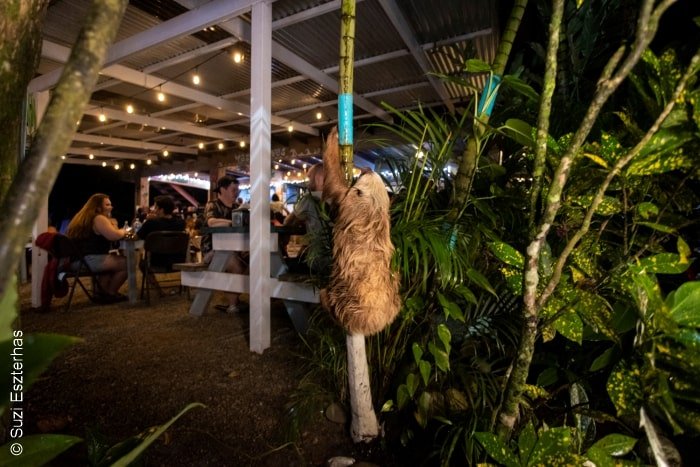
Without reliable population data, it's difficult to understand the full impact of these threats or determine whether populations are declining.
That's why The Great Sloth Census is so important. By comparing different survey methods and studying how forest characteristics influence sloth detections, researchers can improve the way populations are monitored.
The results can also help us understand which habitats are most suitable for sloths and how different species respond to environmental changes.
And because the two sloth species may respond differently, conservation strategies need to consider their individual ecological requirements.
What's Next?
The next stages will expand the surveys to new locations and investigate how forest cover, fragmentation, and connectivity influence sloth distribution.
The team is also studying individual sloths to learn more about their movements, activity patterns, and the microclimate conditions they experience in different habitats through the Urban Sloth Project.
The goal is to better understand where sloths live today, what makes those habitats suitable, and which areas may be most important to protect as the landscape continues to change.
You can help make this research possible by making a gift to The Sloth Conservation Foundation. Your support helps us continue The Great Sloth Census and our work protecting wild sloths and their habitats.
This article is based on preliminary findings from the ongoing PhD research project "How do forest changes influence sloth ecology?" by Catalina Pérez García, Universidad Autónoma de Madrid, conducted in collaboration with the Sloth Conservation Foundation. The results are preliminary and may change as the research progresses.
