
When people think about sloths, they usually picture tropical rainforests. But some of the world's most remarkable sloth populations depend on a very different ecosystem: mangrove forests.
On this World Mangrove Day, we're celebrating these incredible coastal habitats and the surprising role they play in sloth conservation.
What Are Mangroves?
Mangroves are forests that grow where land meets the sea. Their tangled roots are specially adapted to survive in salty, tidal waters, creating one of the most productive ecosystems on Earth.
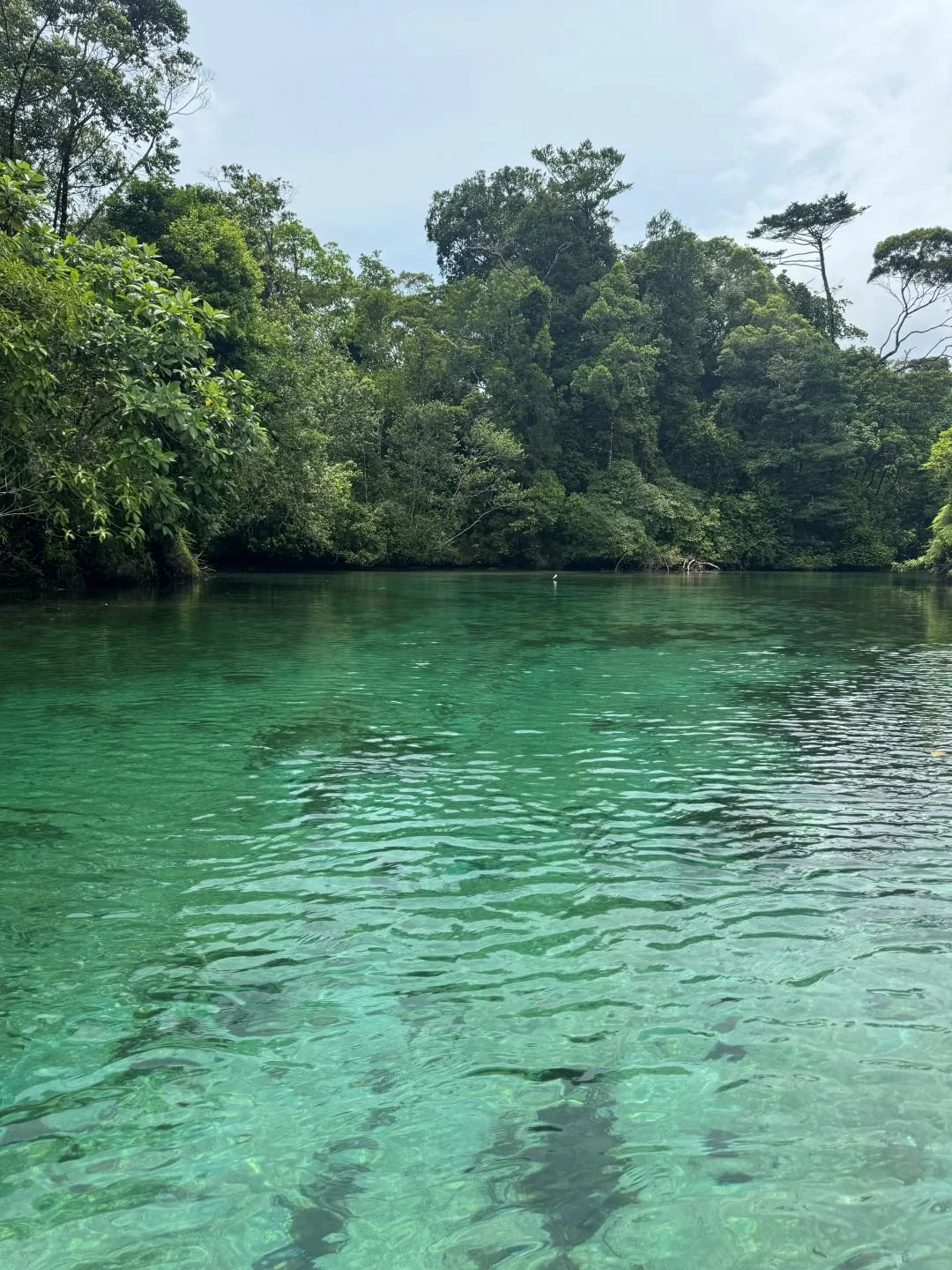
Mangroves, Isla Escudo, Panama
These forests provide nursery grounds for fish, shelter for birds, reptiles, and mammals, store vast amounts of carbon, and act as natural barriers that protect coastlines from storms and coastal erosion. By stabilizing shorelines and reducing wave energy, mangroves help protect both wildlife and coastal communities.
Sloths and Mangroves in Costa Rica
Here in Costa Rica's South Caribbean, one of the most unique places to observe sloths is in Punta Uva.
A small river flows through the forest before emptying into the Caribbean Sea, surrounded by lush mangrove habitat. This is one of the few places in the world where visitors can occasionally witness wild sloths climbing down to the river's edge to drink fresh water, a behavior that is rarely observed elsewhere.
The surrounding mangroves provide an important part of this unique coastal ecosystem, supporting countless species while helping maintain the health of the river and shoreline.
The World's Only Mangrove Specialist Sloth
Perhaps the most famous connection between sloths and mangroves can be found on Escudo de Veraguas Island, off the Caribbean coast of Panama.
This tiny island is home to the pygmy sloth (Bradypus pygmaeus), one of the world's rarest mammals. Unlike other sloth species, pygmy sloths rely heavily on the island's red mangrove forests for food, shelter, and protection. Conserving these mangroves is essential for the survival of the species. Without them, the pygmy sloth would have nowhere else to live.
Protecting Mangroves Means Protecting Wildlife
Mangroves are much more than coastal forests. They protect our shorelines, support fisheries, store carbon, and provide habitat for an extraordinary diversity of wildlife, including some of the world's most iconic sloths.
